Browsed by
Month: November 2013

Chained CPI Chains Taxpayers – Article by Ron Paul

Chained CPI Chains Taxpayers – Article by Ron Paul

The New Renaissance Hat
Ron Paul
November 11, 2013
******************************

One of the least discussed, but potentially most significant, provisions in President Obama’s budget is the use of the “chained consumer price index” (chained CPI), to measure the effect of inflation on people’s standard of living. Chained CPI is an effort to alter the perceived impact of inflation via the gimmick of “full substitution.” This is the assumption that when the price of one consumer product increases, consumers will simply substitute a similar, lower-cost product with no adverse effect. Thus, the federal government decides your standard of living is not affected if you can no longer afford to eat steak, as long as you can afford to eat hamburger.

The problem with “full substitution” should be obvious to anyone not on the federal payroll. Since consumers did not choose to buy lower-priced beef before inflation raised the price of steak, they obviously preferred steak. So if the Federal Reserve’s policies create inflation that forces you to purchase hamburger instead of steak, your standard of living is lowered. CPI already uses this sort of substitution to mask the costs of inflation, but chained CPI uses those substitutions more frequently, thereby lowering the reported rate of inflation.

Supporters of chained CPI also argue that the federal government should take into account technology and other advances that enhance the quality of the products we buy. By this theory, increasing prices signal an increase in our standard of living! While it is certainly true that advances in technology improve our standard of living, it is also true that, left undisturbed, market processes tend to lowerthe prices of goods. Remember the mobile phones from the 1980s? They had limited service, constantly needed charging, and were extremely expensive. Today, almost all Americans can easily afford a mobile device to make and receive calls, texts, and e-mails, as well as use the Internet, watch movies, read books, and more.

The same process occurred with personal computers, cars, and numerous other products. If left alone, the operations of the market place will deliver higher quality and lower prices. It is only when the federal government interferes with the operation of the market, especially via fiat money, that consumers must contend with constant price increases.

The goal of chained CPI is to decrease the federal government’s obligation to meet its promise to keep up with the cost of living in programs like Social Security. But it does not prevent individuals who have a nominal increase in income from being pushed into a higher income bracket. Both are achieved without a vote of Congress.

Noted financial analyst Peter Schiff correctly calls chained CPI a measurement of the cost of survival. Instead of using inflation statistics as a political ploy to raise taxes and artificially cut spending, the President and Congress should use a measurement that actually captures the eroding standard of living caused by the Federal Reserve’s inflationary policies. Changing federal statistics to exploit the decline in the American way of life and benefit big-spending politicians and their cronies in the big banks does nothing but harm the American people.

Ron Paul, MD, is a former three-time Republican candidate for U. S. President and Congressman from Texas.

This article is reprinted with permission from the Ron Paul Institute for Peace and Prosperity.

Prelude #1, Op. 32 (2004) – Video by G. Stolyarov II

Prelude #1, Op. 32 (2004) – Video by G. Stolyarov II

A short piano composition from 2004, in the style of the preludes of the 19th-century Romantic Era, relying on dynamic contrasts to achieve the impression of escalation, followed by calm.

This composition was remastered using the SynthFont2 software, with the Evanescence 2 instrument pack.

Download the MP3 file of this composition here.

See the index of Mr. Stolyarov’s compositions, all available for free download, here.

The artwork is Mr. Stolyarov’s Abstract Orderism Fractal LII, available for download here and here.

Remember to LIKE, FAVORITE, and SHARE this video in order to spread rational high culture to others.

Abstract Orderism Fractal LIII – Art by G. Stolyarov II

Abstract Orderism Fractal LIII – Art by G. Stolyarov II

Abstract Orderism Fractal LIII - by G. Stolyarov II

Abstract Orderism Fractal LIII – by G. Stolyarov II

Note: Left-click on this image to get a full view of this digital work of fractal art.

This fractal interference pattern creates the impression of particles streaming forth in every direction.

This digital artwork was created by Mr. Stolyarov in Apophysis, a free program that facilitates deliberate manipulation of randomly generated fractals into intelligible shapes.

This fractal is an extension of Mr. Stolyarov’s artistic style of Abstract Orderism, whose goal is the creation of abstract objects that are appealing by virtue of their geometric intricacy — a demonstration of the order that man can both discover in the universe and bring into existence through his own actions and applications of the laws of nature.

Fractal art is based on the idea of the spontaneous order – which is pivotal in economics, culture, and human civilization itself. Now, using computer technology, spontaneous orders can be harnessed in individual art works as well.

See the index of Mr. Stolyarov’s art works.

Abstract Orderism Fractal LII – Art by G. Stolyarov II

Abstract Orderism Fractal LII – Art by G. Stolyarov II

Abstract Orderism Fractal LII - by G. Stolyarov II

Abstract Orderism Fractal LII – by G. Stolyarov II

Note: Left-click on this image to get a full view of this digital work of fractal art.

This fractal evokes a light source, emitting bursts of illumination.

This digital artwork was created by Mr. Stolyarov in Apophysis, a free program that facilitates deliberate manipulation of randomly generated fractals into intelligible shapes.

This fractal is an extension of Mr. Stolyarov’s artistic style of Abstract Orderism, whose goal is the creation of abstract objects that are appealing by virtue of their geometric intricacy — a demonstration of the order that man can both discover in the universe and bring into existence through his own actions and applications of the laws of nature.

Fractal art is based on the idea of the spontaneous order – which is pivotal in economics, culture, and human civilization itself. Now, using computer technology, spontaneous orders can be harnessed in individual art works as well.

See the index of Mr. Stolyarov’s art works.

Abstract Orderism Fractal LI – Art by G. Stolyarov II

Abstract Orderism Fractal LI – Art by G. Stolyarov II

Abstract Orderism Fractal LI - by G. Stolyarov II

Abstract Orderism Fractal LI – by G. Stolyarov II

Note: Left-click on this image to get a full view of this digital work of fractal art.

This ornate feather-like fractal is built upon a multitude of spirals at many scales.

This digital artwork was created by Mr. Stolyarov in Apophysis, a free program that facilitates deliberate manipulation of randomly generated fractals into intelligible shapes.

This fractal is an extension of Mr. Stolyarov’s artistic style of Abstract Orderism, whose goal is the creation of abstract objects that are appealing by virtue of their geometric intricacy — a demonstration of the order that man can both discover in the universe and bring into existence through his own actions and applications of the laws of nature.

Fractal art is based on the idea of the spontaneous order – which is pivotal in economics, culture, and human civilization itself. Now, using computer technology, spontaneous orders can be harnessed in individual art works as well.

See the index of Mr. Stolyarov’s art works.

Abstract Orderism Fractal L – Art by G. Stolyarov II

Abstract Orderism Fractal L – Art by G. Stolyarov II

Abstract Orderism Fractal L - by G. Stolyarov II

Abstract Orderism Fractal L – by G. Stolyarov II

Note: Left-click on this image to get a full view of this digital work of fractal art.

This fractal resembles a design from a spirograph, coalescing to form a nautilus shape.

This digital artwork was created by Mr. Stolyarov in Apophysis, a free program that facilitates deliberate manipulation of randomly generated fractals into intelligible shapes.

This fractal is an extension of Mr. Stolyarov’s artistic style of Abstract Orderism, whose goal is the creation of abstract objects that are appealing by virtue of their geometric intricacy — a demonstration of the order that man can both discover in the universe and bring into existence through his own actions and applications of the laws of nature.

Fractal art is based on the idea of the spontaneous order – which is pivotal in economics, culture, and human civilization itself. Now, using computer technology, spontaneous orders can be harnessed in individual art works as well.

See the index of Mr. Stolyarov’s art works.

That Cold-Hearted Discipline – Article by David J. Hebert

That Cold-Hearted Discipline – Article by David J. Hebert

The New Renaissance Hat
David J. Hebert
November 6, 2013
******************************

But of all the duties of beneficence, those which gratitude recommends to us approach nearest to what is called a perfect and complete obligation. What friendship, what generosity, what charity, would prompt us to do with universal approbation, is still more free, and can still less be extorted by force than the duties of gratitude. —Adam Smith, The Theory of Moral Sentiments

A recent article by Wharton Professor Adam Grant has been popping up here and there, most recently in Psychology Today. Grant suggests that studying economics breeds greed, and he cites several studies to support his claim. The studies conclude economics professors give less money to charity than other professions, economics students are more likely to deceive others for personal gain, and people who study economics have less of a concern for fairness and tend to think that “greed” is okay.

To his credit, Grant does consider the alternative: that maybe economics actually attracts greedy people or that greedy people tend to thrive by studying economics. He dismisses these possibilities by noting that “there is evidence for selection . . . but this doesn’t rule out the possibility that studying economics pushes people further toward the selfish extreme.” He goes on to chide practitioners of the discipline for teaching self-interest in the classroom.

Finally, he concludes with four points that are meant to provide evidence of the social harm in studying economics, which can be summarized in two overarching points:

1) Economics justifies greedy behavior, and

2) Studying economics makes people less altruistic.

I want briefly to discuss these two points here.

Economics Justifies Greedy Behavior?

Studying economics, and specifically the role of incentives, teaches us that relying on altruism is a brave assumption that has but limited applicability. For example, among people we know, we can rely on a certain degree of altruism or benevolence. I know, for example, that my family and friends will be there for me not because I pay them to do so, but because they care about me. Similarly, they know I will be there for them. However, I don’t know the same thing about random people I encounter on the street.

And yet in order to enjoy the immense wealth that the division of labor affords us, society demands that we have interactions both with people we know well and people we do not know at all. These two distinct spheres of activity require two distinct forms of cooperation, which one might get from reading Adam Smith’s twin pillars of economics: The Theory of Moral Sentiments and The Wealth of Nations.

More tidily, perhaps, F. A. Hayek describes this situation in The Fatal Conceit by noting the difference between the macroeconomy and the microeconomy. Macro, in this context, refers to society as a whole, while micro refers to just the people to whom we are close. Hayek says that if we were to apply the same rules of the family unit to the macro, as would be the case if we were to allocate resources altruistically, we would destroy the macro. This is because there would be a complete lack of economic calculation, resources would be misallocated, and plans would fail to be coordinated (see these articles for more on economic calculation).

Hayek also notes that the reverse is true: If we were to apply the rules of the market to the family, we would destroy it as well. We don’t need prices and incomes at the dinner table to allocate the food. Even the most ardent defender of markets would agree that having prices and such as the means of allocating food at the dinner table would be wrong, just like paying your friends to help you move across town would be strange. (Beer and pizza don’t count.)

Instead, students of economics recognize not that greed is good, as the saying goes, but that greed can be transformed into the service of others given the proper institutional setting. That institutional setting, which has been thoroughly discussed elsewhere, is one that celebrates the role of property rights, prices, and profits (and losses) and recognizes their role in creating the incentives to properly husband resources, generates the information about the relative scarcities of various goods and transmits this information to consumers and producers in a quick and efficient manner, all of which provides a feedback mechanism to drive continued innovation.

Economics Makes People Less Altruistic?

Grant cites a 2005 article by Neil Gandal et. al. as concluding that “students who planned to study economics rated helpfulness, honesty, loyalty, and responsibility as just as important as students who were studying communications, political science, and sociology,” but that by the third year, economics students rated these values “significantly less important than first-year economics students.”

While the Gandal study does include such conclusions, it also includes much more. For example, economics students attribute less importance to fairness. Evidencing this, Gandal points out that, when questioned about the allocation of radio frequencies to different mobile-phone service providers, students who study economics are more likely to advocate selling the rights to the highest bidder while students of other disciplines are more likely to advocate for allocating the rights to “anybody who meets some minimal eligibility criteria.”

Students of economics do not advocate for property rights because we are greedy; we advocate for property rights because we understand and take seriously potential incentive problems in politics. The notion of minimal eligibility requirements may sound nice, for example, but problems may lie in who gets to draw that line, by what process that line gets drawn, and the incentives faced by the line-drawers. As Madison points out in Federalist 51, “If men were angels, no government would be necessary. If angels were to govern men, neither external nor internal controls on government would be necessary.”

Economics students know men are no angels. And as Nobel laureate James Buchanan points out, government officials are human beings, too, with their own hopes, dreams, and aspirations—and yes, forms of avarice. Supporting the allocation of resources to the highest bidder sidesteps the issues raised by these potential incentive problems. This means that the choice of how to allocate resources fundamentally comes down to a choice of institutions.

We can have a central authority establish guidelines by which anyone who wants can use the radio frequencies, or we can let the market decide. The former leads to a standard tragedy of the commons problem, whereby the radio frequency gets overused. In the case of cell phones, this means that the frequency would be crowded with multiple conversations simultaneously; imagine trying to shout to your friend across a crowded bar. The latter leads to the frequencies being allocated to the person who is best able to utilize them to serve the general population. So AT&T, for example, gets exclusive rights to a certain bandwidth and then tries to figure out how to best serve its customers. In this case, the customer gets to enjoy a clear phone call without the distraction of several other conversations in their ear simultaneously.

In any case, these are not examples of quelling altruism, but of keeping it in its place.

Less Greed, More Cooperation

Viewed in this light, economics does not so much teach greed but rather the beauty of cooperation. How else could we explain how a woolen coat gets made, how Paris gets fed, or how a pencil gets made? And if allocating, say, radio frequencies based on highest valued use makes people learn to discard fairness, well, how exactly is that a bad thing?

David Hebert is a Ph.D. student in economics at George Mason University. His research interests include public finance and property rights.

This article was originally published by The Foundation for Economic Education.

***

Editor’s Note by Gennady Stolyarov II: Mr. Hebert’s article is excellent in focusing on the true significance of economics and the need for private property rights. In one important respect, though, my position differs from his when it comes to the allocation of radio frequency to highest bidders such as AT&T and other entities exercising similar coercively granted monopoly and quasi-monopoly powers.

My position, arising out of similar libertarian principles, is that the allocation of radio frequencies to AT&T (and similar local/regional telecommunications monopolies) through the political process would not result in an economically optimal allocation, even if AT&T were the highest bidder. The reason for this is that AT&T’s very bidding ability arises out of (1) its decades-long history as the telephone monopoly in the United States and (2) the protections from competition that it enjoys in certain jurisdictions as a local or regional monopoly provider of certain services wrongly considered “natural monopolies” – such as high-speed cable services. In a pure free-market system, there would likely need to be some sort of allocation process for radio frequencies, so long as the use of radio frequencies by some parties has the physical ability to interfere with the use of the same frequencies by other parties. However, the outcome of such a free-market allocation process would differ considerably from the outcome of a bidding process in today’s status quo, conditioned by decades of deleterious path-dependency arising out of the privileges granted to AT&T and similar local/regional monopolists. Probably, an auction of radio spectrum on a purely free market would result in many smaller firms buying up many smaller ranges of spectrum and competing with one another more vigorously to provide superior customer service than do a handful of large, politically privileged telecommunications companies (AT&T, Comcast, Verizon, et al.) today. In this path-dependent, partially unfree environment it may be, in some cases, that allocations to lower bidders would result in better uses of resources and improved consumer outcomes, as long as institutional political privilege (e.g., enforced monopolies or historical insulation from competition) of the higher bidders can be incorporated into the bidding process in the form of some reasonable handicap used in considering their bids.

Inflation Has Not Cured Iceland’s Economic Woes – Article by David Howden

Inflation Has Not Cured Iceland’s Economic Woes – Article by David Howden

The New Renaissance Hat
David Howden
November 6, 2013
******************************

No two countries’ responses have polarized commentators over the past five years more than the contrasting post-crisis policies in Iceland and Ireland.

In a paper published in Economic Affairs (available here as a PDF) I contrast the policies enacted by Iceland and Ireland, perhaps the two countries most affected by the liquidity freeze of 2008. A common conclusion has been that one country did everything right and the other did everything wrong, however, I take a more pragmatic approach. There are some positive aspects in each case, and other aspects we can do without.

At the risk of over-simplifying their situations, the key policy differences are:

  1. Iceland allowed substantial swaths of its financial sector to collapse (mostly foreign-domiciled subsidiaries) while Ireland enacted blanket guarantees to keep its financial sector afloat.
  2. Iceland quickly inflated its krona in a bid to regain international competitiveness through depreciation. By being locked in the euro, Ireland was unable to pursue a similar path and instead had to become more attractive to foreigners by lowering its domestic prices (i.e., disinflation or outright deflation).
  3. Iceland stymied a capital flight by enacting monetary controls aimed at keeping investment within the country. By being part of the European Union, Ireland maintained its commitment to free capital markets, and investors were able to enter or exit as they pleased.

The evidence is mixed as to which solution was more effective. Iceland seems to have softened the immediate blow of its recession, but present growth in Ireland is stronger. In a similar way, unemployment in Iceland was less and still remains lower today.

For our purposes here, I want to focus just on the effects of their respective monetary policies, and how the short-term gains from Iceland’s inflationary response now pale in comparison to Ireland’s more subdued response.

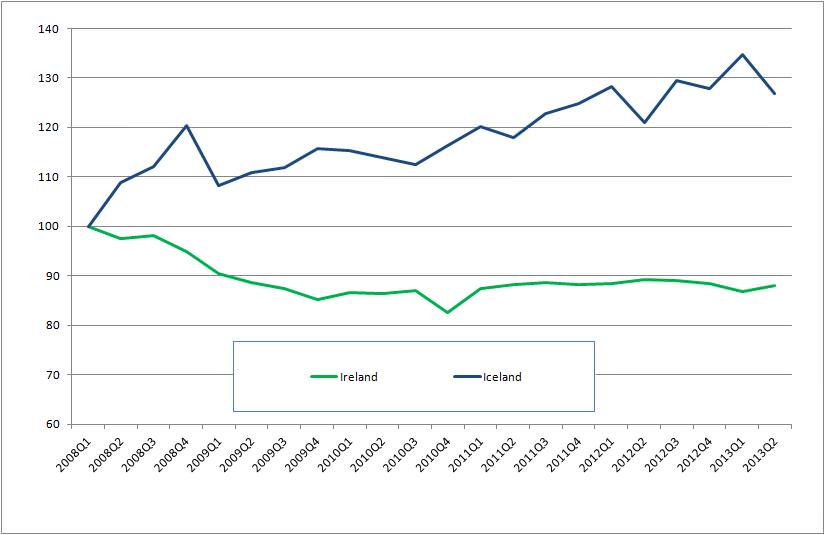
Figure 1: Nominal GDP (2008 = 100) Source: Federal Reserve Bank of St. Louis

Figure 1 shows the common story. Iceland’s inflationary policy stimulated exports, papered over some bad debts, and in general allowed it to exit the storm relatively unscathed. In contrast, Ireland is languishing in slow growth and five years later the country’s income is still 10 percent below its pre-bust peak.

Such an analysis neglects the pernicious effects of inflation on the Icelandic economy. This policy increased the money supply by almost 20 percent in 2008 alone, and lead to an immediate increase in prices.

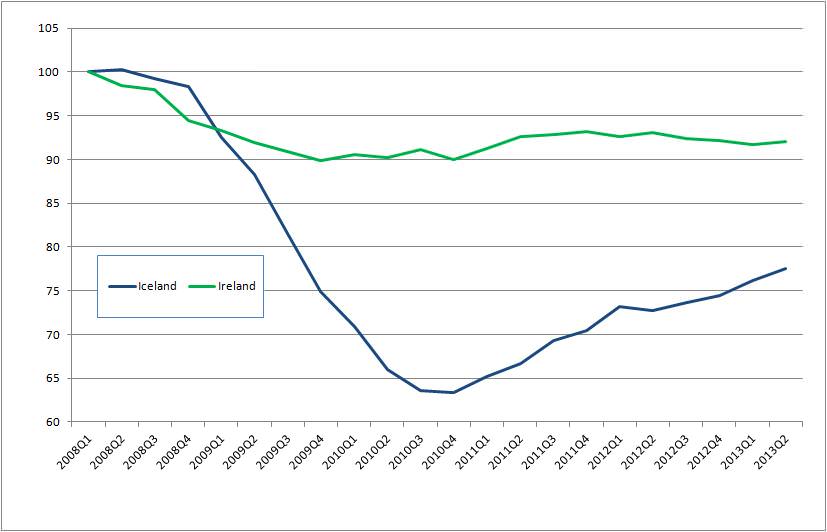
Figure 2: Real GDP (2008 = 100) Source: Federal Reserve Bank of St. Louis

In figure 2 we get a better feel for how the situation felt to the average Icelander or Irishman. As the Central Bank of Iceland inflated the money supply, price inflation raged. Icelanders continually felt their financial security worsen as their purchasing power collapsed. This was not apparent to the rest of the world, fixated as it was on the nominal prices the Icelandic economy posted. By its nadir in late 2010, inflation-adjusted income in Iceland was down over 35 percent.

In Ireland this decline was muted because of price deflation. As domestic prices fell it became easier for Irish citizens to make their declining nominal incomes go further. At its worst, the Irish economy collapsed less than 10 percent in real terms.

This seems to suggest that Ireland had the better solution by not pursuing an inflationary monetary policy. Some will note, however, that Iceland’s recovery since 2010 has been quite strong.

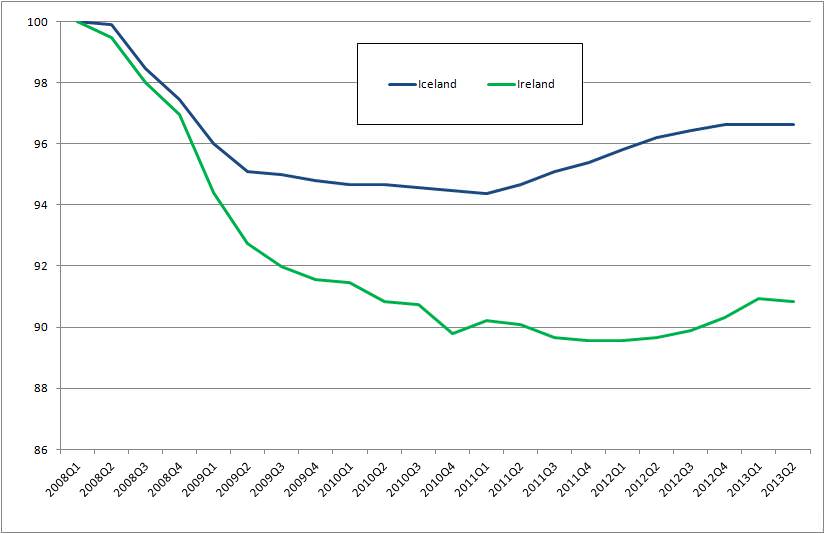
Indeed, if we look at the drop in the employment rate for both countries most probably feel more sympathy for the masses of unemployed Irishmen.

Figure 3: Employment rate (2008 = 1) Source: Federal Reserve Bank of St. Louis

Digging deeper, however, we find that not all is as it seems. Many Icelanders work two jobs to make ends meet. This effect was increasingly pronounced through the recession as inflation made it more difficult to get by with one salary. As a consequence, many Icelanders lost one job during the recession but the unemployment statistics did not reflect this as they were still employed elsewhere. This is notably not the case in Ireland, where not only is one job per worker the norm, but falling prices made it easier for an employed person to make ends meet as the recession continued.

A better way to gauge the employment situation is to look at changes in the hours worked.

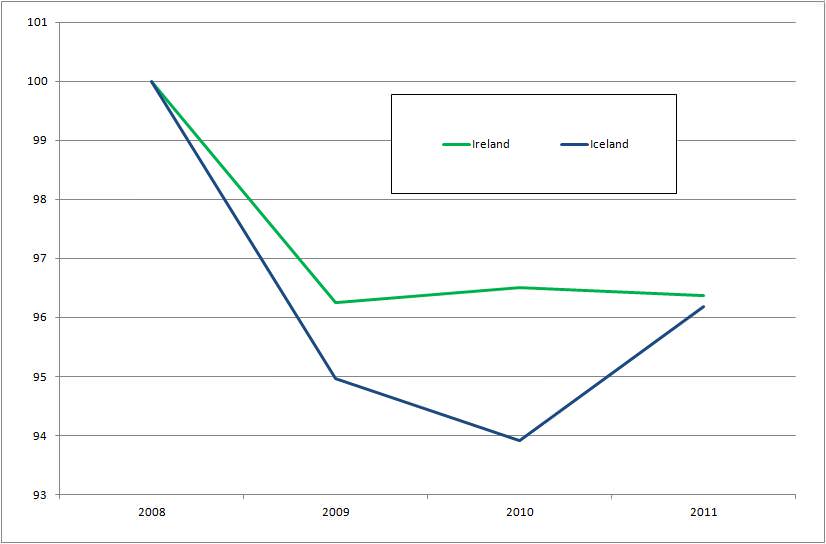
Figure 4: Annual hours worked (2008 = 100) Source: Federal Reserve Bank of St. Louis

Here we can see the situation is reversed. By the recession’s trough in 2010 the number of hours worked by the average Icelander had fallen 6 percent while in Ireland the corresponding drop was only 3.5 percent — almost half as much.

Both countries still have problems. Iceland’s monetary controls are notably stifling needed investment, while Ireland is left with a large debt from bailing out its banks, and this is stalling growth. One thing is clear though — the effects of monetary policy are stark and the proclaimed benefits of Iceland’s inflationary policy were counteracted by the price inflation that ensued.

Don’t let a good crisis go to waste; learn something from it. As the tale of these two countries demonstrates, inflating one’s currency may give the appearance of recovery, but the truth is somewhat less rosy.

David Howden is Chair of the Department of Business and Economics and professor of economics at St. Louis University’s Madrid Campus, Academic Vice President of the Ludwig von Mises Institute of Canada, and winner of the Mises Institute’s Douglas E. French Prize. Send him mail. See David Howden’s article archives.

This article was published on Mises.org and may be freely distributed, subject to a Creative Commons Attribution United States License, which requires that credit be given to the author.

Longevity Logistics: We Can Manage the Effects of Overpopulation – Article by Franco Cortese

Longevity Logistics: We Can Manage the Effects of Overpopulation – Article by Franco Cortese

The New Renaissance Hat
Franco Cortese
November 5, 2013
******************************

This is a more popularly-oriented version of a scholarly article in review for the Journal of Evolution and Technology.

By far the most predominant criticism made against indefinite longevity is overpopulation. It is the first “potential problem” that comes to mind. But fortunately it seems that halting the global mortality rate would not cause an immediate drastic increase in global population; in fact, if the mortality rate dropped to zero tomorrow then the doubling rate for the global population would only be increased by a factor of 1.75 [1], which is smaller than the population growth rate during the post-WWII baby-boom.

Population is significantly more determined by birth rate than by death rate, simply because many people have more than one natural child.

This means that we should not see an unsustainable rise in population following even the complete cessation of death globally for a number of generations. We will run into problems 3 or 4 generations hence – but this leaves us with time enough to plan for overpopulation before we’re forced to resort to more drastic solution-paradigms like procreation-bans and space colonization.

Moreover, there are a number of proposed, and in some cases implemented, solutions to existing, contemporary problems that can be utilized for the purpose of minimizing overpopulation’s detrimental effects on living space and non-renewable resource constraints. These contemporary concerns include climate change and dependence on non-renewable energy sources, and they are only increasing in the amount of public attention they are attracting.

While these concerns and their potential solutions were not created by overpopulation or with overpopulation in mind, the potentially negative effects of an increasing global population can be effectively combated all the same using such contemporary methods and technologies.

Thus we can take advantage of the solution-paradigms developed for such contemporary concerns as climate change and dependence on non-renewable resources, and borrow from such movements as the sustainability movement and the seasteading movement, so as to better mitigate and effectively plan for the negative repercussions of a growing global population caused by the emergence of effective longevity technologies.

In a session with The President’s Council on Bioethics (as it was composed during the Bush Administration), S. Jay Olshansky [2] reported calculations he performed indicating that complete cessation of the global morality rate today would lead to less population growth than resulted from the post-WWII “Baby Boom”:

This is an estimate of the birth rate and the death rate in the year 1000, birth rate roughly 70, death rate about 69.5. Remember when there’s a growth rate of 1 percent, very much like your money, a growth rate of 1 percent leads to a doubling time at about 69 to 70 years. It’s the same thing with humans. With a 1 percent growth rate, the population doubles in about 69 years. If you have the growth rate — if you double the growth rate, you have the time it takes for the population to double, so it’s nothing more than the difference between the birth rate and the death rate to generate the growth rate. And here you can see in 1900, the growth rate was about 2 percent, which meant the doubling time was about five years. During the 1950s at the height of the baby boom, the growth rate was about 3 percent, which means the doubling time was about 26 years. In the year 2000, we have birth rates of about 15 per thousand, deaths of about 10 per thousand, low mortality populations, which means the growth rate is about one half of 1 percent, which means it would take about 140 years for the population to double.

Well, if we achieved immortality today, in other words, if the death rate went down to zero, then the growth rate would be defined by the birth rate. The birth rate would be about 15 per thousand, which means the doubling time would be 53 years, and more realistically, if we achieved immortality, we might anticipate a reduction in the birth rate to roughly ten per thousand, in which case the doubling time would be about 80 years. The bottom line is, is that if we achieved immortality today, the growth rate of the population would be less than what we observed during the post-World War II baby boom.

We would eventually run into problems, of course, a century down the road, but just so you know the growth rates would not be nearly what they were in the post-World War II era, even with immortality today.

In other words we will only have increased the doubling-time of the global population by a factor of 1.75 if we achieved indefinite longevity today (e.g., a doubling time of 140 years in 2000 compared to a doubling time of 80 years). This means that we will have two to four generations worth of time to consider possible solutions to growing population before we are faced with the “hard choice” of (1) finding new space and resources or else (2) limiting or regulating the global birthrate.

An alternate study on the demographic consequences of life extension concluded that “population changes are surprisingly slow in their response to a dramatic life extension”. The study applied “the cohort-component method of population projections to 2005 Swedish population for several scenarios of life extension and a fertility schedule observed in 2005,” concluding that “even for a very long 100-year projection horizon, with the most radical life extension scenario (assuming no aging at all after age 60), the total population increases by 22% only (from 9.1 to 11.0 million)” and that “even in the case of the most radical life extension scenario, population growth could be relatively slow and may not necessarily lead to overpopulation.” [2]. The total population increase due to the complete negation of mortality given by this study is significantly lower than the figure calculated by Olshansky.

Finding innovative solutions to new and old problems is what humanity does. We have a variety of possible viable options to increase the resources and living space available to humanity already. Moreover, there are several other contemporary concerns that are invoking the development of technological and methodological solutions that can be applied to our own concerns regarding the effects of overpopulation. Surely we can conceive of optimal solutions to these problems (and the more pressing a given problem is, the more funding it receives and the faster the solution to it is accomplished) – and take advantage of the growing methodological and technical infrastructure being developed for related and convergent problems – within the time it will take to feel overpopulation’s effect on living space and resources.

We could, for instance, colonize the oceans [3, 4, 5], drawing from the engineering, construction techniques used to build, maintain, and safely inhabit contemporary VLFSs (Very Large Floating Structures). 75% of the Earth’s surface area is, after all, water. This would increase our potential living space 3-fold – and I say “potential” because we surely don’t currently maximize living space on the 25% of the Earth’s surface occupied by land. Furthermore, humanity has as yet barely ventured beyond the surface of the earth – which is a sphere after all. There is nothing to prevent society building higher and building deeper. Indeed, with contemporary and projected advances in materials science and structural engineering, there is no theoretical limit to the height of structures we can safely build – the space elevator being a case in point. And while there will indeed be a maximum size wherein building higher becomes economically prohibitive (a limit determined to a large extent by the materials used), contemporary megastructures [6] indicate that very large structures can be built safety and cost-effectively. Underground living [7, 8, 9, 10] is another potential solution-paradigm as well; underground structures require less energy, are protected from weathering effects and changing temperatures to a much greater extent than structures exposed to the elements, and are less susceptible to damage from natural disasters. Furthermore, there are a number of underground cities in existence today [11], with existing techniques and technologies used to better facilitate contemporary underground living, which we can take advantage of.

In fact, the problem of limited living space is a contemporary problem for certain nations like Japan, and active projects to combat this growing problem have already been undertaken in many cases. This means that there will be an existing host of solutions, with their own technological and methodological infrastructures, which we can benefit from and take advantage of when the problematizing effects of growing global population become immediate. Not only can we take advantage of the existing engineering methodologies developed for use in the construction of VLFSs, but we can also take advantage of the growing body of knowledge pertaining to megastructural engineering and even existing proposals for floating cities [12, 13, 14, 15, 17, 18]. Another possible solution is artificial islands [19].

Furthermore, in recent years the topic of Very Large Floating Structures [21, 22] has experienced a surge of renewed interest occurring in tandem with the increasing interest in seasteading [23, 24], – that is, the creation of very-large-floating-structures for reasons of political sovereignty as well as to allow corporations to get around the laws of a given nation by occupying an area outside of exclusive economic zones. This renewed interest can only increase the amount of attention and funding these concepts receive, in turn increasing the viability of VLFS designs and their underlying structural-engineering and energy-production concerns.

Another contemporary movement that will prove advantageous for our own concerns with the effects of overpopulation on living space, working space, and resource space is the growing green movement and sustainability movement. The problem of resource scarcity is already upon us in many areas, and there exists contemporary motivation for finding more resource-efficient ways of making energy and producing goods, and for lessening our dependency on non-renewable energy sources. Climate change has only become an increasingly predominant concern in international politics, and many incentives exist to lessen our dependence on non-renewable energy sources as well as to lessen the environmental impact of contemporary civilization, which is itself another oft-touted problematic concern possibly resulting from overpopulation. Developments in these areas are only set to continue, for reasons wholly unrelated to the effects of overpopulation, and when those effects come to the fore we will have a collection of existing methodologies that can then be harnessed to lessen the impact of overpopulation on living space and resource scarcity.

The predominance of these problems, as well as the amount of attention and funding they are expected to receive (and thus the viability of their potential solutions), will only increase as we move forward into the future. The solutions we have to the potential problems of overpopulation – namely resource scarcity and lack of living space – will not only increase as the effects of overpopulation get closer, but the technological and methodological infrastructures underlying those solutions will also become more tried, tested, and robust, fueled by contemporary concerns over decreasing living space, climate-change and resource scarcity.

While space colonization is the most frequently proffered technological solution to the possibility of future overpopulation, I think we will turn to various Earth-bound solutions to increasing humanity’s available living space, as well as the space available for agricultural labs, that is the manufacture of food-stuffs, or indoor farming systems [25, 26, 28], before colonizing the cosmos becomes an economically optimal option. I think these sorts of solutions will be employed long before humanity is forced to either regulate the birthrate or move into the cosmos.

Moreover, people who wish to have children will have incentive to support politicians running on policies promoting new solutions to decreasing living space. Consider the number of U.S. taxpayer dollars spent during the Space Race, with no immediate material or scientific benefit (other than to prove it could be done, as well as to maintain rough militaristic equality with the USSR to some extent, as the state of rocket technology was indicative of the state of ballistic technologies like missiles). If humanity is forced to choose between having children and receiving the medical treatments that will keep them from dying, surely people will be motivated to fund initiatives and projects aimed at solving the problems of decreasing living space and increasing resource constraints due to a growing global population.

It is important to remember that the largest increase in life expectancy we have experienced historically was followed by a drastic decrease in birthrate over the next few generations thereafter. Before the Industrial Revolution, English women had on average 6 children. In 2000 the average was less than 2.

Figure 1: Fertility Rates in England, 1540-2000
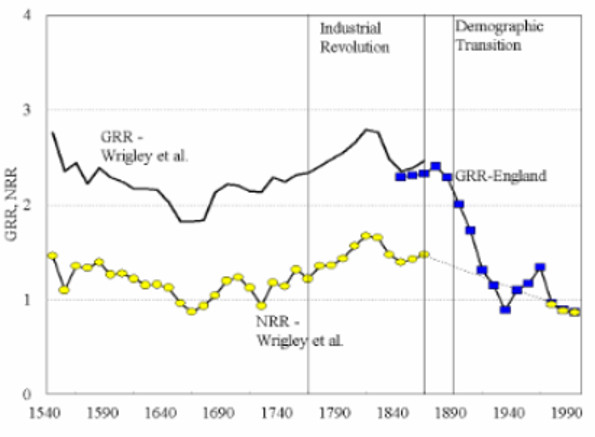
Note: GRR = Gross Reproduction Rate, NRR = Net Reproduction Rate
Source: Wrigley et al. (1997) p. 614. Office of National Statistics, United Kingdom.

The drop in birthrate following the industrial revolution has several causes. Chief among them is the fact that children were considered to some extent as assets, helping with maintaining the family livelihood, often by doing agricultural work on a family farm or helping with household chores (which were much more extensive then). Another large determining factor is a high rate of child mortality; thus families would have multiple children in anticipation of losing some to death. But with a rise in living conditions, the child mortality rate dropped drastically – and as a result we stopped having more kids in anticipation of some of them dying. Moreover, we started treating children less as assets and more as people to nurture and raise for their own sake. Longer lives, and less susceptibility to death in general, appears to have made us better parents.

Thus it is not only possible but probable that we will see a similar drop in the birthrate as a consequence of a significant future increase in average lifespan, with people having children much later in life, when they are more financially stable and when they have done all the commitment-free things they’ve always wanted to do. Without a looming limit on one’s available reproductive lifespan, there will be no pressing motivation to have children “before it’s too late” – and this alone could very well facilitate an unprecedented decrease in the Total Fertility Rate (TFR) of the global population.

Evidence indicates that the drop in birth rate was neither limited to England, nor an isolated result of the Industrial Revolution. A net drop in the TFR seems to be a longer-term trend concurrent across the globe. It is likely that the drop in the TFR is due to the same factors as the drop in birth rate following the Industrial Revolution – increasing life expectancy and continually improving living conditions allow people to have children without expecting a portion of them to be lost to death, to have them for the sake of having children rather than as assets to aid in maintaining the family livelihood, and to have children later in life due to the increase in one’s reproductive lifespan that comes with increasing life expectancy. The fact that the drop in TFR is not an isolated historical event is advantageous because the global population is affected by birth rate much more than by the mortality rate. Hence we may see a continuing decrease in the TFR occur in tandem with increasing life expectancy, leveling out the imbalance created by a mortality rate of zero by a larger than has been heretofore anticipated. (Source: U.S. Central Intelligence Agency, World Factbook.)

Let us suppose, for a moment, the worst: that indefinite longevity is achieved and we completely ignore (i.e., fail to plan for) overpopulation until its effects start becoming readily apparent. Even in this seeming worst-case scenario, overpopulation is not likely to result in any great tragedies. In such a case we would be forced to limit the global birthrate until we are able to implement the solutions that would allow us to sustainably procreate again. If people have a strong enough desire to continue having children, then they will express their demand and politicians will consequently base their policies upon deliberative initiatives to increase available living and agricultural space – and get elected if the desire to freely procreate is strong and widespread enough. Failing to plan for overpopulation will simply be a wake-up call, letting us know that we should have been planning for its effects from the beginning, and that we had better start planning for them now if we want to continue to freely procreate.

Thus while overpopulation is the most prominent and most credible criticism against continually increasing lifespans, and the one that needs to be planned for the most (because it will eventually happen, but it will lead to sustainability, resource, and living-space problems only if we do nothing about it), it is in no way insoluble, nor particularly pressing in terms of the time available to plan and implement solutions to shrinking living space and resource space (i.e., the space occupied by resources such as food, energy production, workplaces, etc.). We have a host of potential solutions today, ones we can use to increase available living space without regulating the global birthrate, and decades following the achievement of indefinite lifespans to consider the advantages and disadvantages of the various possible solutions, to develop them and to implement them.

So then: where to from here? Overpopulation is still the most prominent criticism raised against indefinite longevity, and if combated, the result could be an increase in public support for the Longevity movement. You might think that the widespread concern with overpopulation due to increasing longevity won’t really matter, if they turn out to be wrong, and overpopulation isn’t so insoluble a problem as one is inclined to first presume. But this misses a crucial point: that the time it takes to achieve longevity is determined by and large by how strongly and in how widespread a manner society and the members constituting it desire and demand it. If we can convince people today that overpopulation isn’t an insoluble problem, then continually increasing longevity might happen much sooner than otherwise. At the cost of 100,000 deaths due to age-correlated causes per day, I think hastening the arrival of indefinite longevity therapies by even a modest amount is somewhat imperative. Hastening its arrival by one month will save 3 million lives, and achieving it one year sooner than otherwise will save an astounding 36.5 Million real, human lives.

Thus, we should work toward putting more concrete numbers to these estimates. How much more living space can be feasibly created by colonizing the oceans? How deep can we really dig, build and live? How high can we safely build? Is there a threshold height or depth where building higher or deeper becomes too economically prohibitive to be worth the added living, working or resource space? What are the parameters (e.g., material strength/cost ratio, specific structural design) determining such a threshold?

First, we need to collect and analyze the feasibility studies that have already been undertaken on floating cities, artificial islands, VLFSs and the new solution-paradigms that are emerging to combat the contemporary concerns of sustainability and resource scarcity. In short, we need to compile data from the feasibility studies that have already been done, and the projects already implemented. Then we need to plan and commission further feasibility studies, undertaken by engineers and geologists, to build upon the work already accomplished in feasibility studies pertaining to existing designs for floating cities and other Very Large Floating Structures. We need to put some numbers to the cost the additional space for food, resources, work and living necessitated by widely available life-extension therapies. We need to do some hard calculations to show that the effects of overpopulation are problems that can be solved using existing megascale engineering and construction techniques and materials, safely and economically. We need to show the world that it has more space than it ever thought it had, and that such solution-paradigms as cosmic colonization and procreative regulation are neither the only ones, nor necessarily the most optimal ones. We need, in short, to show them that, in this case, where there’s a will there’s a way, and that the weight of waiting is too high a price to pay.

Franco Cortese is a futurist, author, editor, Affiliate Scholar at the Institute for Ethics & Emerging Technologies, Ambassador at The Seasteading Institute, Affiliate Researcher at ELPIs Foundation for Indefinite Lifespans, Fellow at Brighter Brains Institute, Advisor at the Lifeboat Foundation (Futurists Board Member and Life Extension Scientific Advisory Board Member), Director of the Canadian Longevity Alliance, Activist at the International Longevity Alliance, Canadian Ambassador at Longevity Intelligence Communications, an Administrator at MILE (Movement for Indefinite Life Extension), Columnist at LongeCity, Columnist at H+ Magazine, Executive Director of the Center for Transhumanity, Contributor to the Journal of Geoethical Nanotechnology, India Future Society, Serious Wonder, Immortal Life and The Rational Argumentator. Franco edited Longevitize!: Essays on the Science, Philosophy & Politics of Longevity, a compendium of 150+ essays from over 40 contributing authors.

References:

  1. Presidents Council for Bioethics: Transcripts (December 12, 2002): Session 2: Duration of Life: Is There a Biological Warranty Period? 01.
  2. L. A. Gavrilov and N.S. Gavrilova. “Demographic Consequences of Defeating Aging”. Rejuvenation Research. 2010 April; 13(2-3): 329–334.
  3. Ibid.
  4. McCullagh, Declan. “Seasteaders” Take First Step Toward Colonizing The Oceans.” CBS News, October 9, 2009. 02
  5. Pasternack, Alex. “Bioengineer aspires to colonize the sea.” CNN, January 12, 2011. 03
  6. Banham, Reyner. Megastructure: urban futures of the recent past. London: Thames and Hudson, 1976.
  7. Tsuchiyama, Ray. “Ocean Colonies as Next Frontier.” Forbes, April 24, 2011. Accessed August 1, 2013. 04
  8. “Inside Underground Cities.” Before Its News. 2013 March. 05
  9. South, D. B., and Freda Parker. “Underground Homes – Good or Bad?” Monolithic, January 22, 2009. 06.
  10. Good Earth Plants & Greenscaped Buildings. “Underground Living.” Last modified May 6, 2013. 07.
  11. Kelly, J. “10 Amazing Underground Cities”. Listverse.com. January 22, 2013. Accessed August 1, 2013. 08
  12. Gammon, Katharine. “Building Artificial Islands That Rise With Sea.” PopSci, June 8, 2012. 09
  13. Cottrell, Claire. “A Survey of Futuristic Floating Cities.” FlavorWire, November 2, 2012. 10
  14. “Cities on the Ocean.” Technology Quarterly – The Economist. Q4 2011.
  15. Bonsor, Kevin. “How the Floating Cities Will Work.” HowStuffWorks. n.d. 11.
  16. DigInfo TV. “GREEN FLOAT – a Floating City in the Sky.” Accessed August 6, 2013. 12.
  17. National Geographic. “Pictures: Floating Cities of the Future.” Accessed August 6, 2013. 13.
  18. Emerging Technology News. “Self-Sufficient Floating Cities Planned for 2025: Japan.” Accessed August 6, 2013. 14.
  19. “An artificial island in Hambantota.” News.LK, August 2, 2013. 15
  20. Goodier, Rob. “The World’s 18 Strangest Man Made Islands.” Popular Mechanics, n.d. 16
  21. E. Watanabe, C.M. Wang, T. Utsunomiya and T. Moan. “Very Large Floating Structures: Applications, Analysis and Design”. CORE Report No. 2004-02. Centre for Offshore Research and Engineering National University of Singapore. 17
  22. C.M. Wang, and Z. Tay. Very Large Floating Structures: Applications, Research and Development. In The Proceedings of the Twelfth East Asia-Pacific Conference on Structural Engineering and Construction — EASEC12. Edited by LAM Heung Fai. Singapore: Department of Civil Engineering, National University of Singapore Kent Ridge, 2011. 18
  23. World Architecture News. “Seasteading, United States.” Accessed August 6, 2013. 19
  24. The Seasteading Institute. The Seasteading Institute Annual Report 2008. Rep. n.p., n.d.
  25. Nagy, Attila. “14 High-Tech Farms Where Veggies Grow Indoors.” Gizmodo, June 17. 20.
  26. Meinhold, Bridgette. “Indoor Vertical Farm ‘Pinkhouses’ Grow Plants Faster With Less Energy.” Inhabitat. Last modified May 23, 2013. 21.
  27. TerraSphere. “Urban farming 2.0: No soil, no sun.” Accessed August 1, 2013. 22.
  28. The Vertical Farm Project – Agriculture for the 21st Century and Beyond. “Vertical Farm Designs.” Accessed August 6, 2013. 23


Libertarians and Voting – Article by Alex Salter

Libertarians and Voting – Article by Alex Salter

The New Renaissance Hat
Alex Salter
November 5, 2013
******************************

While it’s often dangerous to make blanket statements about sociopolitical movements, it’s not a stretch to say libertarians have a contentious relationship with voting.

Many libertarians don’t vote at all, and cite positive (as opposed to normative) reasons for doing so. The standard argument goes something like this: Voting in an election is costly, in the sense that it takes time that could have been used doing something else. However, in the vast majority of elections—and probably all elections that matter for who gets to determine significant aspects of policy—each individual vote, taken by itself, is worthless. The voting populace is so large that the probability that the marginal vote affects the outcome of the election is virtually zero. To the extent that one votes solely for the sake of impacting the outcome of elections, the costs of voting outweigh the expected benefits, defined as the probability one’s vote is decisive multiplied by the payoff from having one’s preferred candidate win. A really big payoff, multiplied by zero, is zero.

This argument is a staple of the academic literature in political economy and public choice. It’s used to explain many phenomena, the most prominent of which is rational ignorance. Since each individual’s vote doesn’t matter, no individual has any incentive to become informed on the issues. As such, voters acting rationally remain largely uninformed. As an explanation for an observed phenomenon in political life, it is impeccably reasoned and extremely useful for academic research. However, as an explanation for why individual libertarians refrain from voting, it is potentially quite dangerous.

Voting is a quintessential collective-action problem. Policy would be more libertarian at the margin if libertarians showed up en masse to vote on election day. But for each individual libertarian voter, voting is costly. Furthermore, the benefits of a more libertarian polity are available to each libertarian whether he votes or not. Each libertarian potential voter thus acts according to his own self-interest and stays home, even though if some mechanism were used to get all libertarians to vote, each of them would be better off.

Why is using this argument for abstaining from voting dangerous?  The answer lies in a significant reason why libertarians are libertarians. Many who are not libertarians advocate government provision of goods and services such as roads or education on the grounds that collective-action problems would result in these goods and services being undersupplied. Libertarians rightly respond that this is nonsense. History is full of examples of privately supplied roads and education, not to mention more difficult cases. The existence of a collective-action problem is not a sufficient argument for government intervention. To believe otherwise is to ignore the creative and imaginative capacities of individuals engaging in private collective action to overcome collective-action problems.

Every time a libertarian points to the collective-action problem as a reason for abstaining from voting, he weakens, at least partially, the argument that individuals in their private capacity can overcome these kinds of problems. By suggesting we cannot overcome a relatively simple collective-action problem like voting, our illustrations of ways other collective-action problems have been solved privately, and arguments for how such problems might be solved privately going forward, may appear disingenuous.

Looking at the problem more closely, there are all sorts of ways libertarians can solve the collective-action problem associated with voting. Libertarians could meet throughout the year in social groups dedicated to furthering their education by, say, reading Human Action together, and follow up such meetings with dinner parties or social receptions. The price tag for admission to such groups could be meeting at a predetermined time and place on Election Day and voting. This coupling of mild political activism with other desirable activities is an example of bundling, a very common mechanism by which collective goods and services have been privately supplied throughout history.

At this point, a few caveats are in order.

First, this potential solution is irrelevant for those who refuse to engage in the political process for ethical reasons. A libertarian could find the current popular interpretation of the “social contract” so unacceptable that any engagement in the political process cannot be justified. Second, even after deriving mechanisms for overcoming the voting collective-action problem, individuals’ opportunity cost of participating exceeds the expected benefit. Academics who are libertarians — who must spend significant time engaging highly technical scholarly literature to further their careers — would be most likely to cite this argument, and they may very well be right to do so. Third, organizing “voting clubs” large enough to have a chance of mattering for election outcomes may itself be prohibitively costly. Such is most likely to be true in national elections.

But if these reasons or others are why libertarians abstain from voting, they should say so. Citing the collective-action problem by itself is not enough, and it undermines the argument that purposeful human actors can overcome collective-action problems through voluntary association.

Alex Salter is a Ph.D. student in economics at George Mason University.

This article was originally published by The Foundation for Economic Education.