Browsed by
Category: Science

An Overview of Involuntary Bodily Functions and Cellular Regeneration (2004) – Article by G. Stolyarov II

An Overview of Involuntary Bodily Functions and Cellular Regeneration (2004) – Article by G. Stolyarov II

The New Renaissance Hat
G. Stolyarov II
July 26, 2014
******************************
Note from the Author: This essay was originally written in 2004 and published on Associated Content (subsequently, Yahoo! Voices) in 2007.  The essay earned over 4,700 page views on Associated Content/Yahoo! Voices, and I seek to preserve it as a valuable resource for readers, subsequent to the imminent closure of Yahoo! Voices. Therefore, this essay is being published directly on The Rational Argumentator for the first time.  
***
~ G. Stolyarov II, July 26, 2014
***
Two of the mechanisms essential to sustaining human life as we know it are the brain’s coordination of involuntary bodily activities and cellular regeneration. This paper explores such phenomena.
***

The brain is responsible for coordinating all involuntary bodily mechanisms, which, in themselves, occupy a far greater amount of the body’s functions than conscious activities. This involuntary activity includes facilitating digestion of food, the movement of muscles, and the reception of sensory signals, and responses such as pain, hunger, or the adrenaline rush.

At present, my brain is facilitating my capacity to see, though the specific items I concentrate are determined by my personal choice. I may choose to touch the keyboard, but the sensation this creates on the tips of my fingers is engineered by the brain without my consent. My heart beats involuntarily; I would not be able to engage in many other activities if I were forced to consciously guide it through its every motion.

The majority of human cells regenerate both to repair damage to a given tissue and to ensure a lifespan beyond that of the given cells. Since human beings will inevitably suffer from a wide variety of minor harms and accidents throughout their lives, it is useful for the body to possess the ability to partially repair itself.

The walls of the stomach, after being eroded by stomach acid, can grow back to their former thickness. A cut can heal by the generation of new skin cells. In the event that white blood cells suffer heavy casualties when resisting microbes, new ones can take their place. These cells are generally short-lived and last for a few years at the most. They must be replaced in order for the human organism to continue existing for decades.

If heart and nerve cells possessed the ability to regenerate, two of the leading causes of “natural” death, brain atrophy and heart failure, would be eliminated, as new vitality would be imparted upon these organs by successive creation of new cells to take the place of old and declining ones.

There are no apparent negative drawbacks to the regeneration of heart cells, but the regeneration of nerve cells may hold the potential of memory loss. If a particular neuron in the brain were responsible for storing a particular datum of information, that datum might be lost once that cell atrophied, though the organism could continue functioning and acquiring new information by the use of the fresh neuron that would arise in the old one’s place.

Of course, in a technological society, where forgotten information can quickly be recalled by the reading of books or the viewing of audiovisual records of multiple varieties, this drawback would not be substantial to bring about complete amnesia or loss of personality within the individual.

The Importance and Evolutionary Significance of the Opposable Thumb (2004) – Article by G. Stolyarov II

The Importance and Evolutionary Significance of the Opposable Thumb (2004) – Article by G. Stolyarov II

The New Renaissance Hat
G. Stolyarov II
July 26, 2014
******************************
Note from the Author: This essay was originally written in 2004 and published on Associated Content (subsequently, Yahoo! Voices) in 2007.  The essay earned over 9,700 page views on Associated Content/Yahoo! Voices, and I seek to preserve it as a valuable resource for readers, subsequent to the imminent closure of Yahoo! Voices. Therefore, this essay is being published directly on The Rational Argumentator for the first time.  
***
~ G. Stolyarov II, July 26, 2014
***

It is often said that the defining trait which separates man from the animals is an opposable thumb. While many may take that remark in jest, there is in fact much truth in it. Without the opposable thumb, human beings might never have attained the highly civilized, sophisticated, and technological lifestyles that many of them enjoy today.

Opposable thumbs are required for efficient gripping of objects as well as performing fine manipulations upon them. As soon as man’s tools evolved from crude blocks of stone into more refined objects, the skill of refining objects with his hands on a tiny scale became indispensable to him. After all, virtually all of the early accomplishments of human civilization were built through sheer manual labor!

It is interesting to note what happens to a species that is similar to humans in brain capacity but lacks an opposable thumb. The chimpanzees, though possessing a high degree of intelligence, have advanced only to the level of rudimentary tools for food procurement, most of which (like sticks and blades of grass) are already pre-furnished in the environment and need only be used at the chimps’ discretion. Due to the lack of an opposable thumb, chimpanzees have extremely scant means of creating anything more complex than what they already find in their natural surroundings.

This would probably be man’s fate as well if an opposable thumb were not present – though, owing to man’s rational consciousness, he might have advanced slightly further, perhaps devising some of the larger, cruder tools of early Neolithic society by using more primitive versions of hands (and maybe even the toes of his feet) to put together certain basic implements of farming or hunting.

But it is doubtful that man would have developed writing (as a thumb is indispensable in the act). Thus, he would not have devised a means of storing and passing on information in the long term, implying that he would still lead a largely primitive lifestyle not characterized by noticeable technological progress. The emergence of painting, sculpture, and music would have been unthinkable; people require thumbs to hold paintbrushes, chisels, and musical instruments.

Thus, the importance of the opposable thumb to man’s uniqueness and development is not a laughing matter. Though it is not the sole aspect differentiating man from the animals, it is certainly a significant one. This essay would certainly not have been possible without one!

Malaria, Sickle-Cell Anemia, and Natural Selection (2003) – Article by G. Stolyarov II

Malaria, Sickle-Cell Anemia, and Natural Selection (2003) – Article by G. Stolyarov II

The New Renaissance Hat
G. Stolyarov II
July 26, 2014
******************************
Note from the Author: This essay was originally written in 2003 and published on Associated Content (subsequently, Yahoo! Voices) in 2007.  The essay earned over 13,000 page views on Associated Content/Yahoo! Voices, and I seek to preserve it as a valuable resource for readers, subsequent to the imminent closure of Yahoo! Voices. Therefore, this essay is being published directly on The Rational Argumentator for the first time.  ***
***
~ G. Stolyarov II, July 26, 2014
***

The Genetics Behind the Survival of Sickle-Cell Disease

***

This paper explores the genetics behind malaria and sickle-cell anemia, a fascinating case where the presence of an allele for sickle-cell anemia prevents individuals from getting malaria. This effect explains the presence of some natural selection in favor of the sickle-cell anemia allele.
***

Alternative versions of a gene are alleles. Each gene resides at a specific chromosome locus. The DNA at that locus, however, can vary somewhat in sequence of nucleotides and information content. Alleles are these possible DNA variations.

Individuals who are homozygous for an allele have both alleles of the same sort, one on each pertinent locus of two homologous chromosomes. Individuals who are heterozygous for an allele have two different alleles, one on each of the homologous chromosomes.

Natural selection through differential reproductive success can cause allele frequencies in a population to change. Disasters or dramatic changes in the environment can also bring about a bottleneck effect whereby the small quantity of individuals remaining does not statistically represent the former population. Thus, the available gene pool has been altered dramatically.

Malaria is a tropical disease transmitted through the bite of a mosquito. The malarial protozoa infect the liver and reproduce, subsequently infecting the victim’s red blood cells and becoming available for transfer to other individuals via another mosquito.

People in Africa or of African descent often carry the sickle-cell anemia allele because heterozygotes for the allele can be protected from malaria while not exhibiting considerable symptoms of sickle-cell anemia. They can survive to reproductive age and transfer the allele to offspring, thus perpetuating the allele’s occurrence in the gene pool.

Natural selection can serve as a mechanism for the survival in heterozygotes of certain recessive alleles which pose great harm to recessive homozygotes. If the allele confers an advantage to a heterozygote that is lacked by the dominant homozygote (which in this case is vulnerable to malaria), this allele can be spread to future generations, since its carriers reach reproductive age with greater likelihood. In a different environment, however, where malaria does not occur frequently or at all, there will be little or no survival advantage from being a carrier of the sickle-cell allele. Although these individuals can still reproduce without great obstacles, they are no longer favored over the homozygous dominant genotype. Thus, in places such as the United States, the sickle-cell allele is not nearly as frequent as in the tropical regions of Africa. Nevertheless, it does occur in a very small percentage of the population of African descent, seeing as insufficient time has passed in order for the allele frequency to decline to negligible amounts.

One of the reasons why sickle-cell disease can still potentially exist in malaria-free environments is the fact that heterozygotes’ normal phenotypes “mask” the existence of the allele within their genotypes. Thus, they can mate with healthy heterozygote partners and produce diseased offspring. Perhaps technological advancement in the near future will enable individuals to learn of their own genotypes and the possibility of transferring such diseases to their children, thus enabling them to make more prudent decisions concerning reproduction. Heterozygotes may choose to marry dominant homozygotes in the United States, or clone themselves in Africa so as to ensure that malaria resistance will be passed to their children without the risk of them acquiring sickle-cell disease.

Yet natural selection does not always function in a perfect or desirable manner. In many experimental cases, introducing just one heterozygote into an area with high rates of malaria death failed to establish the sickle-cell allele. Many factors can account for this, including the possibility that the heterozygote did not transfer the recessive allele to his offspring, or that he died of a cause absolutely unrelated to malaria or sickle-cell anemia prior to transferring the allele to offspring.

An Analysis of Ethical Issues in the Film “Jurassic Park” (2004) – Article by G. Stolyarov II

An Analysis of Ethical Issues in the Film “Jurassic Park” (2004) – Article by G. Stolyarov II

The New Renaissance Hat
G. Stolyarov II
July 26, 2014
******************************
Note from the Author: This essay was originally written in 2004 and published on Associated Content (subsequently, Yahoo! Voices) in 2007.  The essay earned over 18,000 page views on Associated Content/Yahoo! Voices, and I seek to preserve it as a valuable resource for readers, subsequent to the imminent closure of Yahoo! Voices. Therefore, this essay is being published directly on The Rational Argumentator for the first time.  ***
***
~ G. Stolyarov II, July 26, 2014
***
The central ethical dilemma of the 1993 Steven Spielberg film, Jurassic Park, hinges on the question of whether man should employ his knowledge of genetics to revive a species that had become extinct as a result of natural processes. The scenario presented by the film is one of utter pandemonium and devastation after carnivorous dinosaurs, such as velociraptors and Tyrannosaurus rex defy security measures and trample on the human-built infrastructure of Jurassic Park. From this arises a more complex series of questions: to what extent should man manipulate genetic information? Which species can he legitimately revive, and which must he refrain from reanimating? At which point is it proper to state that one has taken sufficient precautions against potential threats and proceed with a given project?
***

John Hammond is the founder of Jurassic Park, an entrepreneur who wants to give his visitors an absolutely genuine experience in observing revived dinosaurs and omit no element of the Mesozoic era, even the carnivorous dinosaurs that view humans as prey. Hammond introduces a group of scientists to Jurassic Park and seeks to convince them to give their professional endorsement to the endeavor as a means of mollifying his investors. He repeatedly ignores warnings from Dr. Malcolm and others that the situation is likely to go awry and arranges the tour to take place when there is a high likelihood of a storm occurring. In the meantime, Dennis Nedry, who programs the security systems in Jurassic Park, seeks to steal valuable dinosaur embryos and sell them on the black market. In order to escape and cause havoc in Jurassic Park, he disables the security systems and lets the dinosaurs loose during the storm. By the time the security systems are reestablished, the dinosaurs have already penetrated the main compound.

Dr. Ian Malcolm is a chaos theorist who constantly warns that Hammond’s seeming control over the course Jurassic Park will follow is a mere illusion, that there are numerous factors that cannot be foreseen when two species separated by 65 million years of evolutionary history collide. His prediction is realized, as the all-female contingent of dinosaurs finds a way to reproduce by spontaneously changing sex, as their frog DNA permits. Drs. Grant and Sappler, specialists in the fauna and flora of the Mesozoic, display concern about Hammond’s introduction of certain species into the park which would not be able to adapt to an age in which they do not belong and behave as if they were still in the Mesozoic.

In order to protect visitors from the dinosaurs, Jurassic Park possesses a system of security fences and remote feeding, which allows goats and other medium-sized mammals to be airlifted into the dinosaur cages while keeping humans out of harm’s way. Unfortunately, this does not take into account the fact that carnivorous dinosaurs are instructed by their instincts to hunt their prey, not ingest passive critters that are delivered to them. When Nedry disables the security systems, the dinosaurs have their chance to lunge at the tour vans in search of more active, human prey. They have also begun to feed on one another, the velociraptors consuming small dinosaurs and being in turn hunted by T. rex. The velociraptors are the most agile, coordinated, and intelligent of the dinosaurs, and have even learned to open door handles, surprising even the initial skeptics of the Jurassic Park endeavor. During the course of the dinosaurs’ siege of the Jurassic Park compound, Hammond’s hopes to revive Jurassic Park with enhanced security measures are shattered, and the objective of the humans becomes, as Dr. Sappler suggested, to save the lives of those endangered by the catastrophe. Hammond is not thrilled with the destruction of his most ambitious dream, and regretfully eyes the fossilized mosquito at the tip of his cane, but he must eventually come to terms with the reality of his experiment’s failure.

Jurassic Park’s failure results in numerous fatalities, including that of the visiting lawyer, the chief programmer, and the man in charge of feeding and containing the dinosaurs. Other lives are placed on the line, including those of Dr. Grant, Dr. Malcolm, and Hammond’s own grandchildren. Even after security is established, no place on the island is safe, as the velociraptors penetrate into the main compound and a helicopter is summoned to evacuate the survivors. Aside from the human toll, the consequences of leaving an unmonitored dinosaur ecosystem in place are problematic, to say the least. The dinosaurs are able to breed and entrench themselves on the island. The films which follow Jurassic Park explore the situation on the island after humans return to it to face a far stronger and more aggressive dinosaur population. Moreover, The Lost World depicts a threat to the mainland human population as a T. rex is illegally imported into the United States. These problems were, obviously, not foreseen by Hammond and other creators of Jurassic Park.

The creation of Jurassic Park was an attempt at beneficence, intended to grant visitors of all economic standings an experience hitherto closed to them, a glimpse at an era 65 million years in the past. Moreover, Hammond sought to exercise his autonomy in employing scientific knowledge of genetics to engineer new species in order to earn profit and personal satisfaction. However, the principle of nonmaleficence was neglected in this process, since, though Hammond did take security precautions intended to avoid harm to visitors, he did not fully consider other potential threats and carried the project forward without analyzing possible implications of blending dinosaur DNA with that of frogs or subjecting the park’s security to the control of the unstable and unreliable Dennis Nedry.

An alternate course of action to the swift establishment of Jurassic Park would have been to proceed at a more cautious pace and be more discriminatory as to the features included in the park. Herbivorous dinosaurs alone would not have posed a dramatic threat to human lives, and would likely have been docile enough to be contained by the security measures that the park possessed. This is supported by the fact that Dr. Grant and Hammond’s grandchildren were able to pet a gigantic herbivore and only received a burst of mucus in the face.

Moreover, a more selective process for employment at Jurassic Park might have been able to weed out individuals like Nedry, who was principally responsible for security failures. Every field of human existence has its blackguards and deceivers. This does not justify curtailing endeavors in those fields, but it does warrant a more stringent approach toward keeping those individuals out of positions of power.

As for employing the DNA of frogs, it might have been possible to locate a species that does not spontaneously change sex and use its genes to fill the “gaps” in dinosaur DNA. Dr. Malcolm’s ideas of a complex interplay of factors determining the outcome of a given event should not deter individuals from undertaking endeavors as novel and ambitious as Jurassic Park, but the complexity, which I think is perfectly within the grasp of human cognition, does need to be taken into account. This would fit the ethics of principlism, as Jurassic Park already fulfills the standards of beneficence and autonomy, and nonmaleficence can be achieved by taking stricter precautions to control the dinosaurs and the security measures of the park. The principle of justice would necessitate that individuals like Hammond have the right, like all others living in a free country, to use their property and create a profit-making venture (this can be termed comparative justice in a paradigm where the right to free enterprise exists in a majority of cases).

Putting Randomness in Its Place (2010) – Article by G. Stolyarov II

Putting Randomness in Its Place (2010) – Article by G. Stolyarov II

The New Renaissance Hat
G. Stolyarov II
Originally Published February 11, 2010
as Part of Issue CCXXXV of The Rational Argumentator
Republished July 22, 2014
******************************
Note from the Author: This essay was originally published as part of Issue CCXXXV of The Rational Argumentator on February 11, 2010, using the Yahoo! Voices publishing platform. Because of the imminent closure of Yahoo! Voices, the essay is now being made directly available on The Rational Argumentator.
~ G. Stolyarov II, July 22, 2014
***

A widespread misunderstanding of the meaning of the term “randomness” often results in false generalizations made regarding reality. In particular, the view of randomness as metaphysical, rather than epistemological, is responsible for numerous commonplace fallacies.

To see randomness as metaphysical is to see it as an inherent aspect of reality as such – as embedded inextricably in “the way things are.” Typically, people holding this view will take it in one of two directions. Some of them will see randomness pejoratively – thinking that there is no way reality could be like that: chaotic, undefined, unpredictable. Such individuals will typically posit that, because reality cannot be random, it must therefore be centrally planned by a super-intelligent entity, such as a deity.

Others, however, will use the metaphysical perception of randomness to deny evident and ubiquitously observable truths about our world: the facts that all entities obey certain natural laws, that these laws are accessible to human beings, and that they can inform our decision-making and actions. These individuals typically espouse metaphysical subjectivism – the idea that the nature of reality depends on the person observing it, or that all of existence is in such a chaotic flux that we cannot ever possibly make sense of it, so we might as well “construct” our own personal or cultural “reality.”

But it is the very metaphysical perception of randomness that is in error. Randomness is, rather, epistemological – a description of our state of knowledge of external reality, and not of external reality itself. To say that a phenomenon is random simply means that we do not (yet) have adequate knowledge to be able to explain it causally. Based on past observational experience or some knowledge of aspects inherent to that phenomenon, we might be able to assign probabilities – estimates of the likelihood that a particular event will occur, in the absence of more detailed knowledge about the specifics of the circumstances that might give rise to that event. In some areas of life, this is presently as far as humans can venture. Indeed, probabilistic thinking can be conceptually quite powerful – although imprecise – in analyzing large classes of phenomena which, individually, exhibit too many specific details for any single mind to grasp. Entire industries, such as insurance and investment, are founded on this premise. But we must not mistake a conceptual tool for an external fact; the probabilities are not “out there.” They are, rather, an attempt by human beings to interpret and anticipate external phenomena.

The recognition of randomness as epistemological can be of great aid both to those who believe in biological evolution and to advocates of the free market. Neither the laws of evolution, nor the laws of economics, of course, would fit any definition of “randomness.” Rather, they are impersonal, abstract principles that definitively describe the general outcomes of particular highly complex sets of interactions. They are unable to account for every fact of those interactions, however, and they are also not always able to predict precisely how or when the general outcome they anticipate will ensue. For instance, biological evolution cannot precisely predict which complex life forms will evolve and at what times, or which animals in a current ecosystem will ultimately proliferate, although traits that might enhance an animal’s survival and reproduction and traits that might hinder them can be identified. Likewise, economics – despite the protestations of some economists to the contrary – cannot predict the movements of stock prices or prices in general, although particular directional effects on prices from known technological breakthroughs or policy decisions can be anticipated.

Evolution is often accused of being incapable of producing intelligent life and speciation because of its “randomness.” For many advocates of “intelligent design,” it does not appear feasible that the complexity of life today could have arisen as a result of “chance” occurrences – such as genetic mutations – that nobody planned and for whose outcomes nobody vouched. However, each of these mutations – and the natural selection pressures to which they were subject – can only be described as random to the extent that we cannot precisely describe the circumstances under which they occurred. The more knowledge we have of the circumstances surrounding a particular mutation, the more it becomes perfectly sensible to us, and explicable as a product of causal, natural laws, not “sheer chance.” Such natural laws work both at the microscopic, molecular level where the proximate cause of the mutation occurred, and at the macroscopic, species-wide level, where organisms with the mutation interact with other organisms and with the inanimate environment to bring about a certain episode in the history of life.

So it is with economics; the interactions of the free market seem chaotic and unpredictable to many – who therefore disparage them as “random” and agitate for centralized power over all aspects of human life. But, in fact, the free market consists of millions of human actors in billions of situations, and each actor has definite purposes and motivations, as well as definite constraints against which he or she must make decisions. The “randomness” of behaviors on the market is only perceived because of the observer’s limited knowledge of the billions of circumstances that generate such behaviors. We can fathom our own lives and immediate environments, and it may become easier to understand the general principles behind complex economies when we recognize that each individual life has its own purposes and orders, although they may be orders which we find mistaken or purposes of which we disapprove. But the interaction of these individual microcosms is the free market; the more we understand about it, the more sensible it becomes to us, and the more valid conclusions we can draw regarding it.

The reason why evolution and economies cannot be predicted at a concrete level, although they can be understood, is the sheer complexity of the events and interactions involved – with each event or interaction possibly being of immense significance. Qualitative generalizations, analyses of attributes, and probabilistic thinking can answer some questions pertaining to these complex systems and can enable us to navigate them with some success. But these comprise our arsenal of tools for interpreting reality; they do not even begin to approach being the reality itself.

When we come to see randomness as a product of our limited knowledge, rather than of reality per se, we can begin to appreciate how much there is about reality that can be understood – rather than dismissed as impossible or inherently chaotic – and can broaden our knowledge and mastery of phenomena we might otherwise have seen as beyond our grasp.

Click here to read more articles in Issue CCXXXV of The Rational Argumentator.

Free PDF of «Смерть неправильна!» – Russian Translation of “Death is Wrong”

Free PDF of «Смерть неправильна!» – Russian Translation of “Death is Wrong”

The New Renaissance Hat
G. Stolyarov II
June 28, 2014
******************************

A free PDF version of «Смерть неправильна!» – the Russian translation of Death is Wrong – is now available for download from The Rational Argumentator. You can obtain your copy here and may spread it to Russian-speaking audiences as widely as you wish.

«Смерть неправильна!» was translated into Russian by Marcus Baylin.

cover_final_russian_6x9

«Смерть неправильна!» – Russian Translation of “Death is Wrong” – Translated by Marcus Baylin – Post by G. Stolyarov II

«Смерть неправильна!» – Russian Translation of “Death is Wrong” – Translated by Marcus Baylin – Post by G. Stolyarov II

The New Renaissance Hat
G. Stolyarov II
June 27, 2014
******************************

cover_final_russian_6x9The Russian translation of Death is Wrong – «Смерть неправильна!» – generously translated by Marcus Baylin – is now available via Google Books. You can see a complete preview here.

A paperback version can be obtained from Createspace for $11.23 here.

Amazon has begun to carry the paperback version here.

For some reason, the Amazon Kindle format does not yet support Cyrillic characters, so I have instead decided to offer an electronic version through Google Play.

The electronic version will be downloadable for FREE on Google Play within the next 24 hours on this page.

You have my permission to spread the electronic version of the book to Russian-speaking audiences as widely as possible, with no strings attached.

We can also send some free paperback Russian books to anyone who is willing to distribute them to Russian-speaking children. (This offer is good while supplies last; we have resources to ship 171 copies of Death is Wrong in either English or Russian. If you are interested, e-mail me at gennadystolyarovii@gmail.com with (i) your name, (ii) your MAILING ADDRESS, (iii) your support for indefinite life extension, (iv) the NUMBER OF COPIES of Death is Wrong requested, and (v) your plan for spreading the books to children, free of cost to them.)

Another View of Aging Science: That We Don’t Know Enough – Article by Reason

Another View of Aging Science: That We Don’t Know Enough – Article by Reason

The New Renaissance Hat
Reason
June 27, 2014
******************************

Early this month I pointed out an example of the viewpoint on aging research that focuses on drugs, lifestyle, and metabolic manipulation and sees present work in that area to be a matter of significant and ongoing process. I disagree, for reasons that were explained in that post. Today, I’ll take a glance at a different view of the science of aging and longevity, one that is far more popular in the mainstream research community, and with which I also vehemently disagree.

Researchers in this field might be loosely divided into three camps, which are as follows ordered from largest to smallest: (a) those who study aging as a phenomenon without seeking to produce treatments, (b) those who see to slow aging through development of means to alter the operation of metabolism, such as calorie restriction mimetic drugs, and (c) those who aim to produce rejuvenation biotechnology capable of reversing aging. The vast majority of the aging research community at present consider that too little is known of the details of the progression of aging to make significant inroads in the design of treatments, and that the way forward is fundamental research with little hope of meaningful application for the foreseeable future. This attitude is captured here:

Let me ask you this: ‘Why can’t we cure death yet?’

Quote:

We can’t ‘cure death’ because biology is extremely complicated. Without a fundamental understanding of how biological organisms work on a molecular level, we’re left to educated guesses on how to fix things that are breaking in the human body. Trying to cure disease without a full understanding of the underlying principles is like trying to travel to the moon without using Newton’s laws of motion.

The reason we haven’t cured death is because we don’t really understand life.

This is only half true, however. It is true if your goal is to slow down aging by engineering metabolism into a new state of safe operation in which the damage of aging accumulates more slowly. This is an enormous project. It is harder than anything that has been accomplished by humanity to date, measured on any reasonable scale of complexity. The community has only a few footholds in the vast sea of interactions that make up the progression of metabolism and damage through the course of aging, and this is despite the fact that there exists an easily obtained, very well studied altered state of metabolism that does in fact slow aging and extend life. Calorie restriction can be investigated in almost all laboratory species, and has been the subject of intense scrutiny for more than a decade now. Yet that barely constitutes a start on the long road of figuring out how to replicate the effects of calorie restriction on metabolism, let alone how to set off into the unknown to build an even better metabolic state of operation.

Listing these concerns is not even to start in on the fact that even if clinicians could perfectly replicate the benefits of calorie restriction, these effects are still modest in the grand scheme of things. It probably won’t add more than ten years to your life, and it won’t rejuvenate the old, nor restore any of their lost functionality. It is a way of slowing down remaining harm, not repairing the harm that has happened. All in all it seems like a poor use of resources.

People who argue that we don’t understand enough of aging to treat it are conveniently omitting the fact that the research community does in fact have a proven, time-tested consensus list of the causes of aging. These are the fundamental differences between old tissue and young tissue, the list of changes that are not in and of themselves caused by any other process of aging. This is the damage that is the root of aging. There are certainly fierce arguments over which of these are more important and how in detail they actually interact with one another and metabolism to cause frailty, disease, and death. I’ve already said as much: researchers are still in the early days of producing the complete map of how aging progresses at the detail level. The actual list of damage and change is not much debated, however: that is settled science.

Thus if all you want to do is produce good treatments that reverse the effects of aging, you don’t need to know every detail of the progression of aging. You just need to remove the root causes. It doesn’t matter which of them are more or less important, just remove them all, and you’ll find out which were more or less important in the course of doing so – and probably faster than those who are taking the slow and stead scholarly route of investigation. If results are what we want to see then instead of studying ever more esoteric little corners of our biology, researchers might change focus on ways to repair the known forms of damage that cause aging. In this way treatments can be produced that actually rejuvenate patients, and unlike methods of slowing aging will benefit the old by reversing and preventing age-related disease.

This is exactly analogous to the long history of building good bridges prior to the modern age of computer simulation and materials science. With the advent of these tools engineers can now build superb bridges, of a quality and size that would once have been impossible. But the engineers of ancient Rome built good bridges: bridges that allowed people to cross rivers and chasms and some of which still stand today. Victorian engineers built better bridges to facilitate commerce that have stood the test of time, and they worked with little more than did the Romans in comparison to today’s technologies. So the aging research community could begin to build their bridges now, we don’t have to wait for better science. Given that we are talking about aging, and the cost of aging is measured in tens of millions of lives lost and hundreds of millions more left suffering each and every year, it is amazing to me that there are not more initiatives focused on taking what is already known and settled about the causes of aging and using that knowledge to build rejuvenation treatments.

What we see instead is a field largely focused on doing nothing but gathering data, and where there are researchers interesting in producing treatments, they are almost all focused on metabolic engineering to slow aging. The long, hard road to nowhere helpful. Yet repairing the known damage of aging is so very obviously the better course for research and development when compared to the prospect of an endless exploration and cataloging of metabolism. If we want the chance of significant progress towards means of treating aging in our lifetime, only SENS and other repair-based approaches have a shot at delivering. Attempts to slow aging are only a distraction: they will provide a growing flow of new knowledge of our biochemistry and the details of aging, but that knowledge isn’t needed in order to work towards effective treatments for aging today.

Reason is the founder of The Longevity Meme (now Fight Aging!). He saw the need for The Longevity Meme in late 2000, after spending a number of years searching for the most useful contribution he could make to the future of healthy life extension. When not advancing the Longevity Meme or Fight Aging!, Reason works as a technologist in a variety of industries. 
***

This work is reproduced here in accord with a Creative Commons Attribution license. It was originally published on FightAging.org.

“Protein Folding for Life Extension” Open Badges for Folding@home Participation – Post by G. Stolyarov II

“Protein Folding for Life Extension” Open Badges for Folding@home Participation – Post by G. Stolyarov II

The New Renaissance Hat
G. Stolyarov II
June 8, 2014
******************************

I am pleased to offer five levels of Open Badges as rewards for contributing computing power to the Folding@home project at http://folding.stanford.edu/, which enables anyone in the world to devote computational resources to protein-folding simulations that help advance the fight against a multitude of diseases – such as Alzheimer’s Disease, Parkinson’s Disease, and many cancers. The Longevity Meme Folding@home team seeks to promote increased participation in Folding@home as one way to combat disease and help dramatically lengthen human lifespans within our lifetimes, with the goal of enabling humans to live lives without any upper limit.

These badges were designed by the artist and illustrator Wendy Stolyarov and is issued by  The Rational Argumentator, in conjunction with LongeCity and the Longevity Meme Folding@home team.

You can store these digital badges and share them via Mozilla Backpack to display your achievements to others. The following are the qualifying criteria for each badge:

● Level 1: 5,000 points earned on Folding@home;

● Level 2: 10,000 points earned on Folding@home;

● Level 3: 50,000 points earned on Folding@home;

● Level 4: 100,000 points earned on Folding@home;

● Level 5: 500,000 points earned on Folding@home.

To request a badge, simply send an e-mail to gennadystolyarovii@gmail.com. Include your user name on Folding@home so that your points earned could be verified. You can earn a badge no matter what team you are on, if any, as everyone’s commitment of resources to the protein-folding effort helps the prospects of indefinite life extension. However, you are also encouraged to join The Longevity Meme team in order to help improve its ranking and raise public awareness of the effort life-extension activists are putting into the fight against disease.

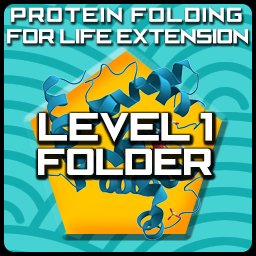
Level 1 Folder - Protein Folding for Life Extension

Level 2 Folder - Protein Folding for Life Extension

Level 1 Folder - Protein Folding for Life Extension

Level 4 Folder - Protein Folding for Life Extension

Level 5 Folder - Protein Folding for Life Extension

Life-Extension Activism Opportunities for All – Article by G. Stolyarov II

Life-Extension Activism Opportunities for All – Article by G. Stolyarov II

The New Renaissance Hat
G. Stolyarov II
June 5, 2014
******************************

You do not need to be a biologist or medical doctor to help hasten the arrival of indefinite life extension. An important array of activist endeavors, which are laying the groundwork for the eventual achievement of unlimited lifespans, can be implemented by anybody. They range from giving out books to playing games to simply running one’s computer – all the while making important contributions to scientific progress and the receptiveness of the general culture to the feasibility and desirability of indefinite longevity.

If you want to glimpse the possibilities in 90 seconds, watch my recent video, “What Anyone Can Do to Advance Indefinite Life Extension”.

In this article, I offer a more detailed overview of some immediately available activism options that anyone can pursue. The time commitment involved in each ranges from minimal to modest, but virtually any of them can fit into the schedule of anyone who recognizes the value of this amazing life we have and the importance of prolonging it as far as possible.

Movement for Indefinite Life Extension (MILE)

MILE_Logo
The Movement for Indefinite Life Extension (MILE) is not a formal organization, but rather a coalition of activists working toward the common goal of achieving indefinite lifespans for people alive today. The MILE coordinates projects and shares articles, images, and news stories via its Facebook group – also accessible using the URL http://themile.info. One of the MILE’s major purposes is to raise awareness of the feasibility and desirability of indefinite life extension and to create a critical mass of support for this most vital of goals. The number of “likes” on the MILE Facebook page is a concise indicator of the movement’s reach, and the eventual goal of the MILE is to achieve 8 million likes by July 17, 2017. Following an incremental approach, the MILE seeks to raise its support by an order of magnitude each year. The goal of 800 supporters was readily exceeded prior to July 17, 2013, and the MILE has launched a concerted effort to reach its Year 2 goal of 8,000 supporters by July 17, 2014. Eric Schulke, who spearheads and coordinates the efforts of the MILE, has launched the MILE Year 2 Goal Fundraiser to fund hundreds of dollars of Facebook advertisements that have already shown success in spreading the message of indefinite life extension to new demographics.

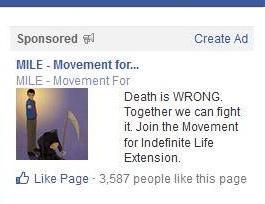
I am proud to have contributed resources to run several ads for MILE that incorporate the core message and the cover image of my children’s book Death is Wrong. These MILE/Death is Wrong ads were designed by my wife and illustrator Wendy Stolyarov and are accompanied by the following text:

Death is WRONG.
Together we can fight it.
Join the Movement for Indefinite Life Extension.
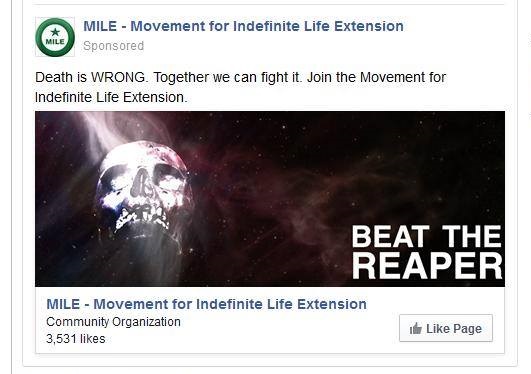
Reaper_MILE_Ad_FBDIW_MILE_AdTo help the MILE reach its Year 2 goal, you can start by clicking the “Like” button on the MILE Facebook page. Beyond that, if you would like to contribute to the advertising campaign and even develop your own custom advertisement that conveys the message of indefinite life extension, this would go a long way toward building the critical mass needed to catalyze public support for life-extension research.

Death is Wrong Book Distribution to Children

DIW_HannaAfter the successful conclusion on April 23, 2014, of my Indiegogo fundraiser to spread over 1,000 copies of the illustrated children’s book Death is Wrong to kids, free of cost to them, I have worked assiduously to coordinate a worldwide distribution effort. Already, 644 out of the 1,029 total available books have been sent to longevity activists throughout the world. Countries where the books have been shipped thus far include the United States, Canada, Mexico, the United Kingdom, the Netherlands, Poland, India, Indonesia, and Singapore. Tens of dedicated longevity supporters have already come forward to request absolutely free shipments of books, but we need more activists to help us distribute the remaining 385 books in their local areas.

Recipients have wide discretion to use their creativity in how to offer the Death is Wrong books to children, as long as the books are made available free of cost and are not resold. Books may be given away to kids directly, lent to multiple kids, given to schools and libraries that will accept them, or used at public readings – among possible other options.

The early successes of the book-distribution effort are among the most heartening and encouraging developments I have observed. Here are some photographs that longevity activists have sent in of their book shipments.

DIW_Amechazurra_ShipmentDIW_Books_Received_CvdB_3
DIW_Books_Received

Here is a charming interview by Aleksander Kelley of his sister Hanna, who is spreading Death is Wrong to the kids she knows.

Help make future scenes like this happen. Requesting a shipment of Death is Wrong books is simple. Send me an e-mail to gennadystolyarovii@gmail.com with (i) your name, (ii) your mailing address, (iii) your statement of support for indefinite life extension, (iv) the number of copies of Death is Wrong requested, and (v) your plan for spreading the books to children, free of cost to them.

Once the shipments arrive, any additional images and videos of the books and events at which they are shared would be most welcome. They can help spread the message of indefinite life extension even further and show the world that the momentum for this cause continues to grow.

Distributed Computing for Medical Science

Would you like to help cure cancer, Alzheimer’s disease, Huntington’s disease, and other deadly ailments, just by running your computer? Most people’s computers spend much time absolutely idle; how about putting that idle time to good use, at minimal additional cost? Distributed computing initiatives such as Folding@home, Rosetta@home, and World Community Grid are absolutely free to join. You just need to download a program that runs the calculations involved in protein-folding simulations and other research efforts while you are not using your computer. Already, these distributed computing initiatives have led to several major medical research breakthroughs, such as this one by Chiba Cancer Center in Japan, which has identified seven drug candidates in the fight against childhood cancer. You can read more about the applications of protein-folding simulations to disease research in this brief post by David Baker of the University of Washington.

While no single medical breakthrough will achieve indefinite lifespans yet, every victory against death and diseases will help us approach that goal. The more of us survive the common killers of our time, the more of us stand a chance of personally witnessing the arrival of longevity escape velocity.

As an additional way to raise the profile of the ideas of indefinite life extension, it is recommended to join a distributed-computing team that explicitly embraces the struggle against senescence and death. On Folding@home, The Longevity Meme team has been folding for years and is ranked 156th out of 220,186 teams as of June 5, 2014. I am spearheading a collaborative effort between The Longevity Meme team, LongeCity, and my online magzine – The Rational Argumentator – to attract renewed participation in Folding@home and The Longevity Meme team among longevity advocates. To provide an additional incentive to join, I am offering a series of five Protein Folding for Life Extension Open Badges, designed by Wendy Stolyarov and available via Badg.us.

FaH-Square-L1 FaH-Square-L2 FaH-Square-L3 FaH-Square-L4 FaH-Square-L5These are badges that you can store and share via Mozilla Backpack to share your achievements with others. The following are the qualifying criteria for each badge:

● Level 1: 5,000 points earned on Folding@home;

● Level 2: 10,000 points earned on Folding@home;

● Level 3: 50,000 points earned on Folding@home;

● Level 4: 100,000 points earned on Folding@home;

● Level 5: 500,000 points earned on Folding@home.

To request a badge, simply send an e-mail to gennadystolyarovii@gmail.com. Include your user name on Folding@home so that your points earned could be verified. You can earn a badge no matter what team you are on, if any, as everyone’s commitment of resources to the protein-folding effort helps the prospects of indefinite life extension. However, you are also encouraged to join The Longevity Meme team in order to help improve its ranking and raise public awareness of the effort life-extension activists are putting into the fight against disease.

On Rosetta@home, the LongeCity team explicitly embraces the ideas of indefinite life extension. On World Community Grid, the Endthedisease team supports life extension and has been involved in numerous disease-fighting computational efforts since 2007. Later this year, the Endthedisease team is anticipated to begin running contests with prizes for top contributors.

Games to Fight Disease

By flying a spaceship through an asteroid field in a computer game, you can help cancer researchers analyze data at a much faster rate than they could before. Play to Cure: Genes in Space is a mobile game released by Cancer Research UK, which anyone with a tablet or mobile phone can play for free. The stated aim of this game is to hasten the day when all cancers are cured – which is, incidentally, the key objective of one of the seven prongs of Dr. Aubrey de Grey’s SENS approach; Dr. de Grey has emphasized that cancer is by far the predominant way by which age-related nuclear mutations harm us.

You can read about the mechanics of and science behind Play to Cure here and watch this video introduction to the game.

Foldit is another free game that enthusiasts of life-extension research can play in order to add the human touch to protein-folding simulations. In 2011, Foldit players discovered the protein structure of a retroviral protease of the Mason-Pfizer monkey virus, an AIDS-like disease in monkeys.

See this list from the Citizen Science Center for more possibilities regarding games you could play and simultaneously participate in innovative citizen-science initiatives – including many devoted to the fight against disease. Games hold out the promise of enabling monumental contributions to scientific research by the general public. A game designed to be sufficiently engaging could attract thousands of non-scientists to do the work that research scientists could conceivably outsource in order to accelerate the rate at which certain kinds of data analysis are performed. The more quickly scientists can iterate through their experiments as a result, the sooner the cures to major diseases will arrive.

Conclusion

Of course, I would urge all life-extension supporters to donate even modest amounts of money to research and advocacy organizations such as the SENS Research Foundation and the Methuselah Foundation, as well as crowdfunded life-extension research projects that are being undertaken with increasing frequency. Yet, I hope that this overview has led readers to recognize that much can be done in addition to monetary donations. Integrate the active pursuit of indefinite longevity into your life, and you will continue to find easy but extremely important ways to become part of the solution to the most pressing problem of all time. Through our efforts, we will hopefully someday be able to celebrate humankind’s greatest victories in the fight against our mutual enemy: death.