Browsed by
Tag: anti-aging

More Attention for “Death is Wrong” – Article by Reason

More Attention for “Death is Wrong” – Article by Reason

The New Renaissance Hat
Reason
April 12, 2014
******************************

I like to see advocates setting forth to create small scale initiatives like the children’s book Death is Wrong and the associated fundraiser to distribute copies. At the large scale a broad advocacy movement for a cause in medical research isn’t a monolithic thing; it is made up thousands of such efforts, a tapestry of individual who each thought enough of the cause to stand up and do something about it. More of this is always a good thing, and working towards a cure for degenerative aging is the most worthy of causes that I know of.

Donating to the right sort of cutting edge research is one approach, and the one I favor, but equally we have to get out there and persuade more people to do the same. Money has to come from somewhere. There is always a balance between raising research funding to get the job done versus funding the cost of gathering more supporters and thus making it more likely that greater amounts of research funding can be obtained. Research results help to convince more people to fund more research, but there is never enough support in the early crucial stages – the really large amounts of research funding arrive after the most important work is done, as is the case for every trend.

The starting point for large amounts of future funding and rapid progress towards actual, real, working rejuvenation treatments is some mix of research funding and advocacy initiatives today, however. All such efforts should be encouraged, as it is through them that the longevity science community finds its way to a louder voice in the public sphere, a taller soapbox from which to persuade and educate. Aging is a horror, the greatest cause of pain and suffering in this world of ours, and we stand at the verge of being able to do something about it – but only if many more people come to think that this cause has merit and make their own contributions to help out.

Praise for Death is Wrong, a delicious transhumanist book for children – Review by Guilio Prisco

Quote:

Death is a disease, and hopefully future scientists, perhaps including the young readers of the book, will find a cure. Previous generations thought that death is inevitable, and invented delusional fake philosophies to make death easier to accept. This reaction is understandable – if you can’t avoid something, you look for ways to accept it – and explains all usual rhetorical babbling in praise of death: “overpopulation, make room for the young, death is a tool of evolution, boredom after a long life,” and the utterly idiotic “death gives meaning to life.” The book deconstructs all these fake “arguments” and calls them what they are: understandable but pathetic attempts to rationalize the inevitable.

Provocative strong messages get heard, and teaching children that death will be cured is very provocative in today’s dull, defeatist, politically correct cultural climate. I think writing for children forces to keep things clean end simple, without big words and endless caveats, cutting through the noise and getting to the point. Clear, clean, and simple communication focused on the core message, with qualifications and caveats (if they are really needed) in footnotes, is something that transhumanists should practice more, and writing for children is a good way to learn.

Spreading the Word That Death is Wrong

Quote:

Who could have thought a month ago that an illustrated children’s book on indefinite life extension would become a fiercely, passionately discussed phenomenon not just in transhumanist and futurist circles, but on mainstream publications and forums? And yet that is exactly what has happened to Death is Wrong – certainly the most influential and provocative of all of my endeavors to date. I am thrilled that it is precisely my pursuit of this most fundamental and precious goal – preservation of the life of every innocent individual – that has achieved greater public exposure, controversy included, than anything else I have ever done.

Review of “Death is Wrong” by Adam Alonzi

Quote:

Death can be cured. Let this sink into your brain, not because it is comforting, but because it is true. Even obvious truths will not gain acceptance unless we vigorously campaign against the falsehoods. Death is not something to embrace, and it is not something to ignore. To turn it into a matter of metaphysics or “bioethics” is insulting to those who, by no fault of their own, are burdened by the ailments of old age. There are many extraordinary men and women who could go on working for hundreds of years if their stars were not designed to dim so soon.

Reason is the founder of The Longevity Meme (now Fight Aging!). He saw the need for The Longevity Meme in late 2000, after spending a number of years searching for the most useful contribution he could make to the future of healthy life extension. When not advancing the Longevity Meme or Fight Aging!, Reason works as a technologist in a variety of industries. 

This work is reproduced here in accord with a Creative Commons Attribution license. It was originally published on FightAging.org.
Bob Lane Reviews “Death is Wrong” on LifeVsDeath.com

Bob Lane Reviews “Death is Wrong” on LifeVsDeath.com

The New Renaissance Hat
G. Stolyarov II
April 12, 2014
******************************

Bob Lane has written an excellent post about Death is Wrong on his site LifeVsDeath.com. Read it here. Mr. Lane writes that “This is an important step in a long-term effort to win minds and change attitudes. I applaud the author’s efforts and plan to share a copy with my 15-year-old. […] Even if you don’t have children, please consider supporting the author in what he is trying to accomplish.”

Review of “Death is Wrong” by Adam Alonzi

Review of “Death is Wrong” by Adam Alonzi

The New Renaissance Hat
Adam Alonzi
April 7, 2014
******************************

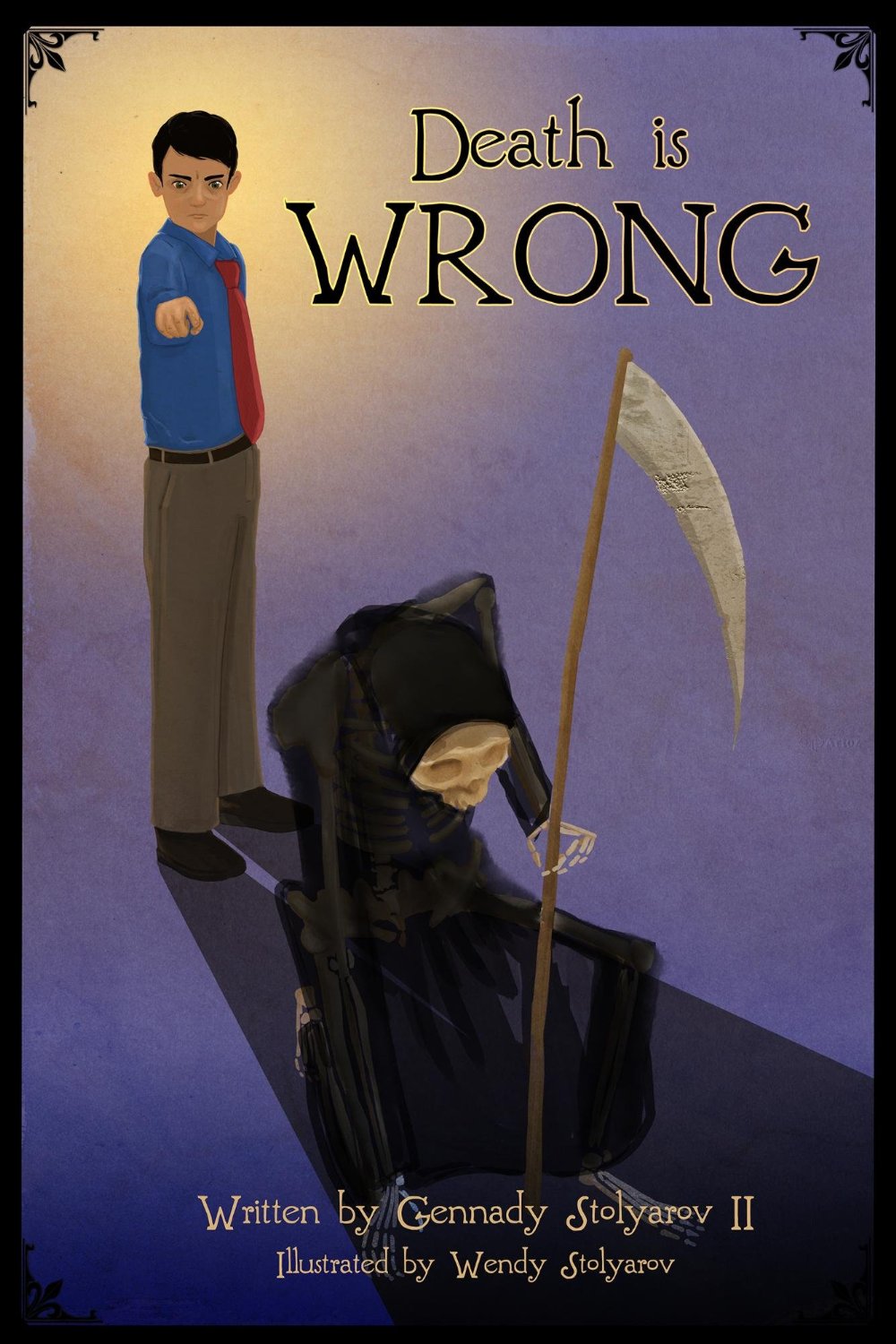
Death is wrong, and it can be defeated. Gennady Stolyarov’s new book, Death is Wrong, makes this powerful  idea accessible to everyone. Now that you have seen the phrase in print, it should not seem odd to you; the vincible visage of the Grim Reaper should seem less frightening. It is a primitive spectre, a monster to be unmasked in the venerable tradition of Scooby Doo. There is no more reason to believe in its inevitability than there is to believe in the Easter Bunny. This strange, wonderful and intoxicating idea should begin to sink into our brains, not because it is pleasant, but because it is true. Please support his Indiegogo campaign here.

Death can be cured. Let this sink into your brain, not because it is comforting, but because it is true. Even obvious truths will not gain acceptance unless we vigorously campaign against the falsehoods Death is not something to embrace, and it is not something to ignore. To turn it into a matter of metaphysics or “bioethics” is insulting to those who, by no fault of their own, are burdened by the ailments of old age. There are many extraordinary men and women who could go on working for hundreds of years if their stars were not designed to dim so soon.

What do you want to do with your life? This is the question Mr. Stolyarov poses to his readers. Whatever you wish to do is restricted by the time you have on this earth. This is restricted largely by your genes, even if you do all you can to mitigate the hand chance and meiosis have dealt you. The fountain of youth now is not far off. We no longer need to deceive ourselves with lofty philosophical discourses of dreams of a world after this one. Conventional “wear and tear” theories claim the body has a finite amount of repair resources, yet if this was true, exercise should greatly decrease one’s lifespan. As far as we can tell, moderate exercise fights aging as well as or better than anything in our still inadequate arsenal.

If the process is the result of unavoidable changes we should not expect to find animals which undergo negligible senescence. We should also expect animals of the same basic shape, type and size to age at approximately the same rates. American crows normally die before their eigth birthday; Kakapo parrots can live well into their nineties. Post-reproductive suicide may be viewed as a peculiarity of some species, but it also graphically illustrates the control genes have over the aging process. The goal of the Transhumanist movement now should be to convince as many people as possible of the viability of this research. Arcane mathematical tidbits from evolutionary biology, although more cogent, are less convincing than masses of salmon carcasses floating downstream or lowly tortoises who, for no obvious reason, live for centuries.

Knowing our quality of life is doomed to decay with each passing year, we do not always take full advantage of the opportunities available to us. Why play the guitar? Some people have been playing it since they were 12. It would be impossible to schedule it in between shifts at the lab and carting the kids around. An ambition is forsaken for lack of time. It is often irrational, as late is better than never, but humans are not always rational animals. The creeping fear of time is partially justified. Anger is more than justified. There is no reason we should not have more quality time to fulfill our aspirations. Paradoxically, coming to terms with the shortness of life can be more paralyzing than invigorating. Like so many falsehoods, carpe diem stems from deep but forgivable denial.

People, including history’s greatest minds, have tried to find ways in which they or their creations were eternal. These efforts amount mostly to confabulations. As much as this statement will be contested, I must make it: death makes life meaningless. If you cannot agree with this, at least concede that aging can make life intolerable. Before you dismiss this, keep in mind it is easy to pontificate about the value of old age when one is young. Creaking joints and failing organs may change your views. Our finest moments are when we feel eternal, yet feeling eternal is quite different from being eternal. Freud called it the oceanic sensation; the expansion of the self into the wider world. When someone knows with certainly they may live hundreds or thousands of years, these otherwise momentary delusions find firm ground on which to stand.

Death is Wrong - by Gennady Stolyarov II, Illustrated by Wendy Stolyarov

In the end our efforts are all for naught. From a cosmic perspective this may be so, and a pugnacious devil’s advocate may ask if there is such a thing as a “good” age to die, but one can forcefully and effectively argue that 75 is too young. 35 is far too young to begin losing one’s faculties, as many professions today require years of training. A man in the prime of his career should also be in the prime of his life. 20 is universally considered too young to die. So are 30, 40, and 50. Before we can even begin to enjoy the fruits of our labors, we are already declining. Before we can begin to understand a portion of the world’s treasures, we are growing old and tired. What a sad state of affairs! We desire lasting rewards, yet we cannot have them. The productions of an entire lifetime do not last, because the enjoyer of those productions and the accolades they have won eventually perishes. With his body, presumably, his consciousness also disappears into nothingness. Deadlines tend to force a person to work in a state of fear. Death is the ultimate deadline.

What of knowledge and talents? Why acquire knowledge when it can only be imperfectly transmitted to the next generation? Preserved in books, but there are already so many books. Immortality may not be necessary for society’s continued progress now, but with the constant expansion of information and the sprawling interconnectedness of different disciplines, it is reasonable to wonder if hyperspecialization is our salvation. Immortality and intelligence amplification will allow us all, to some extent, to become generalists capable of making sane and sound decisions for ourselves and society. Why invest in higher pleasures when the lower ones deliver immediate gratification?

Living for each day devolves into hedonistic stupidity. Why should we care about the consequences of our actions when, regardless of what happens to us, our stories all end in the same way? What was once a psychological necessity is now a hindrance to the greater good. What was once a rational position is now an effrontery to a sane approach to medicine. This is not say that research efforts dedicated to the cell cycle or the precipitating factors involved in autoimmune disorders are worthless – far from it! Rather it means that life extension in its own right ought to be a major area of inquiry. The totem must be smashed and the taboo crushed.

Yet whose decree are we following and why? Disease is our oldest foe. We are not complacent about hereditary illnesses that will only be cured after the perfection of in vivo gene therapy. Yet a lifespan of less than a century is blindly accepted as a physical limit by, according to polls taken by Theodore Goldsmith, a shocking number of scientists and laymen alike. Death is literally our mortal foe, but the amount of energy we have spent fighting it directly would not lead one to this conclusion. The biochemical changes associated with aging are the primary risk factors for diabetes, atherosclerosis, arthritis, and cancer. Yet, in spite of the undeniable correlation between aging and these diseases, research effort is directed mostly at treating them individually instead of addressing their underlying cause.

This is rooted not in a scientific sentiment, but in the unfounded assumption that death is inevitable. This stems less from skepticism towards modern medicine and more from historical superstitions that allowed our ancestors to cope with the mysterious and inhospitable universe in which they found themselves. Worse, there are throngs of secular and religious nihilists alike who actively spread the gospel of death. They erect altars to petty Molochs to distract themselves from their own worst enemy. It will be difficult to battle the most entrenched notion of all, but nothing worth having is easy to obtain. The end of suffering is the highest ideal. Why should we worship false idols any longer?

Should Transhumanism take precedence over the fight against Creationism? The answer seems painfully obvious. I do not care if a pig farmer in Alabama believes the Neolithic era was populated by dinosaurs. His ignorance has no dreadful ramifications for humankind. As an academic and popular movement, anti-aging should be the first and foremost topic of scientific discussion. The secular and sane world accepts Darwinism. There is no reason to suppose converting the remaining holdouts will benefit society in the least. The sane and secular world, however, is still largely unaware of the strides science is making toward biological immortality. Moreover, a small bit about intelligent design in a science textbook, while objectionable on moral grounds, will not do much more damage to an already broken school system.

Mentioning intelligent design in passing will do nothing to dumb down an already doltish student body. Advocates of evolution would be more helpful if they turned their energies to spreading numeracy and basic literacy. Both are in short supply. To spend a lifetime fighting against hopeless ignoramuses makes one an imbecile of the highest order. Let the ignorant tend to their own business while we welcome the age of wonders. Let this be a call to arms. Let this be a call to awaken and accept the foolishness of how humanity uses its resources. Rage against the dying of the light. Do not go gentle into that good night.

Adam Alonzi is the author of Praying for Death and A Plank in Reason. He is also a futurist, inventor, DIY enthusiast, biotechnologist, programmer, molecular gastronomist, consummate dilletante and columnist at The Indian Economist. Read his blog Cool Flickers.