Browsed by
Tag: G. Stolyarov II

Abstract Orderism Fractal 63 – Art by G. Stolyarov II

Abstract Orderism Fractal 63 – Art by G. Stolyarov II

Abstract Orderism Fractal 60 - by G. Stolyarov II

Abstract Orderism Fractal 63 – by G. Stolyarov II

Note: Left-click on this image to get a full view of this digital work of fractal art.

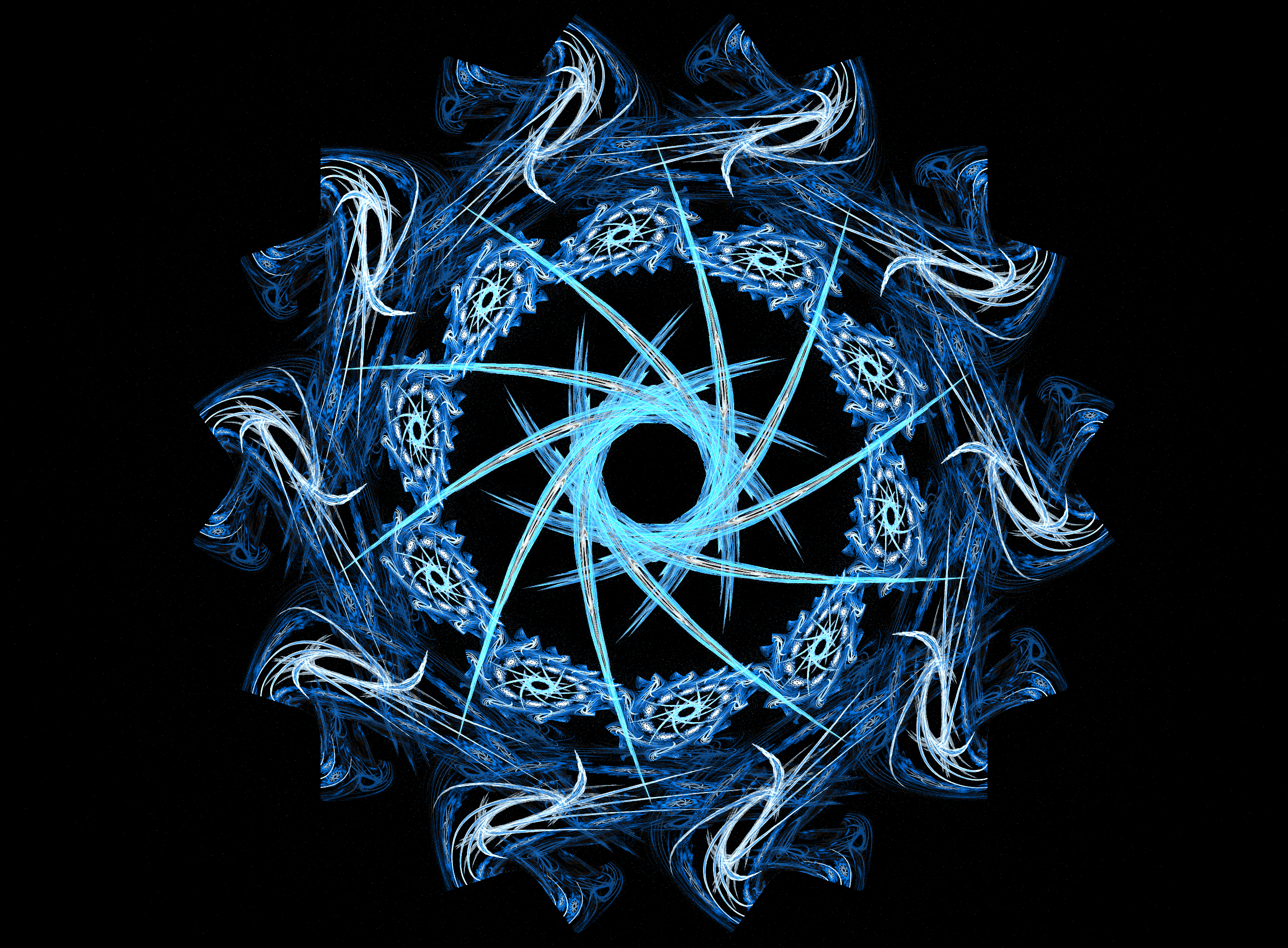
This fractal conveys an impression of sharp, determined, multi-layered rotation.

This digital artwork was created by Mr. Stolyarov in Apophysis, a free program that facilitates deliberate manipulation of randomly generated fractals into intelligible shapes.

This fractal is an extension of Mr. Stolyarov’s artistic style of Abstract Orderism, whose goal is the creation of abstract objects that are appealing by virtue of their geometric intricacy — a demonstration of the order that man can both discover in the universe and bring into existence through his own actions and applications of the laws of nature.

Fractal art is based on the idea of the spontaneous order – which is pivotal in economics, culture, and human civilization itself. Now, using computer technology, spontaneous orders can be harnessed in individual art works as well.

See the index of Mr. Stolyarov’s art works.

Adam Alonzi Interviews G. Stolyarov II on Indefinite Life Extension and “Death is Wrong”

Adam Alonzi Interviews G. Stolyarov II on Indefinite Life Extension and “Death is Wrong”

The New Renaissance Hat
G. Stolyarov II and Adam Alonzi
February 22, 2015
******************************

Today I had a pleasant and erudite discussion with Adam Alonzi regarding the feasibility and desirability of attaining indefinite longevity in our lifetimes, as well as Death is Wrong and its impact.

References

Adam Alonzi’s YouTube Channel
Adam Alonzi Reads Death is Wrong

“Blockchain Insurance Company” – Short Story by G. Stolyarov II in SOA 11th Speculative Fiction Contest

“Blockchain Insurance Company” – Short Story by G. Stolyarov II in SOA 11th Speculative Fiction Contest

The New Renaissance Hat
G. Stolyarov II
February 20, 2015
******************************

My new short story “Blockchain Insurance Company” is one of the entries in the Society of Actuaries’ 11th Speculative Fiction Contest.

You can read all 16 entries and vote for 3 of your favorites here.

“Blockchain Insurance Company” can be read here.

Bitcoin-coins

What Did Not Have to Be – Short Story by G. Stolyarov II

What Did Not Have to Be – Short Story by G. Stolyarov II

The New Renaissance Hat
G. Stolyarov II
February 11, 2015
******************************

This short story was the winning entry in Transhumanity.net’s 2033 Immortality Fiction Contest in January 2013.

I visited the Neo-Luddite village on January 13, 2033, to deliver the weekly shipment of microchips. The Neo-Luddites are particular. They refuse any chip made after 2005, so obtaining components fitting their specifications becomes harder every year.

My parents tell me that, when they were my age, everyone lived like the Neo-Luddites do today. I downloaded plenty of history about this period, but I could not comprehend how anyone could live that way. I wanted to see it myself. This interested me in the work-study program at my ecollege. The ecollege AI maintains a sophisticated registry of supply and demand, connecting goods to customers. Even the Neo-Luddites participate: their Head Elder emails the AI a list of desired goods. The AI obliges them by locating items meeting their restrictions.

I pick up the goods discovered by the AI and fly them to the Neo-Luddites. Then I spend a few hours in the Neo-Luddite village, setting up their computers in their “traditional” schools and hospitals: quaint rooms with row after row of austere chair-desks and bunk beds.

I landed my hovercar in the parking lot outside the Neo-Luddite territory and waited for Joshua’s ground-car to arrive. The Neo-Luddites shun flying or self-driving vehicles. Within their boundaries, all transportation must be manually operated.

Joshua is my age. He is nearing his eighteenth birthday, when Neo-Luddite adulthood begins. Every Neo-Luddite, upon reaching that age, may choose to remain in the Neo-Luddite community or join the broader technological world.  During my past several visits, I have sensed both increasing nervousness and curiosity from him.

“So, Prometheus,” said Joshua once I was seated, “you wanted to see more of Neo-Luddite life. There’s one place I want to show you. I usually don’t go there, but it needs cleaning. Head Elder Timothy asked me to wash the gravestones. You can help, if you like. The cemetery is on the way.”

I agreed, and Joshua turned onto a side road. The cemetery soon stretched before us, triangular, with the point closest to us. Joshua parked the ground-car, then handed me some rags and old-fashioned cleaning supplies. The rows of graves widened as we proceeded. I realized that the Neo-Luddites arranged their graves in reverse-chronological order. The gravestones really did need cleaning – particularly the back rows.

“There aren’t many of us anymore to maintain the cemetery,” Joshua explained. “Most of the original community founders have died. Timothy is the only founding elder alive today. My grandfather used to be Head Elder, but he died last year. Brain cancer.”

“Brain cancer was cured back in 2025!” I exclaimed. “His death was preventable!” But then, all death is preventable now. It is harder to treat the already-senesced – and the Neo-Luddites oppose rejuvenation – but even Joshua’s grandfather could have been saved.

“He was 93,” Joshua said. “Our doctors tried their best, but he lived a long and fruitful life. There were other patients of higher priority to treat.” I know 93-year-olds who would disagree – who are still in ecollege studying one discipline or another, and who outran me at our weekly ultramarathons.

I was curious: “Aren’t large families a major goal in your community? You compensate for your individual mortality by having lots of children to perpetuate your genetic heritage and community traditions.”

“True,” replied Joshua. “But your world’s enticements are strong. Many leave upon turning eighteen. Even some older members have left. My great-uncle Robert looked my age when he visited my grandfather on his deathbed. They were alone for a while; then Robert came out shaking his head. ‘He wouldn’t let me save him,’ was all I heard before he left.”

“Are you considering leaving?” I asked.

“I’ve thought about it,” replied Joshua. “But our community teachings all oppose it. Eternal boredom, overpopulation, loss of essential humanity – we Neo-Luddites resist this.”

“But none of these have occurred!” I was surprised to hear him seriously articulate such old anti-longevity superstitions. “Do I look any less human to you?”

“Well, not superficially, but you have nanobots in your bloodstream, and your bones are unlike our bones.”

“But does that make me less human, or does it amplify my humanity? We are, after all, communicating as two intelligent beings, two friends – perhaps.”

He paused to think. “You’re unusual for your kind. You willingly try to understand us. But I know you live differently in your world. You download information instead of reading it; you have computer memory in your head. You believe you can learn anything and do anything. We have time for only a single vocation, which defines our identities.”

Before I could respond, we noticed a hooded figure, crouching at a gravestone several rows ahead. I magnified my vision to catch the inscription: “Anna Blomgren: 1955-2015”. This person died the year I was born, and she was only sixty!

The figure noticed us and turned around. I saw the deeply wrinkled face of a senesced man in his eighties. His eyes shimmered, not just with life and intelligence, but with tears. He spoke: “Joshua, come closer. See what grief looks life. Anna died because our era’s medicine could not save her. In my despair, I had to find meaning in her death. I told myself that death was natural and good, part of the life cycle. How else could such a wonderful, loving person be taken so early?”

“Head Elder, I had no idea…” Joshua began.

The elder’s piercing stare encompassed us both. “Look at me, Joshua, and see your future – if you stay. You, too, will know grief and loss. I asked you to come here for a reason. This is a test: do you accept our way of life, with all its concomitant suffering? If you stay and raise a Neo-Luddite family, then one day, you, too, will be here, weeping over a grave. If you do not want this, go back with him.”

“But don’t you want me to stay?” Joshua asked, incredulous.

You must decide,” Timothy replied. “My time is almost done; humanity’s time will be forever. I had my reasons; I resisted the future – but soon I will be no more, and the future is already here.”

I was puzzled. “You just need to visit any clinic for rejuvenation therapy. You can be young again, and have indefinite life. Why not, if you are dissatisfied now?”

“It is hardest to face what did not have to be. I lost Anna because I couldn’t save her, but in my grief I convinced others to die unnecessarily. I cannot undermine their sacrifice by avoiding myself the end I led them to. But you can escape. You have your whole life ahead of you. Go!”

We left Timothy to grieve in the graveyard. Joshua flew to the city with me. I messaged a nearby clinic that a senesced man might request assistance soon. He needed only to express the desire in earnest, and a hovercraft would transport him there in minutes. Two weeks later, the clinic still has received no request.

To Prevent World War III, Do Not Arm Ukraine’s Regime – Article by G. Stolyarov II

To Prevent World War III, Do Not Arm Ukraine’s Regime – Article by G. Stolyarov II

The New Renaissance Hat
G. Stolyarov II
February 8, 2015
******************************

I can no longer say that this Cold War will not lead to a ‘Hot War.’ I fear that they could risk it. […]The statements and propaganda on both sides make me fear the worst. If anyone loses their nerve in this charged atmosphere, we will not survive the next few years. […]I do not say such things lightly….I am a man with a conscience. But that’s how it is. I’m really extremely worried.

~ Mikhail Gorbachev

I’m uneasy about beginning a process of military engagement without knowing where it will lead us and what we’ll do to sustain it. […] I believe we should avoid taking incremental steps before we know how far we are willing to go. This is a territory 300 miles from Moscow, and therefore has special security implications.

~ Henry Kissinger

It is an extremely dangerous development, which has been brewing ever since Washington violated its verbal promises to Gorbachev and began expanding NATO to the East, right to Russia’s borders, and threatening to incorporate Ukraine, which is of great strategic significance to Russia and of course has close historical and cultural links. […] The Russian autocracy is far from blameless, but we are now back to earlier comments: we have come perilously close to disaster before, and are toying with catastrophe again. It is not that possible peaceful solutions are lacking.

~ Noam Chomsky

Outside countries should leave Ukraine to resolve the conflict itself. However, even as the US demands that the Russians de-escalate, the United States is busy escalating! […] Why is ‘winning’ Ukraine so important to Washington? Why are they risking a major war with Russia to deny people in Ukraine the right to self-determination? Let’s just leave Ukraine alone!

~ Ron Paul

One can rarely find four thinkers as distinct from one another as Gorbachev, Kissinger, Chomsky, and Ron Paul, and yet, for all of their differences, each of them is clearly guided by a systematic, thoroughly considered intellectual framework. All four of these thinkers have concluded, starting from different practical and moral premises, that further escalation of the Ukraine crisis by the United States would be a dangerous, deeply inadvisable behavior.

Two of these thinkers – Gorbachev and Kissinger – played crucial roles in helping to maneuver the world out of the existential danger of the Cold War. One might consider them to have made tactical or even moral errors, but they deserve recognition for being among the cooler heads that prevailed, helping defuse decades-long tensions between the United States and the Soviet Union that could have easily ended in a nuclear holocaust.

The other two thinkers – Chomsky and Paul – are thought leaders of principled polar opposites of American thought, left-progressivism and right-libertarianism. While sharply at odds over economics, philosophy, and politics, these two systems are both vastly superior to the American political establishment, which is dominated by a tight alliance of special-interest pressure groups, whose primary purpose is to protect existing political privileges through lobbying at the expense of innovative entrepreneurs, consumers, and people of merit in general. Left-progressives and right-libertarians each have a vision of human dignity and morality that is driven by principles and conscience. The American political establishment, represented by virtually indistinguishable “neoconservative” Republicans and “humanitarian interventionist” Democrats, is driven solely by the impulse to entrench the politically connected interests of the status quo at all costs. While both right-libertarians and left-progressives strongly favor peace as an integral component in their project to improve human well-being, the amoral interventionist political establishment in the United States does not care about human well-being. Bombs will drop, drones will massacre innocent civilians, everyone will be deprived of privacy, dignity, and due process – but they will have their privileges and their dominance, even though the world might burn for it.

The “neoconservatives” and “humanitarian interventionists” in the United States speak and act out of misguided short-sightedness, but the pressure they constantly exert on President Barack Obama could be the greatest threat to world peace and the progress of human civilization today, turning a tragic but local conflict into one that could escalate into World War III.

Obama rose to power through left-progressive idealistic rhetoric, but he has shown to be far more inclined toward accommodation to the entrenched political establishment. Even so, he has been reluctant to send lethal weapons to Ukraine, as vestiges of his left-progressivism have given him justified unease at the prospect. Yet the chorus of establishment hawks has recently grown to a warmongering holler. The worst among them are John McCain and Lindsey Graham, who even seek to mandate that Obama send weapons to the Ukrainian regime of Petro Poroshenko and Arseniy Yatseniuk. This same regime has been confirmed to have murdered over 5,300 of its own civilian population, to have employed savage, indiscriminate tactics – such as the deliberate shelling of densely populated neighborhoods and the use of cluster munitions – to have reinstituted military conscription at the point of a gun, and to have incorporated overtly fascist paramilitary “volunteer” units into Ukraine’s military structure. American “neoconservative” and “humanitarian interventionist” politicians, in the name of humanitarian ideals (mostly, vague sound bites about “territorial integrity” and “national self-determination” – neither of which concepts they actually respect with any consistency), seek to aid and abet genuine moral monsters who have already killed thousands and terrorized and displaced millions.

The civil war in Ukraine has thus far been confined within the borders of Ukraine, with modest support from Vladimir Putin’s regime for the Donetsk and Luhansk separatists. (If Putin’s support were indeed decisive or fully commensurate with his abilities, he would have occupied all of Ukraine by now – but his behavior demonstrates that this is not his intention. Putin does not have any grand design on Ukraine, and his sporadic assistance to the separatists has largely been reactive, to prevent their complete obliteration.) If the United States funnels weapons to the Poroshenko/Yatseniuk regime, a local conflict will be turned into a global one, with the United States fighting a proxy war against Russia. If the United States then makes the fateful step of introducing ground troops, the proxy war will quickly turn into a direct war. From a direct conventional war to a nuclear war is only a small step, which is why the actual strategists of the Cold War – wiser men than today’s hawks – understood that it would be unacceptable for the militaries of the United States and the Soviet Union to ever fight one another directly.

Arming the Ukrainian government will perpetuate its ability to inflict a massive death toll upon civilians. Furthermore, it would be completely counterproductive to any lasting peace. Both the separatists and Putin will see it as a validation of the claim that the United States has been behind the “regime change” in Ukraine all along. They will furthermore see it as another step toward Ukraine’s absorption into NATO – an alliance that was originally formed specifically to counter the Soviet Union. One of Putin’s consistent demands throughout the past year has been for a commitment that Ukraine’s membership in NATO would be out of the question. It should be an easy commitment to give – considering that NATO has no real appetite to allow Ukraine to join, and Ukraine’s precarious situation would only endanger the security of all other NATO members, who would be compelled to assist in any of Ukraine’s wars. Yet, instead of acceding to this one demand – which could resolve everything – Western governments have given the Poroshenko/Yatseniuk regime every hope of eventual NATO membership, with no intention of following through. Still, sending weapons at this juncture would strongly reinforce this hope on the part of Poroshenko and Yatseniuk, and the corresponding fear on the part of Putin.

While thoughtful men of principle and even hyper-intelligent ruthless pragmatists (like Kissinger) are against escalating the Ukraine crisis, the “neoconservatives” and “humanitarian interventionists” are neither thoughtful nor pragmatic. Many of them are driven by blind hatred for Russia and a desire to re-ignite the Cold War to re-live its alleged glory days. They would again place the world just a few steps away from nuclear annihilation, just to re-enter a paradigm which is conceptually familiar to them. They are so afraid of a possible new world of hyper-pluralism, individualism, accelerating technological progress, and the irrelevance of national boundaries – that they would place all humankind at risk just to avert their discomfort. Perhaps some of them truly believe their own rhetoric – that Vladimir Putin is a new Hitler and that the annexation of Crimea – a historically Russian territory until Khrushchev gave it to Ukraine in 1954 in order to gain support from the leadership of the Ukrainian Soviet Socialist Republic – is in any way similar to Hitler’s annexation of Czechoslovakia in 1938. (Never mind that Putin has never perpetrated a Holocaust and that the ethnic chauvinists, xenophobes, and anti-Semites are predominantly fighting on the side of the Ukrainian government and wearing Nazi emblems – while many of Putin’s unofficial allies have donned the emblems used by the Russian resistance to the Nazi invasion during World War II!) Perhaps some of the hawks truly believe that the United States has a moral duty to spread “democracy” and “self-determination” at the barrel of a gun to the rest of the world, and to serve as a global policeman, punishing all violations of these vaunted American principles. Yet what the ordinary people who suffer the consequences of American foreign-policy interventionism see are not “democracy” and “self-determination”, but rather dead bodies and homes reduced to rubble. Yes, Vladimir Putin is a ruthless autocrat who suppresses dissent and free inquiry. Yes, Viktor Yanukovych was a corrupt kleptocrat who sometimes employed thugs to deter and punish criticism of his expropriation of the Ukrainian people. At worst, Yanukovych may have ordered snipers from the Berkut police to fire upon the Maidan protesters during his last days in power (although it is perplexing why the snipers fired upon both the protesters and at Berkut police themselves). But neither of them murdered thousands of innocents among their own population, nor used indiscriminate shelling against them. It is one matter to suffer under a repressive autocracy, which will spare you if you keep your head down; it is quite another to quake under omnipresent brutality, murder, and destruction, from which no one is safe and where your next trip to the grocery store could result in your limbs being torn from your body. People who, under Yanukovych, were able to eke out a modest living and hope for gradual improvement, have been devastated and sometimes utterly destroyed by the savage Ukrainian civil war. A swath of Third-World barbarism has been carved out of a region that had, for seventy years, only known drab Second-World sub-optimality. Even if Putin were attempting to resurrect the Soviet Union – quite a far-fetched allegation – the Ukrainian government is creating another Liberia in Europe.

As tragic as it might be, Putin’s most advantageous response to any US decision to send arms to Ukraine would be to immediately escalate the situation, before those arms could arrive to make a difference on the battlefield. This means that the trickle of Putin’s support for the separatists would become a flood, and it would not be surprising if Russian forces directly and openly entered Ukraine and pressed toward Kiev. Undoubtedly, the Ukrainian military would put up a stiff resistance and turn every civilian settlement along the way into another Donetsk Airport. Tens of thousands of soldiers and innocent civilians would be killed in the process, and all of their lives would be lost in vain. Nobody truly wants this outcome, but the hawks in the US Congress are blinded by their desire to punish Russia. They fail to realize that this carnage is precisely the result they would get by further goading Putin on with escalation from the American side. In the face of such thoughtless saber-rattling, one should applaud the frantic, heroic efforts of European leaders – particularly Germany’s Angela Merkel and France’s François Hollande – to forestall a deadly and irreversible sequence of events and to reach a diplomatic solution.

“A bad peace is better than a good war,” counsels an old Jewish and Russian proverb. Benjamin Franklin agreed. “There was never a good War, or a bad Peace,” he wrote in his bestselling Poor Richard’s Almanack – one of 18th-century America’s civilizing moral influences. Right now a sub-optimal peace – what some would consider a bad peace – is the best that could be hoped for in Ukraine. This would involve some manner of sustainable demarcation between the territory held by the Ukrainian government and the rebel People’s Republics of Donetsk and Luhansk. It does not matter whether this demarcation takes the form of officially recognized independence or broad “regional autonomy” – as long as the shells stop falling and the civilians stop dying. National borders are artificial fictions, but human lives are real. It does not matter where officials and diplomats decide to draw their lines on the map, as long as the result is a mutually acceptable understanding of future behaviors, by which living humans would be spared from slaughter.

The Minsk Agreement reached in September 2014 was unsustainable precisely because the Ukrainian government never intended to abide by the agreed-upon demarcation line; Ukrainian troops stubbornly held onto the ghastly, apocalyptic ruin of the once-state-of-the-art Donetsk Airport, despite the fact that it will never be usable as an airport again. According to the Minsk Agreement, the Donetsk Airport was to fall within the autonomous separatist-held territory. Its location was sufficiently close to the city of Donetsk for the Ukrainian army to continue to shell civilian neighborhoods. Understandably, the separatist rebels could not tolerate such a situation of perpetual bombardments, and so they threw their forces at the airport in wave after wave of bloody assaults, until it finally fell. Unfortunately, what also fell in this struggle was the entire premise of a sustainable demarcation line. The Ukrainian government would not respect its commitments, so the separatists saw no need to respect theirs as well. They have launched an offensive in the hopes of creating more buffer territory around their capitals of Donetsk and Luhansk. Tragically, this offensive involves shelling of population centers such as Debaltseve and Mariupol, whose residents are innocent victims, much like the inhabitants of Luhansk and Donetsk. In perpetrating these attacks, the separatists have become as bad as the regime forces they oppose – using the same indiscriminate tactics and the same mass-impact weapons.

It does not matter which side bombards the civilians of Eastern Ukraine, who used to be one another’s neighbors and whose social, cultural, and economic lives used to be tightly intertwined. All of these assaults are a savage, ultimately pointless folly. The lives they take can never be restored, and the ill will they engender can never abate. This is why the idea that the Ukrainian government should ever regain de facto control over the separatist-occupied regions is an absurdity. Who would accept living under a government that murdered their neighbors and families and ruined what meager livelihoods they had? A lasting peace agreement might keep these territories nominally within the boundaries of Ukraine, in order to save face diplomatically, but the actual governance of these territories must be delegated to the people who live there, even if these people would make economically and politically counterproductive decisions. Donetsk and Luhansk might well become neo-communist enclaves and will certainly need decades of painstakingly slow economic recovery to restore 2013-level standards of living. However unfortunate this may all be, it is better than children being blown to bits. If peace is restored, along with free movement across borders (which existed prior to the civil war), the more ambitious and talented residents of these territories will be able to emigrate to the West, to Israel, or even to Russia, where their prospects would be greatly improved. Such emigration has already been happening for decades and has enabled the best minds and the better cultural vestiges of the former Soviet republics to be preserved.

With two key points – (i) broad autonomy for the rebel-held areas, separated by a buffer zone to prevent shelling of population centers, and (ii) a commitment for Ukraine never to join NATO – a peace plan might just avert escalation of the savage Ukrainian civil war. There may still be occasional violations of any resulting cease-fire, since neither side has full control over its fighters. However, redirecting the incentives and conversation away from escalation and toward peaceful coexistence is imperative to avoid making this tragedy worse. Eventually, if peace becomes the general rule rather than the exception, armed attacks in the region could equilibrate to a level very close to zero, and the Donetsk and Luhansk People’s Republics could become unofficial statelets, like Transnistria, Abkhazia, and South Ossetia – de facto autonomous enclaves that are governed poorly but pose no threat to world peace or to anyone outside their boundaries.

If, on the other hand, weapons are sent to the Poroshenko/Yatseniuk regime and events spiral out of control into a World War III, then all of human civilization would be in grave danger. Decades of economic, technological, and cultural progress could be wiped out in days. The infrastructure – not just in Eastern Ukraine but in the West itself – could be devastated sufficiently to bring about another Dark Age, if humankind survives at all. Gone would be the dreams of colonizing other planets, dramatically extending human lifespans and curing chronic diseases, creating radical abundance through technological innovation, and obliterating age-old superstitions and oppressions. The old hawks who seek to relive the Cold War would plunge the world into a predicament far worse – all because they could not let go of their fear, their hatred, and their obsolete zero-sum “us versus them” worldview. Putin would, of course, also be complicit in such a scenario, but not because he would have made the first move. His foremost objective – as has been the case for every Russian autocrat – will be to avoid humiliation and save face, to claim a dignified resolution with an image of strength – no matter what the substantive outcome, in order to avoid domestic unrest. For Russian strongmen, much is forgiven – but losing a war (or seeming to lose it) is unacceptable and is practically a sentence of deposition, if not death. This is why, if the West ratchets up military pressure on Putin, he will have no incentive to put the brakes on the deadly cycle of escalation.

The saber-rattling of hawks in the US Congress and their supporters threatens the progress and the very survival of humankind. One can only hope that cooler heads – the thinkers, the thoughtful idealists, the pragmatists, the diplomats – will prevail and enable a local conflict to remain local and to eventually subside. The next few decades will be crucial for setting the course of human civilization for millennia hence – if people of conscience will be able to wrest those millennia from the short-sighted jingoists who would rob us of them.
How Can We Accelerate Technological Progress? – Panel Discussion with G. Stolyarov II, Demian Zivkovic, and Arash Amini

How Can We Accelerate Technological Progress? – Panel Discussion with G. Stolyarov II, Demian Zivkovic, and Arash Amini

The New Renaissance Hat
G. Stolyarov II, Demian Zivkovic, and Arash Amini
January 24, 2015
******************************

Mr. Stolyarov invites panelists to offer their thoughts on the following question:

What actions can most people take to assist in the acceleration of technological progress so as to solve, within the lifetimes of those alive today, many of the major problems currently associated with the human condition?

Panelists

Demian Zivkovic, 23 years old, is a student of artificial intelligence and philosophy, and founder and president of the Arma’thwynn Society – an international transhumanist think tank comprised of a group of transhumanism-oriented professionals, students, and entrepreneurs interested in the interdisciplinary approach to advancing transhumanist technologies.

Demian has been involved in several endeavors, including interviewing Professor Aubrey de Grey, organizing a transhumanism lecture in The Netherlands now, and spreading “Death is Wrong” – Mr. Stolyarov’s illustrated children’s book on indefinite life extension – in The Netherlands.

***

Arash Amini earned a BS Physics degree from UIC. Since his time at college, Arash was focused on scaling cleantech innovations as far and wide as he could manage.

Thus his affection for the private venture- the vehicle he believes moves information and goods faster than any other available.

While in his last semester at college, Amini started a 312 Aquaponics and went to research and develop industrial scale vertical farming. His latest venture, FarmTower Co is personalizing farming- bringing the site of production to the site of consumption.

He is the author of “DIY Aquaponics: The Definitive How To Guide” and curator of www.diyaquaponicsdesign.info.

In addition, Amini helps startups market their ideas, and grow their revenues without the need of investors. He spends his time ideating solutions to the world’s largest problems.

References

SENS Research Foundation
– “Metformin” – Wikipedia
– “Spontaneous order” – Wikipedia

Achieving a Bright Future: Opportunities and Obstacles – G. Stolyarov II Interviews Demian Zivkovic

Achieving a Bright Future: Opportunities and Obstacles – G. Stolyarov II Interviews Demian Zivkovic

 The New Renaissance Hat
G. Stolyarov II and Demian Zivkovic
January 19, 2015
******************************

Mr. Stolyarov invites Demian Zivkovic to discuss visions of the future and humankind’s prospects for achieving a bright future in time for us to experience and enjoy it. The discussion focuses on the following questions:

(1) What do you consider to be humankind’s best opportunities for achieving a bright future within the next several decades?
(2) What do you consider to be the greatest obstacles to the realization of such a bright future?
(3) How could such obstacles be overcome?

About Demian Zivkovic

Demian Zivkovic, 23 years old, is a student of artificial intelligence and philosophy, and founder and president of the Arma’thwynn Society – an international transhumanist think tank comprised of a group of transhumanism-oriented professionals, students, and entrepreneurs interested in the interdisciplinary approach to advancing transhumanist technologies. Demian has been involved in several endeavors, including interviewing Professor Aubrey de Grey, organizing a transhumanism lecture in The Netherlands now, and spreading Death is Wrong – Mr. Stolyarov’s illustrated children’s book on indefinite life extension – in The Netherlands.

Review of Robert Wilfred Franson’s “The Shadow of the Ship” – Article by G. Stolyarov II

Review of Robert Wilfred Franson’s “The Shadow of the Ship” – Article by G. Stolyarov II

The New Renaissance Hat
G. Stolyarov II
January 17, 2015
******************************
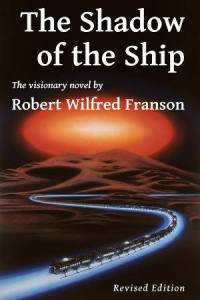
Shadow_of_the_Ship_Cover

               The Shadow of the Ship by Robert Wilfred Franson is a science-fiction novel set in a universe with a unique premise for methods of interstellar travel. A novel with strong individualist and life-extensionist themes, this book has much to recommend itself to libertarians and transhumanists alike. The Second Edition of The Shadow of the Ship was released in Kindle format in December 2014, after Franson regained the rights to the work from the publisher of the 1983 First Edition. The Second Edition contains major enhancements, including more extensive character development, explanation of key aspects of the world within which the novel takes place, and an ending that clearly sets the stage for additional books in what is to be Franson’s Overflight series.

                Space travel in The Shadow of the Ship is accessible to a society that is otherwise technologically far behind our own. The Trails Culture is dispersed among tens of worlds but lacks access even to most twentieth-century technology, such as powered flight or electricity. A series of trails across the “meadow” of subspace connects planets and can be traversed by caravans conveyed by waybeasts (squeakers) who are uniquely suited to crossing them. The book’s protagonist, Hendrikal Eiverdein Rheinallt, is originally from Earth and has been stranded within the region inhabited by the Trails Culture ever since his spaceship crashed on a nearby world. He and his friend Arahant, an intelligent aircat with the ability to speak and compose operas, are “bloodswayers” – practitioners of a rare and challenging discipline that allows the channeling of the body’s energies toward repair and rejuvenation. Rheinallt and Arahant are therefore indefinitely lived and more resilient than ordinary humans, though not indestructible. Rheinallt is approximately six centuries old and endeavors to use his vast scientific knowledge to eventually find his way back to Earth. In the meantime, he carefully advances the scientific and technical knowledge of the inhabitants of the Blue Free Nation, the most tolerant and least regimented of the societies within the Trails Culture.

                The book’s events take place aboard a caravan headed by Rheinallt with the purpose of investigating rumors of a crashed starship along the Blue Trail. The starship would be a paradigm-changing find for the people of the Trails Culture, as it would permit space travel without the limitations that the Trails pose; it could also be Rheinallt’s means to return home. The caravan includes many travelers who join out of scientific curiosity or a desire for fame, while others have more personal motives. Accompanying Rheinallt is his wife and beast-master Whitnadys, as well as a small contingent of crew to defend the caravan and provide essential logistical support. Although Rheinallt is the captain of the caravan, interactions aboard are largely guided by a spontaneous order without explicit laws and with virtually no authority for the captain to impose preemptive restrictions or discipline. Rheinallt, apart from making sure that the caravan is properly organized and maintained, only has the same prerogatives as ordinary passengers – such as the right of self-defense and the ability to protect the caravan against threats that have already manifested themselves. He considers the circumstances carefully and is reluctant to resort to force unless the existence of a physical threat is incontrovertible, as he does not wish for the passengers to lose trust in his leadership or the legitimacy of his decisions.

                Apart from the mostly anarchistic order aboard the caravan – a reflection of the broader lack of centralized authority within the Blue Free Nation – there are competing visions presented in the book, including an attempt by the Federated Trailmen, the area’s guild of caravaneers, to bring subspace travel within their sphere of control, as well as the efforts by the government of Fleurage – a world on the Yellow Trail – to clamp down on political dissent and quash “subversive” innovators who threaten an establishment rapidly spiraling toward totalitarianism. Various passengers on the caravan represent these conflicting visions, which come to challenge Rheinallt’s ability to peacefully coordinate the expedition.

                As much of the novel centers around the mystery of the ship and the stories of the passengers aboard, I will not delve into too much detail regarding events that are crucial to the story’s suspense and surprise. I note, however, that the Second Edition contains significant additions, including thorough expositions of the main characters’ backgrounds and key aspects of Franson’s universe – such as subspace travel, the bloodswayer discipline, and the cultural and technological environment of the Trails Culture. The newly added content allows for foreshadowing of important discoveries and a more definitive elaboration on the threads of the story that would be continued in subsequent novels of the series. Furthermore, the revised ending is quite moving and immerses the reader more deeply into the novel’s characters.

                Indeed, the characters of Rheinallt and Arahant should be of interest to all supporters of indefinite life extension, as here we have fine examples of literary protagonists who do not senesce and are not condemned to an inevitable demise – and who are also intelligent, rational, benevolent, witty, creative, and resourceful. Their range of abilities and vulnerabilities is much closer to what actual indefinitely lived organisms would experience: they can still suffer from accidents and external physical harm, but they lack a built-in expiration. Therefore, their interactions in the environment of subspace are still fraught with peril, but they have sufficient abilities and strengths to give them a fighting chance – much like the fighting chance we humans will need when faced with the many phenomena in the universe that are far bigger than ourselves. The more positive examples of protagonists with unlimited lifespans arise in fiction, the greater will be the cultural acceptance of the idea’s eventual application to our world. For this reason and many others, readers should eagerly anticipate the continuation of Franson’s Overflight series, which will finally bring the universe and ideas of The Shadow of the Ship into renewed prominence after more than three decades.

“Death is Wrong” Reviewed by Robert W. Franson of Troynovant

“Death is Wrong” Reviewed by Robert W. Franson of Troynovant

Read the excellent new review by science-fiction author and literary essayist Robert W. Franson of Death is Wrong. The review is published on Mr. Franson’s website Troynovant, which offers extensive literary and philosophical analysis.

Here is an excerpt: “Death is Wrong is a short book, clearly written and easy to read. I like the personal approach: it doesn’t talk down and is quite accessible. A striking concept presented quite reasonably and supported matter-of-factly. There are apt quotations from a variety of thinkers, including several of my personal heroes of modern times: Francis Bacon, Benjamin Franklin, Friedrich Nietzsche. These people and some scenes from nature are nicely illustrated by Wendy Stolyarov. For readers who want a little more about the background concepts, there is a brief Appendix discussing the seven basic causes of senescence, such as cell loss and atrophy. There are some links for further learning. It’s a good book, entertaining and thoughtful, and certainly gives us a challenge to think about.

We Must Proudly Reassert Free Speech and Universal Western Values – Video by G. Stolyarov II

We Must Proudly Reassert Free Speech and Universal Western Values – Video by G. Stolyarov II

The New Renaissance Hat
G. Stolyarov II
January 12, 2015
******************************

The horror of the attack on the Charlie Hebdo magazine – the murder of 17 people – journalists, policemen, and ordinary shoppers – by Wahhabist Islamist fanatics in Paris on January 7-9, 2015, highlights the stark threat that religious fanaticism poses to Western civilization. The perpetrators of this barbarism have thankfully been eliminated due to the concerted, decisive, and careful work of French police, who managed to destroy the murderers and hostage-takers without harming or terrorizing innocent, peaceful civilians in the process. But unless the Western world resolutely affirms the untrammeled right of free expression of ideas, the already commonplace heckler’s veto over speech will turn into the murderer’s veto.

Mr. Stolyarov explains the need for an assertive revival of Western Enlightenment values (which are also universal human values) and a widespread, unconditional defense of freedom of speech – in order to prevent humankind from relapsing into the muck of barbarism.

References

– “We Must Proudly Reassert Free Speech and Universal Western Values” – Article by G. Stolyarov II – January 12, 2015
– “Excellent News from Turkey Regarding the Possibility of a More Humane Islam” – Post by G. Stolyarov II – November 28, 2008 – Excellent News from Turkey Regarding the Possibility of a More Humane Islam
– “German Newspaper Attacked After Publishing Charlie Hebdo Cartoons” – The World Post – Kirsten Grieshaber – January 11, 2015
– “These Are The Charlie Hebdo Cartoons That Terrorists Thought Were Worth Killing Over” – The Huffington Post – Catherine Taibi – January 7, 2015
– “Transhumanism” – Wikipedia
– “Wahhabism” – Wikipedia