Browsed by
Tag: individualism

Three Ethical Arguments Against Affirmative Action (2003) – Article by G. Stolyarov II

Three Ethical Arguments Against Affirmative Action (2003) – Article by G. Stolyarov II

The New Renaissance Hat
G. Stolyarov II
July 7, 2014
******************************
Note from the Author: This essay was originally written in 2003 and published on Associated Content (subsequently, Yahoo! Voices) in 2007. It has been one of my most-read articles, earning over 66,000 page views, and I seek to preserve it as a valuable resource for readers, subsequent to the imminent closure of Yahoo! Voices. Therefore, this essay is being published directly on The Rational Argumentator for the first time. 
***
~ G. Stolyarov II, July 7, 2014
***

It is time we cease judging people based on the color of their skin and focus on their true character. For three pivotal considerations – that affirmative action harms its intended beneficiaries, that it punishes the most innocent and industrious of persons, and that it defies an essentially individualistic American work ethic – it is imperative to abolish this truly racist practice.

Affirmative-action policy advocates claim that their target is to aid previously persecuted minorities, yet, in reality, such initiatives harm their intended beneficiaries. Thomas Sowell, an African-American researcher at the Hoover Institute at Stanford, reveals that “today many Americans will refuse to visit a black physician or dentist because of their assumption that he or she was admitted both to medical school and to the position held through ‘special preferences’, set-aside quotas, and relaxed standards. The same is true for many other professionals and for other beneficiaries of ‘affirmative action.'” Even if a minority professional is a qualified, rational practitioner, he or she will be shunned due to the stereotype, created by affirmative action, that he or she is a puppet of special interest wars.

Moreover, affirmative action punishes non-minority workers and students, many of whom are the most innocent and industrious of persons. According to libertarian activist Aaron Biterman of Endicott College, Massachusetts, through affirmative action “people are kept down because of the past actions of their ancestors. The innocent are punished because of what the guilty have done. At the University of California Davis in 2002, every 16 out of 100 openings were automatically given to minority students. What happens to white students who may be smarter than the minority students? The white students are left behind because, if they aren’t left behind, ‘racism’ is screamed.”

At the University of Michigan, according to Pepperdine University Economics Professor Stephen Yates, being black automatically counts 20 points toward admission, while a perfect SAT score earns only 12 points. The sins of some Caucasian people’s fathers, for which current generations bear zero responsibility, are sufficient to deny white males today education and jobs for which they are more than capable, thus ruining their lives.

A third crucial reason for the abolition of this practice is that affirmative action defies an essentially individualistic American work ethic. Let us reflect upon those American Jews and Japanese Americans whom the FDR administration had either locked in concentration camps or denied entry into the United States. Biterman presents the following argument: “Are the Jews and Japanese asking for affirmative action? No. Because the Jews and the Japanese have made it in America through the only way you can make it in America: hard work, smart investing, and personal responsibility. Groups such as African-Americans, Hispanics, and women should learn from the experiences of their oppressed brethren.” Skin color, gender, and ethnicity are inconsequential in a capitalist system; merit is consequential, and is the reason why Jews and Japanese are no longer “oppressed minorities”, but happily thriving members of the “majority,” however defined. On the contrary, affirmative action destroys the ethic of merit. Reporter Steven Plaut elaborates, “If a woman [or any ‘minority member’] happens to be the most qualified person for a position, then she will be automatically hired by anyone whose self-interest [so] dictates…. There is no reason for quotas or double standards in hiring. Such quotas ensure only one thing: that the person hired will not be the most qualified. After all, that is the whole point of reverse discrimination!”

“I have a dream that my four little children shall one day inhabit a world where they will be judged not by the color of their skin, but by the content of their character.” Let us at last heed the words of Dr. King, champion of a color-blind culture, and encourage judgment only based on one’s individual merit in matters of education and employment. Because affirmative action harms its intended beneficiaries, punishes the most innocent and industrious of persons, and defies an essentially individualistic American work ethic, it is time to terminate this abominable practice.

The Single Bullet That Killed 16 Million – Article by Edward Hudgins

The Single Bullet That Killed 16 Million – Article by Edward Hudgins

The New Renaissance Hat
Edward Hudgins
June 27, 2014
******************************
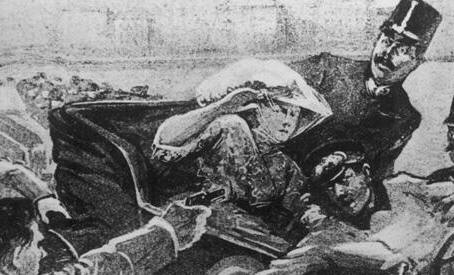
A century ago, on June 28, 1914, Serbian nationalist Gavrilo Princip shot and killed Archduke Franz Ferdinand, heir to the emperorship of Austria-Hungary, along with his wife, on their visit to Sarajevo.
Gavrilo Pirincip fires on the Archduke and Archduchess, June 28, 1914

World War I led to 16 million military and civilian deaths, plus nearly 20 million wounded. And the misery and horror of that war resulted in another casualty: confidence in the Enlightenment enterprise and human progress.

Enlightenment Europe

In the late seventeenth century Isaac Newton’s discovery of the laws of universal gravitation dramatically demonstrated the power of the human mind. Understanding of the world and the universe—what we call modern science—became a central Enlightenment goal.

At the same time, the struggle for Parliamentary supremacy in England led John Locke to pen his powerful treatise on individual liberty. Creating governments limited to protecting life, liberty, and the pursuit of happiness also became a central Enlightenment goal, which culminated in the creation of United States.

Enlightenment values were not limited to Britain or America. They were universal and created a European-wide culture of individualism, freedom, and reason.

Collectivist anti-Enlightenment

But Enlightenment thinkers and activists not only had to fight entrenched oligarchs and rigid religious dogma. Starting with Jean-Jacques Rousseau, a school of thought—if thought it could be called—arose that opposed individualism with the good of “society,” or the group, and rejected reason in favor of emotion and instinct.

The French Revolution starting in 1789 saw Enlightenment ideas losing ground to reactionary and collectivist forces. The result was the Terror and the guillotine, dictatorship and a new monarchy, and the carnage of the Napoleonic wars–the first great modern global conflict, which ended in 1815 at Waterloo.

In the century that followed Europe suffered only short regional conflicts, most relating to the unification of Italy and of Germany. The Industrial Revolution was creating prosperity. Governments were granting citizens rights to political participation and were recognizing their civil liberties. By the early twentieth century, continued progress seemed inevitable.

Pernicious nationalism

But the pernicious collectivist ideology combined with a major European cultural defect: nationalism. This form of collectivism meant more than just an appreciation for the aesthetic achievements—art, music, literature—of the individuals in one’s ethnic group. It meant putting one’s group or one’s country, right or wrong, ahead of universal values and principles. Kill for King or Kaiser!

There’s an irony in the fact that poor Franz Ferdinand wanted to recreate Austria-Hungary as a federation in which the minority groups—that were always either dominated by Viennese elites or at one another’s throats—would have autonomy similar to that enjoyed by the American states. If only Princip had waited a while.

Unfortunately, the volatile combination of nationalism, an interlocking treaty system, and the Britain-Germany imperial rivalry only required a spark like the Sarajevo assassination to set off a global conflagration.

Collectivism vs. collectivism

After World War I, individualism and “selfishness” got much of the blame for the conflict. And science was no longer associated only with progress. It had created machine guns, tanks, and poison gas, and made possible a fearful slaughter.

Idealists created the League of Nations to prevent such wars in the future. But they tried to cure the problem of nationalism with more nationalism, simply accentuating the problem. Indeed, Hitler used the principle of self-determination of peoples as an excuse to unify all Germans into one Reich by force. His form of collectivism also entailed enslaving and wiping out “inferior” races.

The catastrophe of World War II was followed by a Cold War, which saw the Soviet Union asserting another form of collectivism, pitting one economic “class” against another. Western Europe opposed the brutal Soviet kill-the-rich socialism with a kinder, gentler, loot-the-rich democratic socialism. The Soviet Union with its communist empire collapsed in 1991, and Western European democratic socialism is going through a similar disintegration in slow motion.

Still recovering from the Great War

Today, Enlightenment values are making a comeback. The communications and information revolutions, and the application of new technologies in medicine, transportation, and other fields, again demonstrate the power of the human mind and the benefits it confers.

Furthermore, many of the new entrepreneurs understand that it is they as individual visionaries who are transforming the world. And while their achievements benefit everyone, they strive because they love their work and they love to achieve. They pursue happiness. They hold Enlightenment values—though in many cases their politics still need to catch up.

The world is still digging out from the consequences of that single bullet a century ago, which led to the deaths of millions. Putting our country and the world back on the path to liberty and prosperity will require a recommitment to the Enlightenment values that created all the best in the modern world.

***

Dr. Edward Hudgins directs advocacy and is a senior scholar for The Atlas Society, the center for Objectivism in Washington, D.C.

Copyright, The Atlas Society. For more information, please visit www.atlassociety.org.

Homeschooling’s Secular, Rational Benefits – Video by G. Stolyarov II

Homeschooling’s Secular, Rational Benefits – Video by G. Stolyarov II

Mr. Stolyarov explains why homeschooling is an excellent educational approach for freethinkers, as it facilitates the development of an individual learner’s faculties, rather than teaching to the average student or to the lowest common denominator. In this brief video, Mr. Stolyarov refutes common fallacies about homeschooling and discusses the extensive options available to parents who homeschool their children.

All You Need Is Toleration – Article by Max Borders

All You Need Is Toleration – Article by Max Borders

The New Renaissance Hat
Max Borders
January 28, 2014
******************************

Truth carries within itself an element of coercion.
—Hannah Arendt

Identity politics has come to the freedom movement. But does it fit?

Many newly minted libertarians have come out of America’s indoctrination factories feeling a mix of guilt and sanctimony. They’re still libertarians, but they admonish you to “check your privilege” and caution that you may unwittingly be perpetuating a culture of oppression.

Libertarianism alone is not enough, they say.

Our tradition, they urge, needs now to find common cause with various fronts in the movement for “social justice”—struggles against racism, sexism, ageism, ableism, weightism, classism, and homophobia. In that movement, the unit of injustice is the group. Still, joining up means libertarians can attract more young people while forging a more complex, ethically rich political philosophy.

In short, we ought to hitch our wagons to what one might call the “victimhood-industrial complex.” If we don’t, some warn, the millennials will all run to progressivism.

Now if you don’t think this victimhood-industrial complex exists, ask Jonathan Rauch. In his 1993 book Kindly Inquisitors, he argued that free speech was quickly being lost to politically correct censors—especially in higher education. Twenty-plus years later, Rauch says, free speech in the academy is virtually dead:

Unlike most workplaces, universities are at the heart of intellectual life, and so the bureaucratization of speech controls there is more disturbing. In American universities, the hostile-environment and discriminatory-harassment doctrines have become part of the administrative furniture.

And for their student bodies, so also have diversity training, sensitivity seminars, and entire majors devoted to inculcating the victimhood ethos—all of which allows victim groups to justify a dangerous promiscuity with power. That’s one reason libertarians should take caution.

Prime Virtue

To take any moral high ground on matters of subjection, we don’t need to adopt the language or agenda of the victimhood-industrial complex. Indeed, that complex (double entendre intended) is part of progressive intellectuals’ designs on power. It is intended to fragment people along contrived, collectivist lines. And we can do better.

I normally don’t make arguments based on ideological purity, but here’s an area in which pragmatic and philosophical considerations prompt us to look to our own tradition for answers. That is, we libertarians already have a virtue that works. It captures the best of our humane concern for others and discards the bromides, the claptrap, the unearned guilt of the dangerously collectivist “social justice” movement.

That virtue is toleration.

Toleration is what separates libertarianism from competing doctrines, at least when it comes to society and culture. If some principle of non-harm orients our political compass, toleration is a moral guide. I realize that might sound a little funny to anyone who’s spent five minutes on Facebook with a rabid Rothbardian. And, of course, self-styled progressives bandy the term about, too. But the classical liberal form is the original—and most resilient—sense of toleration (or tolerance), because it does not carry with it any baggage that might corrode the rule of law, or the freedoms of expression and conscience.

What has liberated great swaths of humanity is not just the idea that people should be as free as possible; it’s the idea that in order for this great pluralist project to succeed, we have to embrace a virtue that allows us to coexist peacefully with others who may not share our particular ideas about the good life (values, religion, ethnicity, culture, or lifestyle preferences). Classical liberals have always accepted the idea that people are seekers and strivers looking for something. Of course there are a billion paths to happiness, life meaning, and well-being. Accepting that, we have to put the pursuit of happiness first, which requires admitting that we’re all different, one to the next, and we will take different paths.

Toleration starts with conscientiously agreeing not to obstruct another’s path.

Our toleration is also dispositional. A more robust toleration involves a mien of empathy, respect, and open-mindedness. It requires us not just to leave other people alone in their pursuits, but also to consider their perspectives and circumstances. The toleration of social justice is often not so tolerant. It requires conformity, censorship, and consensus.

So, if by “check your privilege” one means try to imagine what life might be like for someone in different circumstances, then great. If by “check your privilege” you’re accusing someone of being part of an oppressor class just because she hasn’t been designated a victim, then you’ve thrown toleration out with the bathwater. This formulation seems to mean your rights and opinions are invalid and you have no real complaints or suffering because you belong to X group. Or, more to the point: You are obligated to pay because people who look like you in some ways did bad things at some point.

The Apparently Perfect vs. the Good

So what does it mean to coexist peacefully with others? And doesn’t toleration have limits? Toleration does not come without its paradoxes, real or apparent. It may be difficult to tolerate the intolerant, for example. But radically free speech and a thick skin are about the best we can do—though such may include fiercely criticizing others for their intolerance in a world without any bright line between disrespect and disagreement. As libertarians, we might draw our own line and not tolerate those who regard themselves as “entitled to force the value [they hold] on other people”—and we can use any peaceful means to thwart them in their attempts to disrupt others’ life plans.

No, toleration is neither a perfect virtue nor the only virtue, but it does the work of peace.

What Liberal Toleration Is Not

Our conception does not require envy or guilt to operate. Nor does it require state censorship or wealth redistribution. It doesn’t require that we adopt cultures and communities we don’t like, but rather acknowledges that those communities and cultures will emerge. Our conception of toleration requires only acknowledgement of differences coupled with that disposition to openness.

Our conception of toleration does not accept the murky idea of victim classes. The problem here is the term “class.” Some member of a class may not be a victim at all. Besides, and more to the point, accepting the idea of victim classes implies that there are perpetrator classes—that if group X has frequently been discriminated against, or abused outright, then all members of group Y are liable for those actions (and, indeed, it’s fair to assume their perspective is tainted).

What’s more, the common acceptance of the idea of a victim class can perpetuate a psychology of victimhood among the members of that class, which holds people back. Some theories of social justice go as far as to require that non-members of the victim class accept that they are victimizers by default. While it is possible to institutionalize mistreatment of a group, justice requires us to dismantle the rot in that institution and to stop putting people into groups at all, not to violate other groups for the sake of abstract redress, or to handicap the excellent, or to reward something irrelevant such as someone’s race.

Proponents of the idea of victim classes view “social justice” as a vague cluster of goods, words, and opportunities to be filtered and apportioned equally among people by an anointed few. What isn’t vague, though, is the power they demand and the privilege they mean to extract. By contrast, proponents of liberal toleration require only that you treat individuals with respect, and first, “do no harm.”

Our conception does not hypostasize or collectivize people—treating them as automatically deserving either special consideration or zealous sensitivity, which is supposed to accrue by virtue of the ascribed group membership. Such collectivism lobotomizes individuals. It robs them of their identities and pushes them to accept identities fashioned by others. It strips them of their individual circumstances. It thins their sense of personal responsibility. And it ignores the content of their character.

Our conception does not demand a perpetual pity party, nor invent reasons to be offended, nor cause one to contrive an invisible latticework of injustice that extends up and out in every direction. Instead, our conception embodies the liberal spirit of “live and let live.” The more people who think that way, the fewer victims—real and imagined—there will be. Toleration needs neither rectitude nor guilt, so demonstrations of piety are also unnecessary. It’s a position that can be held by those who think all people are basically good, or that all people are basically lousy. But that means setting aside the business of sorting out victims (the righteous) and oppressors (the sinful).

Finally, as our conception does not require the ubiquity of injustice, it allows for the flourishing of real community. Real community needs real toleration, free speech, and the inevitable frictions that come along with our colliding perspectives. It is from those frictions that better ideas and more favorable consensuses can emerge—at least if you believe John Stuart Mill and Jonathan Rauch.

Taking Back Toleration

The old adage says: To a hammer, everything looks like a nail. To someone who has been educated in the victimhood-industrial complex, everything looks like social injustice.

Toleration might ask more of us sometimes, such as that we not only acknowledge the differences among people but to try to see things from others’ perspectives (empathy). Taking on that view helps us consider how we might reduce all the frictions and figure out the kind of people we want to be. This is not a political doctrine, however. It’s more like remembering the golden rule. It’s about respecting one’s neighbor—be he Sikh or freak or breeder. It’s about acknowledging what evil, intolerant people have done in the past, but also moving on from it.

Toleration even requires us to put up with—politically, at least—the ugliest forms of expression. As Rauch reminds us, “The best society for minorities is not the society that protects minorities from speech but the one that protects speech from minorities (and from majorities, too).” And that’s hard. One has to listen to different voices, taking into account the circumstances of time, place and person, as opposed to treating people as caricatures. Whatever one’s intentions, we must remember that a lot of evil has flowed from forgetting that people are individuals.

Of course, none of this is to argue that racism or sexism or homophobia doesn’t exist, or to deny that people have been mistreated throughout history for reasons that seem arbitrary and cruel to us. It is not even to deny that people are mistreated to this very day—often for those same arbitrary reasons. Rather, my argument is intended to show that a libertarian principle of respect for persons requires toleration, not identity politics.

The great thing about libertarianism is that it is a political superstructure in which most other political philosophies can operate. No other political philosophy features such built-in, full-fledged pluralism. The other basic political philosophies have built-in asymmetries. Progressivism does not tolerate libertarians living as they wish, but libertarianism tolerates progressives living as they wish (with all the caveats about voluntary participation.) And as Hayek said about the conservative: “Like the socialist, he is less concerned with the problem of how the powers of government should be limited than with that of who wields them; and, like the socialist, he regards himself as entitled to force the value he holds on other people.”

So progressives are intolerant of economic freedom. Conservatives are intolerant of social freedom. Only libertarianism maximizes varying conceptions of the good. Nothing under libertarian doctrine precludes embedded communities of any political stripe, and in a free society, we ought to tolerate these clusters as long as they guarantee a right of exit. Indeed, our only requirement would be that if any such community is to persist, it should do so in a matrix of persuasion rather than of coercion.

If we take back toleration, we have a moral high ground that is both appealing to younger generations and works to the benefit of all people. We don’t have to live with the contradictions of progressive social engineers or with conservatives’ half-hearted deference to individual liberty. By practicing real toleration, we can dispel all the various “isms” while leaving people their life plans.

And that’s good enough for libertarianism.

This article was originally published by the Foundation for Economic Education.

Max Borders is the editor of The Freeman and director of content for FEE. He is also cofounder of Voice & Exit and the author of Superwealth: Why we should stop worrying about the gap between rich and poor.

Melody for “Progress Unyielding”, Op. 76 – Space Colonists’ Anthem from “Eden against the Colossus” – by G. Stolyarov II

Melody for “Progress Unyielding”, Op. 76 – Space Colonists’ Anthem from “Eden against the Colossus” – by G. Stolyarov II

The New Renaissance Hat
G. Stolyarov II
December 7, 2013
******************************

Progress Unyielding is the anthem celebrating space colonization and humans’ expansion throughout the universe, guided by the principles of individualism, liberty, rationality, and progress. It is originally found in my 2004 novel, Eden against the Colossus. I was recently asked to create a composition to convey the music of this anthem, as I imagined it when writing the novel. This composition is not the full orchestration described in Eden against the Colossus, but rather the main melody, played on the harp, with accompaniment by the piano and by a string ensemble for the latter third. It communicates the principal direction of Progress Unyielding and allows the listener to see the words put to music.

Download a free MP3 file of the melody of Progress Unyielding here.

The meter of this piece would accommodate the following very slightly modified lyrics, which still communicate the same substance as the anthem in the novel.

You can listen to and download all of my compositions, including many recently remastered versions of older pieces, here.

****

Progress Unyielding

Our souls before these sights dwarfed shan’t become.
Why bow to passive matter of antiquity?
What spreads from it is pandemonium;
Its barrenness is source for all iniquity.

‘Tis in our minds the idols hatch,
Of stone for man to shape and mold.
Such logic does our hands attach
To this domain of lifeless cold,
To every cavern, crater, creek.
Wrong was the man who’d preached the norm
That worlds are destined for the meek!
Our will and strength give matter form.
He who grovels tastes his obsequies;
We float into the void, oases craft.
We are not slaving tribal bees,
And no collective guides our raft.
We are not one, but many knights;
Each does himself his quest ordain,
We thrive on work, and work from rights.
Our well-earned profit’s our domain.

This ground bears meaning solely to our aims.
Its monuments stem from our ingenuity.
Glory to him who savage wildlands tames,
And weeds out every incongruity!

What shall replace the brittle dune?
What shall refine this cratered scar?
Our pavement shall embrace them soon,
And spread to every spawn of star
Yet seen, and into others we shall gaze,
And thus apply the universe’s stock.
This is not but one transient phase.
Forever shall we tame new rock!
Cosmos is Man’s, its means and goal.
Its exiled heirs now seek its wreath:
Supremacy, from atom, oil, and coal.
Our claim to treasures underneath
These jagged lands shall never wane.
Always grand mechanisms will be our guide.
No Luddites shall their betterment profane.
Inventors we exalt and vandals we deride!

Merit determines worth under our creed.
The self-made prodigy our government defends,
Does our endeavor by example lead,
And never harms one for another’s ends.

What is the trait we deem sublime?
The source which does all virtue render.
It, dauntless, conquers space and time,
And never can its plight surrender.
It is inside us, best within the great,
The ego, mind, one’s self, one’s soul,
Prerequisite to any proper state.
Maintain your own, and you’ve fulfilled your role.
No world beyond this life is real;
Its furthering’s our sole concern.
No godly favor is to steal,
No mystic afterlife to earn.
God’s not above us, but within;
The Self’s the Lord, Reason, His rite.
We have a universe to win.
Join us, great men, in splendid flight!

Meaningful and Vacuous “Privilege” – Article by G. Stolyarov II

Meaningful and Vacuous “Privilege” – Article by G. Stolyarov II

The New Renaissance Hat
G. Stolyarov II
December 3, 2013
******************************

Sanford Ikeda’s concise and insightful lists of 14 common fallacies about the free market (available in two installments from The Freeman here and here) motivate careful thought about the commonly used and misused term “privilege” and the conflations in which it can result. In discussing the second fallacy regarding the free market, that it is identical to a system where the government grants special privileges to businesses, Dr. Ikeda writes that “People sometimes define ‘privilege’ as any advantage a person or group may have over others. Certainly such advantages exist today and would exist in a free market—you may be born into a wealthy family or have superior drive and resourcefulness—but these advantages are consistent with the absence of privilege in the libertarian sense, as long as you acquired such advantages without fraud or the initiation of physical violence against the person or property of others.”

Indeed, the increasingly common usage of the term “privilege” to mean any advantage whatsoever eviscerates it of any genuine meaning it once had. This problem in today’s discourse spreads far beyond discussions of connections between businesses and governments.

Certainly, the very fact that one individual is different from another – with a different set of experiences, different physique, different knowledge, and even different standing room at any particular time – provides that individual with opportunities that the other lacks, while rendering him or her limited in ways that the other is not. Unfortunately, this trivial fact is increasingly being misconstrued in some circles to suggest vile inequities arising out of innocuous human differences. People who have not aggressed against, or even demeaned or ridiculed, anyone are increasingly being identified as “privileged” simply for belonging to broadly and crudely defined groups – be it all people of European descent, all males, or even all non-overweight people (witness the pseudo-concept of “thin privilege”) or people who are not disabled. (“Ableism” is apparently an emerging sin in the vocabulary of the increasingly militant and vitriolic collectivistic “social justice” movement – which is about neither true individual-oriented justice nor the preservation of a civilized and tolerant society.)  Such a vacuously expansive view of privilege is a tremendous insult to the true victims of coercive privilege throughout history – from slaves in all eras, to women who in prior eras were denied suffrage and property rights, to the freethinkers and forbears of liberty and reason, whose voices were too often snuffed out by the arbitrary power of absolute monarchs and theocrats in the pre-Enlightenment world.

Thomas Jefferson, an opponent of privilege in its meaningful sense, put it best when he expressed in his 1826 letter to Roger C. Weightman “the palpable truth, that the mass of mankind has not been born with saddles on their backs, nor a favored few booted and spurred, ready to ride legitimately, by the grace of god.” Jefferson was a staunch opponent of the coercive privilege that enabled some to gain artificial advantages by restricting others from pursuing life-improving courses of action. Accidents of birth, or special lobbying skills, should not, in a just system, enable a person to acquire prerogatives which could not be earned through the free, peaceful exercise of that person’s abilities. Jefferson saw the future and strength of the American republic in the hoped-for emergence of a “natural aristocracy of talent and virtue” – people who, when allowed the liberty to flourish through honest work and competition, would become role models for others solely through their examples. This natural aristocracy would not need force to maintain its prominence, because the traits of the most knowledgeable, most industrious, and most virtuous people will be emulated by any who earnestly seek to improve their own lives and who have the freedom to acquire knowledge and make their own decisions.

Yet Jefferson’s natural aristocracy would be denounced as an example of horrid “privilege” by the “social justice” types – simply due to the necessarily unequal distribution of outcomes on a free market of open and honest production, competition, and cooperation. After all, not everyone can originate the same ideas at the same time. Not everyone can take advantage of the same opportunity for entrepreneurial profit, whose attainment, as economist Israel Kirzner demonstrated in Competition and Entrepreneurship, arises out of alertness to opportunities that others have missed. Kirzner writes that “Because the participants in [a] market are less than omniscient, there are likely to exist, at any given time, a multitude of opportunities that have not yet been taken advantage of. Sellers may have sold for prices lower than the prices which were in fact obtainable… Buyers may have bought for prices higher than the lowest prices needed to secure what they are buying…” (43). Would it be an example of unacceptable “privilege” for an alert entrepreneur to remedy such an arbitrage opportunity and thereby bring otherwise-unrealized value to consumers?

Yes, the free exercise of human abilities will produce outcomes where some people will have some advantages over some others (while, of course, leaving fully open the possibility that those very others will have their own distinct advantages, obtained through hard work, knowledge, or sheer luck). But, as long as coercion is not involved in securing and maintaining those advantages, the people endowed with them are not “booted and spurred” to ride the rest of us. As Dr. Ikeda points out, the differences among people are a source of strength harnessed by the free market: “The free market gives you an incentive to profit from associating with and learning from others who might be very different from you, who operate outside your normal social networks.” By incentivizing and facilitating these interactions, the free market encourages greater tolerance, understanding, and visible societal heterogeneity of the sort that constitutes the best safeguard against truly heinous oppressions based on collectivistic stereotypes. Instead of condemning others as being too “privileged” simply on account of innocuous differences, it is far more productive to think about how those differences can help one achieve one’s own values through honest, peaceful, and productive interaction, cooperation, and exchange.

Putting Randomness in Its Place – Video by G. Stolyarov II

Putting Randomness in Its Place – Video by G. Stolyarov II

A widespread misunderstanding of the meaning of the term “randomness” often results in false generalizations made regarding reality. In particular, the view of randomness as metaphysical, rather than epistemological, is responsible for numerous commonplace fallacies.

Reference
– “Putting Randomness in Its Place” – Essay by G. Stolyarov II

Individualism, Objective Reality, and Open-Ended Knowledge – Video by G. Stolyarov II

Individualism, Objective Reality, and Open-Ended Knowledge – Video by G. Stolyarov II

Mr. Stolyarov explains how an objective reality governed by physical laws is compatible with individual self-determination and indeed is required for individuals to meaningfully expand their lives and develop their unique identities.

Reference

– “Individualism, Objective Reality, and Open-Ended Knowledge” – Post by G. Stolyarov II

Evolution Has No Moral Value; Life Extension Does – Video by G. Stolyarov II

Evolution Has No Moral Value; Life Extension Does – Video by G. Stolyarov II

Mr. Stolyarov responds to two statements by Michael Garfield and makes the case that evolution should not be pursued as a moral goal in itself; rather, the survival and increased longevity of every individual should be pursued, since our rationality, technology, and moral compass allow us to transcend the cruelty of primeval natural selection.

Mr. Stolyarov also refutes the allegation that older people somehow necessarily become resigned to or accepting of their own death. He presents counterexamples of individuals who lived past the age of 80 and who wished to continue living indefinitely.

See Benjamin Franklin’s thoughts on scientific progress and life extension: “The rapid progress true science now makes occasions my regretting sometimes that I was born too soon. It is impossible to imagine the height to which may be carried, in a thousand years, the power of man over matter. We may, perhaps, deprive large masses of their gravity, and give them absolute levity, for the sake of easy transport. Agriculture may diminish its labor and double its produce: all diseases may by sure means be prevented or cured (not excepting even that of old age,) and our lives lengthened at pleasure, even beyond the antediluvian standard. Oh that moral science were in as fair a way of improvement, that men would cease to be wolves to one another, and that human beings would at length learn what they now improperly call humanity.”

References
– “Life as the Origin and Basis of Morality” – Video Series by G. Stolyarov II – Part 1 and Part 2
– “Eliminating Death – Part 1 – Death as Waste” – Video by G. Stolyarov II
– “World’s Oldest Man Wants To Live Forever” – WayOdd
– “Robert Ettinger” – Wikipedia

Individualism, Objective Reality, and Open-Ended Knowledge – Article by G. Stolyarov II

Individualism, Objective Reality, and Open-Ended Knowledge – Article by G. Stolyarov II

The New Renaissance Hat
G. Stolyarov II
September 11, 2013
******************************

I am an individualist, but not a relativist. While I have no dispute with individuals determining their own meaning and discovering their own significance (indeed, I embrace this), this self-determination needs to occur within an objective physical universe. This is not an optional condition for any of us. The very existence of the individual relies on absolute, immutable physical and biological laws that can be utilized to give shape to the individual’s desires, but that cannot be ignored or wished away. This is why we cannot simply choose to live indefinitely and have this outcome occur. We need to develop technologies that would use the laws of nature to bring indefinite longevity about.

In other words, I am an ontological absolutist who sees wisdom in Francis Bacon’s famous statement that “Nature, to be commanded, must be obeyed.” Individual choice, discovery, and often the construction of personal identity and meaning are projects that I embrace, but they rely on fundamental objective prerequisites of matter, space, time, and causality. Individuals who wish to shape their lives for the better would be wise to take these prerequisites into account (e.g., by developing technologies that overcome the limitations of unaided biology or un-transformed matter). My view is that a transhumanist ethics necessitates an objective metaphysics and a reason-and-evidence-driven epistemology.

This does not, however, preclude an open-endedness to human knowledge and scope of generalization about existence. Even though an absolute reality exists and truth can be objectively known, we humans are still so limited and ignorant that we scarcely know a small fraction of what there is to know. Moreover, each of us has a grasp of different aspects of truth, and therefore there is room for valid differences of perspective, as long as they do not explicitly contradict one another. In other words, it is not possible for both A and non-A to be true, but if there is a disagreement between a person who asserts A and a person who asserts B, it is possible for both A and B to be true, as long as A and B are logically reconcilable. A dogmatic paradigm would tend to erroneously classify too much of the realm of ideas as non-A, if A is true, and hence would falsely reject some valid insights.

These insights illustrate the compatibility of objective physical and biological laws (physicalism) with individual self-determination (volition or free will). There is a similar relationship between ontology and ethics. An objective ontology (based on immutable natural laws) is needed as a foundation for an individualistic ethics of open-ended self-improvement and ceaseless progress.