Browsed by
Tag: transhumanism

25% Median Life Extension in Mice via Senescent Cell Clearance, Unity Biotechnology Founded to Develop Therapies – Article by Reason

25% Median Life Extension in Mice via Senescent Cell Clearance, Unity Biotechnology Founded to Develop Therapies – Article by Reason

The New Renaissance HatReason
******************************

With today’s news, it certainly seems that senescent cell clearance has come of age as an approach to treating aging and age-related conditions. Some of the leading folk in the cellular senescence research community today published the results from a very encouraging life span study, extending life in mice via a method of removing senescent cells. This is much the same approach employed in one of the first tests of senescent cell clearance, carried out in accelerated aging mice a few years ago, but in this case normal mice were used, leaving no room to doubt the relevance of the results. The researchers have founded a new company, Unity Biotechnology, to develop therapies for the clinic based on this technology. Clearance of senescent cells has been advocated as a part of the SENS vision for the medical control of aging for more than a decade now, and it is very encouraging to see the research and development community at last coming round to this view and making tangible progress.

Senescent cells have removed themselves from the cycle of replication in reaction to cell and tissue damage, or a local tissue environment that seems likely to result in cancer. Their numbers accumulate with age. Most are destroyed by the immune system or their own programmed cell death mechanisms, but enough linger for the long term for their growing presence to be one of the contributing causes of the aging process. These cells behave badly, secreting harmful signals that degrade tissue function, generate inflammation, and alter the behavior of surrounding cells as well. Near every common age-related condition is accelerated and made worse by the presence of large numbers of senescent cells. We would be better off without them, aging would be slowed by the regular removal of these errant cells, and the therapies to make that possible are on the near horizon.

The mouse lifespan study is the important news here, as it demonstrates meaningful extension of median life span through removal of senescent cells, the first such study carried out in normal mice for this SENS-style rejuvenation technology. This sort of very direct and easily understood result has a way of waking up far more of the public than the other very convincing evidence of past years. So it looks like Oisin Biotechnology, seed funded last year by the Methuselah Foundation and SENS Research Foundation to bring a senescent cell clearance therapy to market, now has earnest competition. Insofar as the competitive urge in business and biotechnology speeds progress and produces better results, let the games begin, I say.

Scientists Can Now Radically Expand the Lifespan of Mice – and Humans May Be Next

Quote:

Researchers have made this decade’s biggest breakthrough in understanding the complex world of physical aging. The researchers found that systematically removing a category of living, stagnant cells (ones which can no longer reproduce) extends the lives of otherwise normal mice by 25 percent. Better yet, scouring these cells actually pushed back the process of aging, slowing the onset of various age-related illnesses like cataracts, heart and kidney deterioration, and even tumor formation. “It’s not just that we’re making these mice live longer; they’re actually stay healthier longer too. That’s important, because if you were going to equate this to people, well, you don’t want to just extend the years of life that people are miserable or hospitalized.” By rewriting a tiny portion of the mouse genetic code, the team developed a genetic line of mice with cells that could, under the right circumstances, produce a powerful protein called caspase when they start secreting p16. Caspase acts essentially as a self-destruct button; when it’s manufactured in a cell, that cell rapidly dies. So what exactly are these circumstances where the p16 secreting cells start to create caspase and self-destruct? Well, only in the presence of a specific medicine the scientists could give the mice. With their highly-specific genetic tweak, the scientists had created a drug-initiated killswitch for senescent cells. In today’s paper, the team reported what happened when the researchers turned on that killswitch in middle-aged mice, effectively scrubbing clean the mice of senescent cells.

Naturally occurring p16Ink4a-positive cells shorten healthy lifespan

Quote:

Senescent cells accumulate in various tissues and organs over time, and have been speculated to have a role in ageing. To explore the physiological relevance and consequences of naturally occurring senescent cells, here we use a previously established transgene, INK-ATTAC, to induce apoptosis in p16Ink4a-expressing cells of wild-type mice by injection of AP20187 twice a week starting at one year of age. We show that AP20187 treatment extended median lifespan in both male and female mice of two distinct genetic backgrounds. The clearance of p16Ink4a-positive cells delayed tumorigenesis and attenuated age-related deterioration of several organs without apparent side effects, including kidney, heart and fat, where clearance preserved the functionality of glomeruli, cardio-protective KATP channels and adipocytes, respectively. Thus, p16Ink4a-positive cells that accumulate during adulthood negatively influence lifespan and promote age-dependent changes in several organs, and their therapeutic removal may be an attractive approach to extend healthy lifespan.

Unity Biotechnology Launches with a Focus on Preventing and Reversing Diseases of Aging

Quote:

Unity will initially focus on cellular senescence, a biological mechanism theorized to be a key driver of many age-related diseases, including osteoarthritis, glaucoma and atherosclerosis. “Imagine drugs that could prevent, maybe even cure, arthritis or heart disease or loss of eyesight. It’s an incredible aspiration. If we can translate this biology into medicines, our children might grow up in significantly better health as they age. There will be many obstacles to overcome, but our team is committed and inspired to achieve our mission. This has been a long journey, and we’re at the point now where we can start making medicines to achieve in humans what we’ve achieved in mice. I can’t wait to see what happens as we move into the clinic.”

To close this post, and once again, I think it well worth remembering that SENS rejuvenation biotechnology advocates and supporters have been calling for exactly this approach to treating aging for more than a decade. That call was made based on the evidence arising from many fields of medical research, and from a considered perspective of aging as a process of damage accumulation, one that can be most effectively treated by repair of that damage. The presence of senescent cells is a form of damage. SENS was not so long ago derided and considered out on the fringe for putting forward that position, but for several years now it has been very clear that the SENS viewpoint was right all along. I strongly encourage anyone who remains on the fence about the validity of the SENS proposals for the treatment of aging to reexamine his or her position on the science.

Reason is the founder of The Longevity Meme (now Fight Aging!). He saw the need for The Longevity Meme in late 2000, after spending a number of years searching for the most useful contribution he could make to the future of healthy life extension. When not advancing the Longevity Meme or Fight Aging!, Reason works as a technologist in a variety of industries.
This work is reproduced here in accord with a Creative Commons Attribution license. It was originally published on FightAging.org.
Zero-Gravity Orbital Habitation Causes Changes That Are at Least Superficially Similar to Accelerated Aging – Article by Reason

Zero-Gravity Orbital Habitation Causes Changes That Are at Least Superficially Similar to Accelerated Aging – Article by Reason

The New Renaissance HatReason
******************************

That old people will go into orbit to escape the rigors of gravity and thus live longer in their declining years was a staple of golden age and later science fiction. These works were written at a time in which our knowledge of human biochemistry – and the application of that knowledge to medicine – was crude in comparison to today. It is fascinating that we can say that for such a short span of years, a mere short lifetime past, but the differences between the medicine of the 1950s and the medicine of today are profound indeed. The writers of that time largely envisaged a future incorporating great gains in energy generation, and a consequent diaspora from Earth, while computation, medicine and the human condition remained much unchanged; older spacemen in the outer reaches struggling with heart disease in their fifties. Instead we found that expanding the generation, storage, transmission, and application of energy is very hard, and the largely unanticipated information revolution occurred instead. We lost the near future of cheap heavy lift to orbit and the solar system at our beck and call, but gained Moore’s Law, biotechnology, nanotechnology, a pervasive internet, and medical progress that is in the early stages of conquering heart disease and may yet save us from all of degenerative aging.

As it turns out, retreating from the rigors of gravity may well have the opposite effect to that imagined by the authors of the last century. Among the alterations produced by orbital habitation in zero gravity are those that appear, at least superficially, much like accelerated aging of the cardiovascular system. The root causes have yet to be pinned down, since very few people are actually researching this topic, but since the onset of these symptoms is fairly rapid, I’d guess at the cause being more a matter of regulatory dysfunction than increased tissue damage, such as the presence of cross-links related to arterial stiffening in aging. Here I’ll point out a few links to the work of one research group on this topic in recent years:

Waterloo to lead new experiment aboard International Space Station

Quote:

The experiment will link changes in astronauts’ hearts and blood vessels with specific molecules in the blood to determine why astronauts experience conditions that mimic aging-related problems and chronic diseases on earth. The findings will help identify important indicators for chronic disease and assist with the development of early interventions for people on earth. “We know that astronauts return from space with stiffer arteries and resistance to insulin, conditions affecting many adults as they age. For the first time, we will be able to track exactly how – and why – the body’s blood vessels change, and use these findings to potentially improve quality of life and the burden of chronic disease.” “In space, astronauts’ bodies show aging-like changes much faster than on Earth. The International Space Station provides a unique platform to study aging-related conditions providing insights that can be used to help understand some of the biggest health issues affecting society. Our research to date suggests that even though astronauts exercise every day, the actual physical demands of tasks of daily living are greatly reduced due to the lack of gravity. This lifestyle seems to cause changes in the vascular system and in the body’s ability to regulate blood glucose that would normally take years to develop on earth.”

U.Waterloo – Vascular Aging and Space Research Program

Quote:

We study factors related to cardiovascular health with aging. One focus is on blood pressure regulation and its impact on brain blood flow to help us understand some of the factors that could contribute to falls in the elderly, especially those that occur on rising from bed. Another focus is on aging blood vessels. We have reported a strong link between peripheral arterial stiffness and a reduction in brain blood flow. Our space research program is very active. We recently completed the study Cardiovascular and Cerebrovascular Control on Return from the International Space Station (CCISS). We are currently collecting data for the project Cardiovascular Health Consequences of Long-Duration Space Flight (Vascular).

Cardiovascular Health Consequences of Long-Duration Space Flight (Vascular)

Quote:

Cardiovascular Health Consequences of Long-Duration Space Flight (Vascular) investigates the impact of long-duration space flight on the blood vessels of astronauts. Space flight accelerates the aging process, and it is important to understand this process to develop specific countermeasures. Data is collected before, during, and after space flight to assess inflammation of the artery walls, changes in blood vessel properties, and cardiovascular fitness. Spaceflight can cause stiffening of the arteries, affecting the body’s ability to control blood pressure. This investigation assessed the blood vessels of astronauts and found decreased flexibility of the carotid artery during flight. Researchers found no relationship between the level of physical fitness and this decrease. The experiment also provided data on the mechanisms behind increased arterial stiffness from spaceflight. Further research is needed to establish effective ways to counter the cardiovascular consequences of spaceflight and ultimately help treat increased arterial stiffness from aging on Earth, which can cause high blood pressure and organ damage.

Impaired cerebrovascular autoregulation and reduced CO2 reactivity after long duration spaceflight

Quote:

Long duration habitation on the International Space Station (ISS) is associated with chronic elevations in arterial blood pressure in the brain compared with normal upright posture on Earth and elevated inspired carbon dioxide. Although results from short-duration spaceflights suggested possibly improved cerebrovascular autoregulation, animal models provided evidence of structural and functional changes in cerebral vessels that might negatively impact autoregulation with longer periods in microgravity. Seven astronauts (1 woman) spent 147 ± 49 days on ISS. Preflight testing (30-60 days before launch) was compared with postflight testing on landing day or the morning 1 or 2 days after return to Earth. The results indicate that long duration missions on the ISS impaired dynamic cerebrovascular autoregulation and reduced cerebrovascular carbon dioxide reactivity.

Recent findings in cardiovascular physiology with space travel

Quote:

The cardiovascular system undergoes major changes in stress with space flight primarily related to the elimination of the head-to-foot gravitational force. A major observation has been that the central venous pressure is not elevated early in space flight yet stroke volume is increased at least early in flight. Recent observations demonstrate that heart rate remains lower during the normal daily activities of space flight compared to Earth-based conditions. Structural and functional adaptations occur in the vascular system that could result in impaired response with demands of physical exertion and return to Earth. Cardiac muscle mass is reduced after flight and contractile function may be altered. Regular and specific countermeasures are essential to maintain cardiovascular health during long-duration space flight.

Reason is the founder of The Longevity Meme (now Fight Aging!). He saw the need for The Longevity Meme in late 2000, after spending a number of years searching for the most useful contribution he could make to the future of healthy life extension. When not advancing the Longevity Meme or Fight Aging!, Reason works as a technologist in a variety of industries.
This work is reproduced here in accord with a Creative Commons Attribution license. It was originally published on FightAging.org.
On Viewing 2001: The First Transhumanist Film – Article by Edward Hudgins

On Viewing 2001: The First Transhumanist Film – Article by Edward Hudgins

The New Renaissance HatEdward Hudgins
November 20, 2015
******************************

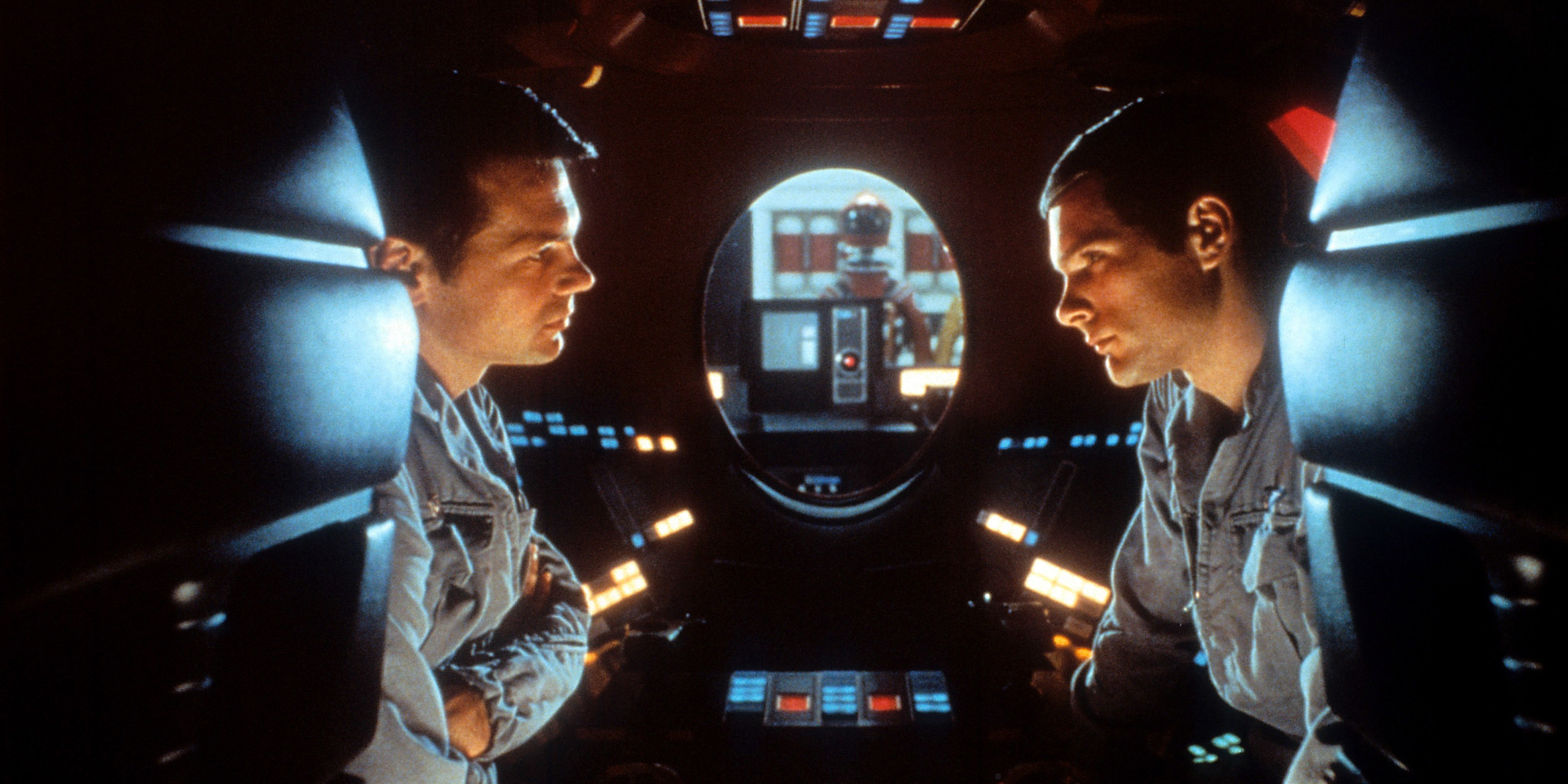
I recently saw 2001: A Space Odyssey again on the big screen. That’s the best way to see this visually stunning cinematic poem, like I saw it during its premiere run in 1968. The film’s star, Keir Dullea, attended that recent screening and afterward offered thoughts on director Stanley Kubrick’s awe-inspiring opus.

2001-space-odyssey-objectivism-transhumanism

He and many others have discussed the visions offered in the film. Some have come to pass: video phone calls and iPad tablets, for example. Others, sadly, haven’t: regularly scheduled commercial flights to orbiting space stations and Moon bases.

But what should engage our attention is that the film’s enigmatic central theme of transformation is itself transforming from science fiction to science fact.

From apes to man

The film’s story came from a collaboration between Kubrick and sci-fi great Arthur C. Clarke. If you’re familiar with Clarke’s pre-2001 novel Childhood’s End and his short story “The Sentinel” you’ll recognize themes in the film.

In the film we see a pre-human species on the brink of starvation, struggling to survive. An alien monolith appears and implants in the brain of one of the more curious man-apes, Moonwatcher, an idea. He picks up a bone and bashes in the skull of one of a herd of pigs roaming the landscape. Now he and his tribe will have all the food they need.

We know from Clarke’s novel, written in conjunction with the film script, that the aliens actually alter Moonwatcher’s brain, giving it the capacity for imagination and implanting a vision of him and his tribe filled with food. He sees that there is an alternative to starvation and acts accordingly. The aliens had juiced evolution. Kubrick gives us the famous scene where Moonwatcher throws the bone in the air. As it falls the scene cuts ahead to vehicle drifting through space. Natural evolution over four million years has now transformed ape-men into modern technological humans.

From stars to starchild

In the film, astronauts discover a monolith buried on the Moon, which sends a signal toward Jupiter. A spaceship is sent to investigate, and astronaut Dave Bowman, played by Dullea, discovers a giant monolith in orbit. He enters it and passes through an incredible hyperspacial stargate. At the end of his journey, Bowman is transformed by the unseen aliens’ monolith into a new, higher life form, an embryo-appearing starchild with, we presume, knowledge and powers beyond anything dreamt of by humans. He is transhuman!

starchild-2001-space-odyssey

Kubrick and Clarke are making obvious references to Nietzsche’s Also Sprach Zarathustra. In that book Nietzsche offers a vision of a human going through three transformations, ending up as a child. “Innocent is the child . . . a new beginning . . . a first movement . . . a holy ‘Yes’.” The child is the creator and the potential for the creation of new values. And, of course, Kubrick used the introduction/sunrise music from the Richard Strauss tone poem named for Nietzsche’s work in the film’s famous opening; in the scene when an idea dawns in the brain of the ape-man; and at the end, when the human is reborn as the starchild. This is as over-the-top symbolism as there ever was!

From evolution to creation

In 2001 natural evolution and alien intervention transform ape-man, to man, to übermensch. Today, we humans are taking control of our own evolution and are beginning to transform ourselves—but into what?

Futurists like Max and Natasha Vita More and Ray Kurzweil have given us the transhumanist philosophy, the idea that we humans can and should use technology to overcome our biological limits, enhancing our physical and mental capacities. Scientists, researchers, and engineers today are doing just this.

They are creating advanced bionic implants and prosthetics to replace lost limbs or body parts. They are working on brain-machine interfaces that could better merge the two. They are experimenting with actually implanting information into brains. They have genetically engineered certain cells to attack only cancer cells. They are working to program nanobots to do the same. And they are understanding the deep mechanisms that cause cells over time to break down, and are exploring ways to “turn off” this process—that is, to actually stop aging. Could we engineer superbrains for real, eternally young übermenschen in decades to come?

Today, the fundamental theme of 2001, human transcendence, is being made real by we humans rather than by alien monoliths. So when you next see this classic film, you might see still see the starchild as a piece of evocative fiction. But you can appreciate that we humans are putting ourselves on a path to something in the future beyond anything dreamt of by humans.

Dr. Edward Hudgins directs advocacy and is a senior scholar for The Atlas Society, the center for Objectivism in Washington, D.C.

Copyright The Atlas Society. For more information, please visit www.atlassociety.org.

Lifespan Challenge: Support the MitoSENS Mitochondrial Repair Project Research Fundraiser – Video by G. Stolyarov II

Lifespan Challenge: Support the MitoSENS Mitochondrial Repair Project Research Fundraiser – Video by G. Stolyarov II

The New Renaissance HatG. Stolyarov II
October 21, 2015
******************************

Mr. Stolyarov, author of “Death is Wrong” and Chief Executive of the Nevada Transhumanist Party (NTP), challenges all members of the NTP and the general public to donate to life-extension research – particularly, the ongoing MitoSENS Mitochondrial Repair Project for which crowdfunding is currently being conducted on Lifespan.io.

LifespanChallengeSign-513x396

Achieving a Bright Future: Opportunities and Obstacles – G. Stolyarov II Interviews Demian Zivkovic

Achieving a Bright Future: Opportunities and Obstacles – G. Stolyarov II Interviews Demian Zivkovic

 The New Renaissance Hat
G. Stolyarov II and Demian Zivkovic
January 19, 2015
******************************

Mr. Stolyarov invites Demian Zivkovic to discuss visions of the future and humankind’s prospects for achieving a bright future in time for us to experience and enjoy it. The discussion focuses on the following questions:

(1) What do you consider to be humankind’s best opportunities for achieving a bright future within the next several decades?
(2) What do you consider to be the greatest obstacles to the realization of such a bright future?
(3) How could such obstacles be overcome?

About Demian Zivkovic

Demian Zivkovic, 23 years old, is a student of artificial intelligence and philosophy, and founder and president of the Arma’thwynn Society – an international transhumanist think tank comprised of a group of transhumanism-oriented professionals, students, and entrepreneurs interested in the interdisciplinary approach to advancing transhumanist technologies. Demian has been involved in several endeavors, including interviewing Professor Aubrey de Grey, organizing a transhumanism lecture in The Netherlands now, and spreading Death is Wrong – Mr. Stolyarov’s illustrated children’s book on indefinite life extension – in The Netherlands.

We Must Proudly Reassert Free Speech and Universal Western Values – Video by G. Stolyarov II

We Must Proudly Reassert Free Speech and Universal Western Values – Video by G. Stolyarov II

The New Renaissance Hat
G. Stolyarov II
January 12, 2015
******************************

The horror of the attack on the Charlie Hebdo magazine – the murder of 17 people – journalists, policemen, and ordinary shoppers – by Wahhabist Islamist fanatics in Paris on January 7-9, 2015, highlights the stark threat that religious fanaticism poses to Western civilization. The perpetrators of this barbarism have thankfully been eliminated due to the concerted, decisive, and careful work of French police, who managed to destroy the murderers and hostage-takers without harming or terrorizing innocent, peaceful civilians in the process. But unless the Western world resolutely affirms the untrammeled right of free expression of ideas, the already commonplace heckler’s veto over speech will turn into the murderer’s veto.

Mr. Stolyarov explains the need for an assertive revival of Western Enlightenment values (which are also universal human values) and a widespread, unconditional defense of freedom of speech – in order to prevent humankind from relapsing into the muck of barbarism.

References

– “We Must Proudly Reassert Free Speech and Universal Western Values” – Article by G. Stolyarov II – January 12, 2015
– “Excellent News from Turkey Regarding the Possibility of a More Humane Islam” – Post by G. Stolyarov II – November 28, 2008 – Excellent News from Turkey Regarding the Possibility of a More Humane Islam
– “German Newspaper Attacked After Publishing Charlie Hebdo Cartoons” – The World Post – Kirsten Grieshaber – January 11, 2015
– “These Are The Charlie Hebdo Cartoons That Terrorists Thought Were Worth Killing Over” – The Huffington Post – Catherine Taibi – January 7, 2015
– “Transhumanism” – Wikipedia
– “Wahhabism” – Wikipedia

We Must Proudly Reassert Free Speech and Universal Western Values – Article by G. Stolyarov II

We Must Proudly Reassert Free Speech and Universal Western Values – Article by G. Stolyarov II

The New Renaissance Hat
G. Stolyarov II
January 12, 2015
******************************

je_suis_charlie_fist_and_pencil

The horror of the attack on the Charlie Hebdo magazine – the murder of 17 people – journalists, policemen, and ordinary shoppers – by Wahhabist Islamist fanatics in Paris on January 7-9, 2015, highlights the stark threat that religious fanaticism poses to Western civilization. The perpetrators of this barbarism have thankfully been eliminated due to the concerted, decisive, and careful work of French police, who managed to destroy the murderers and hostage-takers without harming or terrorizing innocent, peaceful civilians in the process. But unless the Western world resolutely affirms the untrammeled right of free expression of ideas, the already commonplace heckler’s veto over speech will turn into the murderer’s veto.

Anything but complete, unconditional condemnation of this attack allows the murderers and thugs to win. Anyone who claims, “I condemn the attack, but…” is blaming the victims and suggesting that any provocation, any motivation is capable of forming an acceptable causal connection between peaceful expression of ideas and murder. For those who resolutely defend the Western values of individual rights and secularism, the only question should be, “Does the expression of a viewpoint ever, under any circumstances, justify the death penalty?” If the answer is a resounding “No!” – as it should be – then there can be no “but…”.

The Western values that developed over millennia of philosophical evolution and finally emerged brilliantly during the 18th-century Age of Enlightenment are universal human values – affirming human dignity and decency, the potential for peaceful cooperation among diverse viewpoints, the superiority of the creative mind over brute force, the potential for the human condition to be elevated through reason and persuasion, not intimidation. The Age of Enlightenment tamed Christianity in the West, turning it from a religion of bloodthirsty Crusaders, superstitious witch-hunters, and intolerant inquisitors, into a relatively soft cultural force that, at any given time, largely echoes the prevailing moral climate some thirty years prior. Christians who have been influenced by the Enlightenment – and even those who reject it, who have nonetheless found it necessary to adapt to the world it shaped for over two centuries – accept, with the exception of a fringe of fundamentalist fanatics, the basic preconditions for life in a civilized society, including the respect for the political, economic, and philosophical freedoms of those who think differently from them.

The Islamic world still awaits its own Age of Enlightenment, though some Muslims have, to their credit, accepted the Western Enlightenment as their own or attempted a courageous modernization of Islamic theology. Those Muslims who say “Je suis Charlie” are my allies, and I wish to see more Muslims embrace this attitude. But they have an uphill battle to fight – not just against their fanatical co-religionists, for whom no human life is sacred, but against the purveyors of postmodernist political correctness in the West, for whom the avoidance of giving offense trumps the necessity of standing on principle when the stakes are high. And the stakes are high indeed: if the murderer’s veto can result in any idea becoming inexpressible due to self-censorship and pressure from the “reputable” elements of society, then it does not matter what laws or constitutions say. If a sufficiently large element of society exists, whose members have a hair-trigger for offense and will kill you if you infringe upon their arbitrary taboos, then freedom of speech becomes a legal fiction, and de facto blasphemy law is the reality.

The best protection for freedom of thought is its frequent and prominent exercise by as many people as possible. Had prominent newspapers and magazines given frequent circulation to the wittily and refreshingly irreverent cartoons that Charlie Hebdo produced – which does not, by the way, rule out also publishing critiques or rebuttals from any other peaceful perspectives – then the murderous quartet that planned the Paris attacks would have had trouble choosing a target. Indeed, much about Western culture and lifestyles “offends” Wahhabist Muslims today, yet we do not see Westerners being routinely shot for failing to pray five times per day, facing Mecca. Almost everything about Western science, representational art, music, and clothing is inimical to Wahhabist Islam, yet the purveyors of these ubiquitous aspects of Western life – many Muslims among them, too – go unharmed by the fanatics. If politically correct fears are allowed to marginalize any form of expression for fear that it might “offend”, then any person who dares stand up for that expression – as is that person’s inalienable right – becomes a target for those who would relinquish even their own lives in order to cow a society into submission to their twisted, progress-stifling ideology. Political correctness accelerates the transformation of rights into taboos, until nothing of importance can be said, and any act of substance, any design to improve the human condition, would involve maneuvering through a minefield of hysterical, volatile, contradictory, and irrational “sensibilities” of the offended parties du jour.

So what is the solution? The elimination of the murderers themselves does not guarantee that similar murders will not recur. Indeed, the few courageous newspapers that reprinted the Charlie Hebdo cartoons have themselves become victims of threats and even an actual attack on the Hamburger Morgenpost in Germany. The solution is to resolutely reject victim-blaming, and for the prominent political, journalistic, and cultural figures of the Western world to themselves espouse the sentiments that the murderous fanatics considered so enraging. “Je suis Charlie” is a decent start, but a reiteration of the messages of particular cartoons would be far more effective. If the cartoons were republished on whitehouse.gov, parliament.uk, and elysee.fr, as well as the websites of all other national governments and publications with large readership, then a strong signal would be sent that Western societies still stand for the complete ability of any intellectual expression to occur, without its author receiving the death penalty or the kind of politically correct condemnation that invites the executioners to try. While it is not the role of governments to opine on matters of religion, it is their role to protect the rights of their constituents against infringement. Standing by the Charlie Hebdo cartoons – and similar critiques of any religion – would be a stand for the safety of anyone who would express a controversial or unpopular idea. Without a clear promise that such safety will be pursued, free speech means nothing in practice, since the expression solely of bland, prevailing, or popular ideas can occur in any society, with or without legal protections. We should be thankful to the few publications that did re-post the Charlie Hebdo cartoons – such as the Huffington Post, which presented a prominent sample here.

To encourage the expeditious arrival of an Islamic Enlightenment, a clear distinction between “moderate” and “radical” Muslims should be made. Every cultural figure of prominence should emphasize the following minimal criteria to be considered a “moderate” Muslim:

  • Complete rejection and denunciation of any killing motivated by religion
  • Opposition to the enactment of blasphemy laws or any laws prohibiting the criticism of any religion
  • Opposition to the legal establishment of Islamic sharia law in the West
  • Opposition to the persecution and/or prosecution of any person, Muslim or otherwise, who refuses to adhere to sharia law
  • Opposition to the persecution and/or prosecution of “apostates” who choose to leave Islam for any reason
  • Opposition to all laws that bring special restrictions upon women, homosexuals, atheists, and others, based on gender, sexual orientation, or lack of religious belief
  • Support for the right of those who disagree with any tenet or practice of any variant of Islam to peacefully express their disagreement or criticism, even if such expression is uncomfortable to some Muslims and offends their sensibilities
  • Recognition that any individual should have the right to draw Mohammad or any other religious figure, and the choice to exercise that right or not is a purely personal matter.

Finally, the alarming tendency of many long-time residents of European societies to drift toward fundamentalist Islam should be culturally combated by means of a New Renaissance of Western culture. For those who consider, rightly or wrongly, contemporary Western life to lack a sense of purpose or direction, there are far better antidotes than a murderous creed of militant fanaticism, whose spread is explained by its function as a “mind-virus” that short-circuits logical thinking and renders its carrier impervious to empirical evidence. Here, the damage done by the postmodernist critics of Western culture and its universal human values should also be reversed. In particular, the idea of progress – of the ability of humans to dramatically improve their condition through the application of reason, science, and technology – should be revived and asserted with renewed vigor in all areas of life. Beyond survival, what is the purpose of life? To achieve progress, to uplift human lives by harnessing the laws of nature to solve previously insoluble problems.

The humanism of the Renaissance and the Enlightenment should be extended into its logical next phase – transhumanism: the application of science and technology to overcome age-old limits to the human condition. The deployment of the next generations of technologies – from medical breakthroughs to efforts to colonize other worlds – should occur as rapidly as possible in all fields. No amount of help is excessive in pursuing this goal, and so anyone can find meaning in contributing. While we implement such a decisive push forward along the path of progress, we should also remember that we stand upon the shoulders of giants. Great historical achievements of Western art, music, science, literature, architecture, and engineering should be emphasized and celebrated. The achievements of Middle Eastern thinkers of the early Islamic era – prior to the lapse into doctrinaire orthodoxy that occurred due to Al-Ghazali’s influence during the 11th century – could also be incorporated into this celebrated legacy, as doing so would show many Muslims that their own cultural history offers a way out of the quagmire of fanatical intolerance. New cultural monuments should emerge, inspired by the achievements of the past but also embodying an aspiration toward a better future. The legacy of the Enlightenment, in particular, could by itself create an exquisitely sophisticated, cosmopolitan, and proudly assertive cultural manifestation that would have far more to recommend itself than an orthodoxy based on a seventh-century creed ill-adapted to a hyper-pluralistic world of accelerating technological progress.

The murder of human beings for the expression of ideas draws humankind back into the muck of barbarism. It has no place in the twenty-first century, and no part of the world can claim itself to be civilized unless it decisively resists and neutralizes such threats to free speech. The threats, however, have metastasized beyond the individuals who carry them out. A major reassertion of the universal human values of the Enlightenment must happen in order to defuse the hostile environment in which these threats incubate. All decent human beings everywhere are welcome to take part in the revival of these values. Perhaps one day all of us can once more raise our eyes to the stars, without the fear of descending into the quagmire of savagery in which humans murdered each other over disagreements for vast stretches of history, until the Enlightenment raised some of us out.

Transhumanist March (March #12), Op. 78 (2014) – Musical Composition and Video by G. Stolyarov II

Transhumanist March (March #12), Op. 78 (2014) – Musical Composition and Video by G. Stolyarov II

The New Renaissance Hat
G. Stolyarov II
December 8, 2014
******************************
 

The Transhumanist March depicts the accelerating improvement of the human condition and the overcoming of human limitations through technological progress. An ambitious and benevolent melody intensifies throughout the piece, pushing onward to champion the radical improvement of the human condition through the lifting of age-old barriers and the conquest of both space (through settlements on new worlds and elsewhere on Earth) and time (through the reversal of senescence and the curing of deadly diseases to achieve indefinite lifespans).

Download the MP3 file of this composition here.

A PDF file of sheet music for the Transhumanist March can be downloaded here.

See the index of Mr. Stolyarov’s compositions, all available for free download, here.

The artwork is “Depiction of a futuristic city” – a digital painting by Cronus Caelestis, used pursuant to a Creative Commons Attribution Share-Alike Unported 3.0 License and available for download here.

This composition and video may also be freely reproduced using the same Creative Commons Attribution Share-Alike Unported 3.0 License.

Remember to LIKE, FAVORITE, and SHARE this video in order to spread rational high culture to others.

G. Stolyarov II and xpallodoc Discuss the Future – Video Interview

G. Stolyarov II and xpallodoc Discuss the Future – Video Interview

On November 30, 2014, Mr. Stolyarov was interviewed by YouTube user xpallodoc, and the wide-ranging discussion encompassed subjects from visions of the future, indefinite life extension and the concept of I-ness, the future of money and economies, technological progress, virtual worlds, political barriers to progress, artificial intelligence, marriage and family, and being part of the push toward radical abundance and technological breakthroughs within our lifetimes.

References
– “Individual Empowerment through Emerging Technologies: Virtual Tools for a Better Physical World” – Video by G. Stolyarov II
– “How Can I Live Forever?: What Does and Does Not Preserve the Self” – Video by G. Stolyarov II

Man’s Struggle Against Death, Op. 57 (2008) – Musical Composition and Video by G. Stolyarov II

Man’s Struggle Against Death, Op. 57 (2008) – Musical Composition and Video by G. Stolyarov II

The New Renaissance Hat
G. Stolyarov II
November 11, 2014
******************************

This composition by Mr. Stolyarov depicts the most important challenge facing humankind during all of its existence – the imperative of freeing individual humans from the ghastly and unconscionable fate of eventually ceasing to exist. Indefinite physical life in this world is not only possible with sufficient advances in scientific knowledge and medical technology – it is also supremely desirable, and we who are alive now should work to attain it as early as we can.

As outlined by Dr. Aubrey de Grey of the SENS Research Foundation, there are only seven primary types of damage involved in human biological senescence – which leads to death:

1. Extracellular junk
2. Extracellular crosslinks
3. Dysfunctional cells
4. Intracellular aggregates
5. Mitochondrial mutations
6. Nuclear mutations
7. Cell loss/atrophy

This led Mr. Stolyarov to compose a work where there are seven variations on the same theme – with the theme representing the consistent, unyielding human effort to defeat death and achieve indefinite longevity.

Every time that a variation on the theme is played, this represents one of the causes of death finally being overcome by human ingenuity. Accordingly, the melody becomes more jubilant and determined as the composition progresses, because there are fewer perils awaiting man and the amount of the task remaining is reduced.

Once the seven variations are complete (which corresponds with the attainment of indefinite life), the coda of the work is meant to evoke the last line of John Donne’s sonnet, “Death, Be Not Proud”: “And death shall be no more; death, thou shalt die.”

John Donne was not himself a physical life-extensionist (he was alive too early), but the last line of his poem is an excellent motto for life-extensionists to adopt as we spread awareness of the need and urgency of defeating this greatest of all perils.

This composition was remastered using the Finale 2011 and Finale 2014 software. It is written for organ, two pianos, harpsichord, timpani, a brass section, and a strings section.

Download the MP3 file of this composition here.

See the index of Mr. Stolyarov’s compositions, all available for free download, here.

Read more about the quest for indefinite life in Mr. Stolyarov’s book Death is Wrong.

Remember to LIKE, FAVORITE, and SHARE this video in order to spread rational high culture to others.