No Doubt: US Taxpayers Will be Robbed to Arm Poroshenko – Article by Ron Paul

No Doubt: US Taxpayers Will be Robbed to Arm Poroshenko – Article by Ron Paul

The New Renaissance Hat
Ron Paul
February 5, 2015
******************************
President Petro Poroshenko, who the US, along with the Europeans and NATO, helped place in power after last year’s coup, has declared that he has “no doubt” America’s taxpayers will provide the lethal weapons he desires to fight the separatists in eastern Ukraine. I never had any doubt, either. Of course it’s all to stop “Russian aggression.” NATO’s expansionism is never considered an important issue in the very dangerous war.

Our policy in Ukraine is a far cry from “neutrality,” staying out of the internal affairs of others, or avoiding entangling alliances. It is more like being the policeman of the world and claiming the title of the greatest arms manufacturer of all history. The military-industrial complex must be pleased with its repeated successes.

I’m sure the neo-cons are also ecstatic. And sadly it looks like Sen. Lindsey Graham may get his way and get US troops further involved.

The claimed need for our sending lethal weapons to Ukraine is to combat the Russian troops supposedly already in Ukraine. Yet the propagandists never provide any evidence to verify this assertion.

Both sides are now recruiting and even drafting the young to prepare them to do the fighting. There’s evidence that resistance is building to this effort. It would be nice if the young victims of wars started by old people and foreigners would just go on strike and refuse to fight. Let the instigators of the war put their own “boots on the ground.”

Reprinted with permission from author’s Facebook page.

Ron Paul, MD, is a former three-time Republican candidate for U. S. President and Congressman from Texas.

This article is reprinted with permission from the Ron Paul Institute for Peace and Prosperity.

The Failed ‘Yemen Model’ – Article by Ron Paul

The Failed ‘Yemen Model’ – Article by Ron Paul

The New Renaissance Hat
Ron Paul
February 1, 2015
******************************
Last September President Obama cited his drone program in Yemen as a successful model of US anti-terrorism strategy. He said that he would employ the Yemen model in his effort to “degrade and ultimately destroy” ISIS in Iraq and Syria.
 ***

But just a week ago, the government in Yemen fell to a Shiite militia movement thought to be friendly to Iran. The US embassy in Yemen’s capital was forced to evacuate personnel and shut down operations.

If Yemen is any kind of model, it is a model of how badly US interventionism has failed.

In 2011 the US turned against Yemen’s long-time dictator, Saleh, and supported a coup that resulted in another, even more US-friendly leader taking over in a “color revolution.” The new leader, Hadi, took over in 2012 and soon became a strong supporter of the US drone program in his country against al-Qaeda in the Arab Peninsula.

But last week Hadi was forced to flee from office in the coup. The media reports that the US has lost some of its intelligence capability in Yemen, which is making it more difficult to continue the drone strikes. Nevertheless, the White House said last week that its drone program would continue as before, despite the disintegration of the Yemeni government.

And the drone strikes have continued. Last Monday, in the first US strike after the coup, a 12 year-old-boy was killed in what is sickeningly called “collateral damage.” Two alleged “al-Qaeda militants” were also killed. On Saturday yet another drone strike killed three more suspected militants.

The US government has killed at least dozens of civilian non-combatants in Yemen, but even those it counts as “militants” may actually be civilians. That is because the Obama administration counts any military-aged male in the area around a drone attack as a combatant.

It was al-Qaeda in the Arabian Peninsula that claimed responsibility for the brutal shooting at an anti-religious magazine in Paris last month. At least one of the accused shooters cited his anger over US policy in the Middle East as a motivation for him to attack.

Does anyone wonder why, after 14 years of drone strikes killing more than 800 al-Qaeda militants, it seems there are still so many of them? As a Slate Magazine article this week asked, “what if the drones themselves are part of the problem?” That is an excellent question and one that goes to the heart of US anti-terrorist strategy. What if it is US interventionism in general and drone strikes in particular that are motivating so many people to join anti-US militant movements? What if it is interventionist and militarist Western foreign policy that is motivating people to shoot up magazines and seek to bring terrorism back to the countries they see as aggressors?

That is the question that the interventionists fear most. If blowback is real, if they do not hate us because we are so rich and free but because of what our governments are doing to them, then US interventionism is making us less safe and less free.

The disintegration of Yemen is directly related to US drone policy. The disintegration of Libya is directly related to US military intervention. The chaos and killing in Syria is directly related to US support for regime change. Is there not a pattern here?

The lesson from Yemen is not to stay the course that has failed so miserably. It is to end a failed foreign policy that is killing civilians, creating radicals, and making us less safe.

Ron Paul, MD, is a former three-time Republican candidate for U. S. President and Congressman from Texas.

This article is reprinted with permission from the Ron Paul Institute for Peace and Prosperity.

How Can We Accelerate Technological Progress? – Panel Discussion with G. Stolyarov II, Demian Zivkovic, and Arash Amini

How Can We Accelerate Technological Progress? – Panel Discussion with G. Stolyarov II, Demian Zivkovic, and Arash Amini

The New Renaissance Hat
G. Stolyarov II, Demian Zivkovic, and Arash Amini
January 24, 2015
******************************

Mr. Stolyarov invites panelists to offer their thoughts on the following question:

What actions can most people take to assist in the acceleration of technological progress so as to solve, within the lifetimes of those alive today, many of the major problems currently associated with the human condition?

Panelists

Demian Zivkovic, 23 years old, is a student of artificial intelligence and philosophy, and founder and president of the Arma’thwynn Society – an international transhumanist think tank comprised of a group of transhumanism-oriented professionals, students, and entrepreneurs interested in the interdisciplinary approach to advancing transhumanist technologies.

Demian has been involved in several endeavors, including interviewing Professor Aubrey de Grey, organizing a transhumanism lecture in The Netherlands now, and spreading “Death is Wrong” – Mr. Stolyarov’s illustrated children’s book on indefinite life extension – in The Netherlands.

***

Arash Amini earned a BS Physics degree from UIC. Since his time at college, Arash was focused on scaling cleantech innovations as far and wide as he could manage.

Thus his affection for the private venture- the vehicle he believes moves information and goods faster than any other available.

While in his last semester at college, Amini started a 312 Aquaponics and went to research and develop industrial scale vertical farming. His latest venture, FarmTower Co is personalizing farming- bringing the site of production to the site of consumption.

He is the author of “DIY Aquaponics: The Definitive How To Guide” and curator of www.diyaquaponicsdesign.info.

In addition, Amini helps startups market their ideas, and grow their revenues without the need of investors. He spends his time ideating solutions to the world’s largest problems.

References

– SENS Research Foundation
– “Metformin” – Wikipedia
– “Spontaneous order” – Wikipedia

If the Fed Has Nothing to Hide, It Has Nothing to Fear – Article by Ron Paul

If the Fed Has Nothing to Hide, It Has Nothing to Fear – Article by Ron Paul

The New Renaissance Hat
Ron Paul
January 19, 2015
******************************
Since the creation of the Federal Reserve in 1913, the dollar has lost over 97 percent of its purchasing power, the US economy has been subjected to a series of painful Federal Reserve-created recessions and depressions, and the federal government has grown to dangerous levels thanks to the Fed’s policy of monetizing the debt. Yet the Federal Reserve still operates under a congressionally-created shroud of secrecy.No wonder almost 75 percent of the American public supports legislation to audit the Federal Reserve.

The new Senate leadership has pledged to finally hold a vote on the audit bill this year, but, despite overwhelming public support, passage of this legislation is by no means assured.

The reason it may be difficult to pass this bill is that the 25 percent of Americans who oppose it represent some of the most powerful interests in American politics. These interests are working behind the scenes to kill the bill or replace it with a meaningless “compromise.” This “compromise” may provide limited transparency, but it would still keep the American people from learning the full truth about the Fed’s conduct of monetary policy.

Some opponents of the bill say an audit would somehow compromise the Fed’s independence. Those who make this claim cannot point to anything in the text of the bill giving Congress any new authority over the Fed’s conduct of monetary policy. More importantly, the idea that the Federal Reserve is somehow independent of political considerations is laughable. Economists often refer to the political business cycle, where the Fed adjusts its policies to help or hurt incumbent politicians. Former Federal Reserve Chairman Arthur Burns exposed the truth behind the propaganda regarding Federal Reserve independence when he said, if the chairman didn’t do what the president wanted, the Federal Reserve “would lose its independence.”

Perhaps the real reason the Fed opposes an audit can be found by looking at what has been revealed about the Fed’s operations in recent years. In 2010, as part of the Dodd-Frank bill, Congress authorized a one-time audit of the Federal Reserve’s activities during the financial crisis of 2008. The audit revealed that between 2007 and 2008 the Federal Reserve loaned over $16 trillion — more than four times the annual budget of the United States — to foreign central banks and politically influential private companies.

In 2013 former Federal Reserve official Andrew Huszar publicly apologized to the American people for his role in “the greatest backdoor Wall Street bailout of all time” — the Federal Reserve’s quantitative easing program. Can anyone doubt an audit would further confirm how the Fed acts to benefit economic elites?

Despite the improvements shown in the (federally manipulated) economic statistics, the average American has not benefited from the Fed’s quantitative easing program. The abysmal failure of quantitative easing in the US may be one reason Switzerland stopped pegging the value of the Swiss Franc to the Euro following reports that the European Central Bank is about to launch its own quantitative easing program.

Quantitative easing is just the latest chapter in the Federal Reserve’s hundred-year history of failure. Despite this poor track record, Fed apologists still claim the American people benefit from the Federal Reserve System. But, if that were the case, why wouldn’t they welcome the opportunity to let the American people know more about monetary policy? Why is the Fed acting like it has something to hide if it has nothing to fear from an audit?

The American people have suffered long enough under a monetary policy controlled by an unaccountable, secretive central bank. It is time to finally audit — and then end — the Fed.

Ron Paul, MD, is a former three-time Republican candidate for U. S. President and Congressman from Texas.

This article is reprinted with permission from the Ron Paul Institute for Peace and Prosperity.

Achieving a Bright Future: Opportunities and Obstacles – G. Stolyarov II Interviews Demian Zivkovic

Achieving a Bright Future: Opportunities and Obstacles – G. Stolyarov II Interviews Demian Zivkovic

 The New Renaissance Hat
G. Stolyarov II and Demian Zivkovic
January 19, 2015
******************************

Mr. Stolyarov invites Demian Zivkovic to discuss visions of the future and humankind’s prospects for achieving a bright future in time for us to experience and enjoy it. The discussion focuses on the following questions:

(1) What do you consider to be humankind’s best opportunities for achieving a bright future within the next several decades?
(2) What do you consider to be the greatest obstacles to the realization of such a bright future?
(3) How could such obstacles be overcome?

About Demian Zivkovic

Demian Zivkovic, 23 years old, is a student of artificial intelligence and philosophy, and founder and president of the Arma’thwynn Society – an international transhumanist think tank comprised of a group of transhumanism-oriented professionals, students, and entrepreneurs interested in the interdisciplinary approach to advancing transhumanist technologies. Demian has been involved in several endeavors, including interviewing Professor Aubrey de Grey, organizing a transhumanism lecture in The Netherlands now, and spreading Death is Wrong – Mr. Stolyarov’s illustrated children’s book on indefinite life extension – in The Netherlands.

Review of Robert Wilfred Franson’s “The Shadow of the Ship” – Article by G. Stolyarov II

Review of Robert Wilfred Franson’s “The Shadow of the Ship” – Article by G. Stolyarov II

The New Renaissance Hat
G. Stolyarov II
January 17, 2015
******************************
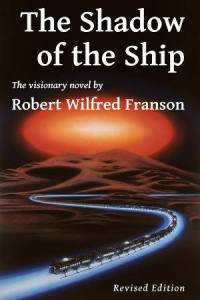
Shadow_of_the_Ship_Cover

               The Shadow of the Ship by Robert Wilfred Franson is a science-fiction novel set in a universe with a unique premise for methods of interstellar travel. A novel with strong individualist and life-extensionist themes, this book has much to recommend itself to libertarians and transhumanists alike. The Second Edition of The Shadow of the Ship was released in Kindle format in December 2014, after Franson regained the rights to the work from the publisher of the 1983 First Edition. The Second Edition contains major enhancements, including more extensive character development, explanation of key aspects of the world within which the novel takes place, and an ending that clearly sets the stage for additional books in what is to be Franson’s Overflight series.

                Space travel in The Shadow of the Ship is accessible to a society that is otherwise technologically far behind our own. The Trails Culture is dispersed among tens of worlds but lacks access even to most twentieth-century technology, such as powered flight or electricity. A series of trails across the “meadow” of subspace connects planets and can be traversed by caravans conveyed by waybeasts (squeakers) who are uniquely suited to crossing them. The book’s protagonist, Hendrikal Eiverdein Rheinallt, is originally from Earth and has been stranded within the region inhabited by the Trails Culture ever since his spaceship crashed on a nearby world. He and his friend Arahant, an intelligent aircat with the ability to speak and compose operas, are “bloodswayers” – practitioners of a rare and challenging discipline that allows the channeling of the body’s energies toward repair and rejuvenation. Rheinallt and Arahant are therefore indefinitely lived and more resilient than ordinary humans, though not indestructible. Rheinallt is approximately six centuries old and endeavors to use his vast scientific knowledge to eventually find his way back to Earth. In the meantime, he carefully advances the scientific and technical knowledge of the inhabitants of the Blue Free Nation, the most tolerant and least regimented of the societies within the Trails Culture.

                The book’s events take place aboard a caravan headed by Rheinallt with the purpose of investigating rumors of a crashed starship along the Blue Trail. The starship would be a paradigm-changing find for the people of the Trails Culture, as it would permit space travel without the limitations that the Trails pose; it could also be Rheinallt’s means to return home. The caravan includes many travelers who join out of scientific curiosity or a desire for fame, while others have more personal motives. Accompanying Rheinallt is his wife and beast-master Whitnadys, as well as a small contingent of crew to defend the caravan and provide essential logistical support. Although Rheinallt is the captain of the caravan, interactions aboard are largely guided by a spontaneous order without explicit laws and with virtually no authority for the captain to impose preemptive restrictions or discipline. Rheinallt, apart from making sure that the caravan is properly organized and maintained, only has the same prerogatives as ordinary passengers – such as the right of self-defense and the ability to protect the caravan against threats that have already manifested themselves. He considers the circumstances carefully and is reluctant to resort to force unless the existence of a physical threat is incontrovertible, as he does not wish for the passengers to lose trust in his leadership or the legitimacy of his decisions.

                Apart from the mostly anarchistic order aboard the caravan – a reflection of the broader lack of centralized authority within the Blue Free Nation – there are competing visions presented in the book, including an attempt by the Federated Trailmen, the area’s guild of caravaneers, to bring subspace travel within their sphere of control, as well as the efforts by the government of Fleurage – a world on the Yellow Trail – to clamp down on political dissent and quash “subversive” innovators who threaten an establishment rapidly spiraling toward totalitarianism. Various passengers on the caravan represent these conflicting visions, which come to challenge Rheinallt’s ability to peacefully coordinate the expedition.

                As much of the novel centers around the mystery of the ship and the stories of the passengers aboard, I will not delve into too much detail regarding events that are crucial to the story’s suspense and surprise. I note, however, that the Second Edition contains significant additions, including thorough expositions of the main characters’ backgrounds and key aspects of Franson’s universe – such as subspace travel, the bloodswayer discipline, and the cultural and technological environment of the Trails Culture. The newly added content allows for foreshadowing of important discoveries and a more definitive elaboration on the threads of the story that would be continued in subsequent novels of the series. Furthermore, the revised ending is quite moving and immerses the reader more deeply into the novel’s characters.

                Indeed, the characters of Rheinallt and Arahant should be of interest to all supporters of indefinite life extension, as here we have fine examples of literary protagonists who do not senesce and are not condemned to an inevitable demise – and who are also intelligent, rational, benevolent, witty, creative, and resourceful. Their range of abilities and vulnerabilities is much closer to what actual indefinitely lived organisms would experience: they can still suffer from accidents and external physical harm, but they lack a built-in expiration. Therefore, their interactions in the environment of subspace are still fraught with peril, but they have sufficient abilities and strengths to give them a fighting chance – much like the fighting chance we humans will need when faced with the many phenomena in the universe that are far bigger than ourselves. The more positive examples of protagonists with unlimited lifespans arise in fiction, the greater will be the cultural acceptance of the idea’s eventual application to our world. For this reason and many others, readers should eagerly anticipate the continuation of Franson’s Overflight series, which will finally bring the universe and ideas of The Shadow of the Ship into renewed prominence after more than three decades.

“Death is Wrong” Reviewed by Robert W. Franson of Troynovant

“Death is Wrong” Reviewed by Robert W. Franson of Troynovant

Read the excellent new review by science-fiction author and literary essayist Robert W. Franson of Death is Wrong. The review is published on Mr. Franson’s website Troynovant, which offers extensive literary and philosophical analysis.

Here is an excerpt: “Death is Wrong is a short book, clearly written and easy to read. I like the personal approach: it doesn’t talk down and is quite accessible. A striking concept presented quite reasonably and supported matter-of-factly. There are apt quotations from a variety of thinkers, including several of my personal heroes of modern times: Francis Bacon, Benjamin Franklin, Friedrich Nietzsche. These people and some scenes from nature are nicely illustrated by Wendy Stolyarov. For readers who want a little more about the background concepts, there is a brief Appendix discussing the seven basic causes of senescence, such as cell loss and atrophy. There are some links for further learning. It’s a good book, entertaining and thoughtful, and certainly gives us a challenge to think about.”

Revolutions Eat Their Parents – Article by Peter St. Onge

Revolutions Eat Their Parents – Article by Peter St. Onge

The New Renaissance Hat
Peter St. Onge
January 13, 2015
******************************

Left-wing revolution is one of history’s biggest bait-and-switches. Both for the intellectuals who hanker for the grapeshot, and for the marginalized peoples who get concentration camps instead of the anti-capitalist utopia they were promised.

“Revolutions eat their children.” This observation, by a journalist during the French Revolution, was only partly true. In reality, revolutions eat their parents. In particular, history’s left-wing revolutions eat the left-wing intellectuals who made them happen. By “left-wing” here I mean revolutions that explicitly aim to use government power to reshuffle society. To remake society so it matches whatever version of “justice” strikes its promoters as attractive.

Of course, in such reformist revolutions the eggheads are just an appetizer. History’s reformist revolutions move straight on to the main course: the marginalized and minorities who were often the revolution’s most passionate supporters to begin with.

The left-wing revolutions of the twentieth century have all followed this pattern: midwifed by utopian intellectuals, power is quickly seized by political entrepreneurs who play to the basest instincts of the common people. Even in the most “civilized” places, such as “anything goes” Weimar Germany or 1950s “playground of the stars” Cuba, these newly enthroned are happy to see those eggheads and their “perverted” friends interred, tortured, hung from the nearest lamp post.

The litany is depressing. Especially for any tenured radical drawing taxpayer money to cheer on the violence. Mao famously boasted of “burying 46,000 scholars alive” meaning he shipped them wholesale to concentration camps so they would shut up and die. Pol Pot’s radical communist movement famously executed intellectuals in the thousands, extending to anybody who wore glasses. Even the supposedly “cool” regimes like Fidel Castro set up concentration camps for homosexuals, while the Soviet Union illegalized homosexuality for over fifty years, outdoing by a mile that light-weight hater Putin.

Most ironically, given his campus stardom, radical hero Che Guevara gleefully and personally executed homosexuals, whom he detested, while helping set up Fidel’s network of camps across the county to torture gays and effeminate men into renouncing their allegedly wicked perversions that were supposedly the product of morally corrosive capitalism.

Why do reformist revolutions enjoy executing both left-wing intellectuals and the very “vulnerable groups” so near to the leftist heart? Because power has its own logic. Because any government based on violence has to constantly watch its back. And that means it has to appeal to the basest instincts of the masses. If the masses hate gays, or Jews, or the eggheads, then the government will do what it’s told, stuffing the Gulags with gays, Jews, and eggheads. What the basest people hate, omnipotent government hates.

Why are intellectuals so blind to this horrible pattern? Presumably, they hope this time is different and that the campus radicals and their pet politicians will hold on this time. If history is a guide, they will not. Instead, their revolution will get snatched from them by political entrepreneurs and turned into their worst nightmare: a revolution that is anti-intellectual, anti-gay, racist, and anti-Semitic. No matter how pure the birth of the revolution, history suggests this is what it will come to.

This gives no pleasure to point out. None of us want radical leftists hanging from lampposts, or executed in Che’s office for his entertainment. What we do wish is that violence-promoting reformers would have a bit more respect for the fire they play with. For them to study a bit more history. To understand why it is, always and everywhere, so dangerous to ride the tiger of unlimited government.

The left thinks it can control the tiger of the masses unleashed. It cannot, and indeed it will be the first to hang. And that would be very sad for us all, left and right.

Peter St. Onge is an assistant professor at Taiwan’s Fengjia University College of Business. He blogs at Profits of Chaos.

This article was published on Mises.org and may be freely distributed, subject to a Creative Commons Attribution United States License, which requires that credit be given to the author.

Reading, Fast and Slow – Article by Bradley Doucet

Reading, Fast and Slow – Article by Bradley Doucet

The New Renaissance Hat
Bradley Doucet
January 13, 2015
******************************

When a book has a lot to offer—meaty ideas, well-crafted language, a plot that sings, characters that move me—I want to take my time with it. I want to savour it and make it last. On the other hand, there are some books that I want to have read, but that I’m not really looking forward to reading. Also, there are just a lot of books out there, and only so many hours to devote to reading in a given day, year, or lifetime. What if I could savour the best and speed through the rest?

Thanks to a Boston-based start-up named Spritz, I should soon be able to do just that. The company has developed a text-streaming technology that apparently allows readers to increase their reading speeds dramatically without loss of comprehension or retention, and with no special training required. Normal reading is like walking, in that you do it at your own pace. In contrast, “spritzing” is like being on a treadmill, with words coming at you one at a time at a pre-determined (but adjustable) rate. It also takes advantage of what the company calls the “Optimal Recognition Point” in each word. That may sound a bit hokey, but a quick trip around the Spritz website, where you can test out the tech for yourself, should dispel your doubts.

One possible use is quickly finishing a book that started out promising but is proving somewhat disappointing. I hate to abandon a book, and I’ll only do so if it feels like a complete waste of time. But I would have been happy, for instance, to step on the gas about halfway through The Luminaries, which won both the Governor General’s Award and the Man Booker Prize last year. What began as an intriguing tale of murder and mystery set during the 1860s New Zealand gold rush, packed with lots of well-defined characters, was not ultimately very fulfilling, in my opinion. Satisfying endings are not terribly common, but in this case, I found myself caring less and less about the characters as the story dragged on. With a really good novel, the opposite happens.

If this technology pans out, I’ll have more time to spend with higher quality books, which is reason enough to be excited. But as the cost of reading (in terms of time) falls, simple economics suggests that most people will probably read more, which frankly would be great. Just think: A wiser, more knowledgeable, more empathetic world may be right around the corner.

Bradley Doucet is Le Québécois Libre‘s English Editor and the author of the blog Spark This: Musings on Reason, Liberty, and Joy. A writer living in Montreal, he has studied philosophy and economics, and is currently completing a novel on the pursuit of happiness.

We Must Proudly Reassert Free Speech and Universal Western Values – Video by G. Stolyarov II

We Must Proudly Reassert Free Speech and Universal Western Values – Video by G. Stolyarov II

The New Renaissance Hat
G. Stolyarov II
January 12, 2015
******************************

The horror of the attack on the Charlie Hebdo magazine – the murder of 17 people – journalists, policemen, and ordinary shoppers – by Wahhabist Islamist fanatics in Paris on January 7-9, 2015, highlights the stark threat that religious fanaticism poses to Western civilization. The perpetrators of this barbarism have thankfully been eliminated due to the concerted, decisive, and careful work of French police, who managed to destroy the murderers and hostage-takers without harming or terrorizing innocent, peaceful civilians in the process. But unless the Western world resolutely affirms the untrammeled right of free expression of ideas, the already commonplace heckler’s veto over speech will turn into the murderer’s veto.

Mr. Stolyarov explains the need for an assertive revival of Western Enlightenment values (which are also universal human values) and a widespread, unconditional defense of freedom of speech – in order to prevent humankind from relapsing into the muck of barbarism.

References

– “We Must Proudly Reassert Free Speech and Universal Western Values” – Article by G. Stolyarov II – January 12, 2015
– “Excellent News from Turkey Regarding the Possibility of a More Humane Islam” – Post by G. Stolyarov II – November 28, 2008 – Excellent News from Turkey Regarding the Possibility of a More Humane Islam
– “German Newspaper Attacked After Publishing Charlie Hebdo Cartoons” – The World Post – Kirsten Grieshaber – January 11, 2015
– “These Are The Charlie Hebdo Cartoons That Terrorists Thought Were Worth Killing Over” – The Huffington Post – Catherine Taibi – January 7, 2015
– “Transhumanism” – Wikipedia
– “Wahhabism” – Wikipedia