Browsed by
Category: Philosophy

Investmentocracy: A Challenge to Conventional Democratic Principles and a Framework for a New Free Society (2009) – Treatise by G. Stolyarov II – Second Edition

Investmentocracy: A Challenge to Conventional Democratic Principles and a Framework for a New Free Society (2009) – Treatise by G. Stolyarov II – Second Edition

The New Renaissance Hat
G. Stolyarov II
July 8, 2014
******************************
The Second Edition of my 2009 treatise “Investmentocracy: A Challenge to Conventional Democratic Principles and a Framework for a New Free Society” has been released in PDF format. It can be freely downloaded here.
***

Abstract

            The system of investmentocracy, described and defended here, offers a viable alternative to the conventional democratic principles of “one man, one vote” and the illegitimacy of vote transfers and vote pooling among individuals. Investmentocracy, which rewards contributors to the government with a number of votes proportional to their contributions, permits a viable elimination of compulsory taxation. Investmentocracy also entails remedies for voter irrationality and strong protections for all individual rights, including the rights of non-contributors. I use the Freecharter, a constitution of my own design, to provide a specific framework within which investmentocracy can be viably embedded. Here, both protections for individual rights inherent to investmentocracy itself and protections contained in other parts of the Freecharter will be examined.

***

Table of Contents

Section Page
Abstract 2
Introduction 2
I. Existing Literature Regarding Investmentocracy and CDPs
    1. Literature Regarding Investmentocracy 3
    2. Literature Critiquing Conventional Democratic Principles 5
II. Problems With Conventional Democratic Principles
    3. Incompatibility of Compulsory Taxation With Individual Rights 9
    4. Ownership Shares in Governmental Entities 10
    5. Lack of Sanctity of the One Man, One Vote Principle 10
III. Mechanics of Investmentocracy and the Transition from CDPs
    6. Investmentocracy and the Elimination of Taxation 11
    7. Transferability of Votes Under Investmentocracy 12
    8. Pooling of Votes Under Investmentocracy 12
    9. Cosmopolitanism, Non-Discrimination, and Investmentocracy 13
  10. Investmentocracy and Incentives for Voter Rationality 14
  11. Defeating the “Social Quacks” Through Investmentocracy 15
  12. The Transition from CDPs to Investmentocracy 16
IV. Resolution of Objections and Concerns Regarding Investmentocracy
  13. The Incentive to Invest 17
  14. The Welfare Loophole Addressed 18
  15. Why Investmentocracy Will Not Create a Hereditary Aristocracy 19
  16. Why the Wealthiest Few Will Not Take Over 21
  17. The Elimination of Forced Carrying and the Mitigation of Free Riding 25
  18. Protecting Rights Under Investmentocracy

18.1.Protections for Individual Rights Inherent to Investmentocracy

18.1a. Desire for Additional Government Funding

18.1b. Fewer Reasons to Oppress Non-Contributors

18.1c. Friedman’s Four Types of Spending Under CDPs and Investmentocracy

18.2.Protections for Individual Rights External to Investmentocracy

18.2a. The Bill of Rights and the Restrictive Clauses

18.2b. The Tricameral Legislature

18.2c. The Nullifier

18.2d. The Opt-In Constitution

29

29

29

30

31

32

32

36

38

40

Conclusion 42
Appendix: The Freecharter: A Constitution for a Society of Lasting Liberty 44
Works Cited 69
About Mr. Stolyarov 72

***
Find out more about the Freecharter.

An Analysis of Ethical Issues in the Film “Gattaca” (2004) – Article by G. Stolyarov II

An Analysis of Ethical Issues in the Film “Gattaca” (2004) – Article by G. Stolyarov II

The New Renaissance Hat
G. Stolyarov II
July 4, 2014
******************************
Note from the Author: This essay was originally written in 2004 and published on Associated Content (subsequently, Yahoo! Voices) in 2007. It earned over 40,000 page views since, and I seek to preserve it as a valuable resource for readers, subsequent to the imminent closure of Yahoo! Voices. Therefore, this essay is being published directly on The Rational Argumentator for the first time. 
***
~ G. Stolyarov II, July 4, 2014
***

The central ethical dilemma of the 1997 Andrew Niccol film Gattaca concerns the manner in which an individual ought to be judged. Should it be by the composition of his genome, present at birth, or by the attributes of personality and ambition that are chosen by that individual? In the futuristic society depicted in the film, genetic engineering allows for the elimination of almost all physical defects in newborns, whose bodily characteristics later render them far more favorable candidates for employment than those whose genes had not been enhanced in this manner. Eventually, interviews are conducted not to assess an applicant’s character and determination, but his genetic code. The even more fundamental question that arises from this is, “What determines the essential identity of a human being? Is it his genetic code, or is it something else?”

Vincent is a child born in the obsolete manner, and thus his genome is riddled with “errors,” from which high “probabilities” of him obtaining certain ailments later in life are inferred. Nevertheless, these are probabilities only, and Vincent is healthy, athletic, and yearns to one day explore outer space. Unfortunately, he is denied admission to Gattaca, the facility of the space program, on the basis of his genome alone. Despite his splendid knowledge of astronomy and navigation, the best test scores in the world will not admit him.

Yet Vincent is not content with the position of janitor, and “borrows” the identity of Jerome Morrow, a paralyzed individual with a superb genome. A series of complex procedures is designed to allow Vincent to pass all the substance tests and gain admission to Gattaca under the name of Jerome Morrow. Jerome may have the genetic endowment to enter Gattaca, but he lacks the will, and thus harbors no objection to Vincent taking his place. Another employee at Gattaca, Irene, had also been born in the obsolete manner, but her genome is adequate enough for her to be permitted to work on minor tasks. She suspects that Vincent may be connected with the recent murder of the mission director, who was about to uncover Vincent’s actual identity. In the process, however, she enters a relationship with Vincent, and faces the dilemma of whether or not to disclose his identity to the police.

Vincent’s brother, Anton, is the inspector heading the murder investigation. Throughout his childhood, he sought to demonstrate his superiority to Vincent by virtue of his enhanced genetic endowment. Nevertheless, Vincent had once saved Anton’s life in a game of “chicken,” where Anton’s body had failed him, while Vincent’s was able to endure. Anton wishes to maintain the image of his superiority and is immensely jealous of Vincent’s successful aspiring to the heights of outer space.

Vincent attempts to deceive the security systems at Gattaca by pretending to be Jerome Morrow and presenting samples of bodily substances prepared by Jerome for various examinations. In the meantime, he studies and works diligently, and his level of performance at Gattaca is precisely what is anticipated of a man with a privileged genetic endowment. Thus, only a few people ever come to suspect that Vincent is a “borrowed ladder,” a fabricator of his genetic identity. Vincent is set to depart on a mission into space, after which his individual merits will overrule his genome conclusively, and he will no longer be subject to genetic security tests. However, the murder of the mission director subjects Gattaca to a series of extremely intrusive investigations by police that threaten to uncover Vincent’s true identity and even arrest him for murder, even though Vincent is innocent of the crime.

Vincent’s tenacity and resolve to enter space ultimately allow him to successfully endure turbulent times. Despite a multitude of close calls, he is saved from universal detection, though he is recognized by Irene, whose personal admiration for Vincent overrides the fact that Vincent had broken the law. Anton also recognizes his brother and threatens to arrest him, still acting on his childhood jealousy. However, a final game of “chicken,” in which Vincent saves Anton once again, proves that Vincent’s defiance of the inferior expectations imposed upon him by his society has enabled him to exceed in his abilities individuals like Anton, whom societal expectations had favored. The doctor at Gattaca recognized Vincent’s individual merits and decided to fabricate a “valid” test for him on the day of the launch. To people like the doctor, Vincent has proved his worth and his genetic composition has become irrelevant.

Vincent’s course of action, though in violation of the law, was not in violation of moral principles. Vincent had harmed no one by his attempt to pursue his ambitions at Gattaca and in outer space; thus, his action exhibited the principle of nonmaleficence. His exploratory endeavors are of immense benefit to both himself and the level of knowledge available to the general society; thus, his action fulfills the principle of beneficence. His action was an exercise of his individual autonomy and right to self-determination in the face of a hierarchical culture that repressed these rights. Finally, his action attempted to allow Vincent to experience the just treatment that he deserved on the basis of his merits, and which, absent the action, would have been denied to him on the basis of his genome. Thus, the action fulfills the principle of justice.

A rational society would have resolved the ethical dilemma of the proper criterion of judging an individual by eschewing determinism altogether. Vincent should not have initially been seen solely as the product of his genes, for a man is born tabula rasa where the mind is concerned. The human genome determines only the structural mechanisms that exist in the individual organism. How the individual employs those mechanisms is a matter of pure willpower and determination. Few genes can conclusively determine an individual’s fate; a high probability of heart disease can be reduced by strenuous exercise, of the sort Vincent engaged in. A low “intelligence quotient” is no obstacle to an individual reading, comprehending, and applying immense volumes of material, so long as the interest to do so is clearly seen.

Vincent should have been admitted to Gattaca on the basis of a one-on-one interview process that tested his knowledge, physical skill, and enthusiasm for space exploration, for, without these, the finest genetic endowment can still produce a Jerome Morrow, a man who is paralyzed not only in body (by an accident) but in mind (by lack of ambition). The theory that fits this solution is principlism. Vincent is not harming anyone by pursuing his own favorite field of exploration; thus, the action is nonmaleficent. He is amply benefiting himself and others through his skilled endeavors in the realm of space exploration; thus, the action is beneficent. He is allowed to exercise his individual autonomy and pursue his goals, regardless of societal prejudices. And, finally, he is entitled to the same freedom of action and opportunity that other members of his society (the genetically engineered individuals) possess, which passes the test for comparative justice.

Why I Do Not Adhere to Anarcho-Capitalism (2009) – Article by G. Stolyarov II

Why I Do Not Adhere to Anarcho-Capitalism (2009) – Article by G. Stolyarov II

The New Renaissance Hat
G. Stolyarov II
Originally Published August 9, 2009,
as Part of Issue CCII of The Rational Argumentator
Republished July 2, 2014
******************************
Note from the Author: This essay was originally published as part of Issue CII of The Rational Argumentator on August 9, 2009, using the Yahoo! Voices publishing platform. Because of the imminent closure of Yahoo! Voices, the essay is now being made directly available on The Rational Argumentator. The arguments in it continue to be relevant to discussions regarding minarchism and anarcho-capitalism, and therefore it is fitting for this publication to provide these arguments a fresh presence.
~ G. Stolyarov II, July 2, 2014
***

As one of the many libertarians who loves individual freedom and free markets but nevertheless perceives an important role for government, I have been challenged numerous times on my stance. The best way to describe my position is that I am a minarchist in theory; I happen to agree with Thomas Jefferson that “that government is best which governs least,” and yet I recognize that an active government is necessary for combating force and fraud and for ensuring that the natural rights of individuals are not transgressed upon by other private parties. In practice, I am an incrementalist – a strong supporter of evolutionary change rather than revolutionary change of any sort. I believe that real-world political reform is a delicate process, and that the sequence of transitions matters just as much as the abstract desirability of any given transition. We want to implement the right changes, but we also need to implement them in the right order – just as a doctor who wishes to cure a patient using theoretically sound procedures cannot just apply the procedures in an arbitrary sequence and hope to succeed.

Following Murray Rothbard (who, unlike me, was a noted anarcho-capitalist), I believe that liberty is the most desirable political end, but it is not necessarily the most desirable end of all. The length, prosperity, and security of every individual’s life are to me much more important – and I see liberty as the surest means of attaining those ends to the greatest extent. However, it is possible for those ends to also be partially and tolerably well attained – at least in the short term – in an environment that lacks complete liberty. This is why I developed a rough system that “measures” degrees of government oppression using a mixture of cardinal and ordinal approaches. Irrespective of the particular criteria of comparison, any reasonable thinker will agree that some governments today are much more tolerable than others – and a few are quite innocuous and even outright beneficent, especially when we consider governments over smaller jurisdictions, such as states and localities, and particular agencies of those governments which do not employ coercion to any substantial extent. Metaphysically, I agree with Ayn Rand that there is an objective reality, where A = A – i.e., every particular thing is what it is and not what one’s mental model of it happens to be. Thus, I believe in judging every particular instance of government or governance not just as “government or governance in general” but rather as precisely what it is specifically – which means that a government is nothing more than the sum of the people who compose it and their actions, which need to be judged on their own merits or lack thereof. I am therefore open to the possibility that some governments may be able to solve some problems without infringing on natural rights at all. I am equally open, of course, to the possibility that those problems may be solved on the free market without government participation.

Here, I will present a basic outline of my objections to anarcho-capitalism as it is typically presented today. Anarcho-capitalism can be defined as the position that government is unnecessary altogether and that market-based services can provide all of the essential functions of government recognized by the minarchist as legitimate – including police protection, protection from foreign invaders, enforcement of contracts, and adjudication of disputes.

My Foremost Political Goal

I define a state of complete liberty as the absence of the initiation of violence or coercive dishonesty by any individual against any other individual. By “violence” I mean the physical disruption of either the integrity of an individual’s body or that of the material things which that individual owns. The term “coercive dishonesty” encompasses fraud, breach of contract, bad-faith dealings, and failure to fully disclose information that would affect the decision of a party in a business transaction. By “initiating” violence or coercive dishonesty I mean being the first party to inflict such acts on another, without having had such acts inflicted on oneself by that other and without defending some other innocent party against those acts inflicted by that other. I do not consider retaliatory force – provided that it is a proportional response to the initiated force and does not harm innocent parties – to be illegitimate or undesirable.

Thus, I believe that the state of the world which minimizes violence and coercive dishonesty as much as possible is the most desirable state. To be sure, both many governments and many private parties throughout history have engaged in these heinous acts – and I am not defending any entities that have. My position does not embrace governments as they currently are, but as they can be and ought to be. Anarcho-capitalists may object to my position by arguing that few, if any, governments in history have subscribed to minarchist principles and initiated no violence or coercive dishonesty. To this, I will reply by quoting John Lennon: “You may call me a dreamer, but I’m not the only one.” Few, if any, societies in history have been viably anarcho-capitalist, either. Neither my position nor the anarcho-capitalists’ has any existing real-world incarnation. The question before us, then, is which of these positions would result in less overall violence and coercive dishonesty if implemented in practice?

Objection 1: Lack of an Ultimate Arbiter

Anarcho-capitalists posit that dispute resolution – be it of the character of police action or judicial proceedings – can occur among entirely private entities on the free market without any government involvement at all. For sake of conciseness, I will call the entities that engage in this manner of dispute resolution DRAs – or dispute resolution agencies.

It is true that many forms of dispute resolution can occur without government participation and do occur in this manner today – within families and business arrangements subject to private arbitration. If a private dispute is resolved satisfactorily by the relevant private parties themselves, then there is no need for recourse to government. However, there also exist instances – all too many today, as evidenced by the overwhelmed American judicial system – where private parties cannot reconcile their differences solely through private means. Anarcho-capitalists’ typical response to this is that in a wholly free market (as they define it, that is, with no government altogether) ex ante arrangements would exist whereby, if DRA X and DRA Y – representing two different and opposing parties in a dispute – could not reach a mutually satisfactory decision, the power of decision would be delegated to a third DRA – Z. This is conceivable, but it is by no means guaranteed that such an arrangement would occur in all cases. Thus, under anarcho-capitalism, there is nothing theoretically preventing there being no ultimate resolution to a dispute – ever – from the standpoint of legitimacy, in which case there would be no recourse left but to the principle of “might makes right.” If a dispute cannot be resolved peacefully, then it will devolve into violence – which is the least desirable of all outcomes. Anarcho-capitalism lacks an ultimate arbiter that would step in irrespective of prior contractual arrangements or lack thereof in order to quell the initiation of violence if it were to occur.

It is conceivable that a government could leave most dispute resolution to the private market – unless the market has demonstrated its failure to achieve lasting, peaceable resolution. In that case, the government, as the ultimate arbiter, would need to intervene and offer a resolution, either through a decision of its courts or through the interposition of armed agents whose presence would prevent violence from erupting. It is important to remind my readers that my foremost objective is the prevention of violence breaking out. If two private DRAs were about to begin a miniature war – and they happened not to have contractual procedures in place for preventing it beforehand – then it is desirable for a third agency with greater powers than a mere private entity to decisively put an end to such coercive and damaging behavior.

Objection 2: Lack of Legitimate Enforcement against Violent Non-Parties to Contracts

The way an anarcho-capitalist society would work – according to most of its advocates – is that all members would bind themselves by contracts in their mutual interactions, and the contracts would stipulate consequences for non-compliance. This raises an interesting issue: What if a person within the society refused to bind himself by any contracts whatsoever and simply raided, stole, and murdered as he saw fit? If there is no law other than what individuals choose to bind themselves by, then what legitimate recourse do other non-coercive members of the society have against this initiator of violence? Moreover, if this person were to team up with a host of others who similarly chose not to bind themselves by any contracts that prohibit initiation of force, could not a formidable criminal gang form and terrorize – if not overwhelm – the peaceful portions of the anarcho-capitalist society? Of course, somebody in the anarcho-capitalist society could always simply kill or detain the aggressors in practice, without regard for whether the aggressors broke a contract or not. However, such an act would not be legitimate in an anarcho-capitalist society. Illegitimate acts can and do occur – both with and without governments – but what counts as an illegitimate act matters. Under a government, murder can and does happen, but murder is considered illegitimate. Under anarcho-capitalism, murder by non-parties to any contracts is not illegitimate, but punishing by force a person who commits such a murder is illegitimate. A system where legitimacy fails to apply to actions with obvious morality and desirability is a troubling system indeed.

Objection 3: The Oxymoron and the Danger of Markets in Force

A market arrangement is an arrangement based on voluntary participation of all parties – an arrangement where trading is substituted for compulsion. On a free market for a typical good or service – such as an item of food or a construction job, for instance – no individual is required to buy and no individual is required to sell, except on terms mutually favorable and explicitly agreed upon. However, the term “market” no longer applies in this sense when any element of compulsion is introduced. When a “market service” involves wielding weapons and enacting violence against individuals who do not wish to have this violence inflicted upon them, it ceases to be a “market service” and becomes something quite different. This does not necessarily make such a service illegitimate, of course – as the potential for retaliatory force is a necessary component in minimizing the initiation of force. However, this difference does invalidate the application of typical principles of analyzing markets to such “services.” There can be no market-based analysis of a service that does not entirely rely on voluntary consent from all parties involved.

One of the glaring dangers of a “market service” specializing in the use of force is that such a service could simply use the force it “produces” to extort or steal other people’s wealth instead of earning it in voluntary trades. Without an external authority to enforce a prohibition on this behavior, there is no guarantee that such behavior would not occur. A free-market DRA would not always do this, of course, but there are conceivable scenarios where every incentive would favor such behavior. Only when there are substantial disincentives to the use of force from other armed parties on a free market or when the DRA administrator is particularly humane, benevolent, and enlightened could a DRA be reasonably expected not to violate individual rights. There are two ways for such incentives to arise without reliance on anyone’s personal virtues. Either 1) there could exist a “balance of power” among the DRAs such that each of them is afraid of transgressing against clients of the other or 2) there could exist an authority external to the DRAs that would always protect the parties unjustly aggressed upon, irrespective of the power differential between the aggressors and the targets of aggression. I favor solution 2), because it is not as contingent on a particular balance of power being in place.

Moreover, many anarcho-capitalists claim that one of the problems with government is that it has a monopoly on the use of force and that, as a monopoly, it necessarily offers a lower quality and lower quantity of its product at higher prices. I urge the reader to recall, however, that we are not here discussing a monopoly on otherwise entirely voluntary transactions. It is useful to ask the question whether it is desirable to have force offered in “higher quality,” higher quantities, and a lower price. I, for one, would prefer it to be more expensive to kill a person rather than less – and for the methods of killing to be both of lower quality (i.e., less reliable at killing) and available in lower quantities. Perhaps a monopoly on force has the potential to minimize the use of force compared to “competition” in force. This, I believe, is an empirical question – but even the question itself challenges many anarcho-capitalists’ assertions that governments are necessarily bad because they are monopolies on the use of force.

Objection 4: Each Person a Judge in His Own Case

This objection to anarcho-capitalism comes from none other than one of history’s first libertarians – John Locke. Locke believed that a government is necessary to resolve disputes and decide on punishments, because no individual is qualified to be an impartial judge in his own case. Virtually all of us, when we feel wronged, have a tendency to exaggerate the magnitude of the injury we have suffered and to demand a punishment that is likely to be disproportionate to the offense. On the other hand, when a person has wronged somebody else, he has an incentive to maintain his innocence or to argue that his act was not as grievous as was truly the case. A third party, not itself a victim or a perpetrator of the wrongful act, is needed to ascertain both the facts of the case and the apportionment of guilt and punishment. Sometimes, such a third party could indeed be a private arbiter. However, it is entirely possible for two private DRAs to each be vested – either emotionally, financially, or both – in the interests of their particular clients in a manner that would detract from objectivity in reaching a decision. In that case, I believe that an indispensable role exists for government to provide the desirable impartial arbitration.

Objection 5: Over-Emphasis on Names, Under-Emphasis on Reality

My concern with anarcho-capitalism is it substitutes consideration of the names of political arrangements for the reality of those arrangements – i.e., the physical actions performed by physical people in the physical world. Whether a function is called a “market” function or a “government” function is not as important as the physical movements involved in carrying out that function. If the physical movements involved do not cause disruption of body or property (as in violence) and do not involve the formation of chemical reactions corresponding to false impressions of reality in the brains of parties to a transaction (as in coercive dishonesty), then the action is legitimate from the standpoint of natural law. On the other hand, if the physical movements of individuals correspond to acts of violence or coercive dishonesty, then these actions are illegitimate – irrespective of whether the individuals call themselves (or are called by others) government officials, free-market DRAs, or private gangsters.

Anarcho-capitalists might respond here by noting that, in the 20th century, governments have killed more people than possibly all private crime in human history. This is true – but it does not undermine the case for any government whatsoever. The killing was done by some governments – such as the governments of Nazi Germany, the USSR, and Maoist China – but not others, such as many of the governments of American cities, towns, and villages. Moreover, even in the governments that perpetrated the killings, only some of the officials were responsible for either ordering the killings, promoting them as desirable, or carrying them out. Millions of government employees have never committed a single coercive action (and yes, that even includes their mode of earning a living – as quite a few government positions are not tax-financed). It does not seem fair to lump a peaceful bureaucrat doing research or mediating consumer complaints at his desk with an NKVD officer massacring villagers in the Ukraine. Both are “government” functionaries, but they could not be farther apart in terms of what they do, and the atrocities of the latter do not de-legitimize the former. The anarcho-capitalist characterization of all government as violent, coercive, and unnecessary is a poor substitute for a thorough consideration of reality. Moreover, it is a violation of the principle of methodological individualism, which evaluates the actions of each person as an individual person, and not primarily as a member of a collective. Collectives do not act or think; only individual people do – although the incentives people face depend on the institutional structure to which those people are subject.

Objection 6: No Practical Application

To date, I have not found a single viable proposal for the attainment of anarcho-capitalism in the real world. Anarcho-capitalists have tended to spend most of their time on either 1) describing what an ideal anarcho-capitalist society would be like or 2) discussing why government, in its various manifestations, is undesirable. At the same time, some anarcho-capitalists have disdained and even actively discouraged participation in “the system” as it currently is, because that would grant “implicit recognition” to existing power structures. During the 2008 Republican Primaries, for instance, many anarcho-capitalists (though, of course, not all of them; I do not mean to offer a blanket characterization) endeavored to actively dissuade people from supporting the Ron Paul movement, arguing that attempting to reform the U.S. government from within would grant legitimacy to the structures of the U.S. government. These anarchists were preoccupied with formal structures over the substantive functions of the government – which could be better or worse than they are today. Moreover, these anti-Ron-Paul anarcho-capitalists undermined a movement that had the potential to eliminate many of the abuses of the U. S. federal government against its subjects’ liberties.

I happen to believe that political theory is more than a mind game; it has relevance to the real world, and it ought to have real-world implications for how we act in our own lives. It is not enough to simply state that one would like the world to be a certain way. Rather, a specific, technical, and quite involved series of steps is necessary to transition from the status quo to any state considered desirable. To simply contemplate the end outcome without any idea of how to attain it or even approach it is to divorce one’s political thinking from reality. We find ourselves today with a highly imperfect political system – one that involves numerous violations of individual liberties and also jeopardizes the economic prosperity and technological progress of the Western world. To solve today’s political problems, we cannot but participate in government in some way for the purposes of reforming it or at least protecting ourselves. To reject government altogether instead of endeavoring to improve it is to hide from the real, pressing problems of our time.

Perhaps the anarcho-capitalist ideal will be realizable in some distant future time, once human beings have progressed morally and technologically to such an extent that the initiation of force is no longer lucrative to anybody. I even suggested that this would happen in my short story, “The Fate of War.” In that enlightened time, violence would altogether not be within the realm of human consideration, and a viable anarcho-capitalism would be the natural corollary to that state of affairs.

Meanwhile, however, we are alive today – and if we do not have that which we consider good within our lifetimes, we shall not have it at all. If it is liberty we want – and the anarcho-capitalists have not come up with a viable way to have it without government – then we must have liberty with government. This endeavor will require working through government as well as through private channels; it will require not rejecting the existing system, but modifying it incrementally to move it toward more liberty and less violence. At the same time, a revolution against government is the least desirable course of action, because it would devastate our current levels of prosperity, health, and stability. Individuals who are wealthy, productive, and in control of their lives will come, over time, to civilly demand increasing amounts of independence from centralized control. On the other hand, individuals whose livelihoods have been ruined and whose prospects for upward mobility have been thwarted by an unstable macroeconomic and political climate – which inevitably accompanies revolutions – are easy prey for demagogues and would-be tyrants. Advocates of freedom must be patient, civil, and cautious. While challenging abuses of government authority as such abuses occur, freedom-loving people ought never to do anything that would undermine the standard of living or the safety and comfort of people in the Western world.

Free PDF of «Смерть неправильна!» – Russian Translation of “Death is Wrong”

Free PDF of «Смерть неправильна!» – Russian Translation of “Death is Wrong”

The New Renaissance Hat
G. Stolyarov II
June 28, 2014
******************************

A free PDF version of «Смерть неправильна!» – the Russian translation of Death is Wrong – is now available for download from The Rational Argumentator. You can obtain your copy here and may spread it to Russian-speaking audiences as widely as you wish.

«Смерть неправильна!» was translated into Russian by Marcus Baylin.

cover_final_russian_6x9

«Смерть неправильна!» – Russian Translation of “Death is Wrong” – Translated by Marcus Baylin – Post by G. Stolyarov II

«Смерть неправильна!» – Russian Translation of “Death is Wrong” – Translated by Marcus Baylin – Post by G. Stolyarov II

The New Renaissance Hat
G. Stolyarov II
June 27, 2014
******************************

cover_final_russian_6x9The Russian translation of Death is Wrong – «Смерть неправильна!» – generously translated by Marcus Baylin – is now available via Google Books. You can see a complete preview here.

A paperback version can be obtained from Createspace for $11.23 here.

Amazon has begun to carry the paperback version here.

For some reason, the Amazon Kindle format does not yet support Cyrillic characters, so I have instead decided to offer an electronic version through Google Play.

The electronic version will be downloadable for FREE on Google Play within the next 24 hours on this page.

You have my permission to spread the electronic version of the book to Russian-speaking audiences as widely as possible, with no strings attached.

We can also send some free paperback Russian books to anyone who is willing to distribute them to Russian-speaking children. (This offer is good while supplies last; we have resources to ship 171 copies of Death is Wrong in either English or Russian. If you are interested, e-mail me at gennadystolyarovii@gmail.com with (i) your name, (ii) your MAILING ADDRESS, (iii) your support for indefinite life extension, (iv) the NUMBER OF COPIES of Death is Wrong requested, and (v) your plan for spreading the books to children, free of cost to them.)

The Single Bullet That Killed 16 Million – Article by Edward Hudgins

The Single Bullet That Killed 16 Million – Article by Edward Hudgins

The New Renaissance Hat
Edward Hudgins
June 27, 2014
******************************
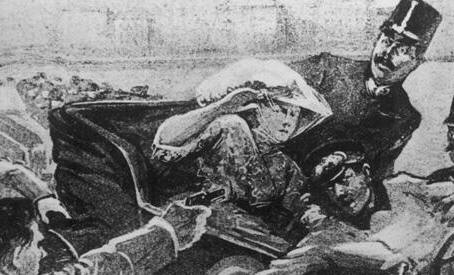
A century ago, on June 28, 1914, Serbian nationalist Gavrilo Princip shot and killed Archduke Franz Ferdinand, heir to the emperorship of Austria-Hungary, along with his wife, on their visit to Sarajevo.
Gavrilo Pirincip fires on the Archduke and Archduchess, June 28, 1914

World War I led to 16 million military and civilian deaths, plus nearly 20 million wounded. And the misery and horror of that war resulted in another casualty: confidence in the Enlightenment enterprise and human progress.

Enlightenment Europe

In the late seventeenth century Isaac Newton’s discovery of the laws of universal gravitation dramatically demonstrated the power of the human mind. Understanding of the world and the universe—what we call modern science—became a central Enlightenment goal.

At the same time, the struggle for Parliamentary supremacy in England led John Locke to pen his powerful treatise on individual liberty. Creating governments limited to protecting life, liberty, and the pursuit of happiness also became a central Enlightenment goal, which culminated in the creation of United States.

Enlightenment values were not limited to Britain or America. They were universal and created a European-wide culture of individualism, freedom, and reason.

Collectivist anti-Enlightenment

But Enlightenment thinkers and activists not only had to fight entrenched oligarchs and rigid religious dogma. Starting with Jean-Jacques Rousseau, a school of thought—if thought it could be called—arose that opposed individualism with the good of “society,” or the group, and rejected reason in favor of emotion and instinct.

The French Revolution starting in 1789 saw Enlightenment ideas losing ground to reactionary and collectivist forces. The result was the Terror and the guillotine, dictatorship and a new monarchy, and the carnage of the Napoleonic wars–the first great modern global conflict, which ended in 1815 at Waterloo.

In the century that followed Europe suffered only short regional conflicts, most relating to the unification of Italy and of Germany. The Industrial Revolution was creating prosperity. Governments were granting citizens rights to political participation and were recognizing their civil liberties. By the early twentieth century, continued progress seemed inevitable.

Pernicious nationalism

But the pernicious collectivist ideology combined with a major European cultural defect: nationalism. This form of collectivism meant more than just an appreciation for the aesthetic achievements—art, music, literature—of the individuals in one’s ethnic group. It meant putting one’s group or one’s country, right or wrong, ahead of universal values and principles. Kill for King or Kaiser!

There’s an irony in the fact that poor Franz Ferdinand wanted to recreate Austria-Hungary as a federation in which the minority groups—that were always either dominated by Viennese elites or at one another’s throats—would have autonomy similar to that enjoyed by the American states. If only Princip had waited a while.

Unfortunately, the volatile combination of nationalism, an interlocking treaty system, and the Britain-Germany imperial rivalry only required a spark like the Sarajevo assassination to set off a global conflagration.

Collectivism vs. collectivism

After World War I, individualism and “selfishness” got much of the blame for the conflict. And science was no longer associated only with progress. It had created machine guns, tanks, and poison gas, and made possible a fearful slaughter.

Idealists created the League of Nations to prevent such wars in the future. But they tried to cure the problem of nationalism with more nationalism, simply accentuating the problem. Indeed, Hitler used the principle of self-determination of peoples as an excuse to unify all Germans into one Reich by force. His form of collectivism also entailed enslaving and wiping out “inferior” races.

The catastrophe of World War II was followed by a Cold War, which saw the Soviet Union asserting another form of collectivism, pitting one economic “class” against another. Western Europe opposed the brutal Soviet kill-the-rich socialism with a kinder, gentler, loot-the-rich democratic socialism. The Soviet Union with its communist empire collapsed in 1991, and Western European democratic socialism is going through a similar disintegration in slow motion.

Still recovering from the Great War

Today, Enlightenment values are making a comeback. The communications and information revolutions, and the application of new technologies in medicine, transportation, and other fields, again demonstrate the power of the human mind and the benefits it confers.

Furthermore, many of the new entrepreneurs understand that it is they as individual visionaries who are transforming the world. And while their achievements benefit everyone, they strive because they love their work and they love to achieve. They pursue happiness. They hold Enlightenment values—though in many cases their politics still need to catch up.

The world is still digging out from the consequences of that single bullet a century ago, which led to the deaths of millions. Putting our country and the world back on the path to liberty and prosperity will require a recommitment to the Enlightenment values that created all the best in the modern world.

***

Dr. Edward Hudgins directs advocacy and is a senior scholar for The Atlas Society, the center for Objectivism in Washington, D.C.

Copyright, The Atlas Society. For more information, please visit www.atlassociety.org.

Motivated Time Prospectors – Article by Eric Schulke

Motivated Time Prospectors – Article by Eric Schulke

The New Renaissance Hat
Eric Schulke
May 16, 2014
******************************

Think of all the people’s lots in life that you don’t have. You will regret not having more chances to stand here as you are now. It is said that if everybody put their worries into a pile and then took an equal share from the pile, then most people would be content to take back their own share of them. I was reading an article that said,

“To be sick and dying in Vegas has its own existential horror. Not only do you realize that you are going to die and that you don’t matter to the world, but you also realize that much of the world is awful and yet you still would do anything to live.”

Struggling to survive on this planet can be miserable, and yet we continue to stick with it. Why? Because we know that with life there is a chance to engage in more experience. It seems that a person can live, in part, on the desire for continued experience. That chance drives us to keep reaching for achievement and progress.

What does one want to experience in life? What does that honest-to-life list look like? If you had to draw up a complete list, could you do it, or describe the nature of it? The active wanting of experience, it seems, is a major cure to indifference toward death. It seems that it might be a life-or-death question.

We have become really good at being indifferent to the most widespread forms of death, in order to spare ourselves from stressing out on futilely trying to do something about it. Now that we have the tools and techniques, and the times have changed, we have to change that way of thinking from indifference back toward letting that horror affect us. Horror benefits us in that it is our cue to be driven to action to make sure that the horror can’t happen again. If a poltergeist starts ravaging your house, that’s your signal to get out of there, in the same way that the horror that general death, aging, and other diseases are your signal to get death, aging, and other diseases away from you and out of your cells.

Carl Sagan’s daughter once related his words that “there was nothing he would like more in the world than to see his mother and father again.” I was thinking about what an insult added to injury he must have felt in his final days, to have the paralyzing misery of impending death heaped on top of crushing pain. Let that kind of pain course through your mind, face it, bring it to a steaming rage, and let the energy power you to help execute any of the various assaults on aging and disease that are underway in laboratories in various places around the world.

In another article, I was reading about a guy whose daughter went missing in 1971, and was never found. He lived to be 102 and died in the fall of 2013. He had stated that one of the hardest burdens for him was never knowing what happened to his daughter. What misery, for all those years… Think of that… Then five days after he died, his daughter’s car was found upside down in a river; she was the apparent victim of a decades-old car crash.

I can’t fathom that life could inflict such a bitter spite upon somebody. That story stirs up the kind of despair and anguish that each death seems to deserve. It’s the kind of anguish you need to figure out how to allow in, in order to have the right kinds of drive to help pull the Movement for Indefinite Life Extension forward with us.

So once we get there, back to that place where we stand amidst realization of the horror of death, how do we face it? One good basic and natural way to do so, it seems, is to purposefully enjoy the good parts of life, and strategize and take action in helping to fix the worst of the broken things. It’s fun and fulfilling. Life isn’t bad, it’s an adventure. A tough challenge is like a choppy sea, like two armies clashing, or mountain climbers fighting the elements. The implementation of the solution of each challenge is like a Renaissance of scale, some miniature, some very large, like Caesar vs. Vercingetorix, or Charlemagne vs. the Vikings. It’s like the writings of Caesar, the writing-resurgence work of the Carolingians, Vercingetorix and the fate of an entire Celtic confederation, or the first times the Vikings set sail out beyond Greenland.

A few days ago I was thinking about a typical farm hand of Medieval times, walking outside to smell the heavy wet grass and earth of a cold wet spring day. How did they remember the great Lombard migrations, or Scandinavian raiders docking at Pisa? Who was Charlemagne to people before negationists took hold? What did they think might become of the future? Many of them must have felt lost at that kind of thought.

Focus on your heartbeat, feel it pulsing. Theirs pulsed like that. They thought of their hearts stopping and of how it couldn’t possibly be lost to the dust of history anytime soon. You think that, too. Their hearts are lost to the dust of history. Yours is next.

What does every year, and every moment mean to the history of everything? I read recently that if you throw a pebble, it could be offsetting the center of gravity of the universe. Every moment means everything, every moment is everything. Every moment is a world in itself, a great painting, a great work of art, a great burning torch, a water well built in inhospitable lands. Think of how many heartbeats have come to a stop, how many paintings have been burned… So many tangled groves in forests have had the wind blowing through them for all of these years, without one person, without one spoken word, in a place near a stream, where there was once a mighty, crackling stone fireplace that warmed multiple generations of families across the 6th through 8th centuries. It was a place that hosted countless memories which later tormented the souls of dying, now long-dead grandfathers.

They don’t deserve to be dead. They deserve what they earned: the world that is paying exponentially exciting, satiating, and fullfillingly valuable dividends today. This is an incredibly motivating and driving factor in what pushes me to pursue indefinite life extension. People take on a variety of diverse augmentations over time, becoming unique collections of intriguing insight – dynamic power tools for slicing and dicing the elements. We can’t afford for these wealths of rare and powerful abilities and resources to be pillaged and killed off. Sometimes it seems as if life-extensionists like me have to explain to people why it’s bad to let people be killed before we can get down to business in a worldwide effort to reach the goals that can get this done.

We are like the union for the people that make a profession out of being human. We are creating better and better pay, and we demand longer hours. I want every feasible remedy that can restore and maintain life to be a permanent fixture in this reality, for it to be harvested like air. There is no reason a heart has to give out. There is no reason we cannot prevent tangles from forming in the brain. Our organs and cells don’t have to degrade. We have tools, techniques, and brains. We will make it through these obstacles.

How long will it be before our times are old, before 2015 cars look like old classics, and thoughts of our times are most often associated with the smell of the pages of books that have been moved from their years of service on shelves, to boxes of outdated material in back rooms? Many experiences and voyages that could have happened, and could have been chronicled in those boxes, can never exist.

That’s the problem, it seems: There are experiences that could have existed, but that now never can. Thoughtful experience – there is no reason to forgo it or allow it to be lost – hence the basic, inherent reasoning for supporting indefinite life extension, it seems.

Every moment is the gold, the thing to be mined, the thing to be in awe of, to seek, pursue, and strategize toward, to work for, to feel victorious for possessing. Let’s mine more time: support the Movement for Indefinite Life Extension. Don’t be distracted by fool’s gold while the most valuable gold, time, slips through your fingers.

One of these days, we will put funeral homes across the world out of business, and it will be a great victory. We will celebrate, and the festivities will be grand. But we must get a move on now, because our chances are turning into sand.

Eric Schulke was a director at LongeCity during 2009-2013. He has also been an activist with the Movement for Indefinite Life Extension and other causes for over 13 years.

Fearless, Provocative, and Inescapably Thought-Provoking: Review of Kyrel Zantonavitch’s “Pure Liberal Fire” – Article by G. Stolyarov II

Fearless, Provocative, and Inescapably Thought-Provoking: Review of Kyrel Zantonavitch’s “Pure Liberal Fire” – Article by G. Stolyarov II

The New Renaissance Hat
G. Stolyarov II
May 16, 2014
******************************
Pure Liberal Fire by Kyrel Zantonavitch is available on Amazon in paperback and Kindle formats.
***
There is perhaps not a single thinker in the world more fearless than Kyrel Zantonavitch. Pure Liberal Fire is the direct, provocative distillation of his thoughts on metaphysics, epistemology, ethics, politics, economics, culture, religion, and the history of philosophy – including Objectivism and Classical Liberalism. Zantonavitch seeks to evoke a pure, true liberalism, and he shows no mercy for ideologies and attitudes that constitute its antithesis. He certainly leaves no doubt in the reader’s mind about where he stands on the issues addressed – and each article within the book employs an abundance of superlative expressions – be they positive or negative. When Zantonavitch praises, he really praises – and the same goes for when he condemns.
***

I give this book a rating of five stars because it invariably makes people think – no matter who they are or what their starting persuasions and assumptions might be. There are many areas in which I strongly agree with Zantonavitch – and quite a few where I strongly disagree as well. He articulates many valid points about the fundamentals of philosophy, the importance of liberty in political theory, atheism, the damage perpetrated by various political movements and policies, and the unfortunate tendencies among historical and current Objectivists toward dogmatism and conformism instead of independent thought and the honest pursuit of truth. Some of our areas of disagreement include war, areas of foreign policy, and, perhaps more generally, the desired mechanisms for achieving societal change.

Zantonavitch’s approach and style would entail achieving a fiery, dramatic, immediate deposition of everything (every person, every policy, every idea) he considers evil, dangerous, or damaging. My view of reform is more surgical, focused on getting the sequence of steps right so as to minimize the damage inflicted during the transition while ridding the world of the disease of bad policies (and, in a more long-term fashion, through persuasion and free-market education, also ridding it of bad thinking of the sort that motivates bad policies).

Zantonavitch combines his no-holds-barred treatment of his subject matters with a unique dialectical technique. There are several places in a book where he characterizes a particular set of ideas (or people) in a strongly negative way – but then later (or earlier) also portrays them as either highly praiseworthy, or at the very least understandable and characterized by redeeming attributes. Two examples that come to mind are (1) his discussions of Objectivism as a brainwashing cult in some places and as the most advanced, best-developed philosophy to date in others, and (2) his characterizations in some places of religious believers as not particularly bad as long as they do not take their belief too seriously – and in other places of anyone who believes in a god or teaches his/her children such beliefs as being guilty of evil and/or abuse. The reader can glimpse in this a deliberate juxtaposition of these opposing characterizations in a dialectical fashion – in an attempt to examine both the positive and the negative aspects of the ideas and behaviors Zantonavitch is writing about. (With regard to Objectivism, there is definitely merit in pointing out both the great strengths and the failures, as I have myself done, for instance.) This also creates a second layer of meaning in Zantonavitch’s work, as his uses of positive and negative superlatives with regard to the same subject are seldom immediately close to one another. While the rest of his writing endeavors to be extremely direct (indeed, provocative) with regard to its meaning, he seems to expect his readers to make their own connections in this respect without him deliberately pointing them out. As a result, with regard to Objectivism especially, Zantonavitch’s readers have the opportunity to acquire a more balanced, nuanced view after having been exposed to both his glorious praise and his scathing condemnation of the philosophy.

“Death is Wrong” Fundraiser: Another Ship Returns to Harbor after Braving the Seas for the Cause – Article by Eric Schulke

“Death is Wrong” Fundraiser: Another Ship Returns to Harbor after Braving the Seas for the Cause – Article by Eric Schulke

The New Renaissance Hat
Eric Schulke
April 26, 2014
******************************

On December 2nd of 2013, the Movement for Indefinite Life Extension began a contest for people to send in their ideas on how to spend money on outreach for the cause. The following question was asked:

If you were to receive a check in the mail with $5,000 to inform as many people as possible about the desirability and the prospects for indefinite life extension, to get them interested in the people, projects and organizations working directly or indirectly toward indefinite life extension, then how might you spend it?

Six entries were entered into a poll.

The entry with the most votes was Gennady Stolyarov’s entry to distribute 1,000 copies of his and his wife Wendy’s great new children’s book Death is Wrong. Their winning entry won them one of four books that were given away for the contest: a signed copy of The Transhumanist Wager, which was generously contributed to the project by its author, Zoltan Istvan.

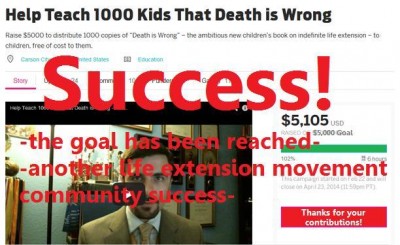
A group of us put our heads together and came up with a plan to raise the money. The fundraiser was launched on February 23rd of 2014 and successfully completed on April 23rd of 2014.

It is a great success on multiple levels for the Death is Wrong book and vision in itself, which supports indefinite-life-extension research and philosophy in general, and which is written by one of the many Movement for Indefinite Life Extension leaders, Gennady Stolyarov.

It is also a great success for the Movement for Indefinite Life Extension in general on many levels. It is one of the first major projects the MILE has executed in its upcoming series of projects to work to reach 80,000 “likes” at MILE Facebook page for the Year 3 goal, which begins on July 17th 2014, and tasks us with collectively helping to achieve the group victory of moving from 8,000 likes, to 80,000 likes by the July 17th of the following year, 2015.

Rodney Ashby and Jason Shields helped us get the momentum rolling and did fundraising throughout, and Tonya Scholz gave the project a big hand. Gennady Stolyarov made an amazing media tour for the project, finding himself talking about it in interviews and getting mentions and reports from a variety of sources. Most of them are of his own arranging, some of these outlets picked the story up on their own, and there are some opportunities that I arranged. They include, but are not limited to, the following:

There were 92 contributions from over 80 individuals and one group, including, but not limited to:

There were also at least 13 anonymous donations. I did a count of all of the donors that I brought in. A close, conservative estimate is that I brought in around 70% of them.

We ended up raising $5,141, compounding on the success by $141. That means that we raised enough to distribute 29 more books than projected. Those of us that worked with this didn’t take a single dime as a cut of this. I put a hundred dollars or so in ads into it, and Wendy and Gennady have given countless hours of their time to rewarding donors. Countless others, like general activists and reporters, have put their time and resources into this. The Life Extension Foundation made an inspiring and generous $1,255 dollar donation to close the deal.

Gennady and I have already secured the distribution of 140 copies, and there are now over 1,000 total available for distribution. An order even went out to Aubrey de Grey, whose work is one of the many topics that is talked about in the book. Gennady Stolyarov writes in the Indiegogo update page that,

Update of April 16, 2014: I am delighted to announce that a shipment of 10 Death is Wrong books was made yesterday to Dr. Aubrey de Grey himself at the SENS Research Foundation. Since Dr. de Grey’s work is a crucial inspiration for Death is Wrong and my longevity activism more generally, I am immensely pleased that he has agreed to receive this shipment and make the books available for distribution.

We encourage the distribution of Death is Wrong books to places like schools, libraries, and directly to parents and children. We ask people to order as many copies as they think they may be able to give away to kids and people with kids, at Transhuman and health events, rallies, and similar events. Gennady has instructions on how to order them free of charge:

Instructions for Longevity Activists to Request Copies of Death is Wrong

– Send an e-mail to gennadystolyarovii@gmail.com

– Provide your name, your mailing address, a statement of your support for indefinite life extension, and a brief description of your plan to spread the book to children in your local area. Remember that all copies received pursuant to this initiative would need to be offered to children free of charge (as gifts or reading opportunities) and may not be resold.

– Provide the number of copies of Death is Wrong that you are requesting.

– Preferably, provide an indication that you would be willing to send photographs of the books that have been delivered to you as well as events where you will be distributing the books.

The project has been a great community effort. The Movement for Indefinite Life extension is our collective spirit, not an organization. Together we collect supporters for all of the constructive projects and organizations. There must have been over 150 people involved. More activists flexed their life-extension muscles, and we helped more people that want to get involved to take the first step. If you’ve ever saved money, then you know how incremental change adds up. You cannot achieve the saving of $8,000 unless you first get to $2,000, and $6,000, and so forth.

It’s an example of elements coming together for a movement, like this article says:

A movement occurs when, one, a large number of people have a need that, two, lines up with the necessary ingredients to make it happen, and those two things are sparked by, three, a catalyst.

The need to survive has always been here. The ingredients have been getting added to the mix since the dawn of the Scientific Revolution. The element of the love for life is in the air, thick with explosive properties, fueled by indefinite-life-extension research and outreach from around the world and across time. People are busy working on rallies, conferences, events, interviews, getting the message out, and all the rest. The tools and the ability to make this happen are ripe, and growing more and better yields of produce by the month. Every time you put a match to it, it erupts in indefinite-life-extension activism. Be that spark today and get in on this movement.

We have more projects like this ahead, and there are plenty of others to choose from in the communities, pages, groups, organizations, sites, and other venues, around the world, growing here toward that tipping point where we can have the opportunity to spill across the ticker tapes of screens and the minds of the young and old alike, lighting hearts and minds on fire with desire to chip in together to make this happen. This is an incredible opportunity, this time here, fertile with tools and insights, unleashed capabilities beyond our wildest dreams. People are already capable of tons of incredible things that you don’t even know about yet.

Columbus went on a fantastic voyage. When you think of those times, and how fulfilling and enthralling it must have been for them to be able to be part of that, realize that indefinite life extension, all this Transhumanism, is an even greater frontier, and you are in an even more incredible and glorious position than people like Columbus and his crew. It’s a position here where anybody, where you, can help sail out into these incredible frontiers that are opened up through the ever-expanding fields of science and technology.

Eric Schulke was a director at LongeCity during 2009-2013. He has also been an activist with the Movement for Indefinite Life Extension and other causes for over 13 years.

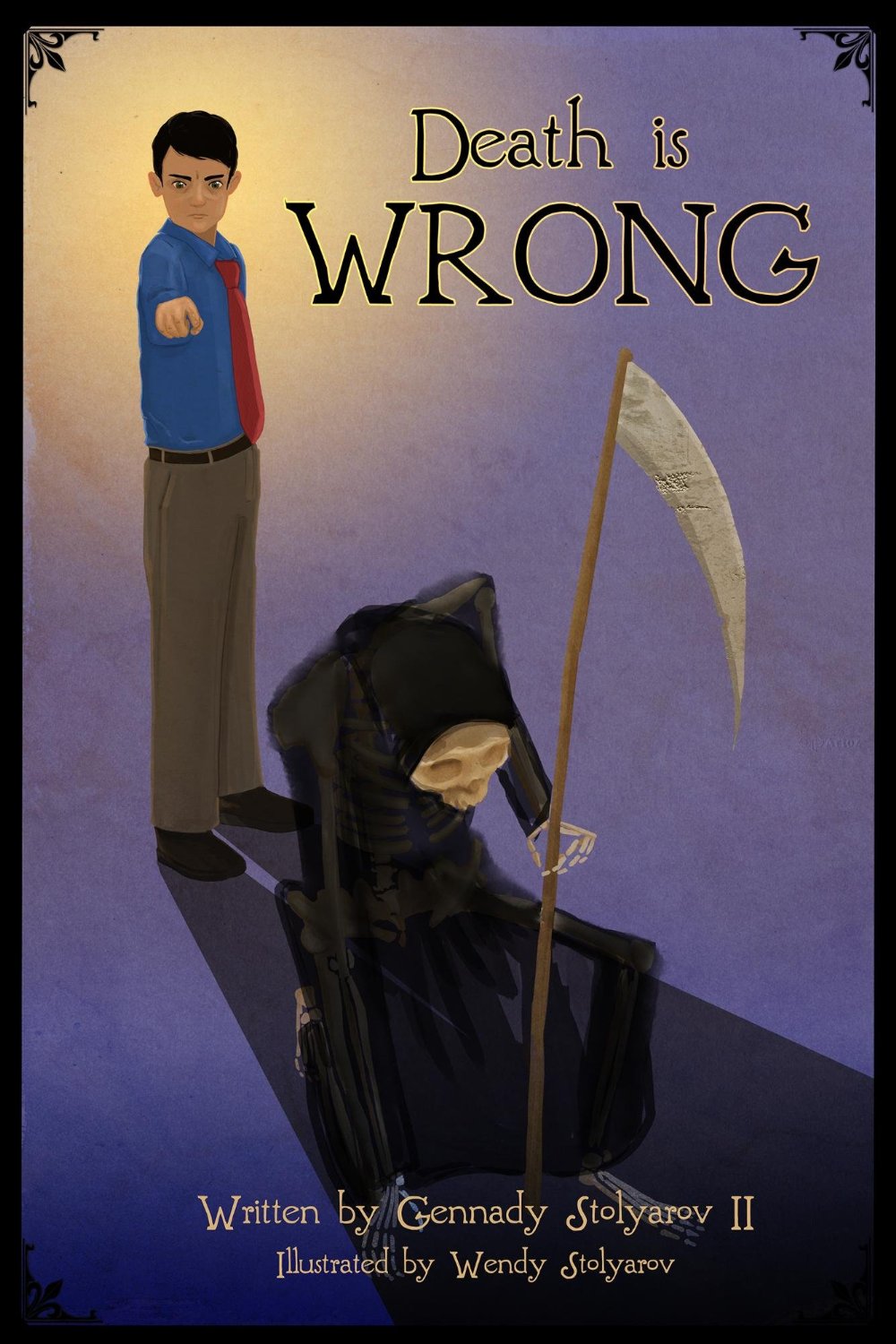
Death is Wrong - by Gennady Stolyarov II, Illustrated by Wendy Stolyarov

“Death is Wrong” Fundraiser Success – Video by G. Stolyarov II

“Death is Wrong” Fundraiser Success – Video by G. Stolyarov II

The New Renaissance Hat
G. Stolyarov II
April 23, 2014
******************************

A compounded victory! We have raised enough funds through Indiegogo to provide at least 1029 free paperback copies of Death is Wrong to children throughout the world.

Please watch my video announcement of the fundraiser’s success! (The number of available books has increased since I mentioned being able to provide 1024 books in the video.)

140 copies have been distributed; 159 are immediately ready to go upon request. Within 15 days, we will have the funds to distribute all of the remaining books to activists who ask for them.

Extensive thanks go to Bill Faloon of the Life Extension Foundation and Tonya Scholz, who persuaded Mr. Faloon to provide the Life Extension Foundation’s support. They have my eternal gratitude for their generous willingness to step in and get us the rest of the way to our goal. Thank you, also, to every single one of our 92 funders and hundreds of supporters throughout the world!

Earlier today I was interviewed by Tonya Scholz and Sandra Lopez on their Social Chats livestreamed radio program. We had a delightful conversation about Death is Wrong and the amazing reach it has had thus far. You can listen to the recording of the interview here.

Also, I am happy to announce that the five-day window for free downloads of the Kindle version has resulted in 318 downloads – an additional way in which the book has spread significantly!

Instructions for Longevity Activists to Request Copies of Death is Wrong

– Send an e-mail to gennadystolyarovii@gmail.com

– Provide your name, your mailing address, a statement of your support for indefinite life extension, and a brief description of your plan to spread the book to children in your local area. Remember that all copies received pursuant to this initiative would need to be offered to children free of charge (as gifts or reading opportunities) and may not be resold.

– Provide the number of copies of Death is Wrong that you are requesting.

– Preferably, provide an indication that you would be willing to send photographs of the books that have been delivered to you as well as events where you will be distributing the books.