Browsed by
Category: Philosophy

Mr. Stolyarov’s Article “Indefinite Lifespans Are Possible in Our Lifetimes” Published by Viral Global News

Mr. Stolyarov’s Article “Indefinite Lifespans Are Possible in Our Lifetimes” Published by Viral Global News

The New Renaissance Hat
G. Stolyarov II
April 22, 2014
******************************

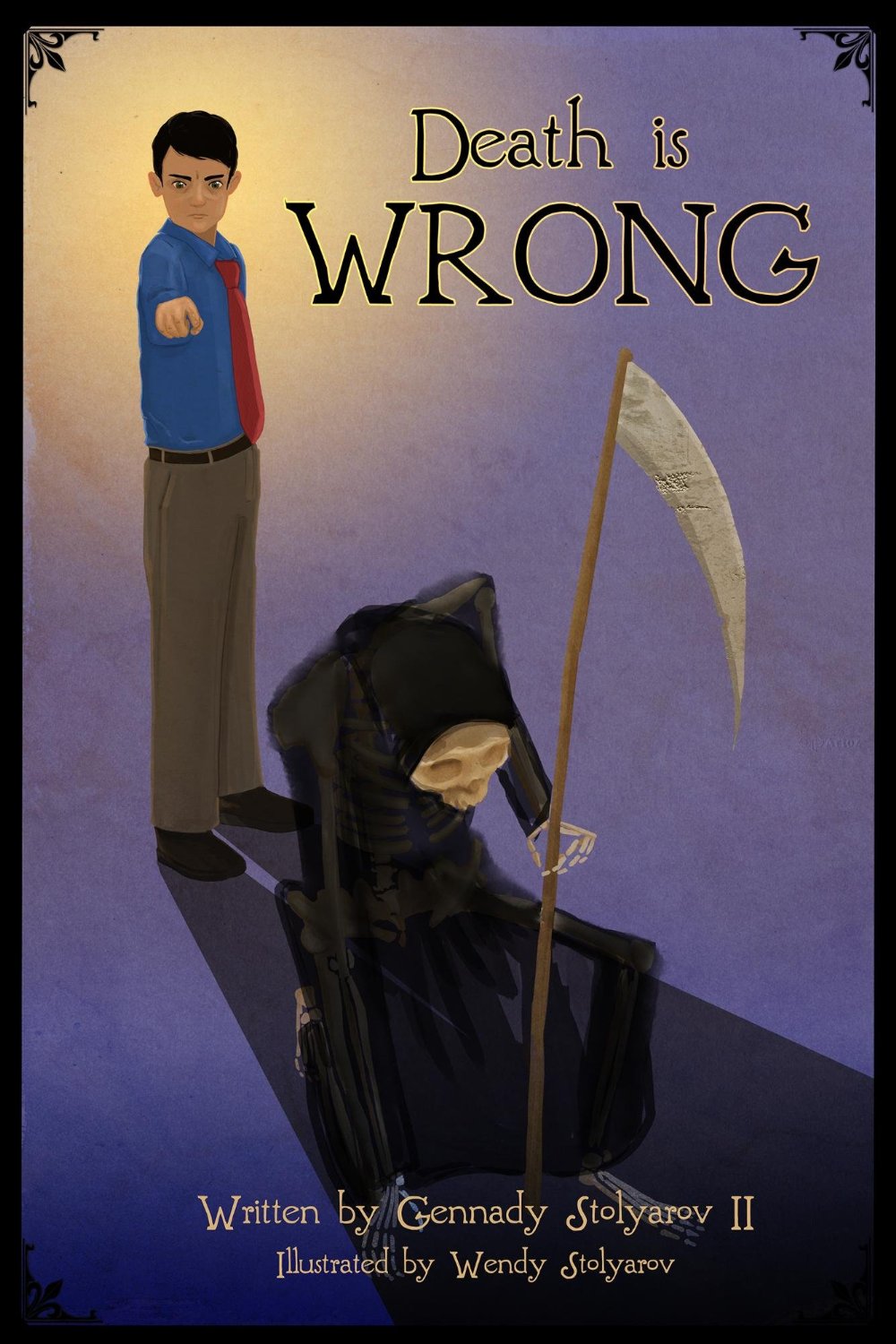
I was pleased to contribute a guest article to Viral Global News, titled “Indefinite Lifespans Are Possible in Our Lifetimes”. The article discusses my illustrated children’s book Death is Wrong, my effort to spread 1000 paperback copies to children, free of cost to them, as well as the basics of Dr. Aubrey de Grey’s research program of SENS (Strategies for Engineered Negligible Senescence), through whose realization the reversal of senescence and the achievement of indefinite longevity would be possible within the next several decades. Read the article here.

Here is the list of references accompanying my article. Please refer to these sources if you would like a more in-depth look at the topics I briefly discuss.

References

Death is Wrong in paperback format on Amazon

Death is Wrong in Kindle format on Amazon

– Indiegogo Campaign: Help Teach 1000 Kids That Death is Wrong

– “Fable of the Dragon-Tyrant” by Nick Bostrom

– “Life Span Extension Research and Public Debate: Societal Considerations”. Aubrey D.N.J. de Grey. Methuselah Foundation and SENS Research Foundation. 2007.

– “Negligible senescence” – Wikipedia

– “Turritopsis dohrnii” – Wikipedia

– “Transdifferentiation” – Wikipedia

SENS Research Foundation

Chart of types of aging-related damage in “A Reimagined Research Strategy for Aging” – SENS Research Foundation

– “Living to 1000: an interview with Aubrey de Grey”. Zander Redwood. 80,000 Hours. April 12, 2012.

– Genentech Alzheimer’s Prevention Trial

– “Progress Against Aging”. Campaign Against Aging. 2010.

– Aubrey de Grey’s video response to Gennady Stolyarov II’s question on how to make up lost progress in anti-aging research – in “Projects to accelerate radical healthy longevity” – Video by the London Futurists

– “How Google’s Calico aims to fight aging and ‘solve death’” – Arion McNicoll – CNN – October 3, 2013

Human Longevity, Inc.

SENS Research on the seven types of damage constituting senescence:

Cell Loss and Atrophy

Dysfunctional/Senescent Cells

Nuclear Mutations

Mitochondrial Mutations

Extracellular Junk

Intracellular Junk

Extracellular Crosslinks

“Death is Wrong” Campaign Update – April 21, 2014 – Video by G. Stolyarov II

“Death is Wrong” Campaign Update – April 21, 2014 – Video by G. Stolyarov II

Mr. Stolyarov provides an update and call to action regarding his effort to Help Teach 1000 Kids That Death is Wrong.

Two days remain until the April 23, 2014, deadline for fundraising for the effort to spread 1000 paperback copies of Death is Wrong to children, free of cost to them. Contribute today to help broaden the reach of this culturally transformative illustrated children’s book on indefinite life extension.

As of April 21, 2014, $3,620 have been raised in this flexible-funding campaign, and $1,380 remain to reach the $5,000 target.

  • At least 725 books will be shipped in total.
  • 140 have been shipped already to longevity activists in the US, UK, Mexico, Poland, India, and Indonesia.
  • 133 books are ready to be shipped upon request.

The Kindle version of “Death is Wrong” is free to download through April 22, 2014. Get it here.

Get your copy today and refer as many children as you can to the link.

The impact of Death is Wrong is just beginning to occur!

References

BBC Future – “How to live forever” – Article by Frank Swain – April 21, 2014

Viral Global News – “Indefinite Lifespans Are Possible in Our Lifetimes” – Article by Gennady Stolyarov II -April 21, 2014

The Future And You – Discussion Between Stephen Euin Cobb and Gennady Stolyarov II
– Part 1 – http://traffic.libsyn.com/thefutureandyou/TFAY_2014_4_2.mp3
– Part 2 – http://traffic.libsyn.com/thefutureandyou/TFAY_2014_4_9.mp3

LongeCity Now – Justin Loew Interviews Gennady and Wendy Stolyarovhttp://www.longecity.org/media/LongeCityPodcast_Stolyarov2014_A01.mp3

The Humility of Futurism – Article by Adam Alonzi

The Humility of Futurism – Article by Adam Alonzi

The New Renaissance Hat
Adam Alonzi
April 20, 2014
******************************

Civilization operates as if its troubles and their solutions will be as relevant tomorrow as they are today. Likely they were obsolete yesterday. How preposterous do the worries and aspirations of yesteryear seem now? What has not been refined since its conception? Our means of subsistence, entertainment, expression and enlightenment continue to change, although, at least unconsciously, they are accepted as stable. Change, once gradual, now quickens exponentially. Countless professions have been created and destroyed by advances; old orders have been destroyed, new ones have arisen; our world outlooks have been revolutionized by new discoveries over and over, although a sizable portion of the world is unwilling or unable to understand a man like Aubrey de Grey and an equally sizable portion of the population is still struggling with Copernicus. A Futurist accepts himself and his ideas as incomplete, therefore he actively works to improve upon them. Futurism is the first ideology that explicitly accepts the necessity and desirability of change.

It is a mistake to think we have reached the final stage of our journey. Plateaus are mirages conjured by the shortsighted; human evolution is a mountain without a peak. If a man has eyes, let him see all we have done and all we have yet to do. Let him gain the humility religion and liberalism have failed to inculcate into him and so many others. Each generation repeats this mistake. There is no evidence to suggest we are complete or are doomed now only to regress. Naysayers seem motivated to dismiss the triumphs of others out of fear they themselves will appear even less significant. Historically the distant future has received little attention compared to such pressing questions as the number of angels on the head of a pin or the labor theory of value. This may be thanks to a fondness for the apocalyptic, a fascination which certainly has not faded with time, but it is also attributable to the egotistical need to stand out. All epochs are transitions. The advances of this decade have failed to restore popular faith in progress, yet the very word is misleading. Faith does rest not upon an empirical foundation. There are scores of popular beliefs founded upon little or no evidence. Yet the proof of progress is all around us. Death wishes and earth-annihilating misanthropy aside, we can trace the modern disdain for the march forward to the fashionable nonsense of academia.


Speculations and prophecies, even conservative estimates based on careful analysis, are treated with derision by the public. To say one has faith in technology is misleading. To compare the singularity to the rapture is like comparing planetary motion to Santa Claus. One is rooted in scripture, the other in observation. The doomsayers, secular and religious alike, enjoy forecasting our demise. The essential corruption critics charge Western civilization with is common to all; it is called human nature. It is meant to be transcended, not through critiques of immaterial “cultural entities,” but by improving our bodies and our minds through bioengineering. No belief is needed here. We do not rely upon a outworn holy book or the absurd dialectic of the Marxists. We change and adapt because we must. This is a point of pride, not one of shame. We do not worship the past; we have shrugged it off. Compared to the ridiculous claims circulating in the cesspool collectively referred to as “the humanities” this is a sane position, yet it is treated with nothing by scorn by those who, wishing so ardently to distance themselves from Western civilization, bite the hands that feed them, clothes them, and shelters them. While they navigate by GPS, post their inane tangents on social media sites, and try with all their might to discredit the culture to which they owe their lives and livelihoods, others push forward. Self-proclaimed critics of Western civilization should consider trading their general practitioner for an Angolan witch doctor. It is hard to respect those who do not practice what they preach.

Postmodernism and cultural relativism, though they have pretensions of completeness and delusions of permanence, are but passing fads. Something devoid of usefulness or, for that matter, a coherent hypothesis, cannot last long when technology is generating so much benefit to so many people. A meme will continue to propagate itself long after it has served its purpose, to the detriment of competitors and to society at large. It is the duty of Futurists and Transhumanists to demolish the acceptability of rubbish in academia and in the media. The Luddites are more dangerous than the Creationists. Hubris is barely acceptable in the hard sciences, but in an absolutely unempirical discipline like philosophy, it is deplorable. Our first priority should not be political or religious; it should be scientific. To whom do we owe our prosperity, and to whom do we owe our future? To whom do we owe our lives and the lives of our children? How many of us would not be here today were it not for the men and women of modern medicine? This is not the end. Forget the weary and the overwhelmed; they are weak. Forget the ones who have no desire to climb higher; they are unfit. Cast aside the ones who pray fervently for the undoing of their own species; they are the most vile of all. This is not the end. This is our beginning.
***
Adam Alonzi is the author of Praying for Death and A Plank in Reason. He is also a futurist, inventor, DIY enthusiast, biotechnologist, programmer, molecular gastronomist, consummate dilletante and columnist at The Indian Economist. Read his blog Cool Flickers.
***
Help the next generation embrace a progress-filled vision of the future by supporting the illustrated children’s book Death is Wrong (free in Kindle format until April 22, 2014), and the campaign to distribute 1000 paperback copies to children, free of cost to them. The Indiegogo fundraising period ends on April 23, so please consider making a contribution today.
***

“Death is Wrong” Kindle Version Available for Free on April 18-22, 2014

“Death is Wrong” Kindle Version Available for Free on April 18-22, 2014

The New Renaissance Hat
G. Stolyarov II
April 18, 2014
******************************

Starting April 18 and continuing through April 22, the Kindle version of Death is Wrong will be available for free on Amazon. Those who have not yet read the book will be able to obtain it here. One does not need to own a Kindle in order to be able to read the Kindle e-books from Amazon.

Amazon allows a 5-day time window for free Kindle distribution at most, but this is another opportunity for the book to spread as widely as possible. If you obtain a free version and like what you read, please consider donating to our effort to spread 1000 paperback copies to children whose Internet access may not be as continuous and unfettered as ours. On the other hand, if you happen to know some children who do have sufficient Internet access to obtain the Kindle version, I ask that you link them to the Amazon page during the time the e-book is available for free.

Death is Wrong - by Gennady Stolyarov II, Illustrated by Wendy Stolyarov

Gennady and Wendy Stolyarov Interviewed by Justin Loew of LongeCity Regarding “Death is Wrong”

Gennady and Wendy Stolyarov Interviewed by Justin Loew of LongeCity Regarding “Death is Wrong”

The New Renaissance Hat
G. Stolyarov II
April 16, 2014
******************************

Justin Loew of LongeCity recently interviewed me and my wife Wendy Stolyarov regarding our illustrated children’s book Death is Wrong and our Indiegogo campaign to spread this book to 1000 children, free of cost to them. The audio broadcast of our excellent conversation has been posted on this thread on the LongeCity forum. Here is a link to the MP3 file: http://www.longecity.org/media/LongeCityPodcast_Stolyarov2014_A01.mp3.

Gennady and Wendy Stolyarov

For the Love of Money? – Article by Gary M. Galles

For the Love of Money? – Article by Gary M. Galles

The New Renaissance Hat
Gary M. Galles
April 13, 2014
******************************

It’s not unusual to hear market systems criticized for relying too much on money, as if this comes at the expense of the altruistic relationships that would otherwise prevail. Ever heard the phrase “only in it for the money”? It’s as if self-interest has a stink that can corrupt transactions that generate benefits for others, turning them into offenses. So this line of thinking suggests reliance on market systems based in self-ownership would be tantamount to creating a world where people only do things for money, and lose the ability to relate to one another on any other terms.

People Don’t Do Everything for Money

One need not go far to see the falsity of the claim that everything is done for money in market systems. My situation is but one example: I have a Ph.D. in economics from a top graduate program. It is true that, as a result, I have an above-average income. But I did not do it all for the money. One of my major fields was finance, but if all I cared about was money—as my wife reminds me when budgets are particularly tight—I would have gone into finance rather than academia and made far more. But I like university students. I think what I teach is important, and I value the ability to pass on whatever wisdom I have to offer. I like the freedom and time to pursue avenues of research I find interesting. I enjoy the ability to tell and write the truth as I see it (particularly since I see things differently from most) and I prefer a “steady job” to one with far more variability.

Every one of those things I value has cost me money. Yet I chose to be a professor (and would do it again). While it’s true that the need to support my family means that I must acquire sufficient resources, many things beyond just money go into choosing what I do for a living. And the same is true for everyone.

Ask any acquaintances of yours who they know that only does things for money. What would they say? They would certainly deny it about themselves. While they might apply this characterization to people they don’t know, beyond Dickens’s Ebenezer Scrooge and his comic book namesake, Scrooge McDuck, they would be unable to provide a single convincing example. If market critics performed that same experiment, they would recognize that they are condemning a mirage, not market arrangements.

Confusing Ends and Means

Beyond the fact that all of us forego some money we could earn for other things we value, the fact that every one of us gives up money we have earned for a vast multitude of goods, services, and causes also reveals that individuals don’t just do things for the money. Each of us willingly gives up money up to further many different purposes we care about. Money is not the ultimate end sought, but a means to a vast variety of possible ends. Mistakenly treating money as the end for which “people do everything” is fundamentally flawed—both for critics of the market and for the participants in it.

To do things for money is nothing more than to advance what we care about. In markets, we do for others as an indirect way of doing for ourselves. This logic even applies to Scrooge. His nephew Fred’s assertion that he doesn’t do any good with his wealth is false; he lends to willing borrowers at terms they find worth meeting, expanding the capital stock and the options of others.

That an end of our efforts is to benefit ourselves, in and of itself, merits neither calumny nor congratulations. Money’s role is that of an amoral servant that can help us advance whatever ends we ultimately pursue, while private property rights restrict that pursuit to purely voluntary arrangements. Moral criticism cannot attach to the universal desire to be able to better pursue our ends or to the requirement that we refrain from violating others’ rights, only to the ends we pursue.

To do things for money in order to achieve world domination could justify moral condemnation. But the problem is that your intended end will harm others, not the fact that you did some things for money, benefitting those you dealt with in that way, to do so. Using money to build a leprosarium, as Mother Teresa did with her Nobel Prize award, does not justify moral condemnation. Similarly, using money to support your family, to live up to agreements you made with others, and to try not to burden others is being responsible, not reprehensible. Further, there is nothing about voluntary arrangements that worsens the ends individuals choose. But by definition, they place limits on ends that require harming others to achieve them.

It is true that money represents purchasing power that can be directed to ends others object to. Money is nothing more than a particularly powerful tool, and all tools can be used to cause harm. Just as we shouldn’t have to forego the benefits of hammers because somebody could cause harm with one, there’s no reason to think society would be better off without money or the market arrangements it makes possible just because some people can use those things for harmful ends. And if the ends aren’t actually causing harm, then the objections over them come down to nothing more than disagreements about inherently subjective valuations. Enabling a small class of people to decide which of these can be pursued and which can’t makes everyone worse off.

Those who criticize people for doing everything for money also do a great deal for money themselves. How many campaigns have religious groups and nonprofit organizations run to get more money? How much of government action is focused on getting more money? Why do the individuals involved not apply the same criticism to themselves? Because they say they will “do good” with it. But every individual doing things for money also intends to do good, as he or she sees it, with that money. And if we accept that people are owners of themselves, there is no obvious reason why another’s claims about what is “good” should trump any “good” that you hold dear, or provide for another in service through exchange.

Criticizing a Straw Man

Given that the charge that “people do everything for money” in market systems is both factually wrong and logically lame, why do some keep repeating it? It creates a straw man easier to argue against than reality, by misrepresenting alternatives at both the individual and societal level.

At the individual level, this assertion arises when people disagree about how to spend “public” resources (when we respect private property, this dispute disappears, because the owner has the right to do as he or she chooses with it, but cannot force others to go along with or allow it; “public” resources are obtained by force). The people who wish to spend other people’s confiscated resources in ways the original owners disagree with claim a laundry list of caring benefits their choice would provide, but foreclose similar consideration of the harms that would be caused to those they claim care only about money. That, in turn, is used to imply that the purportedly selfish person’s claims are unworthy of serious attention. (Something similar happens when politicians count “multiplier effects” where government money is spent, but ignore the symmetrical negative “multiplier effects” radiating from where the resources are taken.)

This general line draws support from a misquotation of the Bible. While more than one recent translation of 1 Tim 6:10 renders it “the love of money is a root of all sorts of evils,” the far less accurate King James Version rendered it, “the love of money is the root of all evil.” When one simply omits or forgets the first three words, it becomes something very different—“money is the root of all evil.” Portray those who disagree with your “caring” ends as simply loving money more than other people, and they lose every argument by default. Naturally, it’s a seductive strategy.

At the societal level, criticizing market systems as tainted by the love of money implies that an alternate system would escape that taint and therefore be morally preferable. By focusing attention only on an imaginary failing of market systems that would be avoided, it allows the implication of superiority to be made without having to demonstrate it. This is a version of the Nirvana fallacy.

By blaming monetary relationships for people’s failings, “reformers” imply that taking away markets’ monetary nexus will somehow make people better. But no system makes people angels; all systems must confront human flaws and failings. That means a far different question must be addressed: How well will a given system do with real, imperfect, mostly self-interested people? And it shouldn’t be necessary, but most political rhetoric makes a second question nearly as important: Does the given system assume that people are not imperfect and self-interested when they have power?

Given that the utopian alternatives offered always involve some sort of socialism or other form of tyranny, an affirmative case for them cannot be made. Only by holding the imaginary “sins” of market systems to impossible standards, while holding alternatives to no real standards except the imagination of self-proclaimed reformers, can that fact be dodged. But there’s nothing in history or theory that demonstrates that overwriting markets with expanded coercion makes people more likely to do things for others. As Anatole France noted, “Those who have given themselves the most concern about the happiness of peoples have made their neighbors very miserable.” And as economist Paul Heyne wrote, “Market systems do not produce heaven on earth. But attempts by governments to repress market systems have produced . . . something very close to hell on earth.

Money at the Margin

Money is not everything. But changes in the amounts of money to be earned or foregone as a result of decisions change our incentives at the many margins of choice we face, and so change our behavior. Such changes—money at the margin—are the primary means of adjusting our behavior in the direction of social coordination in a market system.

Changes in monetary incentives are how we adapt to changing circumstances, because whatever their ultimate ends, everyone cares about commanding more resources for those purposes they care about. It is how we rebalance arrangements when people’s plans get out of synch, which is inevitable in our complex, dynamic world. In such cases, changing money prices allow each individual to provide added incentives to all who might offer him assistance in achieving his ends, even if he doesn’t know them, doesn’t know how they would do so, and doesn’t think about their wellbeing (in fact, it applies even if he dislikes those he deals with, as long as the benefits of the arrangements exceed his perceived personal cost of doing so).

For instance, consider a retail gas station faced with lengthy lines of cars. That reflects a failure of social cooperation between the buyers and the seller. Those in line are revealing by their actions that they are willing to bear extra costs beyond the current price to get gas, but their costs of waiting do not provide benefits to the gas station owner. So the owner will convert those costs of waiting in line, which are going to waste, into higher prices (unless prevented by government price ceilings or antigouging directives) that benefit him. That use of money at the margin benefits both buyers and sellers and results in increased amounts of gasoline supplied to buyers.

Further, people can change their behavior in response to price changes in far more ways than “outsiders,” unfamiliar with all the local circumstances, realize. This makes prices, in turn, far more powerful than anyone recognizes.

Consider water prices. If water prices rose, your first thought might well be that you had no choice but to pay them. You might very well not know how many different responses people have already had to spikes (ranging from putting different plants in front yards to building sophisticated desalinization plants). Similarly, when airline fuel prices rose sharply, few recognized in advance the number of changes that airlines could make in response: using more fuel-efficient planes, changing route structures, reducing carry-on allowances, lightening seats, removing paint, and more.

If people recognized how powerful altered market prices are in inducing appropriate changes in behavior, demonstrated by a vast range of examples, they would recognize that the cost of abandoning money at the margin, which enables these responses by offering appropriate incentives to everyone who could be of assistance in addressing the problem faced, would enormously exceed any benefit.

Massive Improvements in Social Cooperation

If we could just presume that individuals know everyone and all the things they care about and the entirety of their circumstances, we could imagine a society more focused on doing things directly for others. But in any extensive society, there is no way people could acquire that much information about the large number of people involved. Instead, this would extend the impossible information problem that Hayek’s “The Use of Knowledge in Society” laid out in regard to central planners. You can care all you want, but that won’t give you the information you need. Beyond that insuperable problem, we would also have to assume that people cared far more about strangers than human history has evidenced.

Those information and other-interestedness requirements would necessarily dictate a very small society. But the costs of those limitations, if people recognized them, would be greater than virtually anyone would be willing to bear.

Without a broad society, the gains from cross-pollination of ideas and different ways of doing things would be hamstrung. The gains from comparative advantage (areas and groups focusing on what they do best, and trading with others doing the same thing) would similarly be sharply curtailed. A very small society would eliminate the incentive for large-scale specialization (requiring more extensive markets) and division of labor that makes our standard of living possible. Virtually every product that involves a large number of separate arrangements—such as producing cars or the gasoline to power them—would disappear, because the arrangements would be overwhelmed by the costs of making them without money as the balance-tipper. As Paul Heyne once put it,

The impersonal transactions that constitute the market system . . . have, over the course of a few centuries, enormously expanded our ability to provide [for] one another . . . while at the same time vastly extending our freedom both by offering us a multitude of options and by freeing us from arbitrary restrictions on our choice of life goals and on the means to further those goals. To reject impersonal transactions as unethical amounts to rejecting the foundation of modern life.

Conclusion

A pastiche of false premises leads many to reject out of hand what Hayek recognized as the “marvel” of market systems, which, if they had arisen from deliberate human design, “would have been acclaimed as one of the greatest triumphs of the human mind.” This is great for those who seek power over others—they have an endless supply of bogeymen to promise to fight.

But it’s a disaster for social coordination. The record of disasters inflicted on society demonstrates what follows when voluntary arrangements are replaced by someone else’s purportedly superior vision.

But it’s often forgotten. We must continue to make the case.

Gary M. Galles is a professor of economics at Pepperdine University. He is the author of The Apostle of Peace: The Radical Mind of Leonard Read. Send him mail.

This article was originally published by The Foundation for Economic Education.

Bob Lane Reviews “Death is Wrong” on LifeVsDeath.com

Bob Lane Reviews “Death is Wrong” on LifeVsDeath.com

The New Renaissance Hat
G. Stolyarov II
April 12, 2014
******************************

Bob Lane has written an excellent post about Death is Wrong on his site LifeVsDeath.com. Read it here. Mr. Lane writes that “This is an important step in a long-term effort to win minds and change attitudes. I applaud the author’s efforts and plan to share a copy with my 15-year-old. […] Even if you don’t have children, please consider supporting the author in what he is trying to accomplish.”

Mr. Stolyarov Interviewed by Stephen Euin Cobb on The Future And You – Part 2

Mr. Stolyarov Interviewed by Stephen Euin Cobb on The Future And You – Part 2

The New Renaissance Hat
G. Stolyarov II
April 9, 2014
******************************

Stephen Euin Cobb, host of The Future And You podcast, recently interviewed me about Death is Wrong, life extension, visions of the future, and related topics – including a brief discussion of my novel Eden against the Colossus (2003-2004) and my play Implied Consent (2004-2005).

The second half of our excellent conversation was just posted as this week’s episode of The Future And You. Find it here.

Here is the link to the MP3 file of our interview: http://traffic.libsyn.com/thefutureandyou/TFAY_2014_4_9.mp3

You can also listen to the first part of our interview, posted on April 2, 2014. Here is the MP3 file for Part 1: http://traffic.libsyn.com/thefutureandyou/TFAY_2014_4_2.mp3

Review of “Death is Wrong” by Adam Alonzi

Review of “Death is Wrong” by Adam Alonzi

The New Renaissance Hat
Adam Alonzi
April 7, 2014
******************************

Death is wrong, and it can be defeated. Gennady Stolyarov’s new book, Death is Wrong, makes this powerful  idea accessible to everyone. Now that you have seen the phrase in print, it should not seem odd to you; the vincible visage of the Grim Reaper should seem less frightening. It is a primitive spectre, a monster to be unmasked in the venerable tradition of Scooby Doo. There is no more reason to believe in its inevitability than there is to believe in the Easter Bunny. This strange, wonderful and intoxicating idea should begin to sink into our brains, not because it is pleasant, but because it is true. Please support his Indiegogo campaign here.

Death can be cured. Let this sink into your brain, not because it is comforting, but because it is true. Even obvious truths will not gain acceptance unless we vigorously campaign against the falsehoods Death is not something to embrace, and it is not something to ignore. To turn it into a matter of metaphysics or “bioethics” is insulting to those who, by no fault of their own, are burdened by the ailments of old age. There are many extraordinary men and women who could go on working for hundreds of years if their stars were not designed to dim so soon.

What do you want to do with your life? This is the question Mr. Stolyarov poses to his readers. Whatever you wish to do is restricted by the time you have on this earth. This is restricted largely by your genes, even if you do all you can to mitigate the hand chance and meiosis have dealt you. The fountain of youth now is not far off. We no longer need to deceive ourselves with lofty philosophical discourses of dreams of a world after this one. Conventional “wear and tear” theories claim the body has a finite amount of repair resources, yet if this was true, exercise should greatly decrease one’s lifespan. As far as we can tell, moderate exercise fights aging as well as or better than anything in our still inadequate arsenal.

If the process is the result of unavoidable changes we should not expect to find animals which undergo negligible senescence. We should also expect animals of the same basic shape, type and size to age at approximately the same rates. American crows normally die before their eigth birthday; Kakapo parrots can live well into their nineties. Post-reproductive suicide may be viewed as a peculiarity of some species, but it also graphically illustrates the control genes have over the aging process. The goal of the Transhumanist movement now should be to convince as many people as possible of the viability of this research. Arcane mathematical tidbits from evolutionary biology, although more cogent, are less convincing than masses of salmon carcasses floating downstream or lowly tortoises who, for no obvious reason, live for centuries.

Knowing our quality of life is doomed to decay with each passing year, we do not always take full advantage of the opportunities available to us. Why play the guitar? Some people have been playing it since they were 12. It would be impossible to schedule it in between shifts at the lab and carting the kids around. An ambition is forsaken for lack of time. It is often irrational, as late is better than never, but humans are not always rational animals. The creeping fear of time is partially justified. Anger is more than justified. There is no reason we should not have more quality time to fulfill our aspirations. Paradoxically, coming to terms with the shortness of life can be more paralyzing than invigorating. Like so many falsehoods, carpe diem stems from deep but forgivable denial.

People, including history’s greatest minds, have tried to find ways in which they or their creations were eternal. These efforts amount mostly to confabulations. As much as this statement will be contested, I must make it: death makes life meaningless. If you cannot agree with this, at least concede that aging can make life intolerable. Before you dismiss this, keep in mind it is easy to pontificate about the value of old age when one is young. Creaking joints and failing organs may change your views. Our finest moments are when we feel eternal, yet feeling eternal is quite different from being eternal. Freud called it the oceanic sensation; the expansion of the self into the wider world. When someone knows with certainly they may live hundreds or thousands of years, these otherwise momentary delusions find firm ground on which to stand.

Death is Wrong - by Gennady Stolyarov II, Illustrated by Wendy Stolyarov

In the end our efforts are all for naught. From a cosmic perspective this may be so, and a pugnacious devil’s advocate may ask if there is such a thing as a “good” age to die, but one can forcefully and effectively argue that 75 is too young. 35 is far too young to begin losing one’s faculties, as many professions today require years of training. A man in the prime of his career should also be in the prime of his life. 20 is universally considered too young to die. So are 30, 40, and 50. Before we can even begin to enjoy the fruits of our labors, we are already declining. Before we can begin to understand a portion of the world’s treasures, we are growing old and tired. What a sad state of affairs! We desire lasting rewards, yet we cannot have them. The productions of an entire lifetime do not last, because the enjoyer of those productions and the accolades they have won eventually perishes. With his body, presumably, his consciousness also disappears into nothingness. Deadlines tend to force a person to work in a state of fear. Death is the ultimate deadline.

What of knowledge and talents? Why acquire knowledge when it can only be imperfectly transmitted to the next generation? Preserved in books, but there are already so many books. Immortality may not be necessary for society’s continued progress now, but with the constant expansion of information and the sprawling interconnectedness of different disciplines, it is reasonable to wonder if hyperspecialization is our salvation. Immortality and intelligence amplification will allow us all, to some extent, to become generalists capable of making sane and sound decisions for ourselves and society. Why invest in higher pleasures when the lower ones deliver immediate gratification?

Living for each day devolves into hedonistic stupidity. Why should we care about the consequences of our actions when, regardless of what happens to us, our stories all end in the same way? What was once a psychological necessity is now a hindrance to the greater good. What was once a rational position is now an effrontery to a sane approach to medicine. This is not say that research efforts dedicated to the cell cycle or the precipitating factors involved in autoimmune disorders are worthless – far from it! Rather it means that life extension in its own right ought to be a major area of inquiry. The totem must be smashed and the taboo crushed.

Yet whose decree are we following and why? Disease is our oldest foe. We are not complacent about hereditary illnesses that will only be cured after the perfection of in vivo gene therapy. Yet a lifespan of less than a century is blindly accepted as a physical limit by, according to polls taken by Theodore Goldsmith, a shocking number of scientists and laymen alike. Death is literally our mortal foe, but the amount of energy we have spent fighting it directly would not lead one to this conclusion. The biochemical changes associated with aging are the primary risk factors for diabetes, atherosclerosis, arthritis, and cancer. Yet, in spite of the undeniable correlation between aging and these diseases, research effort is directed mostly at treating them individually instead of addressing their underlying cause.

This is rooted not in a scientific sentiment, but in the unfounded assumption that death is inevitable. This stems less from skepticism towards modern medicine and more from historical superstitions that allowed our ancestors to cope with the mysterious and inhospitable universe in which they found themselves. Worse, there are throngs of secular and religious nihilists alike who actively spread the gospel of death. They erect altars to petty Molochs to distract themselves from their own worst enemy. It will be difficult to battle the most entrenched notion of all, but nothing worth having is easy to obtain. The end of suffering is the highest ideal. Why should we worship false idols any longer?

Should Transhumanism take precedence over the fight against Creationism? The answer seems painfully obvious. I do not care if a pig farmer in Alabama believes the Neolithic era was populated by dinosaurs. His ignorance has no dreadful ramifications for humankind. As an academic and popular movement, anti-aging should be the first and foremost topic of scientific discussion. The secular and sane world accepts Darwinism. There is no reason to suppose converting the remaining holdouts will benefit society in the least. The sane and secular world, however, is still largely unaware of the strides science is making toward biological immortality. Moreover, a small bit about intelligent design in a science textbook, while objectionable on moral grounds, will not do much more damage to an already broken school system.

Mentioning intelligent design in passing will do nothing to dumb down an already doltish student body. Advocates of evolution would be more helpful if they turned their energies to spreading numeracy and basic literacy. Both are in short supply. To spend a lifetime fighting against hopeless ignoramuses makes one an imbecile of the highest order. Let the ignorant tend to their own business while we welcome the age of wonders. Let this be a call to arms. Let this be a call to awaken and accept the foolishness of how humanity uses its resources. Rage against the dying of the light. Do not go gentle into that good night.

Adam Alonzi is the author of Praying for Death and A Plank in Reason. He is also a futurist, inventor, DIY enthusiast, biotechnologist, programmer, molecular gastronomist, consummate dilletante and columnist at The Indian Economist. Read his blog Cool Flickers.

“Death is Wrong” Campaign Update – April 5, 2014 – Video by G. Stolyarov II

“Death is Wrong” Campaign Update – April 5, 2014 – Video by G. Stolyarov II

Mr. Stolyarov discusses the progress of the Indiegogo campaign to spread “Death is Wrong” to 1000 children, free of cost to them.

Number of books shipped so far: 79
Number of books that can be shipped immediately upon request: 111
Number of books that can be shipped in total, via the funds raised: 545

Donate today to the fundraiser to Help Teach 1000 Kids That Death is Wrong.

New reward tier for $2,300 donation:

In addition to the rewards of the previous tiers (signed copy of “Death is Wrong”, personalized article about the contributor, and a portrait of the contributor by Wendy Stolyarov, in the style of the philosophers depicted in “Death is Wrong”), I will write 9 articles on the subjects of the contributor’s choice – at least 1500 words in length each. The articles would be created at least monthly once the fundraiser goal is met.

References
Death is Wrong on Amazon
* Paperback version
* Kindle version
Death is Wrong Official Home Page
– “Spreading the Word That Death is Wrong” – Article by Gennady Stolyarov II
Death is Wrong Book Trailer – Video by Peter Caramico

Instructions for Longevity Activists to Request Copies of Death is Wrong

– Send an e-mail to gennadystolyarovii@gmail.com
– Provide your name, your mailing address, a statement of your support for indefinite life extension, and a brief description of your plan to spread the book to children in your local area. Remember that all copies received pursuant to this initiative would need to be offered to children free of charge (as gifts or reading opportunities) and may not be resold.
– Provide the number of copies of Death is Wrong that you are requesting.
– Preferably, provide an indication that you would be willing to send photographs of the books that have been delivered to you as well as events where you will be distributing the books.