Browsed by
Category: Philosophy

Final Level – 1 Life Left – Big Boss Man: Grim Reaper – Article by Eric Schulke

Final Level – 1 Life Left – Big Boss Man: Grim Reaper – Article by Eric Schulke

The New Renaissance Hat
Eric Schulke
September 24, 2014
******************************

The grim reapers of the world are like metaphorical big boss men. It’s like fighting a dragon that lives at the end of a great pass, or a King Koopa at the end of the last level. If you don’t destroy the grim reaper within your 90 years or so of “free lives”, then you never get to play the game of life again. We can choose to put our intellectual, problem-solving, level-navigating skills to the test to see if we can do it.

We do that by supporting the research that is working to do it. Play the game of life. The controls are completely integrated into your surroundings, and it comes with a fully immersive virtual reality option. It’s like Mario can navigate areas where he can choose from levels like, teleconferencing with the World Health Organization to help problem-solve the orchestration of a beneficial convention, or navigating the 5 largest cities of a small map to pin up enough fliers to get at least 100 people to show up at an organization’s life-extension rally.

Reaper_MILE_Ad“Beat the Reaper” ad developed by Wendy Stolyarov.

After you spend some time going through the routines of the levels, it becomes easier, and your controller speed and dexterity increases. It is the same with support of the Movement for Indefinite Life Extension. Bio-technology, lab equipment, and the political, social, commercial, and other contributions that go into it, are your controllers. After you’ve spent some time going through various levels in the chambers of the game, you’ll have more confidence in helping the growing collective of us to continue getting to and entering that final level, to work on beating the grim reaper.  We go in independent missions and through various united efforts, sometimes with slingshots, sometimes with Battle Ship fleets; sometimes with tested, comprehensive, long-term strategies, and the backing of nations of focused, practiced, fervent supporters.

There is a lot of good practical and theoretical research on ending aging, diseases, and other forms of death, and a lot more that can be completed and dreamt up by the new minds entering in on this great mission. There are small, growing pockets of students, activists, researchers and others around the world that are already doing things like chipping away at the roots of aging, working on preserving consciousness, and finding more algorithms that can help crunch data for cures.

Play “Beat the Reaper” with us. It’s an epic game.

MILE_Logo

When most people understand the importance of integrating this into their lives, they will be compelled to, and want to, and find satisfaction in helping to beat these levels. People will think about all resources available to them as being of potential assistance to this cause, in even small capacities, like pinning up a life-extension post card in their office.

This requires world support, which will not arrive until your example leads the thoughts of the people you come in contact with to notice how valuable this is, and gives them ideas to mull over on what they might decide to do to contribute. The goal of indefinite life extension gets here after we all join in and do what it takes to get the work done to make it happen. Help the people, projects, and organizations that are working on indefinite life extension to succeed by talking about their breakthroughs, reading about conference reports, suggesting books about it to people, encouraging your friends to team up with the various projects and events related to it, and most importantly, by leading the way for more of the people around you. Play the game. We can beat the reaper. Make time for indefinite life extension so that indefinite life extension can make time for you.

Eric Schulke was a director at LongeCity during 2009-2013. He has also been an activist with the Movement for Indefinite Life Extension and other causes for over 13 years.

The Straw Rand Fallacy – Article by Bradley Doucet

The Straw Rand Fallacy – Article by Bradley Doucet

The New Renaissance Hat
Bradley Doucet
September 13, 2014
******************************

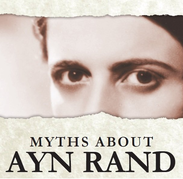
MythsRandMany critics of Ayn Rand have a maddening tendency to take her to task for ideas she did not defend and in fact explicitly rejected. They would rather score cheap debating points, it seems, than actually think about her challenging vision of the possibilities of human life. Disagree with her all you want, but as Laurie Rice puts it in the introduction to Myths about Ayn Rand: Popular Errors and the Insights They Conceal, “If you value your argument, you do it a disservice by misrepresenting its opponent.”

This slim volume of essays, published by the folks at The Atlas Society (for whom I have written) does a good job of dispelling some of the disinformation you may have come across regarding the author of The Fountainhead and Atlas Shrugged. And when the Kindle edition is available for a buck and can be read through in one sitting, critics have no excuse for getting it wrong.

David Kelly kicks things off by showing that Rand was not an elitist. Yes, the heroes of her novels are high achievers, which is what makes them so inspiring, but she explicitly rejected the notion that such people were morally superior to others and should rule over the rest of humanity. On her vision, Kelly writes, “It isn’t for the privileged, but for the productive. It isn’t against the poor, but against the irrational, the slothful, the envious, and the power-seeking—whatever their origin or social status.”

Will Thomas takes the baton for myths two to five, explaining why Rand was not a conservative, was not for dog-eat-dog selfishness, and was not simply pro-wealthy or pro-business, and arguing also that she was indeed a serious philosopher. On this last point, Thomas tells us that although she was not an academic scholar, her views have come to have some influence on academic philosophy, especially in the realms of ethics and political philosophy, but also increasingly in epistemology as well.

Yet her philosophy, in very non-elitist fashion, has admittedly had more influence on ordinary people, and indeed, Rand argued persuasively that philosophy is for everyone, that it is something we all need. As Thomas writes, her novels are not just popular because of their entertainment value—though they are entertaining, despite another widespread myth not explicitly addressed in this collection. “When people read Rand, they are inspired, and challenged, and made to rethink what they’ve been taught. That’s because Rand offers them timeless and compelling ideas about human life and the world we live in. It’s her philosophy that keeps readers coming back.”

In the postscript, Alexander Cohen takes up this theme in an open response to President Obama’s implication, during the 2012 election campaign, that Rand is for teenagers. Cohen writes, “If you’re the sort of teenager who wants an uplifting moral vision, a vision of joy and achievement rather than suffering and sacrifice […] then Ayn Rand is for you.” But if you didn’t happen to discover her as a teen, and if you’re the sort of adult who also wants to be uplifted and inspired, then Ayn Rand just might be for you, too.

Bradley Doucet is Le Québécois Libre‘s English Editor and the author of the blog Spark This: Musings on Reason, Liberty, and Joy. A writer living in Montreal, he has studied philosophy and economics, and is currently completing a novel on the pursuit of happiness. He also writes for The New Individualist, an Objectivist magazine published by The Atlas Society, and sings.
Gennady and Wendy Stolyarov Interviewed by Roen Horn of the Eternal Life Fan Club About “Death is Wrong”

Gennady and Wendy Stolyarov Interviewed by Roen Horn of the Eternal Life Fan Club About “Death is Wrong”

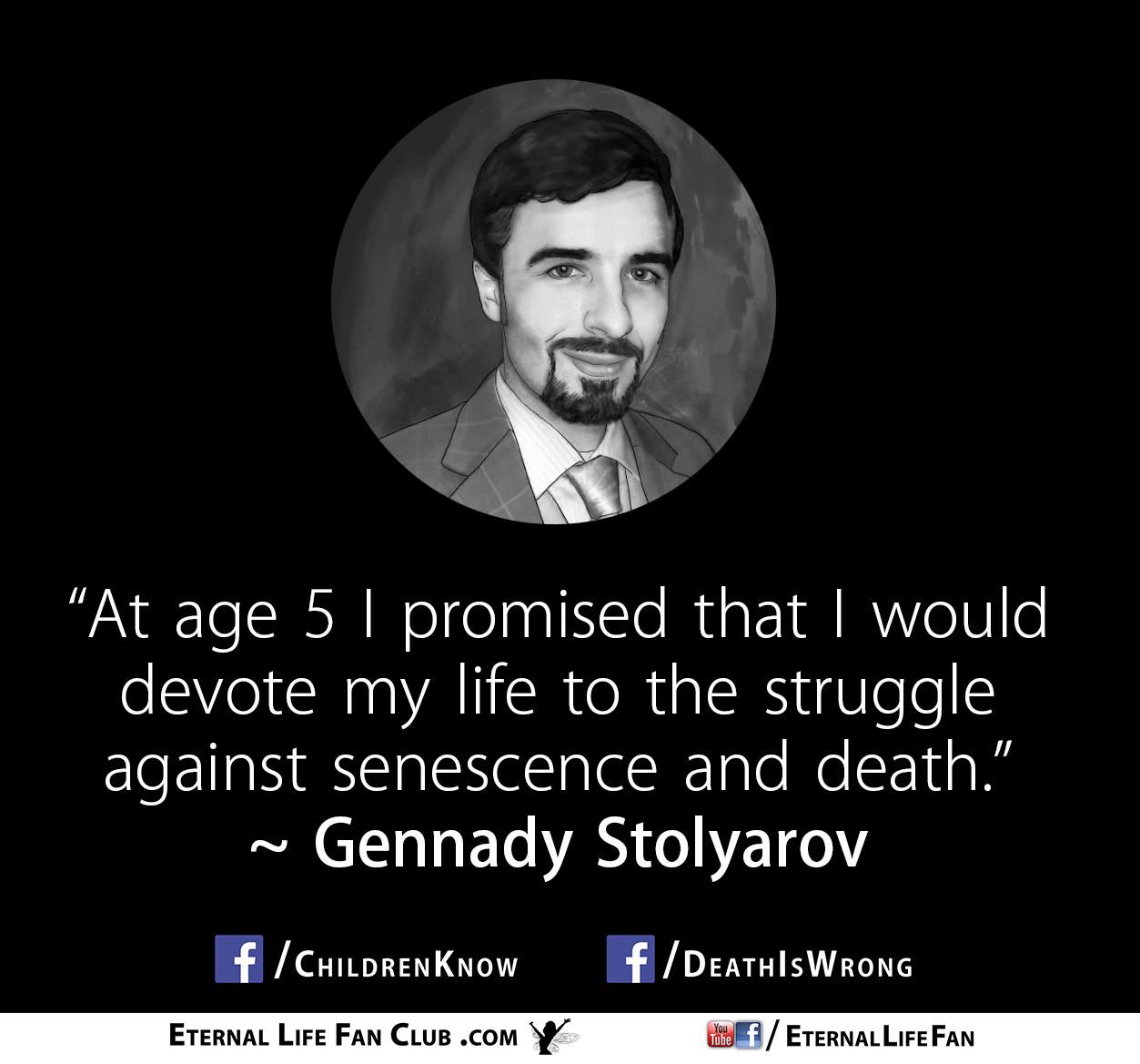
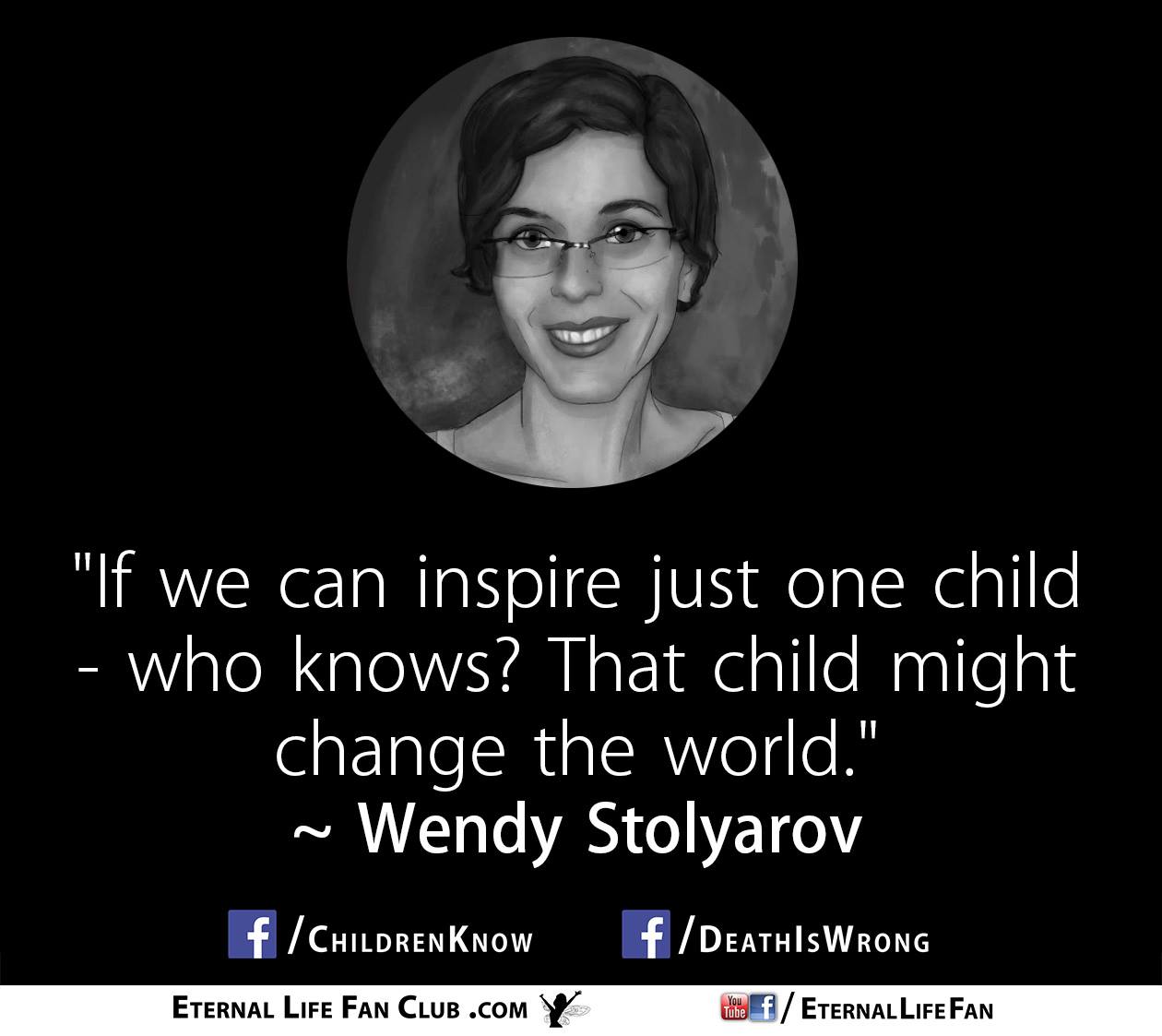
On September 6, 2014, Roen Horn of the Eternal Life Fan Club interviewed Gennady Stolyarov II and Wendy Stolyarov on the subject of their illustrated children’s book Death is Wrong and related arguments for life extension and technological progress. The interview was extensive, and many subjects were discussed. Watch it here.

ELFC_G+W+Interview_Snapshot Here is the video trailer that was posted two days in advance of the interview.

GSII_Age_5_Quote Wendy_Inspire_One_Child_Quote

The Rational Argumentator’s Twelfth Anniversary Manifesto

The Rational Argumentator’s Twelfth Anniversary Manifesto

The New Renaissance Hat
G. Stolyarov II
August 31, 2014
******************************

The Rational Argumentator marks its 12-year anniversary on August 31, 2014. This publication has now reached a venerable age by Internet standards, and its impact only continues to grow. I am pleased to announce that TRA’s trajectory has followed closely the aspirations expressed in the Eleventh Anniversary Manifesto, with many milestones reached and many vital projects completed. There is no doubt in my mind that TRA’s twelfth year was its best so far. Despite the turmoil in the world, The Rational Argumentator has stood firm in its efforts to champion a better way – a path of rationality, individual freedom, and technological progress – in a resolute rejection of the barbaric methods and short-sighted goals of certain “world leaders” today. To memorialize TRA’s unwavering commitment to the improvement of the human condition over the past dozen years, I have added to its header the words “Championing Reason, Rights, and Progress Since 2002”.

Total twelfth-year visitation for all TRA features was 1,430,226 page views – a record high and a significant 32.77% increase over the eleventh-year visitation of 1,077,192 page views. The previous record year for visitation was the ninth year, which brought 1,398,438 page views, and the twelfth year exceeded this amount by 2.27%. TRA’s lifetime visitation stands at 8,176,586 page views. 314 new regular TRA features were published in 2014, in addition to many special features, some of which amount to hundreds of pages of reading. This has been a major increase from the 208 features published during TRA’s eleventh year and even the 306 features published during TRA’s tenth year. In addition to increasing my own content production, I have restored to typical historical levels TRA’s practice of republishing thoughtful works by other authors.

Unprecedented public exposure and reach has been achieved by means of my children’s book Death is Wrong, illustrated by the wonderful Wendy Stolyarov. With tremendous support from the life-extensionist/transhumanist movement, The Rational Argumentator served as the hub for a massive fundraising and book-distribution effort to spread 1,029 free paperback copies of Death is Wrong to children in 14 countries. 92 generous donors and 50 activists throughout the world made this effort possible. Our Indiegogo fundraiser was successfully completed on April 23, 2014, and all 1,029 books were sent out as of August 7, 2014. Communities such as MILE – the Movement for Indefinite Life Extension, LongeCity, and the Life Extension Foundation were crucial in spreading the word about this effort and facilitating widespread awareness of our goal and its importance. For a great example of the outpouring of pro bono support motivated by Death is Wrong, watch this Book Trailer video, masterfully created by Peter Caramico of LongeCity. Death is Wrong has been featured by Fast Company, Mashable, Psychology Today, the BBC, TheBlaze, VICE Motherboard, Slashdot, and other prominent publications. This has enabled many more people to become aware of the feasibility and desirability of pursuing indefinite life extension in our lifetimes. As a side benefit, it has also brought more visitation to The Rational Argumentator.

In an effort to maximize the spread of Death is Wrong, after the conclusion of the distribution of paperback books, I took the next step of making the electronic editions of the book – available in English, Russian, and Spanish – freely downloadable in PDF format. Thus far, over 1,216 copies have been downloaded directly from The Rational Argumentator, and the files have spread to many external sites as well. This has essentially more than doubled the spread of the book’s message since the completion of the paperback-distribution campaign. In the meantime, another freely available work of mine, Eden against the Colossus ­­– which I republished in January 2013, has already been downloaded over 3,300 times. My strategy of making my works as easy to obtain as possible has certainly gone a long way toward ensuring that their message continues to influence the world to the maximal realistic extent.

Overall, my efforts to make my past writings available for free download directly from The Rational Argumentator’s domain have been successfully completed. In addition to the most up-to-date and thorough Third Edition of A Rational Cosmology, released in September 2013, nearly all of my older musical compositions have been remastered, and free MP3 files of the remastered versions have been made available on this page. I hope to continue to gradually release music videos of each of my compositions, accompanied by my works of fractal art. 47 videos are available already, out of 76 total videos that could be made for each of my extant compositions.

An added impetus to the project to host all of my works on The Rational Argumentator was given in July 2014, with the announcement by Yahoo! of the abrupt forthcoming closure of Yahoo! Voices (formerly Associated Content), where I had published 1,321 features since 2007 and where my works had garnered 3,190,261 page views. Yahoo’s mismanagement of Associated Content since its 2010 acquisition had made the site distinctly less appealing for original, intellectual contributors. Most of my spare time in July 2014 was spent on rescuing my previously published articles – including many sections of educational study guides – to ensure their continued availability directly on The Rational Argumentator. While I will no longer receive revenue from the page views on these works, I am happy that they have not been lost to the world due to Yahoo’s disastrous decision. Many articles were republished as new features on The Rational Argumentator. Some articles were also placed in my archive page of selected writings from Associated Content/Yahoo! Voices. Every single study guide in my Free Tools for Rational Education section – including my widely utilized actuarial study guides – is now available either in a conveniently downloadable PDF format or (for smaller study guides) in the form of multiple interconnected HTML pages.

Through repeated content-rescue efforts since 2009, I have learned my lesson: always host my own material myself, if I wish to see it preserved indefinitely. Almost every single large, commercial content site on which I published in the past, or which I attempted to use to earn modest revenue streams from my content, is now defunct. Geocities, Helium.com, Today.com, Adbrite, Associated Content, and Yahoo! Voices are all gone; The Rational Argumentator has outlasted them all. The Rational Argumentator will continue to outlast any sites that are driven by a short-termist mentality of sacrificing quality of content to the quarterly bottom line. This is because The Rational Argumentator is motivated by my quest for permanence – in knowledge, in achievement, in existence itself. As long as I live (which I hope will be indefinitely), so shall The Rational Argumentator persist.

Mr. Stolyarov Interviewed by La República Democrática de Leo About “Death is Wrong”

Mr. Stolyarov Interviewed by La República Democrática de Leo About “Death is Wrong”

The New Renaissance Hat
G. Stolyarov II
August 30, 2014
******************************

Listen to the excellent and entertaining recent interview of me by Leonardo Nunes Ricucci on La República Democrática de Leo, where we discuss my children’s book Death is Wrong, transhumanism, indefinite life extension, risk management, and related topics.

You can listen to the podcast and download an MP3 file of the episode at https://soundcloud.com/rdleo/ep-33

Ontological Realism and Creating the One Real Future – Video by G. Stolyarov II

Ontological Realism and Creating the One Real Future – Video by G. Stolyarov II

The New Renaissance Hat
G. Stolyarov II
August 23, 2014
******************************

An ongoing debate in ontology concerns the question of whether ideas or the physical reality have primacy. Mr. Stolyarov addresses the implications of the primacy of the physical reality for human agency in the pursuit of life and individual flourishing. Transhumanism and life extension are in particular greatly aided by an ontological realist (and physicalist) framework of thought.

References

– “Ontological Realism and Creating the One Real Future” – Essay by G. Stolyarov II
– “Objective Reality” – Video by David Kelley
A Rational Cosmology – Treatise by G. Stolyarov II
– “Putting Randomness in Its Place” – Essay by G. Stolyarov II
– “Putting Randomness in Its Place” – Video by G. Stolyarov II

Review of “The Transhumanist Wager” by Zoltan Istvan – Article by Kyrel Zantonavitch

Review of “The Transhumanist Wager” by Zoltan Istvan – Article by Kyrel Zantonavitch

The New Renaissance Hat
Kyrel Zantonavitch
August 20, 2014
******************************

The Transhumanist Wager by Zoltan Istvan is available on Amazon in paperback and Kindle formats.

***

This is the best novel I’ve read in over 30 years! I don’t ever expect to see its like again. Fascinating, amazing, and shocking to the point of numbness.

***

It’s rather comparable to Atlas Shrugged — the earth-shaking epic and classic by Ayn Rand from 1957. It has Atlas Shrugged’s magisterial story sweep and stunning philosophical ambition. It has Rand’s quasi-god-like heroism too. And like the other novel, Zoltan Istvan’s book is looking to mercilessly conquer the world.

***

Let’s hope!

***

Mr. Istvan’s thunderous 300-page saga, The Transhumanist Wager, is a truly remarkable novel of ideas. It’s unique. It has no peers or rivals. And it’s completely unexpected and unprecedented.

***

Like Atlas Shrugged, it offers many formidable intellectual challenges. One or two of these I’ve yet to work out. Like Rand’s lengthy magnum opus, The Transhumanist Wager is mesmerizingly philosophically bold and rich. And like Atlas, it’s rather repetitive in introducing these dynamic, new ideas to a silently dumbfounded world. But at least you clearly know where each novelist-philosopher stands on the issues, and what controversial and ferocious thing they each have to teach us.

***

I find this to be an unapologetically extreme and revolutionary book. A true tour de force and deep-thinking book which comes at all of us from out of the blue. If you don’t read it, you’re fatuously and tragically missing out. Wager is a historical game-changer, and likely to spark a new era in mankind’s evolution. Humans will never be the same.

***

It seems a shame and crime to give away virtually anything in the plot, so I’ll keep it very light. The hero of the story seeks a truly astounding level of personal growth and, simultaneously, human evolutionary ascent. He effectively threatens to dethrone Zeus himself. Whether Jethro Knights — the alter ego of Zoltan Istvan – actually achieves this is something the high-intelligence, high-virtue reader will have to find out for himself.

***

This book is jaw-droppingly ambitious and powerful. It’s also massively persuasive. The novel is filled with energy, zealotry, ferocity, honesty, courage, and heedless impetuosity. A visionary and fundamentalist book of gigantic and fearless integrity which is almost utterly loyal to its own monumental and yet somewhat narrow beliefs. But make no mistake: these ideas and beliefs are world-rocking.

***

Ultimately, Mr. Istvan is a slightly but significantly limited philosopher. He’s not an Objectivist, and isn’t that familiar with Ayn Rand’s intellectual beliefs and theories, evidently. Still, I consider Zoltan Istvan to be an immensely powerful neoliberal thinker and a formidable cultural warrior. He fights for the Good Guys; and he aims to capture a great deal of the future. Amazingly, Mr. Istvan may have come to these ultra-high-level theories and points of view without having had much help from today’s leading neoliberals: the economic Austrians, the political libertarians, and the philosophical Objectivists. Maybe Zoltan Istvan just used his own exceptionally high virtue and Herculean fearlessness to derive his “transhumanist” philosophy from the classics of human literature and intellectualism, especially the Greeks, Romans, Renaissance, and Enlightenment thinkers. Astonishing, if true!

***

And yet…Mr. Istvan isn’t that strong a neoliberal. He, his hero, and this novel don’t entirely believe in the epistemology of reason, the ethics of individualism, and the politics of liberty.

***

Still, what a dynamo and hero this Zoltan character is! What a vivacious, ferocious, and catastrophic cultural warrior! Mr. Istvan is a one-man wrecking crew of contemporary culture and evidently a magnificent being of immense and singular stature. Or at least his alter ego in the story is.

***

Altho’ the ideas inside somewhat overwhelm it, The Transhumanist Wager is a genuine novel which tells a dramatic, wonderous, and wide-ranging tale. The plot is exciting, involving, and enthralling. The characters are generally believable, often archetypal, and sometimes indelible. This is a heroic epic which transverses the entire planet and overwhelmingly impacts all of mankind.

***

I also found this book to be a hugely enjoyable, winding, and suspenseful yarn. It’s great fun to read, and even more fun to think about.

***

Overall I consider Zoltan Istvan’s The Transhumanist Wager to be outstanding as a novel, and even better as a book of theoretical and practical philosophy, regarding the shooting-star ascent of man, and our soon-to-be superhuman future.

***

Kyrel Zantonavitch is the founder of The Liberal Institute  (http://www.liberalinstitute.com/) and a writer for Rebirth of Reason (http://www.rebirthofreason.com). He can be contacted at zantonavitch@gmail.com.

“La muerte está mal” – Spanish Translation of “Death is Wrong” – Translated by Néstor Duno – Post by G. Stolyarov II

“La muerte está mal” – Spanish Translation of “Death is Wrong” – Translated by Néstor Duno – Post by G. Stolyarov II

The New Renaissance Hat
G. Stolyarov II
August 16, 2014
******************************BookCover_Spanish_Flat_FrontOnly_small

The Spanish translation of Death is Wrong – La muerte está mal – generously translated by Néstor Duno – is now available via The Rational Argumentator, Amazon, and Createspace.

A paperback version can be obtained from Createspace for $9.13 here.

Amazon has begun to carry the paperback version for $8.67 here.

The Kindle version is available for $0.99 (the lowest price Amazon permits) here.

Also, a free PDF version is available here.

You have my permission to spread the electronic version of the book to Spanish-speaking audiences as widely as possible, with no strings attached.

Ontological Realism and Creating the One Real Future – Article by G. Stolyarov II

Ontological Realism and Creating the One Real Future – Article by G. Stolyarov II

The New Renaissance Hat
G. Stolyarov II
August 13, 2014
******************************

An ongoing debate in ontology concerns the question of whether ideas or the physical reality have primacy. In my view, the physical reality is clearly ontologically primary, because it makes possible the thinking and idea-generation which exist only as very sophisticated emergent processes depending on multiple levels of physical structures (atoms, cells, tissues, organs, organisms of sufficient complexity – and then a sufficiently rich history of sensory experience to make the formation of interesting ideas supportable).

One of my favorite contemporary philosophers is David Kelley – an Objectivist but one very open to philosophical innovation – without the dogmatic taint that characterized the later years of Ayn Rand and some of her followers today. He has recently released a video entitled “Objective Reality”, where he discusses the idea of the primacy of existence over consciousness. Here, I seek to address the primacy of the physical reality in its connection with several additional considerations – the concepts of essences and qualia, as well as the implications of the primacy of the physical reality for human agency in the pursuit of life and individual flourishing.

Essences

Some ontological idealists – proponents of the primacy of ideas – will claim that the essence of an entity exists outside of that entity, in a separate realm of “immaterial” ideas akin to Plato’s forms. On the contrary, on essences, I am of an Aristotelian persuasion that the essence of a thing is part of that very thing; it is the sum of the qualities of an entity, without which that entity could not have been what it is. The essences do not exist apart from any thing – but rather any thing of a particular sort that exists has the essence which defines it as that thing – along with perhaps some other incidental qualities which are not constitutive to it being that thing.

For instance, a chair may be painted blue or green or any other color, and it may have three legs instead of four, and it may have some dents in it – but it would still be a chair. But if all chairs were destroyed, and no one remembered what a chair was, there would be no ideal Platonic form of the chair floating out there somewhere. In that sense, I differ from the idealists’ characterization of essences as “immaterial”. Rather, an essence always characterizes a material entity or process performed by material entities.

Qualia

Qualia are an individual’s subjective, conscious experiences of reality – for instance, how an individual perceives the color red or the sound of a note played on an instrument. But qualia, too, have a material grounding. As a physicalist, I understand qualia to be the result of physical processes within the body and brain that generate certain sensory perceptions of the world. It follows that different qualia can only be generated if one’s organism has different physical components.

A bat, a fly, or a whale would certainly experience the same external reality differently from a human. Most humans (the ones whose sense organs are not damaged or characterized by genetic defects) have the same essential perceptual structures and so, if placed within the exact same vantage point relative to an object, would perceive it in the same way (with regard to what appears before their senses). After that, of course, what they choose to focus on with their minds and how they choose to interpret what they see (in terms of opinions, associations, decisions regarding what to do next) could differ greatly. The physical perception is objective, but the interpretation of that perception is subjective. But by emulating the sensory organs of another organism (even a bat or a fly), it should be possible to perceive what that organism perceives. I delve into this principle in some detail in Chapter XII of A Rational Cosmology: “The Objectivity of Consciousness”.

Importance of Ontological Realism to Life, Flourishing, and Human Agency

Some opponents of ontological realism might classify it as a “naïve” perspective and claim that those who see physical reality as primary are inappropriately assigning it “ontological privilege”. On the contrary, I strongly hold that this world is the one and that, certainly, events that happen in this world are ontologically privileged for having happened – as opposed to the uncountably many possibilities for what might have happened but did not. Moreover, I see this recognition as an essential starting point for the endeavor which is really at the heart of individual liberty, life extension, transhumanism, and, more generally, a consistent vision of humanism and morality: the preservation of the individual – of all individuals who have not committed irreparable wrongs – from physical demise.

I am not an adherent of the “many worlds” interpretation of quantum mechanics, which some may posit in opposition to my view of the primacy of the single physical reality which we directly experience and inhabit. Indeed, to me, it does not appear that quantum mechanics has a valid philosophical interpretation at all (at least not until some extremely rational and patient philosopher delves into it and tries to puzzle it out); rather, it is a set of equations that is reasonably predictive of the behavior of subatomic particles (sometimes) through a series of probabilistic models. Perhaps in part due to my work in another highly probability-driven area – actuarial science – my experience informs me that probabilistic models are at best only useful approximations of phenomena that may not yet be accessible to us in other ways, and a substantial fraction of the time the models are wildly wrong anyway. As for the very concept of randomness itself, it is a useful epistemological idea, but not a valid metaphysical one, as I explain in my essay “Putting Randomness in Its Place“.

In my view, the past is irreversible, and it happened in the one particular way it happened. The future is full of potential, because it has not happened yet, and the emergent property of human volition enables it to happen in a multitude of ways, depending on the paths we choose. In a poetic sense, it could be said that many worlds unfold before us, but with every passing moment, we pick one of them and that world becomes the one irreversibly, while the others are not retained anywhere. Not only is this understanding a necessary prerequisite for the concept of moral responsibility (our actions have consequences in bringing about certain outcomes, for which we can be credited or faulted, rewarded or punished), but it is also necessary as a foundation for the life-extension premise itself.

If there were infinitely many possible universes, where each of us could have died or not died at every possible instant, then in some of those hypothetical universes, we would have all already been beneficiaries of indefinite life extension. Imagine a universe where humanity was lucky and avoided all of the wars, tyrannies, epidemics, and superstitions that plagued our history and, as a result, was able to progress so rapidly that indefinite longevity would have been already known to the ancient Greeks! This would make for fascinating fiction, and I readily admit to enjoying the occasional retrospective “What if?” contemplation – e.g., what if the Jacobins had not taken over during the French Revolution, or what if Otto von Bismarck had never come to power in Germany, or what if the attacks of September 11, 2001 (a major setback for human progress, largely due to the reactionary violation of civil liberties by Western governments) had never happened? Unfortunately, from an ontological perspective, I do not have that luxury of rewriting the past.  As for the future, it can only be written through actions that affect the physical world, but any tools we can create to help us do this would be welcome.

This is certainly not the best of all possible worlds (a point amply demonstrated in one of my favorite works, Voltaire’s Candide), but it is the world we find ourselves in, through a variety of historical accidents, path-dependencies, and our own prior choices and their foreseen and unforeseen repercussions. But this is indeed our starting point when it comes to any future action, and the choice each of us ultimately faces is whether (i) to become a passive victim of the “larger forces” in this world (to conform or “adapt”, as many people like to call it), (ii) to create an alternate world using imagination and subjective experience only, or (iii) to physically alter this world to fit the parameters of a more just, happy, safe, and prosperous existence – a task to which only we are suited (since there is no cosmic justice or higher power). It should be clear by now that I strongly favor the third option. We should, through our physical deeds, harness the laws of nature to create the world we would wish to inhabit.

“Death is Wrong” Free PDF Files Available for Download – Post by G. Stolyarov II

“Death is Wrong” Free PDF Files Available for Download – Post by G. Stolyarov II

The New Renaissance Hat
G. Stolyarov II
August 11, 2014
******************************

Now that my campaign to spread over 1,000 Death is Wrong books to children has succeeded, I have asked myself what I could do to spread the book and its message even further. In an effort to increase the readership of the book, I have made the Second Edition available for FREE download as a PDF file. Perhaps, in this way, the book could reach tens or even hundreds of thousands of readers. Thus far, PDF versions are available in English, Russian, and Spanish.

PDF URL – Death is Wrong – English Edition: http://rationalargumentator.com/Death_is_Wrong_Second_Edition_Full.pdf

PDF URL – «Смерть неправильна!» – Russian Edition (translated by Marcus Baylin): http://rationalargumentator.com/Death_is_Wrong_Russian_Edition_Full.pdf

PDF URL – La muerte está mal – Spanish Edition (translated by Néstor Duno): http://rationalargumentator.com/Death_is_Wrong_Spanish_Edition.pdf

If you have read the PDF version and enjoyed it, consider purchasing the paperback version on Amazon for yourself, a friend, or a child, and/or consider making a PayPal or cryptocurrency donation via the sidebar on The Rational Argumentator.

Death is Wrong - by Gennady Stolyarov II, Illustrated by Wendy Stolyarov

Death is Wrong – by Gennady Stolyarov II, Illustrated by Wendy Stolyarov

Click on the cover for a high-resolution image that you can download, save, and distribute.