Browsed by
Category: Politics

Janet Yellen, the “Pink Dream,” and a Coming Economic Nightmare – Article by Joseph T. Salerno

Janet Yellen, the “Pink Dream,” and a Coming Economic Nightmare – Article by Joseph T. Salerno

The New Renaissance Hat
Joseph T. Salerno
November 19, 2013
******************************

On Monday, former Fed official Andrew Huszar publicly apologized to the American public for his seminal role in executing the Quantitative Easing (QE) program, a program he characterizes as “the greatest backdoor Wall Street bailout of all time,” and “the largest financial-markets intervention by any government in world history.” While this is a momentous admission from an insider (Mr. Huszar is also a former Wall Street banker), perhaps Mr. Huszar’s most revealing statement concerned the results of QE’s “relentlessly pumping money into the financial markets during the past five years.” He referred to the spectacular rally in financial markets and expressed agreement with the growing belief among expert observers that market conditions had become “bubble-like.”

In a paper just released by the American Enterprise Institute, another former policymaker, resident fellow Desmond Lachman, formerly deputy director of the International Monetary Fund’s Policy Development and Review Department, warns that QE and other “unorthodox monetary policies” are having “unintended consequences.” Among other consequences, Lachman sees signs of incipient bubbles forming throughout the world:

An important aim of the QE policies pursued in the United States, the United Kingdom, and Japan has been to encourage risk taking and to raise asset prices as the means to stimulate aggregate demand. The question that now needs to be asked is whether these policies may have given rise to excessive risk taking, overleveraging, and bubbles in asset and credit markets. In this context, one has to wonder whether historically low yields on junk bonds in the industrialized countries now understate the risk of owning those bonds. . . . One also has to wonder whether yields on sovereign bonds in the European periphery have become disassociated from those countries’ underlying economic fundamentals and whether global equity valuations have not become excessively rich.

The markets for gems and for collectibles have also become very frothy of late. Yesterday, new records were set for a gemstone and for an Andy Warhol piece of art sold at auction. The “Pink Dream,” is a 59.60 carat vivid pink diamond, which is the highest color grade for diamonds, and the purity of its crystals is ranked among the top 2 percent in the world. The record setting price was $83 million. Not coincidentally, the DJIA set an intraday record shortly before the auction. The new record price for the Andy Warhol piece was $105.4 million. The auction’s combined $199.5 million in revenues was also a record for Sotheby’s. During Sotheby’s Geneva fall auction season, records were also set for the prices of an orange diamond and a Rolex Daytona watch.

While the Austrian insight that super-accommodative Fed monetary policy may be causing a recurrence of asset bubbles is making headway in policy circles, it has not yet dawned on Janet Yellen. Nor is such an epiphany likely. Ms. Yellen wears the intellectual blinders of the mainstream macroeconomist which force her to focus narrowly on arbitrary and increasingly irrelevant statistical averages and aggregates like the CPI, the unemployment rate, and GDP and to ignore what is going on around her in real markets.

This was clearly revealed in remarks prepared for her confirmation hearing released yesterday. Ms. Yellen noted that the rate of increase in the CPI index was less than the Fed target of 2.00 percent and that the labor market and the economy were performing far short of their potential (based on the meaningless concept of “potential GDP”). She thus reiterated her commitment to continuing monetary accommodation and “unconventional policy tools such as asset purchases.” It is true that in her testimony before the Senate committee on Thursday she did concede that it is “important for the Fed to attempt to detect asset bubbles when they are forming.” However, she blithely dismissed concerns that recent record highs in asset markets reflected “bubble-like conditions.” With Ms. Yellen’s confirmation highly likely, we can look forward to the Fed blindly fueling asset bubbles to a fare-thee-well. With the financial system still on shaky ground, this will lead to another financial meltdown and a U.S. government takeover of the financial system, the likes of which will make the last Wall Street bailout appear to be a minor intervention.

Joseph Salerno is academic vice president of the Mises Institute, professor of economics at Pace University, and editor of the Quarterly Journal of Austrian Economics. He has been interviewed in the Austrian Economics Newsletter and on Mises.org. Send him mail. See Joseph T. Salerno’s article archives.

This article was published on Mises.org and may be freely distributed, subject to a Creative Commons Attribution United States License, which requires that credit be given to the author.

Federal Reserve Steals From the Poor and Gives to the Rich – Article by Ron Paul

Federal Reserve Steals From the Poor and Gives to the Rich – Article by Ron Paul

The New Renaissance Hat
Ron Paul
November 19, 2013
******************************

Last Thursday the Senate Banking Committee held hearings on Janet Yellen’s nomination as Federal Reserve Board Chairman. As expected, Ms. Yellen indicated that she would continue the Fed’s “quantitative easing” (QE) polices, despite QE’s failure to improve the economy. Coincidentally, two days before the Yellen hearings, Andrew Huszar, an ex-Fed official, publicly apologized to the American people for his role in QE. Mr. Huszar called QE “the greatest backdoor Wall Street bailout of all time.”

As recently as five years ago, it would have been unheard of for a Wall Street insider and former Fed official to speak so bluntly about how the Fed acts as a reverse Robin Hood. But a quick glance at the latest unemployment numbers shows that QE is not benefiting the average American. It is increasingly obvious that the Fed’s post-2008 policies of bailouts, money printing, and bond buying benefited the big banks and the politically-connected investment firms. QE is such a blatant example of crony capitalism that it makes Solyndra look like a shining example of a pure free market!

It would be a mistake to think that QE is the first time the Fed’s policies have benefited the well-to-do at the expense of the average American. The Fed’s polices have always benefited crony capitalists and big spending politicians at the expense of the average American.

By manipulating the money supply and the interest rate, Federal Reserve polices create inflation and thereby erode the value of the currency. Since the Federal Reserve opened its doors one hundred years ago, the dollar has lost over 95 percent of its purchasing power —that’s right, today you need $23.70 to buy what one dollar bought in 1913!

As pointed out by the economists of the Austrian School, the creation of new money does not impact everyone equally. The well-connected benefit from inflation, as they receive the newly-created money first, before general price increases have spread through the economy. It is obvious, then, that middle- and working-class Americans are hardest hit by the rising level of prices.

Congress also benefits from the devaluation of the currency, as it allows them to increase welfare- and warfare-spending without directly taxing the people. Instead, the increase is only felt via the hidden “inflation tax.” I have often said that the inflation tax is one of the worst taxes because it is hidden and because it is regressive. Of course, there is a limit to how long the Fed can facilitate big federal spending without causing an economic crisis.

Far from promoting a sound economy for all, the Federal Reserve is the main cause of the boom-and-bust economy, as well as the leading facilitator of big government and crony capitalism. Fortunately, in recent years more Americans have become aware of how the Fed is impacting their lives. These Americans have joined efforts to educate their fellow citizens on the dangers of the Federal Reserve and have joined efforts to bring transparency to the Federal Reserve by passing the Audit the Fed bill.

Auditing the Fed is an excellent first step toward restoring a monetary policy that works for the benefit of the American people, not the special interests. Another important step is to repeal legal tender laws that restrict the ability of the people to use the currency of their choice. This would allow Americans to protect themselves from the effects of the Fed’s polices. Auditing and ending the Fed, and allowing Americans to use the currency of their choice, must be a priority for anyone serious about restoring peace, prosperity, and liberty.

Ron Paul, MD, is a former three-time Republican candidate for U. S. President and Congressman from Texas.

This article is reprinted with permission from the Ron Paul Institute for Peace and Prosperity.

Pursuing the Outcomes of a Free Market – Video by G. Stolyarov II

Pursuing the Outcomes of a Free Market – Video by G. Stolyarov II

What hope is there to actually achieve the ideals of liberty in our lifetimes? There is a promising approach, encapsulated in the following method. Ask yourself: What results would a fully free market, functioning in accordance with the principles of liberty and individual rights, bring about? Now go pursue those results directly, through your individual actions, without waiting for the system to change.

References:
– The Musical Compositions of G. Stolyarov II
– “Occupy Wall Street activists buy $15m of Americans’ personal debt” – Adam Gabbatt – The Guardian – November 12, 2013

What Does Greenpeace Have Against Golden Rice? – Article by Bradley Doucet

What Does Greenpeace Have Against Golden Rice? – Article by Bradley Doucet

The New Renaissance Hat
Bradley Doucet
November 17, 2013
******************************
Imagine if you stumbled across a naturally-occurring variety of rice that was rich in beta-carotene, a precursor to vitamin A found in carrots, pumpkins, and sweet potatoes. A lack of vitamin A in the body leads to an increased risk of blindness and increased susceptibility to disease, which can in turn lead to premature death in small children. If you could get people in poor rice-based societies to substitute this newfound variety of rice for the kind of rice they normally eat, then you could help them dramatically improve their health.Well, no such naturally-occurring variety of rice exists on Earth. Fortunately, though, some very intelligent human beings have created such a variety through genetic modification or genetic engineering (GE). It is called “Golden Rice” because of its golden colour. But far from celebrating this life-saving invention, groups like Greenpeace are fighting to stop it from being accepted and implemented. My first reaction to this was that the good people at Greenpeace and similar groups are out of their gourds. But skeptical though I was, I wanted to give them a chance to change my mind, to prove me wrong. What I found was not very impressive. Here are some of the reasons the organization gives [1] for claiming that “Golden Rice is environmentally irresponsible, poses risks to human health, and could compromise food, nutrition and financial security.” 1) “The tens of millions of dollars invested in Golden Rice would have been better spent on VAD [vitamin A deficiency] solutions that are already available and working, such as food supplements, food fortification and home gardening.” Well, maybe yes, maybe no. But who is to decide where money is better spent? I personally would rather have lots of people trying lots of different things. The best solutions will win out in the marketplace if people are free to choose. Oh, and Golden Rice is a form of food fortification. It just takes place at the genetic level.

2) “If cross-pollination or seed mix-up causes Golden Rice contamination, it could prove difficult, if not impossible to eradicate.” The use of words like ‘contamination’ and ‘eradicate’ are clearly meant to poison the debate, to get people to equate Golden Rice with dangerous diseases and harmful radiation. Rhetoric aside, is there any reason to expect more cross-pollination or seed mix-ups with Golden Rice than with other varieties? Are we afraid that basmati might cross-pollinate jasmine rice?

3) “If any hazardous, unexpected effects would develop from Golden Rice, the GE contamination would affect countries where rice is an essential staple and put people and food security at risk.” The reason they have to imagine hypothetical hazardous effects is that as far as anyone can tell, Golden Rice has no actual hazardous effects. It’s safe. It’s been tested. In the absence of any indication that it is harmful, we should go ahead and consume it. Or at least let other people consume it if we ourselves are filled with irrational fear.

4) “It is irresponsible to impose Golden Rice on people if it goes against their religious beliefs, cultural heritage and sense of identity, or simply because they do not want it.” Uh, no argument here. It’s not just irresponsible, it’s completely immoral. But who, exactly, is talking about imposing anything on anyone? Groups like Greenpeace are the ones that want to prevent people from being able to choose Golden Rice. I’m unaware of anyone who wants to force people to eat it, or farmers to grow it.

5) “Golden Rice does not address the underlying causes of VAD, which are mainly poverty and lack of access to a healthy and varied diet.” So what? An artificial knee doesn’t address the underlying causes of bone density loss, but it sure makes life better for people whose natural knees are worn out. Getting at underlying causes is great, and I am certainly all for the economic freedom that will help the poor escape poverty. But in the meantime, treating some of the more dire symptoms of poverty also seems like a good idea.

6) “[T]he single-crop approach of Golden Rice could make malnutrition worse because it encourages a diet based solely on rice, rather than increasing access to a diverse diet of fruits and vegetables, considered crucial to combatting VAD and other nutrient deficiencies.” Golden Rice is a food, not an approach. The sooner the people in poor rice-based societies can get access to a diverse diet with lots of fruits and vegetables, the better, but again, in the meantime, Golden Rice can help. To forbid this option while holding out for a better one is perverse.

7) “Despite all the hype surrounding Golden Rice, it still remains unproven whether daily consumption of Golden Rice would actually improve the vitamin A status of people who are deficient.” This is patently false. Scientific studies have shown that the beta-carotene contained in Golden Rice is “highly available and easily taken up into the bloodstream by the human digestive system.” There is no reason to believe that Golden Rice would not improve the vitamin A status of people who are deficient, and every reason to believe that it would.

Since the reasons Greenpeace gives for opposing Golden Rice are so transparently inadequate, I have to wonder what the real, unstated reasons are. I can’t help but think that the people in charge of this campaign are unscientifically opposed to the transformative technology of genetic engineering itself, despite all of its potential to improve human lives. It really seems to me that they are motivated by an ecological religion whose goal is not to make human life better, but to preserve the non-human natural world for its own sake, and to stop us from altering it in any way unless it is to return it to a previous state before humans started altering it, which was somehow a better state despite being less suited to human survival and flourishing.

I’m all for reducing pollution and dealing with other environmental problems to the extent that doing so actually improves the human condition. Prioritizing the environment to the detriment of human well-being, though, I can’t get behind. And preventing the deployment of beneficial technologies that we have no reason to think would have any harmful effects on people or the environment? That is simply indefensible. Greenpeace should cease its harmful campaign against Golden Rice and get behind this life-saving technology.

1. Greenpeace refers to Golden Rice as “GE ‘Golden’ rice,” which I find clunky. For the sake of readability, I have replaced every instance of “GE ‘Golden’ rice” with “Golden Rice” in quotations from the Greenpeace website.

Bradley Doucet is Le Québécois Libre‘s English Editor and the author of the blog Spark This: Musings on Reason, Liberty, and Joy. A writer living in Montreal, he has studied philosophy and economics, and is currently completing a novel on the pursuit of happiness. He also writes for The New Individualist, an Objectivist magazine published by The Atlas Society, and sings.
Pursuing the Outcomes of a Free Market – Article by G. Stolyarov II

Pursuing the Outcomes of a Free Market – Article by G. Stolyarov II

The New Renaissance Hat
G. Stolyarov II
November 13, 2013
******************************

            Those of us who love liberty wish to see a free-market society in our lifetimes. But, as a near-term prospect, a society even approximating a thorough respect of individual rights and free exchange is not on the horizon. The best liberty-oriented activism, culminating in the passionate, motivated support for Ron Paul during his 2012 Presidential campaign, has only gained the ideas of liberty the sympathy of perhaps 15% of the United States population, with the ability to attract perhaps a few more percentage points in tactical alliances on specific issues. This is not enough to catalyze system-wide change and turn around the steadily deteriorating political situation. Probably the best near-term hope for the system is some semblance of the 1990s – a glorious time for liberty by comparison to today! This could be achieved if enough people are galvanized to oppose and overturn NSA surveillance, meaningless foreign wars, and the never-ending domestic “wars” on drugs and terror, which have always ultimately turned into wars on innocent, law-abiding Americans. Such an outcome would produce a sigh of relief from the liberty-minded, but it still would not be close to a free market; it would just be somewhat sane and non-totalitarian.

            But if persuasion has not succeeded in convincing even a plurality of the population (at least for now) and if political change in the near term would mostly consist of reversing the most blatant, egregious travesties of justice, then what hope is there to actually achieve the ideals of liberty in our lifetimes? There is a promising approach, encapsulated in the following method. Ask yourself: What results would a fully free market, functioning in accordance with the principles of liberty and individual rights, bring about? Now go pursue those results directly, through your individual actions, without waiting for the system to change.

            Yes, there are limits to this approach. One limit is the law, whose prohibitions and mandates today will certainly constrain certain beneficial courses of action that would have been possible on the free market, while requiring people to spend their time on other courses of action that the free market would have rendered unnecessary. Yet the approach I propose can still do considerable good within the bounds of current laws in any political system less oppressive than that of Oceania in George Orwell’s 1984. Another limit is that the outcomes of a fully free market are not entirely foreseeable. Future discoveries and innovations by free individuals are the currently unseen benefits of voluntary action and exchange, and we cannot always anticipate them in advance. Even with this recognition, though, it is possible to reasonably anticipate that a free market would uplift human beings materially, intellectually, morally, and culturally. People in a free society would be more prosperous, more knowledgeable (and better able to distinguish good ideas from bad), less inclined to aggression against their fellow men, and more inclined to refined tastes (as a result of increased prosperity, leisure time, and sense that life is generally good).

            Direct, peaceful, lawful action by individuals today can bring about many of the results of a free market even without a free market being legally in place or supported by the majority of people. Furthermore, such results can be brought about by actions that are themselves fully consistent with free-market principles, since they would be entirely voluntary and respectful of the rights of others. There is one catch: the activities that would be profitable on a free market would not necessarily be so today. Their cost would need to be absorbed using one’s own resources, and one would need to consider the outcome not a loss, or even a sub-optimal profit, but rather a moral profit that outweighs the material cost, including the opportunity cost, in time and money.

            To give an example, I compose classically inspired music and give recordings away for free online using a Creative Commons license. In a free market, which over time would uplift the tastes of the general public, the production of high music (which would be simultaneously sophisticated and appealing to the human ear) would be much more remunerative than it is today, and the likes of Justin Bieber and Miley Cyrus would be relegated to the ever-thinning ranks of the dregs of society. This hypothesis is supported by history: in prior, far less prosperous but economically freer eras, composers of high music were often seen as celebrities, with Wolfgang Amadeus Mozart, Felix Mendelssohn, Giuseppe Verdi, and Johann Strauss II being just a few examples. Today, creators of good music have to content themselves with far less remuneration than the dubious pop idols, manufactured by politically connected and protected record labels. However, no one inhibits the freedom to compose, and the available tools for doing so are more impressive than ever before. Voluntary private action can increase the abundance of newly produced high culture in music, art, and literature. Similarly, voluntary private research initiatives, ranging from the humanities to mathematics to DIY biology, can hasten the rate of meaningful discoveries in order to more closely approximate the pace of intellectual and technological progress that would occur in a free market. With the hyper-empowerment made  possible through recent electronic technologies, the opportunities for any individual to make a difference in a field today exceed those available to large laboratories, academic departments, workshops, and orchestras in the mid-20th century. Thus, one person with free-market sympathies, acting on his own time with his own resources, can often achieve more than teams of people working through established institutions using old patterns of production, whose obsolescence is becoming glaringly obvious to anyone who pays attention.

            As an added bonus, creating free-market outcomes in accordance with free-market principles will, in any system, highlight the benefits and possibilities of voluntary, private action to those who might otherwise be unconvinced. It appears to me, from observation and experience, that theoretical and abstract arguments for the benefits of liberty are not sufficient to persuade anyone who is not already extremely theoretically inclined – a tiny minority of the human population. For everyone else, practical demonstrations of how freedom would work are far more powerful than the most finely honed theory of liberty. Probably, the majority of people would only come to support free markets once liberty-minded people have, de facto, built an entire free market around them by informally approximating its outcomes and workings. At that time, achieving a formal free market would just be a matter of “flipping the switch” on the entire system and amending the laws (with popular consent) to recognize the kind of societal order that would have already formed in practice.

            Interestingly enough, Rolling Jubilee, a more recent initiative by the Occupy movement, has valuable lessons to teach free-market advocates regarding the approach of pursuing desired outcomes directly. No, I am not referring to physical occupations of public places, but rather the efforts to purchase consumer debt on the secondary market (at deep discounts) and subsequently to abolish such debt, freeing consumers of its burden.  While the economic ideas of members of the Occupy movement often differ from free-market views, this initiative has achieved an objective that free-market advocates should find salutary: the reduction of the total outstanding amount of consumer debt, much of which was the result of a credit bubble fueled by the reckless inflationary monetary policy of the Federal Reserve. Furthermore, much today’s outstanding consumer debt is an outcome of cultural malaise brought about by generations of unfreedom, as a result of which a condition of financial dependency has come to predominate instead of self-reliance and the robustness to contingencies that can only come about due to a buffer of present owned resources. Freer-market cultures tend to be more contemptuous of reliance on personal debt, and it is thus reasonable to expect the total amount of debt on a free market to be less than exists today. The Occupy movement did not wait for authoritative permission, or for majority agreement, or for system-wide change. Rather, members pooled their resources and, by paying $400,000, managed to annul $14 million of consumer debt. It is a drop in the bucket of the entire problem, to be sure, but it is also an invaluable proof of concept for the project of massive societal transformation through voluntary, private action.

            Direct, peaceful, law-abiding action to bring about the outcomes of a free market would also help in another crucial respect by rehabilitating the image of free markets in the eyes of skeptics. The outcome of the course of action I propose would not be profit maximization in the present day; indeed, it would often require working for free on one’s own time and engaging in acts that would be considered charitable or philanthropic by professed opponents of the market. Even businesses that espouse free-market ideas could join in on this project and pursue practices that, while they may not capture every morsel of profit out there for the taking, are more in accord with how a free market would behave. Such businesses could, for instance, voluntarily renounce lobbying for special privileges and barriers to entry that would keep competitors out of the market.  They could also spend resources to improve workplace conditions and surrounding neighborhoods in order to better approximate how workplaces and neighborhoods would look under a prosperous free market. Furthermore, internal salary schedules in such businesses could be based on an approximation of meritocracy as it would emerge on a free market, which would often mean higher compensation for innovative and talented employees (irrespective of age, origin, past socioeconomic circumstances, or connections), resulting in greater retention, improved morale, better products, and long-term competitive advantages for the business that undertakes such a step. To certain onlookers, these behaviors might seem consistent with what is today called “corporate social responsibility” – and perhaps they would be. But by engaging in these practices in the name of striving toward a free-market ideal, liberty-minded businessmen could perhaps for the first time break through to capture the hearts and minds of many present-day detractors.

            What outcomes do you think would be achieved by a free market but are deficient today? Now go work to make them happen.

Remembrance Day 2038 – Short Story by Bradley Doucet

Remembrance Day 2038 – Short Story by Bradley Doucet

The New Renaissance Hat
Bradley Doucet
November 11, 2013
******************************

One hundred years ago, humanity was on the verge of global war. Hitler’s Germany had already annexed Austria, and Hirohito’s Japan had invaded China, Mongolia, and the USSR. Tens of millions of people would die in the ensuing Second World War, the deadliest conflict in human history. Today, we remember the fallen, both military and civilian, in this and other wars. We remember, and we give thanks for the current peace, which we have good grounds for believing will be an enduring one.

As recently as 25 years ago, such optimism would have seemed naïve. Though the world was already becoming much less violent in general, the terrorist attacks of September 11, 2001 were still an open psychic wound for many Americans, and isolated wars raged on in many regions. Fears of nuclear proliferation threatened to spark further conflicts in the already volatile Middle East.

But parallel to these political events and tensions, the global economy kept growing, spreading the benefits of industrialization and trade to more and more people in more and more countries. The more obvious the connection became between basic economic freedom and rising standards of living, the harder it became for even the most authoritarian regimes to resist the push for freer markets. Dire poverty has now been all but eradicated and real economic security is commonplace. And as people have more to live for, they are less willing to die for their countries. Pragmatic negotiations have become more attractive, and violent conflict less so.

The change that humanity has undergone can be summed up by a simple but profound slogan: Make trade, not war. As we have become more accustomed to seeing our neighbours as potential trading partners in positive-sum exchanges, killing them no longer seems to make a lot of sense. We remember today the wars of the past, that we might better appreciate our present peace and extend it indefinitely into the future.

Bradley Doucet is Le Québécois Libre‘s English Editor and the author of the blog Spark This: Musings on Reason, Liberty, and Joy. A writer living in Montreal, he has studied philosophy and economics, and is currently completing a novel on the pursuit of happiness. He also writes for The New Individualist, an Objectivist magazine published by The Atlas Society, and sings.

Chained CPI Chains Taxpayers – Article by Ron Paul

Chained CPI Chains Taxpayers – Article by Ron Paul

The New Renaissance Hat
Ron Paul
November 11, 2013
******************************

One of the least discussed, but potentially most significant, provisions in President Obama’s budget is the use of the “chained consumer price index” (chained CPI), to measure the effect of inflation on people’s standard of living. Chained CPI is an effort to alter the perceived impact of inflation via the gimmick of “full substitution.” This is the assumption that when the price of one consumer product increases, consumers will simply substitute a similar, lower-cost product with no adverse effect. Thus, the federal government decides your standard of living is not affected if you can no longer afford to eat steak, as long as you can afford to eat hamburger.

The problem with “full substitution” should be obvious to anyone not on the federal payroll. Since consumers did not choose to buy lower-priced beef before inflation raised the price of steak, they obviously preferred steak. So if the Federal Reserve’s policies create inflation that forces you to purchase hamburger instead of steak, your standard of living is lowered. CPI already uses this sort of substitution to mask the costs of inflation, but chained CPI uses those substitutions more frequently, thereby lowering the reported rate of inflation.

Supporters of chained CPI also argue that the federal government should take into account technology and other advances that enhance the quality of the products we buy. By this theory, increasing prices signal an increase in our standard of living! While it is certainly true that advances in technology improve our standard of living, it is also true that, left undisturbed, market processes tend to lowerthe prices of goods. Remember the mobile phones from the 1980s? They had limited service, constantly needed charging, and were extremely expensive. Today, almost all Americans can easily afford a mobile device to make and receive calls, texts, and e-mails, as well as use the Internet, watch movies, read books, and more.

The same process occurred with personal computers, cars, and numerous other products. If left alone, the operations of the market place will deliver higher quality and lower prices. It is only when the federal government interferes with the operation of the market, especially via fiat money, that consumers must contend with constant price increases.

The goal of chained CPI is to decrease the federal government’s obligation to meet its promise to keep up with the cost of living in programs like Social Security. But it does not prevent individuals who have a nominal increase in income from being pushed into a higher income bracket. Both are achieved without a vote of Congress.

Noted financial analyst Peter Schiff correctly calls chained CPI a measurement of the cost of survival. Instead of using inflation statistics as a political ploy to raise taxes and artificially cut spending, the President and Congress should use a measurement that actually captures the eroding standard of living caused by the Federal Reserve’s inflationary policies. Changing federal statistics to exploit the decline in the American way of life and benefit big-spending politicians and their cronies in the big banks does nothing but harm the American people.

Ron Paul, MD, is a former three-time Republican candidate for U. S. President and Congressman from Texas.

This article is reprinted with permission from the Ron Paul Institute for Peace and Prosperity.

That Cold-Hearted Discipline – Article by David J. Hebert

That Cold-Hearted Discipline – Article by David J. Hebert

The New Renaissance Hat
David J. Hebert
November 6, 2013
******************************

But of all the duties of beneficence, those which gratitude recommends to us approach nearest to what is called a perfect and complete obligation. What friendship, what generosity, what charity, would prompt us to do with universal approbation, is still more free, and can still less be extorted by force than the duties of gratitude. —Adam Smith, The Theory of Moral Sentiments

A recent article by Wharton Professor Adam Grant has been popping up here and there, most recently in Psychology Today. Grant suggests that studying economics breeds greed, and he cites several studies to support his claim. The studies conclude economics professors give less money to charity than other professions, economics students are more likely to deceive others for personal gain, and people who study economics have less of a concern for fairness and tend to think that “greed” is okay.

To his credit, Grant does consider the alternative: that maybe economics actually attracts greedy people or that greedy people tend to thrive by studying economics. He dismisses these possibilities by noting that “there is evidence for selection . . . but this doesn’t rule out the possibility that studying economics pushes people further toward the selfish extreme.” He goes on to chide practitioners of the discipline for teaching self-interest in the classroom.

Finally, he concludes with four points that are meant to provide evidence of the social harm in studying economics, which can be summarized in two overarching points:

1) Economics justifies greedy behavior, and

2) Studying economics makes people less altruistic.

I want briefly to discuss these two points here.

Economics Justifies Greedy Behavior?

Studying economics, and specifically the role of incentives, teaches us that relying on altruism is a brave assumption that has but limited applicability. For example, among people we know, we can rely on a certain degree of altruism or benevolence. I know, for example, that my family and friends will be there for me not because I pay them to do so, but because they care about me. Similarly, they know I will be there for them. However, I don’t know the same thing about random people I encounter on the street.

And yet in order to enjoy the immense wealth that the division of labor affords us, society demands that we have interactions both with people we know well and people we do not know at all. These two distinct spheres of activity require two distinct forms of cooperation, which one might get from reading Adam Smith’s twin pillars of economics: The Theory of Moral Sentiments and The Wealth of Nations.

More tidily, perhaps, F. A. Hayek describes this situation in The Fatal Conceit by noting the difference between the macroeconomy and the microeconomy. Macro, in this context, refers to society as a whole, while micro refers to just the people to whom we are close. Hayek says that if we were to apply the same rules of the family unit to the macro, as would be the case if we were to allocate resources altruistically, we would destroy the macro. This is because there would be a complete lack of economic calculation, resources would be misallocated, and plans would fail to be coordinated (see these articles for more on economic calculation).

Hayek also notes that the reverse is true: If we were to apply the rules of the market to the family, we would destroy it as well. We don’t need prices and incomes at the dinner table to allocate the food. Even the most ardent defender of markets would agree that having prices and such as the means of allocating food at the dinner table would be wrong, just like paying your friends to help you move across town would be strange. (Beer and pizza don’t count.)

Instead, students of economics recognize not that greed is good, as the saying goes, but that greed can be transformed into the service of others given the proper institutional setting. That institutional setting, which has been thoroughly discussed elsewhere, is one that celebrates the role of property rights, prices, and profits (and losses) and recognizes their role in creating the incentives to properly husband resources, generates the information about the relative scarcities of various goods and transmits this information to consumers and producers in a quick and efficient manner, all of which provides a feedback mechanism to drive continued innovation.

Economics Makes People Less Altruistic?

Grant cites a 2005 article by Neil Gandal et. al. as concluding that “students who planned to study economics rated helpfulness, honesty, loyalty, and responsibility as just as important as students who were studying communications, political science, and sociology,” but that by the third year, economics students rated these values “significantly less important than first-year economics students.”

While the Gandal study does include such conclusions, it also includes much more. For example, economics students attribute less importance to fairness. Evidencing this, Gandal points out that, when questioned about the allocation of radio frequencies to different mobile-phone service providers, students who study economics are more likely to advocate selling the rights to the highest bidder while students of other disciplines are more likely to advocate for allocating the rights to “anybody who meets some minimal eligibility criteria.”

Students of economics do not advocate for property rights because we are greedy; we advocate for property rights because we understand and take seriously potential incentive problems in politics. The notion of minimal eligibility requirements may sound nice, for example, but problems may lie in who gets to draw that line, by what process that line gets drawn, and the incentives faced by the line-drawers. As Madison points out in Federalist 51, “If men were angels, no government would be necessary. If angels were to govern men, neither external nor internal controls on government would be necessary.”

Economics students know men are no angels. And as Nobel laureate James Buchanan points out, government officials are human beings, too, with their own hopes, dreams, and aspirations—and yes, forms of avarice. Supporting the allocation of resources to the highest bidder sidesteps the issues raised by these potential incentive problems. This means that the choice of how to allocate resources fundamentally comes down to a choice of institutions.

We can have a central authority establish guidelines by which anyone who wants can use the radio frequencies, or we can let the market decide. The former leads to a standard tragedy of the commons problem, whereby the radio frequency gets overused. In the case of cell phones, this means that the frequency would be crowded with multiple conversations simultaneously; imagine trying to shout to your friend across a crowded bar. The latter leads to the frequencies being allocated to the person who is best able to utilize them to serve the general population. So AT&T, for example, gets exclusive rights to a certain bandwidth and then tries to figure out how to best serve its customers. In this case, the customer gets to enjoy a clear phone call without the distraction of several other conversations in their ear simultaneously.

In any case, these are not examples of quelling altruism, but of keeping it in its place.

Less Greed, More Cooperation

Viewed in this light, economics does not so much teach greed but rather the beauty of cooperation. How else could we explain how a woolen coat gets made, how Paris gets fed, or how a pencil gets made? And if allocating, say, radio frequencies based on highest valued use makes people learn to discard fairness, well, how exactly is that a bad thing?

David Hebert is a Ph.D. student in economics at George Mason University. His research interests include public finance and property rights.

This article was originally published by The Foundation for Economic Education.

***

Editor’s Note by Gennady Stolyarov II: Mr. Hebert’s article is excellent in focusing on the true significance of economics and the need for private property rights. In one important respect, though, my position differs from his when it comes to the allocation of radio frequency to highest bidders such as AT&T and other entities exercising similar coercively granted monopoly and quasi-monopoly powers.

My position, arising out of similar libertarian principles, is that the allocation of radio frequencies to AT&T (and similar local/regional telecommunications monopolies) through the political process would not result in an economically optimal allocation, even if AT&T were the highest bidder. The reason for this is that AT&T’s very bidding ability arises out of (1) its decades-long history as the telephone monopoly in the United States and (2) the protections from competition that it enjoys in certain jurisdictions as a local or regional monopoly provider of certain services wrongly considered “natural monopolies” – such as high-speed cable services. In a pure free-market system, there would likely need to be some sort of allocation process for radio frequencies, so long as the use of radio frequencies by some parties has the physical ability to interfere with the use of the same frequencies by other parties. However, the outcome of such a free-market allocation process would differ considerably from the outcome of a bidding process in today’s status quo, conditioned by decades of deleterious path-dependency arising out of the privileges granted to AT&T and similar local/regional monopolists. Probably, an auction of radio spectrum on a purely free market would result in many smaller firms buying up many smaller ranges of spectrum and competing with one another more vigorously to provide superior customer service than do a handful of large, politically privileged telecommunications companies (AT&T, Comcast, Verizon, et al.) today. In this path-dependent, partially unfree environment it may be, in some cases, that allocations to lower bidders would result in better uses of resources and improved consumer outcomes, as long as institutional political privilege (e.g., enforced monopolies or historical insulation from competition) of the higher bidders can be incorporated into the bidding process in the form of some reasonable handicap used in considering their bids.

Inflation Has Not Cured Iceland’s Economic Woes – Article by David Howden

Inflation Has Not Cured Iceland’s Economic Woes – Article by David Howden

The New Renaissance Hat
David Howden
November 6, 2013
******************************

No two countries’ responses have polarized commentators over the past five years more than the contrasting post-crisis policies in Iceland and Ireland.

In a paper published in Economic Affairs (available here as a PDF) I contrast the policies enacted by Iceland and Ireland, perhaps the two countries most affected by the liquidity freeze of 2008. A common conclusion has been that one country did everything right and the other did everything wrong, however, I take a more pragmatic approach. There are some positive aspects in each case, and other aspects we can do without.

At the risk of over-simplifying their situations, the key policy differences are:

  1. Iceland allowed substantial swaths of its financial sector to collapse (mostly foreign-domiciled subsidiaries) while Ireland enacted blanket guarantees to keep its financial sector afloat.
  2. Iceland quickly inflated its krona in a bid to regain international competitiveness through depreciation. By being locked in the euro, Ireland was unable to pursue a similar path and instead had to become more attractive to foreigners by lowering its domestic prices (i.e., disinflation or outright deflation).
  3. Iceland stymied a capital flight by enacting monetary controls aimed at keeping investment within the country. By being part of the European Union, Ireland maintained its commitment to free capital markets, and investors were able to enter or exit as they pleased.

The evidence is mixed as to which solution was more effective. Iceland seems to have softened the immediate blow of its recession, but present growth in Ireland is stronger. In a similar way, unemployment in Iceland was less and still remains lower today.

For our purposes here, I want to focus just on the effects of their respective monetary policies, and how the short-term gains from Iceland’s inflationary response now pale in comparison to Ireland’s more subdued response.

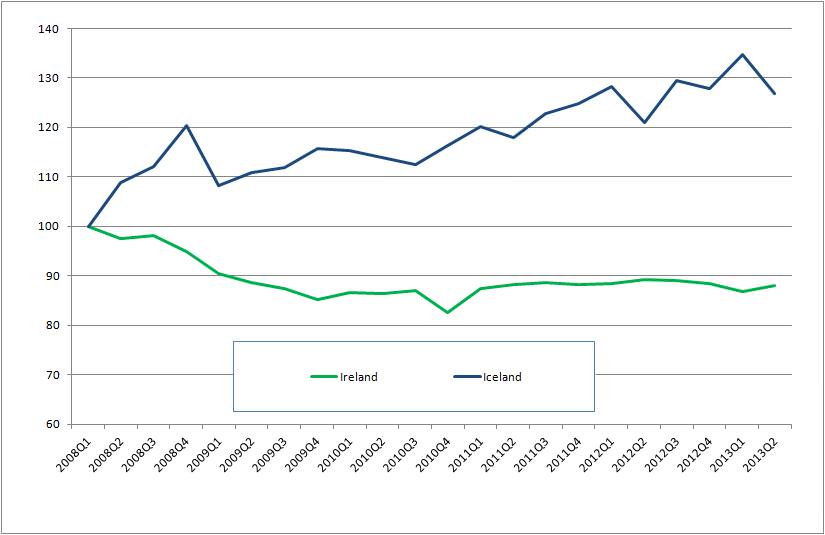
Figure 1: Nominal GDP (2008 = 100) Source: Federal Reserve Bank of St. Louis
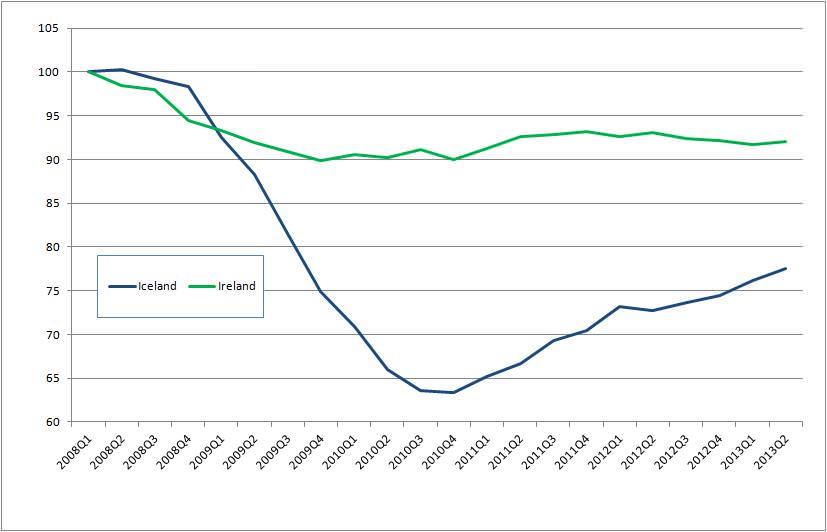
Figure 1 shows the common story. Iceland’s inflationary policy stimulated exports, papered over some bad debts, and in general allowed it to exit the storm relatively unscathed. In contrast, Ireland is languishing in slow growth and five years later the country’s income is still 10 percent below its pre-bust peak.

Such an analysis neglects the pernicious effects of inflation on the Icelandic economy. This policy increased the money supply by almost 20 percent in 2008 alone, and lead to an immediate increase in prices.

Figure 2: Real GDP (2008 = 100) Source: Federal Reserve Bank of St. Louis
In figure 2 we get a better feel for how the situation felt to the average Icelander or Irishman. As the Central Bank of Iceland inflated the money supply, price inflation raged. Icelanders continually felt their financial security worsen as their purchasing power collapsed. This was not apparent to the rest of the world, fixated as it was on the nominal prices the Icelandic economy posted. By its nadir in late 2010, inflation-adjusted income in Iceland was down over 35 percent.

In Ireland this decline was muted because of price deflation. As domestic prices fell it became easier for Irish citizens to make their declining nominal incomes go further. At its worst, the Irish economy collapsed less than 10 percent in real terms.

This seems to suggest that Ireland had the better solution by not pursuing an inflationary monetary policy. Some will note, however, that Iceland’s recovery since 2010 has been quite strong.

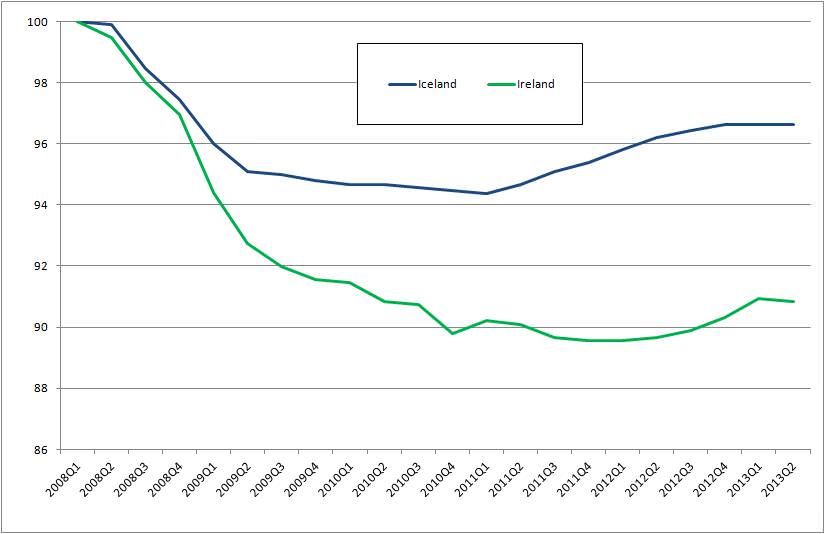
Indeed, if we look at the drop in the employment rate for both countries most probably feel more sympathy for the masses of unemployed Irishmen.

Figure 3: Employment rate (2008 = 1) Source: Federal Reserve Bank of St. Louis
Digging deeper, however, we find that not all is as it seems. Many Icelanders work two jobs to make ends meet. This effect was increasingly pronounced through the recession as inflation made it more difficult to get by with one salary. As a consequence, many Icelanders lost one job during the recession but the unemployment statistics did not reflect this as they were still employed elsewhere. This is notably not the case in Ireland, where not only is one job per worker the norm, but falling prices made it easier for an employed person to make ends meet as the recession continued.

A better way to gauge the employment situation is to look at changes in the hours worked.

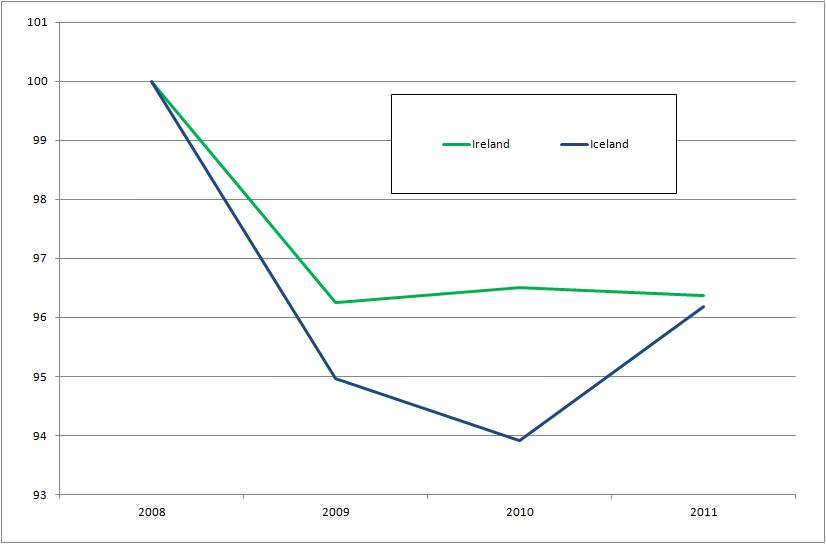
Figure 4: Annual hours worked (2008 = 100) Source: Federal Reserve Bank of St. Louis

Here we can see the situation is reversed. By the recession’s trough in 2010 the number of hours worked by the average Icelander had fallen 6 percent while in Ireland the corresponding drop was only 3.5 percent — almost half as much.

Both countries still have problems. Iceland’s monetary controls are notably stifling needed investment, while Ireland is left with a large debt from bailing out its banks, and this is stalling growth. One thing is clear though — the effects of monetary policy are stark and the proclaimed benefits of Iceland’s inflationary policy were counteracted by the price inflation that ensued.

Don’t let a good crisis go to waste; learn something from it. As the tale of these two countries demonstrates, inflating one’s currency may give the appearance of recovery, but the truth is somewhat less rosy.

David Howden is Chair of the Department of Business and Economics and professor of economics at St. Louis University’s Madrid Campus, Academic Vice President of the Ludwig von Mises Institute of Canada, and winner of the Mises Institute’s Douglas E. French Prize. Send him mail. See David Howden’s article archives.

This article was published on Mises.org and may be freely distributed, subject to a Creative Commons Attribution United States License, which requires that credit be given to the author.

Libertarians and Voting – Article by Alex Salter

Libertarians and Voting – Article by Alex Salter

The New Renaissance Hat
Alex Salter
November 5, 2013
******************************

While it’s often dangerous to make blanket statements about sociopolitical movements, it’s not a stretch to say libertarians have a contentious relationship with voting.

Many libertarians don’t vote at all, and cite positive (as opposed to normative) reasons for doing so. The standard argument goes something like this: Voting in an election is costly, in the sense that it takes time that could have been used doing something else. However, in the vast majority of elections—and probably all elections that matter for who gets to determine significant aspects of policy—each individual vote, taken by itself, is worthless. The voting populace is so large that the probability that the marginal vote affects the outcome of the election is virtually zero. To the extent that one votes solely for the sake of impacting the outcome of elections, the costs of voting outweigh the expected benefits, defined as the probability one’s vote is decisive multiplied by the payoff from having one’s preferred candidate win. A really big payoff, multiplied by zero, is zero.

This argument is a staple of the academic literature in political economy and public choice. It’s used to explain many phenomena, the most prominent of which is rational ignorance. Since each individual’s vote doesn’t matter, no individual has any incentive to become informed on the issues. As such, voters acting rationally remain largely uninformed. As an explanation for an observed phenomenon in political life, it is impeccably reasoned and extremely useful for academic research. However, as an explanation for why individual libertarians refrain from voting, it is potentially quite dangerous.

Voting is a quintessential collective-action problem. Policy would be more libertarian at the margin if libertarians showed up en masse to vote on election day. But for each individual libertarian voter, voting is costly. Furthermore, the benefits of a more libertarian polity are available to each libertarian whether he votes or not. Each libertarian potential voter thus acts according to his own self-interest and stays home, even though if some mechanism were used to get all libertarians to vote, each of them would be better off.

Why is using this argument for abstaining from voting dangerous?  The answer lies in a significant reason why libertarians are libertarians. Many who are not libertarians advocate government provision of goods and services such as roads or education on the grounds that collective-action problems would result in these goods and services being undersupplied. Libertarians rightly respond that this is nonsense. History is full of examples of privately supplied roads and education, not to mention more difficult cases. The existence of a collective-action problem is not a sufficient argument for government intervention. To believe otherwise is to ignore the creative and imaginative capacities of individuals engaging in private collective action to overcome collective-action problems.

Every time a libertarian points to the collective-action problem as a reason for abstaining from voting, he weakens, at least partially, the argument that individuals in their private capacity can overcome these kinds of problems. By suggesting we cannot overcome a relatively simple collective-action problem like voting, our illustrations of ways other collective-action problems have been solved privately, and arguments for how such problems might be solved privately going forward, may appear disingenuous.

Looking at the problem more closely, there are all sorts of ways libertarians can solve the collective-action problem associated with voting. Libertarians could meet throughout the year in social groups dedicated to furthering their education by, say, reading Human Action together, and follow up such meetings with dinner parties or social receptions. The price tag for admission to such groups could be meeting at a predetermined time and place on Election Day and voting. This coupling of mild political activism with other desirable activities is an example of bundling, a very common mechanism by which collective goods and services have been privately supplied throughout history.

At this point, a few caveats are in order.

First, this potential solution is irrelevant for those who refuse to engage in the political process for ethical reasons. A libertarian could find the current popular interpretation of the “social contract” so unacceptable that any engagement in the political process cannot be justified. Second, even after deriving mechanisms for overcoming the voting collective-action problem, individuals’ opportunity cost of participating exceeds the expected benefit. Academics who are libertarians — who must spend significant time engaging highly technical scholarly literature to further their careers — would be most likely to cite this argument, and they may very well be right to do so. Third, organizing “voting clubs” large enough to have a chance of mattering for election outcomes may itself be prohibitively costly. Such is most likely to be true in national elections.

But if these reasons or others are why libertarians abstain from voting, they should say so. Citing the collective-action problem by itself is not enough, and it undermines the argument that purposeful human actors can overcome collective-action problems through voluntary association.

Alex Salter is a Ph.D. student in economics at George Mason University.

This article was originally published by The Foundation for Economic Education.