Browsed by
Tag: aging

Mr. Stolyarov’s Article “Indefinite Lifespans Are Possible in Our Lifetimes” Published by Viral Global News

Mr. Stolyarov’s Article “Indefinite Lifespans Are Possible in Our Lifetimes” Published by Viral Global News

The New Renaissance Hat
G. Stolyarov II
April 22, 2014
******************************

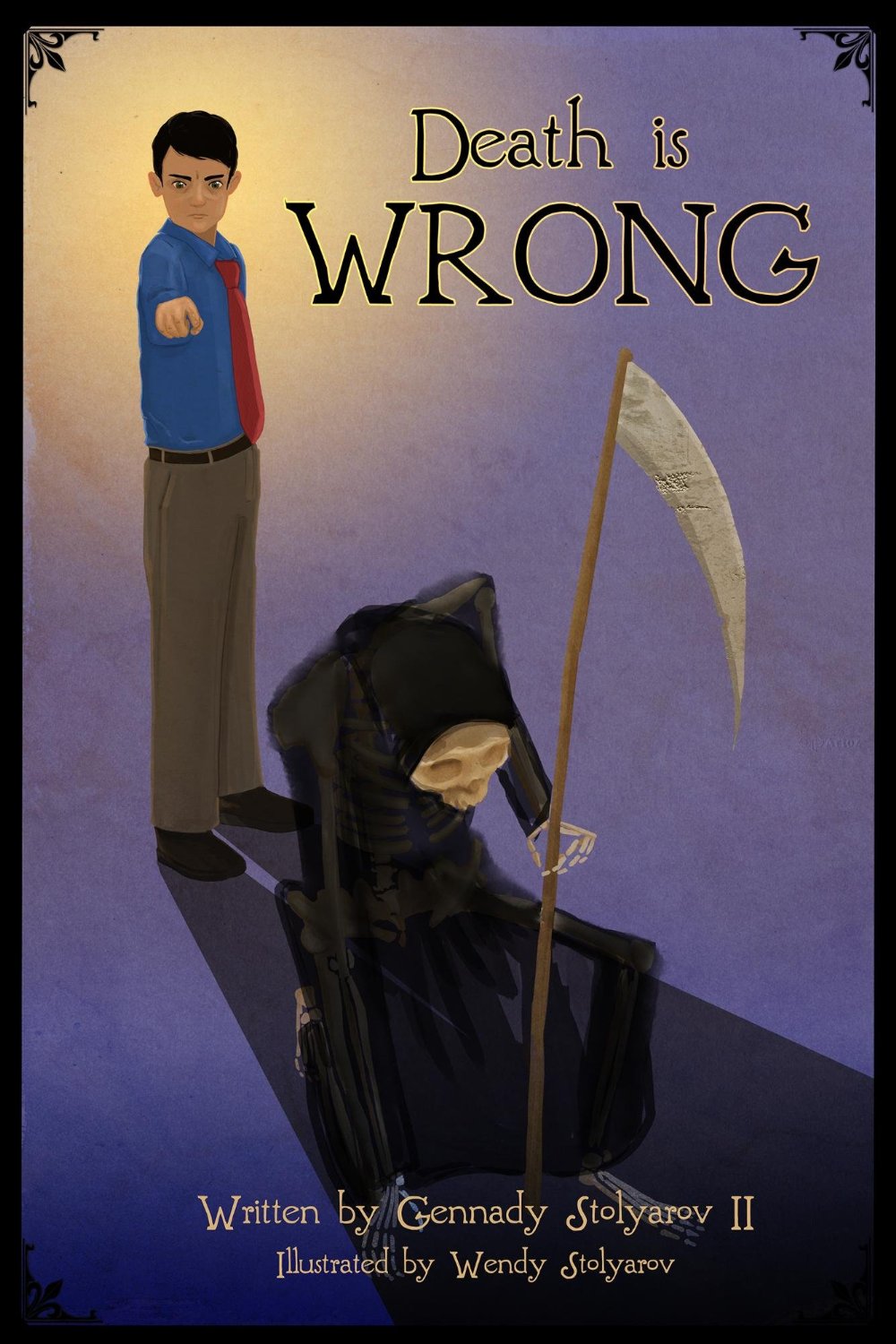
I was pleased to contribute a guest article to Viral Global News, titled “Indefinite Lifespans Are Possible in Our Lifetimes”. The article discusses my illustrated children’s book Death is Wrong, my effort to spread 1000 paperback copies to children, free of cost to them, as well as the basics of Dr. Aubrey de Grey’s research program of SENS (Strategies for Engineered Negligible Senescence), through whose realization the reversal of senescence and the achievement of indefinite longevity would be possible within the next several decades. Read the article here.

Here is the list of references accompanying my article. Please refer to these sources if you would like a more in-depth look at the topics I briefly discuss.

References

Death is Wrong in paperback format on Amazon

Death is Wrong in Kindle format on Amazon

– Indiegogo Campaign: Help Teach 1000 Kids That Death is Wrong

– “Fable of the Dragon-Tyrant” by Nick Bostrom

– “Life Span Extension Research and Public Debate: Societal Considerations”. Aubrey D.N.J. de Grey. Methuselah Foundation and SENS Research Foundation. 2007.

– “Negligible senescence” – Wikipedia

– “Turritopsis dohrnii” – Wikipedia

– “Transdifferentiation” – Wikipedia

SENS Research Foundation

Chart of types of aging-related damage in “A Reimagined Research Strategy for Aging” – SENS Research Foundation

– “Living to 1000: an interview with Aubrey de Grey”. Zander Redwood. 80,000 Hours. April 12, 2012.

– Genentech Alzheimer’s Prevention Trial

– “Progress Against Aging”. Campaign Against Aging. 2010.

– Aubrey de Grey’s video response to Gennady Stolyarov II’s question on how to make up lost progress in anti-aging research – in “Projects to accelerate radical healthy longevity” – Video by the London Futurists

– “How Google’s Calico aims to fight aging and ‘solve death’” – Arion McNicoll – CNN – October 3, 2013

Human Longevity, Inc.

SENS Research on the seven types of damage constituting senescence:

Cell Loss and Atrophy

Dysfunctional/Senescent Cells

Nuclear Mutations

Mitochondrial Mutations

Extracellular Junk

Intracellular Junk

Extracellular Crosslinks

“Death is Wrong” Campaign Update – April 21, 2014 – Video by G. Stolyarov II

“Death is Wrong” Campaign Update – April 21, 2014 – Video by G. Stolyarov II

Mr. Stolyarov provides an update and call to action regarding his effort to Help Teach 1000 Kids That Death is Wrong.

Two days remain until the April 23, 2014, deadline for fundraising for the effort to spread 1000 paperback copies of Death is Wrong to children, free of cost to them. Contribute today to help broaden the reach of this culturally transformative illustrated children’s book on indefinite life extension.

As of April 21, 2014, $3,620 have been raised in this flexible-funding campaign, and $1,380 remain to reach the $5,000 target.

  • At least 725 books will be shipped in total.
  • 140 have been shipped already to longevity activists in the US, UK, Mexico, Poland, India, and Indonesia.
  • 133 books are ready to be shipped upon request.

The Kindle version of “Death is Wrong” is free to download through April 22, 2014. Get it here.

Get your copy today and refer as many children as you can to the link.

The impact of Death is Wrong is just beginning to occur!

References

BBC Future – “How to live forever” – Article by Frank Swain – April 21, 2014

Viral Global News – “Indefinite Lifespans Are Possible in Our Lifetimes” – Article by Gennady Stolyarov II -April 21, 2014

The Future And You – Discussion Between Stephen Euin Cobb and Gennady Stolyarov II
– Part 1 – http://traffic.libsyn.com/thefutureandyou/TFAY_2014_4_2.mp3
– Part 2 – http://traffic.libsyn.com/thefutureandyou/TFAY_2014_4_9.mp3

LongeCity Now – Justin Loew Interviews Gennady and Wendy Stolyarovhttp://www.longecity.org/media/LongeCityPodcast_Stolyarov2014_A01.mp3

“Death is Wrong” Kindle Version Available for Free on April 18-22, 2014

“Death is Wrong” Kindle Version Available for Free on April 18-22, 2014

The New Renaissance Hat
G. Stolyarov II
April 18, 2014
******************************

Starting April 18 and continuing through April 22, the Kindle version of Death is Wrong will be available for free on Amazon. Those who have not yet read the book will be able to obtain it here. One does not need to own a Kindle in order to be able to read the Kindle e-books from Amazon.

Amazon allows a 5-day time window for free Kindle distribution at most, but this is another opportunity for the book to spread as widely as possible. If you obtain a free version and like what you read, please consider donating to our effort to spread 1000 paperback copies to children whose Internet access may not be as continuous and unfettered as ours. On the other hand, if you happen to know some children who do have sufficient Internet access to obtain the Kindle version, I ask that you link them to the Amazon page during the time the e-book is available for free.

Death is Wrong - by Gennady Stolyarov II, Illustrated by Wendy Stolyarov

Gennady and Wendy Stolyarov Interviewed by Justin Loew of LongeCity Regarding “Death is Wrong”

Gennady and Wendy Stolyarov Interviewed by Justin Loew of LongeCity Regarding “Death is Wrong”

The New Renaissance Hat
G. Stolyarov II
April 16, 2014
******************************

Justin Loew of LongeCity recently interviewed me and my wife Wendy Stolyarov regarding our illustrated children’s book Death is Wrong and our Indiegogo campaign to spread this book to 1000 children, free of cost to them. The audio broadcast of our excellent conversation has been posted on this thread on the LongeCity forum. Here is a link to the MP3 file: http://www.longecity.org/media/LongeCityPodcast_Stolyarov2014_A01.mp3.

Gennady and Wendy Stolyarov

More Attention for “Death is Wrong” – Article by Reason

More Attention for “Death is Wrong” – Article by Reason

The New Renaissance Hat
Reason
April 12, 2014
******************************

I like to see advocates setting forth to create small scale initiatives like the children’s book Death is Wrong and the associated fundraiser to distribute copies. At the large scale a broad advocacy movement for a cause in medical research isn’t a monolithic thing; it is made up thousands of such efforts, a tapestry of individual who each thought enough of the cause to stand up and do something about it. More of this is always a good thing, and working towards a cure for degenerative aging is the most worthy of causes that I know of.

Donating to the right sort of cutting edge research is one approach, and the one I favor, but equally we have to get out there and persuade more people to do the same. Money has to come from somewhere. There is always a balance between raising research funding to get the job done versus funding the cost of gathering more supporters and thus making it more likely that greater amounts of research funding can be obtained. Research results help to convince more people to fund more research, but there is never enough support in the early crucial stages – the really large amounts of research funding arrive after the most important work is done, as is the case for every trend.

The starting point for large amounts of future funding and rapid progress towards actual, real, working rejuvenation treatments is some mix of research funding and advocacy initiatives today, however. All such efforts should be encouraged, as it is through them that the longevity science community finds its way to a louder voice in the public sphere, a taller soapbox from which to persuade and educate. Aging is a horror, the greatest cause of pain and suffering in this world of ours, and we stand at the verge of being able to do something about it – but only if many more people come to think that this cause has merit and make their own contributions to help out.

Praise for Death is Wrong, a delicious transhumanist book for children – Review by Guilio Prisco

Quote:

Death is a disease, and hopefully future scientists, perhaps including the young readers of the book, will find a cure. Previous generations thought that death is inevitable, and invented delusional fake philosophies to make death easier to accept. This reaction is understandable – if you can’t avoid something, you look for ways to accept it – and explains all usual rhetorical babbling in praise of death: “overpopulation, make room for the young, death is a tool of evolution, boredom after a long life,” and the utterly idiotic “death gives meaning to life.” The book deconstructs all these fake “arguments” and calls them what they are: understandable but pathetic attempts to rationalize the inevitable.

Provocative strong messages get heard, and teaching children that death will be cured is very provocative in today’s dull, defeatist, politically correct cultural climate. I think writing for children forces to keep things clean end simple, without big words and endless caveats, cutting through the noise and getting to the point. Clear, clean, and simple communication focused on the core message, with qualifications and caveats (if they are really needed) in footnotes, is something that transhumanists should practice more, and writing for children is a good way to learn.

Spreading the Word That Death is Wrong

Quote:

Who could have thought a month ago that an illustrated children’s book on indefinite life extension would become a fiercely, passionately discussed phenomenon not just in transhumanist and futurist circles, but on mainstream publications and forums? And yet that is exactly what has happened to Death is Wrong – certainly the most influential and provocative of all of my endeavors to date. I am thrilled that it is precisely my pursuit of this most fundamental and precious goal – preservation of the life of every innocent individual – that has achieved greater public exposure, controversy included, than anything else I have ever done.

Review of “Death is Wrong” by Adam Alonzi

Quote:

Death can be cured. Let this sink into your brain, not because it is comforting, but because it is true. Even obvious truths will not gain acceptance unless we vigorously campaign against the falsehoods. Death is not something to embrace, and it is not something to ignore. To turn it into a matter of metaphysics or “bioethics” is insulting to those who, by no fault of their own, are burdened by the ailments of old age. There are many extraordinary men and women who could go on working for hundreds of years if their stars were not designed to dim so soon.

Reason is the founder of The Longevity Meme (now Fight Aging!). He saw the need for The Longevity Meme in late 2000, after spending a number of years searching for the most useful contribution he could make to the future of healthy life extension. When not advancing the Longevity Meme or Fight Aging!, Reason works as a technologist in a variety of industries. 

This work is reproduced here in accord with a Creative Commons Attribution license. It was originally published on FightAging.org.

Bob Lane Reviews “Death is Wrong” on LifeVsDeath.com

Bob Lane Reviews “Death is Wrong” on LifeVsDeath.com

The New Renaissance Hat
G. Stolyarov II
April 12, 2014
******************************

Bob Lane has written an excellent post about Death is Wrong on his site LifeVsDeath.com. Read it here. Mr. Lane writes that “This is an important step in a long-term effort to win minds and change attitudes. I applaud the author’s efforts and plan to share a copy with my 15-year-old. […] Even if you don’t have children, please consider supporting the author in what he is trying to accomplish.”

Review of “Death is Wrong” by Adam Alonzi

Review of “Death is Wrong” by Adam Alonzi

The New Renaissance Hat
Adam Alonzi
April 7, 2014
******************************

Death is wrong, and it can be defeated. Gennady Stolyarov’s new book, Death is Wrong, makes this powerful  idea accessible to everyone. Now that you have seen the phrase in print, it should not seem odd to you; the vincible visage of the Grim Reaper should seem less frightening. It is a primitive spectre, a monster to be unmasked in the venerable tradition of Scooby Doo. There is no more reason to believe in its inevitability than there is to believe in the Easter Bunny. This strange, wonderful and intoxicating idea should begin to sink into our brains, not because it is pleasant, but because it is true. Please support his Indiegogo campaign here.

Death can be cured. Let this sink into your brain, not because it is comforting, but because it is true. Even obvious truths will not gain acceptance unless we vigorously campaign against the falsehoods Death is not something to embrace, and it is not something to ignore. To turn it into a matter of metaphysics or “bioethics” is insulting to those who, by no fault of their own, are burdened by the ailments of old age. There are many extraordinary men and women who could go on working for hundreds of years if their stars were not designed to dim so soon.

What do you want to do with your life? This is the question Mr. Stolyarov poses to his readers. Whatever you wish to do is restricted by the time you have on this earth. This is restricted largely by your genes, even if you do all you can to mitigate the hand chance and meiosis have dealt you. The fountain of youth now is not far off. We no longer need to deceive ourselves with lofty philosophical discourses of dreams of a world after this one. Conventional “wear and tear” theories claim the body has a finite amount of repair resources, yet if this was true, exercise should greatly decrease one’s lifespan. As far as we can tell, moderate exercise fights aging as well as or better than anything in our still inadequate arsenal.

If the process is the result of unavoidable changes we should not expect to find animals which undergo negligible senescence. We should also expect animals of the same basic shape, type and size to age at approximately the same rates. American crows normally die before their eigth birthday; Kakapo parrots can live well into their nineties. Post-reproductive suicide may be viewed as a peculiarity of some species, but it also graphically illustrates the control genes have over the aging process. The goal of the Transhumanist movement now should be to convince as many people as possible of the viability of this research. Arcane mathematical tidbits from evolutionary biology, although more cogent, are less convincing than masses of salmon carcasses floating downstream or lowly tortoises who, for no obvious reason, live for centuries.

Knowing our quality of life is doomed to decay with each passing year, we do not always take full advantage of the opportunities available to us. Why play the guitar? Some people have been playing it since they were 12. It would be impossible to schedule it in between shifts at the lab and carting the kids around. An ambition is forsaken for lack of time. It is often irrational, as late is better than never, but humans are not always rational animals. The creeping fear of time is partially justified. Anger is more than justified. There is no reason we should not have more quality time to fulfill our aspirations. Paradoxically, coming to terms with the shortness of life can be more paralyzing than invigorating. Like so many falsehoods, carpe diem stems from deep but forgivable denial.

People, including history’s greatest minds, have tried to find ways in which they or their creations were eternal. These efforts amount mostly to confabulations. As much as this statement will be contested, I must make it: death makes life meaningless. If you cannot agree with this, at least concede that aging can make life intolerable. Before you dismiss this, keep in mind it is easy to pontificate about the value of old age when one is young. Creaking joints and failing organs may change your views. Our finest moments are when we feel eternal, yet feeling eternal is quite different from being eternal. Freud called it the oceanic sensation; the expansion of the self into the wider world. When someone knows with certainly they may live hundreds or thousands of years, these otherwise momentary delusions find firm ground on which to stand.

Death is Wrong - by Gennady Stolyarov II, Illustrated by Wendy Stolyarov

In the end our efforts are all for naught. From a cosmic perspective this may be so, and a pugnacious devil’s advocate may ask if there is such a thing as a “good” age to die, but one can forcefully and effectively argue that 75 is too young. 35 is far too young to begin losing one’s faculties, as many professions today require years of training. A man in the prime of his career should also be in the prime of his life. 20 is universally considered too young to die. So are 30, 40, and 50. Before we can even begin to enjoy the fruits of our labors, we are already declining. Before we can begin to understand a portion of the world’s treasures, we are growing old and tired. What a sad state of affairs! We desire lasting rewards, yet we cannot have them. The productions of an entire lifetime do not last, because the enjoyer of those productions and the accolades they have won eventually perishes. With his body, presumably, his consciousness also disappears into nothingness. Deadlines tend to force a person to work in a state of fear. Death is the ultimate deadline.

What of knowledge and talents? Why acquire knowledge when it can only be imperfectly transmitted to the next generation? Preserved in books, but there are already so many books. Immortality may not be necessary for society’s continued progress now, but with the constant expansion of information and the sprawling interconnectedness of different disciplines, it is reasonable to wonder if hyperspecialization is our salvation. Immortality and intelligence amplification will allow us all, to some extent, to become generalists capable of making sane and sound decisions for ourselves and society. Why invest in higher pleasures when the lower ones deliver immediate gratification?

Living for each day devolves into hedonistic stupidity. Why should we care about the consequences of our actions when, regardless of what happens to us, our stories all end in the same way? What was once a psychological necessity is now a hindrance to the greater good. What was once a rational position is now an effrontery to a sane approach to medicine. This is not say that research efforts dedicated to the cell cycle or the precipitating factors involved in autoimmune disorders are worthless – far from it! Rather it means that life extension in its own right ought to be a major area of inquiry. The totem must be smashed and the taboo crushed.

Yet whose decree are we following and why? Disease is our oldest foe. We are not complacent about hereditary illnesses that will only be cured after the perfection of in vivo gene therapy. Yet a lifespan of less than a century is blindly accepted as a physical limit by, according to polls taken by Theodore Goldsmith, a shocking number of scientists and laymen alike. Death is literally our mortal foe, but the amount of energy we have spent fighting it directly would not lead one to this conclusion. The biochemical changes associated with aging are the primary risk factors for diabetes, atherosclerosis, arthritis, and cancer. Yet, in spite of the undeniable correlation between aging and these diseases, research effort is directed mostly at treating them individually instead of addressing their underlying cause.

This is rooted not in a scientific sentiment, but in the unfounded assumption that death is inevitable. This stems less from skepticism towards modern medicine and more from historical superstitions that allowed our ancestors to cope with the mysterious and inhospitable universe in which they found themselves. Worse, there are throngs of secular and religious nihilists alike who actively spread the gospel of death. They erect altars to petty Molochs to distract themselves from their own worst enemy. It will be difficult to battle the most entrenched notion of all, but nothing worth having is easy to obtain. The end of suffering is the highest ideal. Why should we worship false idols any longer?

Should Transhumanism take precedence over the fight against Creationism? The answer seems painfully obvious. I do not care if a pig farmer in Alabama believes the Neolithic era was populated by dinosaurs. His ignorance has no dreadful ramifications for humankind. As an academic and popular movement, anti-aging should be the first and foremost topic of scientific discussion. The secular and sane world accepts Darwinism. There is no reason to suppose converting the remaining holdouts will benefit society in the least. The sane and secular world, however, is still largely unaware of the strides science is making toward biological immortality. Moreover, a small bit about intelligent design in a science textbook, while objectionable on moral grounds, will not do much more damage to an already broken school system.

Mentioning intelligent design in passing will do nothing to dumb down an already doltish student body. Advocates of evolution would be more helpful if they turned their energies to spreading numeracy and basic literacy. Both are in short supply. To spend a lifetime fighting against hopeless ignoramuses makes one an imbecile of the highest order. Let the ignorant tend to their own business while we welcome the age of wonders. Let this be a call to arms. Let this be a call to awaken and accept the foolishness of how humanity uses its resources. Rage against the dying of the light. Do not go gentle into that good night.

Adam Alonzi is the author of Praying for Death and A Plank in Reason. He is also a futurist, inventor, DIY enthusiast, biotechnologist, programmer, molecular gastronomist, consummate dilletante and columnist at The Indian Economist. Read his blog Cool Flickers.

To Accept Aging and Death is to Choose Aging and Death – Article by Reason

To Accept Aging and Death is to Choose Aging and Death – Article by Reason

The New Renaissance Hat
Reason
April 1, 2014
******************************

It is in the nature of things for people to become more accepting of the imperfect state of the world and the flawed human condition with advancing age, to lose that youthful indignation and urge to change all that causes suffering and injustice. We can blame a range of things for this, but I suspect that it has a lot to do with the growth in wealth and connections that occurs over the years for most individuals. Whatever your starting level, on average the 50-year-old you will be in a better place than the 20-year-old you. The gains you have amassed merge with nostalgia in a slow erosion of the desire to tear down walls and shake up your neighbors: things are better for you, and isn’t that a good thing? Not everyone is this way, of course, but it is a dynamic to be aware of in your relationship with the world. It is human nature to measure today against yesterday, and feel good about gains that are relatively large but absolutely small.

Acceptance of death and aging is the mindset I am thinking in particular here. The unpleasant ends of life are dim and distant myths when you are young and vigorous in your search for world-changing causes. It is the rare young individual who is willing to devote his or her life in preparation for a time half a century down the road. The older folk who feel the pressures of time and encroaching frailty are those who have become more accepting, however. To fight aging and work on rejuvenation treatments is an intrinsically hard sell in comparison to many other ventures. The youth think they have time to focus on other matters first, and the old have come to terms.

Nonetheless, with rapid progress in biotechnology year after year the number of people needed to get the job done is falling rapidly. Ten million supporters willing to put in a little time or money (rather than just a wave and a good word) and the careers of a few thousand scientists and biotechnicians is probably more than is needed at this point, a level of support that lies in a similar ballpark to that of the cancer or stem-cell research communities. We are not there yet, though support for scientific, medical approaches to the treatment and prevention of aging has grown in a very encouraging fashion over the past decade. At any time in the next year or so you might see mainstream press articles in noted publications favorably mention the SENS Research Foundation, regenerative medicine, Google’s Calico initiative, and progress in genetic science all in the same few paragraphs.

We are here, where we are, precisely because numerous people retained a youthful fire and verve, and indignation and horror of aging and death. Despite the ever-present opposition from a mainstream that once mocked aging research, these iconoclasts put in the work that has raised funds, created organizations, and changed minds: all seeds for tomorrow’s grand rejuvenation research community. This is a work in progress. But let us take a moment to admire some of the fire from those driving things along at the grassroots level:

Those Critical of Indefinite Life Extension Fear Life

Quote:

Accepting death is in fact choosing it. In the face of recent discoveries and progress in science, medicine, technology – it is a matter of choice. Pretending to be fearless in the face of death isn’t some form of heroism. It isn’t reasonable or courageous. It is quite the opposite. It is taking the easy way out. Let’s repeat it – death really is the easy way out. You fall asleep; you get a bullet; cancer kills you; some choose suicide; some accept aging and its effects as an inexorable given. The hard truth here that we should be prepared to acknowledge is: accepting death is the true cowardice, no matter the circumstances. Fighting it and choosing life is the true courage.

Critics of indefinite life extension, don’t put on a snide, condescending face and tell me that you aren’t afraid of death, because you are, too.

By your own knee-jerk flippancy, reactionary admission, you are also afraid of life. You’re afraid of death, and you’re afraid of life. You say, right to us, all the time, that you don’t want to bear to deal with the drastic changes, you don’t want to live without all your friends and family around, you don’t want to live with war still being a reality anywhere. You can’t stand all the jerks and the dangerous people, and rich people, or tyrants, controlling you for one decade longer than a traditional lifespan. The thought of it makes you want to jump into your grave right now to get away from this big, bad, scary life.

You, my friend, are afraid of life. Living scares you. You think of life and you cower. You see the challenges of life and you’re too scared to face them. You wouldn’t dare form and join teams and initiatives to meet those challenges on the intellectual combat fields of dialectics and action. You don’t have what it takes. Life isn’t for you. It’s not your thing. So love your death, fear your life. Do that if that’s what you want.

I am afraid of death. It scares me to think of losing my life. I value my life. I have no shame in that. That is the reasonable thing to do. What I have shame for is that anybody would think that being afraid of death might possibly be something to mock.

You mock us for being afraid of death. We are afraid of death; it’s a logical and positive thing to be afraid in the face of it. It reminds a person to take action against danger. It’s your being afraid of life that is to be mocked. So stand up and tell us how afraid you are of living. We promise not to look upon you with too much shame, and we promise to lend you a hand if you need help crossing over to the land of reason.

Reason is the founder of The Longevity Meme (now Fight Aging!). He saw the need for The Longevity Meme in late 2000, after spending a number of years searching for the most useful contribution he could make to the future of healthy life extension. When not advancing the Longevity Meme or Fight Aging!, Reason works as a technologist in a variety of industries. 

This work is reproduced here in accord with a Creative Commons Attribution license. It was originally published on FightAging.org.

Guide to Talking about Immortality – Article by Wendy Hou

Guide to Talking about Immortality – Article by Wendy Hou

The New Renaissance Hat
Wendy Hou
April 1, 2014
******************************

Introduction

Wobster’s List of Words to Avoid

A Non-Threatening Script (Faith-Friendly!)

FAQs

Introduction

Death is natural. Death gives life meaning. Nothing would be meaningful if you lived forever. You’ll be bored of living. Immortality comes through what we leave behind. You live on in your children. Immortality would only be available to the wealthy. You’ll cause class warfare. Earth would run out of resources. People would stop having children. You should overcome your fear of death so you can live more fully.

A discussion about potential immortality is among the most frustrating conversations a rationalist will ever have. Nowhere else is the response so uniform, uniformly hostile, and boringly predictable. While a more intelligent or more educated person generally makes for a better discussion, that doesn’t seem to make any difference here.

Meet Generic Gerry. This is an ordinary person with an ordinary upbringing, uploaded with our society’s typical views on death. Here are my tips for talking to Generic Gerry. I hope it will be useful to you, so perhaps you can skip that pointless swirl and have a more fruitful discussion.

Wobster’s List of Words to Avoid

To begin with, here are some words you shouldn’t say.

  1. Immortal / immortality / live forever

This is number 1 for a reason! When you say “immortal”, you’re thinking of reading books and making art and enjoying the company of loved ones. You know what Gerry is thinking? Voldemort. Or perhaps the wicked stepmother in Tangled. Or perhaps the Flying Dutchman. Literature has not been kind. Let’s just skip the part where Gerry calls you selfish and accuses you of sacrificing others for yourself.

  1. Transhumanism

“Oh, like Ray Kurzweil!” Generic Gerry knows exactly one transhumanist, Ray Kurzweil. And (while Mr. Kurzweil is an excellent and inspiring person) Gerry thinks he’s crazy. Unfortunately, Gerry hasn’t actually met Mr. Kurzweil, only heard stories. Secondhand. They’ve become distorted along the way. “He takes 1000 vitamins and wants to bring back his father’s voice in a box!”

  1. Cryonics

Another topic that’s treated unfairly in the media. At best, Gerry thinks cryonics is weird; at worst, a cowardly scam. We don’t need those negative feelings here.

  1. Singularity / AI

Not directly relevant here, and kind of scary to Generic Gerry, who’s not super excited about computers taking over the world.

These are all buzzwords. They are like light switches in a room or buttons in a psyche. The moment you say “immortality”, you are no longer talking to an agent. You are now talking to an NPC. NPCs are all about programming. Their thinking switches off while their programming switches on, and out of their mouths comes a whole culture’s worth of social platitudes, all in one big defensive stream.

That’s why it’s always the same conversation.

A Non-Threatening Script (Faith-Friendly!)

Since talking about “not dying” makes Generic Gerry raise up the defensive shields, I like to talk about “not dying without consent.”

  1. Begin with something anyone can agree with.

“Doesn’t it suck when people die of cancer at the age of 40 with two young kids? Or when they die slowly of Alzheimers?”

  1. Link to aging.

“If we could fix these aging-related problems, people wouldn’t get cancer when they get older anymore. They would stay healthy and active.”

  1. Introduce the vision.

“Instead of dying from cancer before they are ready, they can live out all their dreams and read all the books they want.”

  1. Stick close to the cultural norm.

“Then, when decide they are ready, they can set up their affairs, get their finances in order, and die surrounded by family and friends.”

Of course, there will always be new books to read, and maybe you’d never decide you are ready to die, but you don’t have to say it. Leave Gerry to come to that conclusion.

It works even with the religious who want to be with their god or their eternal family someday. Most would object to never dying, but some do appreciate more control over when and how.

It’s important to remember you won’t change Gerry’s mind overnight. Gerry will have to think about it over weeks and months, maybe even years. Your goal is to crack the gates open. If Gerry rejects immortality, that gate is slammed shut. But if Gerry expresses interest in choosing the timing and circumstances of death, you’ve got your foot in the door! Gerry will not be openly hostile to discussing aging research with you. Perhaps Gerry will even be interested in the research or excited about advances. And for a first conversation, that’s the best you can hope for.

FAQs

I’ve heard every one of these way too many times. In all likelihood, so have you.

  • I want to go to heaven.

It will always be trivially easy to die. You’ll just get to choose when you’re ready. You won’t have to die unexpectedly at the age of 60 wishing you could watch your grandchild grow up.

  • If you’re afraid to die, you’re not really living.

Unfortunately, you are thinking of Voldemort, a character so afraid to die he never truly lived. Voldemort is also fiction. In real life, I’m more like a person who eats healthy to avoid heart disease.

  • Won’t living forever get boring?

Not in the first 1000 years, no. After that, you can choose to die if it’s boring.

  • When people are old, they are ready to die.

Seeing as a 22% of all healthcare costs are incurred in the last year of life, no they aren’t. But even if they were. . . .

When people are old, they are also tired, achy, and frail. Would they still be ready if they were healthy, fit, and active? Perhaps the real age when they’d be ready is 200 or 1000. We don’t know.

  • Would it be available to everyone or just the wealthy?

Short answer: It will be available to everyone.

Long answer: Even today, vaccines aren’t readily available in Africa. But we don’t grab our pitchforks, yelling “Down with vaccines!” In the US, cancer treatments are still limited to those who can afford them. Chemotherapy started with Eva Peron before reaching the rest of Argentina. Life extension will begin with the wealthy, too. One day, it will reach everyone. Those who care can help fund life extension for the poor, or better yet, donate to research to make the life-extension techniques cheaper and better.

  • How will Earth support all those people?

That’s something we’ll have to figure out. Perhaps we could mine asteroids for resources or grow food on space stations. We might need to have fewer children until we can support them. What we don’t do is let the elderly die for resources, not even now.

  • Death is but the next great adventure.

That’s your belief, and you can choose it for yourself, but please don’t choose that path for me.

Wendy Hou is a programmer, mathematics instructor, and life-extension supporter.

Those Critical of Indefinite Life Extension Fear Life – Article by Eric Schulke and Wioletta Karkucińska

Those Critical of Indefinite Life Extension Fear Life – Article by Eric Schulke and Wioletta Karkucińska

The New Renaissance Hat
Eric Schulke and Wioletta Karkucińska
March 23, 2014
******************************

What a repugnant, disdainful, knee-jerk flippancy to flop out of one’s mouth to mock anybody for being afraid of death.

If death doesn’t arouse fear, then what is fear?

We know what fear is. It’s having the sense to understand the level of loss that something imposes upon a person. It’s a no-brainer to understand that life provides value that would diminish to an extensive level if it were to be lost.

Let’s make this even clearer by spelling out what the dictionary tells us about fear.

fear

verb \ˈfir\

: to be afraid of (something or someone)

: to expect or worry about (something bad or unpleasant)

: to be afraid and worried

a :  an unpleasant often strong thought caused by anticipation or awareness of danger

b (1) :  an instance of this (2) :  a state marked by this

:  anxious concern :  solicitude

:  reason for alarm :  danger

I don’t have the courage to be robbed or run over; nor should I, or anyone. I have the emotional maturity to understand what my fear is telling me and to equip myself with the courage to join in on the assault on the terrible beast of aging. Watching incredible things unfold in the universe and world, seeing that it is all just the tip of an inconceivably large iceberg, and then seeing that it will be arbitrarily terminated in another of endless, terrible, horrific events for all involved, is alarming. It should concern you that you are standing on the deck of this great star-ship called Earth, and that you might fall off. You should be able to be aware of, and anticipate danger that is ahead. Your stake in the universe is at stake. Your DNA crawled out of your mother’s womb, drove a spike into the universe, asserting a claim in this realm, and death comes along like a miscreant walking up to a land-claim stake, and rips it out and throws it in the river.

“What are you, afraid of death?” They say.

“Don’t be a coward.”

“Because you’re too cowardly to accept death, the rest of us have to help you with your stupid little excursions?”

It’s as though they are saying, “What are you, afraid of cancer? You sissy, your mother and brother have cancer? So what? Don’t act like a wimp. Cancer is what happens. People live, people get cancer. Don’t accept the ice cream and the music if you’re going to whine about the cancer, it’s part of the package. If I could lift a finger to stop people from dying, then I wouldn’t do it.”

Or, it’s like that jerk that you know urging people to walk into woods where there are predators with humans as prey.

“Come on man, walk forty miles through the jungle there. Don’t worry about the lions, mosquitoes, and rhinos. You’ll get through fine, just goooo.” What terrible advice, and what a terrible kind of advice to condone and not discourage!

They are like the trash-talkers on the rodeo machine, where a round of people sit at a teeter-tottering table in the middle of a bull pen while they play cards and talk smack to each other for not continuing to sit in the bull’s eye of imminent death.

Pretending to be fearless in the face of death isn’t some form of heroism. It isn’t reasonable or courageous. It is quite the opposite. It is taking the easy way out.

What’s more is, that although being afraid is a sensible, logical part of it, the overriding part of it is that most of the people that I talk to that want to live long into the future, do it first and foremost because of their love for life. Most of the people that I know have been thwamped over the head with passion bugs of various kinds by flipping over galactic rocks like philosophy stones, quantum particles, history books and science boulders.

Fighting death has been for ages treated as a battle destined to be lost. How many times, when faced with a loss of a loved one, have we heard “Well, that’s the way of life”? How can one NOT notice the bitter irony and hypocrisy of that statement? How can death EVER be called an element of life, something to accept? It’s the very OPPOSITE of life, NOT part of it, and it is high time we should start seeing it as such. Let the blinders fall from our eyes, once and for all.

We appreciate our opportunity. We appreciate the rarity of humanity and the mind-blowing mysteries we have the privilege to continue to be submersed in. We understand that culture and tradition do not govern the big picture of what it means to exist here.

What it means to exist here is that we are the rare opportunities to know existence. What kind of extremely rare miracle would spring out of the mud after eons of nothingness and then declare that fleeting, flippant, empty cultural traditions of intellectually straitjacketed ancestors of itself are the best dictates for how it should face the big picture of the rapidly unfolding, multifaceted, and to-be-unfettered dreams-come-true (multi?)universe? Would you say that your grandmother’s old typewriter manual is the best guide for figuring out how to fix and program your computer?

What kind of jaw-dropping, paradigm-quaking miracle would spring out of the mud, find science and technology, industry and physics, communications superhighways and knowledge warehouses at the ends of high-speed trails, and all the rest – in many cases at its disposal or within reach of it – and then decide that the best thing for this miracle of the universe to do would be to return to the mud? I can’t tell you how disappointing it is to realize that many of our fellow human beings still think that. It’s also hard to understand exactly how they could think that in a world that emphasizes the value in good, positive critical thinking. They know better than that.

Accepting death is in fact choosing it. In the face of recent discoveries and progress in science, medicine, technology – it is a matter of choice.

Some people will smugly respond with the assertion that quality is obviously better than quantity. They say that acquiring more happiness now in exchange for taking away their chance to live for continued decades and centuries, is not irresponsible and wrong.

To them we say, our ancestors toiled and struggled through untold and long-lasting hardships to deliver their progeny, you, here to where you are so you can have the opportunities and the ever-brighter futures the generations of your ancestors hoped for, worked for, and achieved. You and your opportunities are their achievement, and I urge you to keep in mind thoughts of not wanting to let them down. You don’t live it up now and then throw away the chance your ancestors gave you. Your job is to survive first, and build empires later. You accept the tough times so that you may continue to earn opportunities to work to build more and more goodness into your life – be that through the completion of more dreams, the building up of more enterprises, the satiation of more curiosity, the fulfillment of more adventure, etc. The tough times help you to savor the good times more. When the ship is on choppy seas and might go down, you hold on tight and work twice as hard. Our ancestors didn’t raise us to throw in the towel. As far as I have ever seen, modern-day Homo sapiens did not evolve with a gene for quitting.

You are set for all the challenges that fighting for life brings. Let’s repeat it – death really is the easy way out. You fall asleep; you get a bullet; cancer kills you; some choose suicide; some accept aging and its effects as an inexorable given. The hard truth here that we should be prepared to acknowledge is: accepting death is the true cowardice, no matter the circumstances. Fighting it and choosing life is the true courage.

Critics of indefinite life extension, don’t put on a snide, condescending face and tell me that you aren’t afraid of death, because you are, too.

By your own knee-jerk flippancy, reactionary admission, you are also afraid of life. You’re afraid of death, and you’re afraid of life. You say, right to us, all the time, that you don’t want to bear to deal with the drastic changes, you don’t want to live without all your friends and family around, you don’t want to live with war still being a reality anywhere. You can’t stand all the jerks and the dangerous people, and rich people, or tyrants, controlling you for one decade longer than a traditional lifespan. The thought of it makes you want to jump into your grave right now to get away from this big, bad, scary life.

You, my friend, are afraid of life. Living scares you. You think of life and you cower. You see the challenges of life and you’re too scared to face them. You wouldn’t dare form and join teams and initiatives to meet those challenges on the intellectual combat fields of dialectics and action. You don’t have what it takes. Life isn’t for you. It’s not your thing. So love your death, fear your life. Do that if that’s what you want.

I am afraid of death. It scares me to think of losing my life. I value my life. I have no shame in that. That is the reasonable thing to do. What I have shame for is that anybody would think that being afraid of death might possibly be something to mock.

You mock us for being afraid of death. We are afraid of death; it’s a logical and positive thing to be afraid in the face of it. It reminds a person to take action against danger. It’s your being afraid of life that is to be mocked. So stand up and tell us how afraid you are of living. We promise not to look upon you with too much shame, and we promise to lend you a hand if you need help crossing over to the land of reason.

We once thought the Earth was flat or that all planets revolved around Earth. Many people who have threatened to disrupt tradition and the ways things have been at given times in the world’s history, have faced persecution and shunning for their discoveries. The life of helping move the world forward was hard because the work didn’t often ride forward in a parade of activism and public cheer and action. It would ride forward one hard-fought campaign at a time, one shovel-full at a time, at the hands of small groups of dedicated people working hard to ring the bell of freedom at each new level as humanity continued to expand out into the big picture of the universe and existence. They kept their minds fine-tuned and well-oiled with awareness and focus on what it means to be alive, gathered information, moved humanity forward in various ways, and proved the huge number of skeptics wrong. Life must have felt like hell for them, but they held on and won.

They chose to be courageous in their LIVES. Are you ready to open your mind and face some difficulties in the struggle for life? Would you rather fall asleep and miss out on miracles or stay wide awake and live them?

Eric Schulke was a director at LongeCity during 2009-2013. He has also been an activist with the Movement for Indefinite Life Extension and other causes for over 13 years.

Wioletta Karkucińska is an author and longevity activist in Warsaw, Poland.