Browsed by
Tag: Donald Trump

Will Trump Boycott Grocery Stores for Their Unfair Trade? – Article by Edward Hudgins

Will Trump Boycott Grocery Stores for Their Unfair Trade? – Article by Edward Hudgins

The New Renaissance HatEdward Hudgins
******************************

Donald Trump’s stump thump against Mexico is that it runs a $58 billion annual trade surplus with the United States. Trump somehow thinks this leaves America the poorer.

He claims that it is out of that money, presumably sitting in some giant vault in Tijuana, that Mexico will pay for the border fence he wants to build to keep immigrants from entering the United States illegally. Trump’s pronouncements only demonstrate how he keeps facts and reason from entering his thoughts and, how he would keep Americans from making their own free choices in a free market.

International free trade is win-win
Trump’s very language reveals a glaring error concerning trade. Mexico and America do not trade. Mexicans and Americans do. Mexicans have $58 billion more in cash (pieces of paper with George Washington’s picture on them or the equivalent credits on bank ledgers) and Americans have $58 billion more in goods (electrical equipment, Trump-themed apparel).

And Trump doesn’t bother to ask, what are those Mexicans supposed to do with those pieces of paper? If they don’t spend them in America, they’ve got nothing but useless paper. So the Mexican trade surplus also means that Mexicans are investing an equivalent amount in America, helping the U.S. economy grow.

Further, the fundamental nature of trade between individuals is a win-win situation. Someone who buys an orange Donald hat for $20 to show his support for the former host of “The Apprentice” values the hat more than the twenty. And the manufacturer in Mexico who has a warehouse full of said head gear prefers the $20.

If The Donald slaps a 30% tariff on all goods coming from Mexico, maybe his starry-eyed supporters would shell out $26, the higher cost of the hat. But a poor mother with five kids seeing the price of a pair of shoes jump from $20 to $26 might be hard-pressed to afford the extra $30 she’d need to cover the feet of all her five little ones. But Trump doesn’t care. He wants to get rid of that pesky trade imbalance and what better way than to discourage that mom from buying Mexican-made shoes for her family! On the other hand, maybe he will notice when Mexican investors pull out of his latest golf resort or skyscraper projects, because his policies have destroyed their profits.

Trump’s grocery store trade deficit
If Trump is so against trade deficits, he should have a serious problem in his own household. Trump no doubt runs a huge trade deficit with his grocery store. He gives them piles of money when he buys food—no doubt top-priced cuisine—but the store never buys anything from him. Maybe he should boycott it. Maybe we should all boycott our local grocery stores lest we be victims of a trade deficit. Maybe if elected president, Trump will slap a 30 percent “grocery tariff” on everything that those stores try to sell to us poor, exploited schleps until those stores start purchasing stuff from us.

Trumps versus liberty
Trump poses as a friend of the people, but he wants to use government to prohibit the Americans from purchasing goods from whomever they wish—including Mexicans. The Donald presumes to know better what individual Americans should buy with their own money and at what price than they do. He’s determined to drive up the prices for Americans buying from Mexicans to teach those Mexicans a lesson. So what if American consumers and businesspeople are collateral damage.

Trump’s policies would only add more instability to an already unstable world. Ayn Rand explained that “The essence of capitalism’s foreign policy is free trade—i.e., the abolition of trade barriers… the opening of the world’s trade routes to free international exchange and competition among the private citizens of all countries dealing directly with one another. During the nineteenth century, it was free trade that liberated the world, undercutting and wrecking the remnants of feudalism and the statist tyranny of absolute monarchies.”

When governments take away the liberty of individuals to pursue their self-interest by trading freely with other individuals—a win-win situation—they set the stage for conflicts and even wars between countries. Trump’s proposed trade war is really a war on the American people.

Dr. Edward Hudgins directs advocacy and is a senior scholar for The Atlas Society, the center for Objectivism in Washington, D.C.

Copyright The Atlas Society. For more information, please visit www.atlassociety.org.

One Bad Reason to Hate Trump – Article by Sarah Skwire

One Bad Reason to Hate Trump – Article by Sarah Skwire

The New Renaissance HatSarah Skwire
******************************

99 Reasons, But the Name Ain’t One

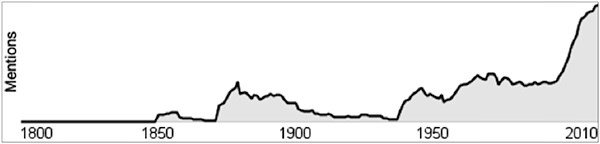
I have 99 (thousand) reasons to hate Donald Trump and to find his campaign stomach turning. I won’t list them here. The Google graph showing the rising use of the word “bloviate” in American political discourse should stand in place of any detailed accounting.

bloviategraph

But what’s grabbed most of the attention since John Oliver mentioned it recently on his show, Last Week Tonight, is Trump’s name. As Oliver notes, “Trump sounds like money.” But, he continues in tones of shock and dismay, “It turns out the name Trump was not always his family name.… An ancestor had changed it to Trump from Drumpf.”

My family name wasn’t originally Skwire. It was Skwirsky. My grandfather and his brothers changed it — right around when Trump’s ancestor changed the family name — because back in those days, it was hard to get jobs in the United States with an obviously foreign name. Trump’s ancestors, I’m sure, did the same thing.

There’s no shame in being from places that aren’t America. There’s no shame in having a last name that’s unusual. And I am bothered by the pleasure we are taking in mocking a name that sounds a little bit funny and a whole lot foreign. It sounds like the kind of rhetoric Trump uses. So I’m not going to indulge.

However.

(And this is a very big “however.”)

I do think there’s something to talk about here, and I don’t think it’s funny at all.

The focus on Trump’s original family name is not analogous to the focus on former Republican presidential candidate Chris Christie’s ample girth. Governor Christie’s poundage was immaterial to his campaign. He has not publically bloviated about the need for the obese to stop being lazy, to start exercising, and to start eating right. He has not signed on to regulatory agendas like former New York mayor Michael Bloomberg’s attempts to control what and how much people eat and drink. He hasn’t, in other words, turned his weight into a centerpiece of his campaign.

Trump, however, has made immigration one of his central issues. Even those of us who have tried desperately to avoid the whole political season have heard that he wants a bigger wall along the border with Mexico, that he wants Mexico to pay for it, and that he would deport 11 million illegal immigrants in short order. A little research turns up Trump’s repeated references to immigrants as criminals, drug dealers, and rapists. Birthright citizenship is dumb, he opines. And the barriers to immigration should be towering, because, Trump says over and over, the people born here should be our first concern.

It’s not funny that Trump’s family name used to be Drumpf. That’s just a standard American story that most of us probably share. To be an American, for most of us, means we’re not really from around here.

But the idea that we might have an American president who thinks it’s fine for the Drumpf family to come to America and achieve unimagined success in a few generations, but who will do everything possible to keep the Rodriguez family or the Habib family from doing the same?

That’s a tragedy.

Sarah Skwire is the poetry editor of the Freeman and a senior fellow at Liberty Fund, Inc. She is a poet and author of the writing textbook Writing with a Thesis. She is a member of the FEE Faculty Network.

This article was published by The Foundation for Economic Education and may be freely distributed, subject to a Creative Commons Attribution 4.0 International License, which requires that credit be given to the author.

Free Trade Is the Path to Prosperity – Article by Georgi Vuldzhev

Free Trade Is the Path to Prosperity – Article by Georgi Vuldzhev

The New Renaissance HatGeorgi Vuldzhev
******************************

The political circus of the 2016 presidential election has revived and reinvigorated popular belief in age-old protectionist fallacies. Currently Donald Trump and Bernie Sanders are both in favor of expanding protectionist trade policy, with both of them arguing that free trade “destroys” jobs and hurts domestic workers and producers by exposing them to foreign competition. Both candidates espouse an utterly misguided zero-sum view of economics, in which one side to an exchange wins only when the other side loses. Both men are, of course, completely wrong.

Free Trade Does Not Destroy Jobs

It is true that greater competition between domestic and foreign workers can lead to a decline in wage rates and possibly unemployment in some sectors of the economy. But this is only a short-term effect. Free competition between foreign and domestic producers also naturally leads to lower prices for the goods and services which can now be freely imported from abroad. So, while nominal wage rates are pushed down in some sectors, real wage rates rise overall for everyone in the economy because of the decline in prices.

Thanks to free trade consumers spend less money on certain goods and services and this allows them to spend more money on others, which leads to rising demand and thus profits in the sectors providing the latter, and consequently leads also to more investment by entrepreneurs. This higher rate of investment naturally leads to the creation of more jobs in these sectors and thus offsets any original rise in unemployment that might have occurred.

Alternatively, the consumers may choose to save the extra disposable income that was freed up by the decline in prices. This rise in the savings rate will lead to a decline in interest rates, which makes profitable certain long-term capital-intensive projects which were not profitable beforehand. Seizing the opportunity presented by this increase in savings, entrepreneurs will start borrowing and investing in those long-term capital intensive projects, which on its own already creates more jobs, but it also leads to a rise in demand for capital goods, which raises profits in the capital goods industries and consequently leads to more investment and job openings in those sectors.

Free Trade Is Win-Win

Free trade not only doesn’t “destroy” jobs, but it also promotes specialization between nations, which improves the efficiency and productivity of workers, and leads to a rise in living standards for all. Trade is not some kind of a zero-sum game in which if one side wins, the other has to lose.

When two countries such as the United States and China, for example, trade freely with one another, their citizens are incentivized to specialize in those lines of production in which they have a comparative advantage. Due to the difference in factors of production endowments it is best for different countries to specialize in producing those types of goods and services which they can produce most efficiently in comparative terms. A higher level of specialization, through the effect of economies of scale, makes production more cost-efficient.

By specializing in a certain line of production and then exchanging the goods and services produced for those that others are specialized in producing, the people of a given country can substantially raise their living standards because the gains in productivity are naturally followed by an increasing supply of goods and services and thus rising real incomes. This way free trade allows for the flourishing of what can be called an “international” division of labor. Just like a greater degree of division of labor can lead to big gains in productivity and thus real incomes on an intra-national (i.e., internal for a given country) level it can also do so on an international level.

Protectionism Makes You Poor

When international trade is restricted, for example, by protectionist legislation which places tariffs on certain imports, this process of specialization is hindered and thus the gains in productive efficiency are diminished. By artificially raising the price of imports, tariffs allow otherwise uncompetitive and inefficient domestic businesses to remain in operation. Consumers are forced to pay higher prices for the goods the importation of which is penalized by tariffs, and this effectively constitutes a redistribution of resources from the consumers to the domestic producers.

More importantly, protectionism hinders the process of specialization described in the previous section and thus prevents living standards from rising in the long-term, or worse — it can even lead to their decline. By propping up the profits of comparatively inefficient domestic producers and keeping in business, tariffs prevent the labor shift from those inefficient sectors, to more comparatively efficient ones. Consequently, because this prevents a higher degree of specialization from taking place, or even reverses it, the benefits that specialization leads to cannot be obtained. Productivity does not increase (or at least not to the same degree as it could) and thus real incomes do not rise.

Contrary to the popular political rhetoric nowadays, free trade does not “destroy jobs.” It can only lead to a shift of resources (labor, capital, and other factors) from one comparatively inefficient sector or group of sectors in the domestic economy to another more comparatively efficient one. This process of specialization in the comparatively advantageous lines of production not only does not destroy jobs, but it also enables big gains in efficiency and productivity to take place, which leads to a rise in real incomes. This is how, far from somehow hurting the domestic workers, free trade actually does the opposite — it makes them richer. It is, in fact, protectionism which makes us all poorer, workers included, by artificially propping up inefficient businesses, leading to a misallocation of resources and a decline in standards of living for us all.

Georgi Vuldzhev is a student and an intern at the Institute for Market Economics in Sofia, Bulgaria. He has written articles on economics and politics for the European Students for Liberty blog, where he is a regular contributor, and various Bulgarian publications. His main interests are Austrian economics and libertarian political theory.

This article was published on Mises.org and may be freely distributed, subject to a Creative Commons Attribution United States License, which requires that credit be given to the author.

Do We Need To ‘Rebuild The Military’? – Article by Ron Paul

Do We Need To ‘Rebuild The Military’? – Article by Ron Paul

The New Renaissance HatRon Paul
******************************

The Republican presidential debates have become so heated and filled with insults, it almost seems we are watching a pro wrestling match. There is no civility, and I wonder whether the candidates are about to come to blows. But despite what appears to be total disagreement among them, there is one area where they all agree. They all promise that if elected they will “rebuild the military.”

What does “rebuild the military” mean? Has the budget been gutted? Have the useless weapons programs like the F-35 finally been shut down? No, the United States still spends more on its military than the next 14 countries combined. And the official military budget is only part of the story. The total spending on the US empire is well over one trillion dollars per year. Under the Obama Administration the military budget is still 41 percent more than it was in 2001, and seven percent higher than at the peak of the Cold War.

Russia, which the neocons claim is the greatest threat to the United States, spends about one-tenth what we do on its military. China, the other “greatest threat,” has a military budget less than 25 percent of ours.

Last week the Pentagon announced it is sending a small naval force of US warships to the South China Sea because, as Commander of the US Pacific Command Adm. Harry Harris told the House Armed Services Committee, China is militarizing the area. Yes, China is supposedly militarizing the area around China, so the US is justified in sending its own military to the area. Is that a wise use of the US military?

The US military maintains over 900 bases in 130 countries. It is actively involved in at least seven wars right now, including in Iraq, Syria, Pakistan, and elsewhere. US Special Forces are deployed in 134 countries across the globe. Does that sound like a military that has been gutted?

I do not agree with the presidential candidates, but I do agree that the military needs to be rebuilt. I would rebuild it in a very different way, however. I would not rebuild it according to the demands of the military-industrial complex, which cares far more about getting rich than about protecting our country. I would not rebuild the military so that it can overthrow more foreign governments who refuse to do the bidding of Washington’s neocons. I would not rebuild the military so that it can better protect our wealthy allies in Europe, NATO, Japan, and South Korea. I would not rebuild the military so that it can better occupy countries overseas and help create conditions for blowback here at home.

No. The best way to really “rebuild” the US military would be to stop abusing the military in the first place. The purpose of the US military is to defend the United States. It is not to make the world safe for oil pipelines, or corrupt Gulf monarchies, or NATO, or Israel. Unlike the neocons who are so eager to send our troops to war, I have actually served in the US military. I understand that to keep our military strong we must constrain our foreign policy. We must adopt a policy of non-intervention and a strong defense of this country. The neocons will weaken our country and our military by promoting more war. We need to “rebuild” the military by restoring as its mission the defense of the United States, not of Washington’s overseas empire.

Ron Paul, MD, is a former three-time Republican candidate for U. S. President and Congressman from Texas.

This article is reprinted with permission from the Ron Paul Institute for Peace and Prosperity.

Trump and Sanders Are Both Conservatives – Article by Steven Horwitz

Trump and Sanders Are Both Conservatives – Article by Steven Horwitz

The New Renaissance HatSteven Horwitz
******************************

Shared Visions of Fear, Force, and Collectivism

Those of us who reject the conventional left-right political spectrum often see things that those working within it cannot. For example, in “Why the Candidates Keep Giving Us Reasons to Use the ‘F’ Word” (Freeman, Winter 2015), I argue that Donald Trump and Bernie Sanders, seen by many as occupying opposite ends of the ideological spectrum, both embrace the thinking of economic nationalism, if not fascism.

They also share a different political tradition. It may seem to contradict their shared fascist pedigree, but Trump and Sanders are both, in a meaningful sense, conservatives.

Trump, of course, has been lambasted by many self-described conservatives precisely because they believe he is not a conservative. And Sanders, the self-described “democratic socialist,” hardly fits our usual conception of a conservative. What exactly am I arguing, then?

They are both conservatives from the perspective of classical liberalism. More specifically, they are conservatives in the sense that F.A. Hayek used the term in 1960 when he wrote the postscript to The Constitution of Liberty titled “Why I Am Not a Conservative.” There he said of conservatives,

They typically lack the courage to welcome the same undesigned change from which new tools of human endeavors will emerge.… This fear of trusting uncontrolled social forces is closely related to two other characteristics of conservatism: its fondness for authority and its lack of understanding of economic forces.… The conservative does not object to coercion or arbitrary power so long as it is used for what he regards as the right purposes. He believes that if government is in the hands of decent men, it ought not to be too much restricted by rigid rules.

That description would seem to apply to both Trump and Sanders. They share a fear of uncontrolled and undesigned change, especially in the economy. This is most obvious in Trump’s bluster about how America never “wins” and his desire to raise tariffs on Chinese imports and close the flow of immigrants, especially from Mexico. Economic globalization is a terrific example of uncontrolled change, and using foreign workers and producers as scapegoats for that change — especially when those changes have largely benefited most Americans — is a good example of this fear of the uncontrolled.

Those policies also show the much-discussed economic ignorance of Trump and his supporters, as shutting off trade and migration would impoverish the very people Trump claims to care about — those who are, in fact, supporting him. International trade and the free migration of labor drive down costs and leave US consumers with more money in their pockets with which to buy new and different goods. They also improve living standards for our trade partners, but Trump and his followers wrongly perceive their gains as necessitating American losses.

The same concerns are echoed in Sanders’s criticisms of free trade and in his claim that immigration is undermining good jobs for the native-born. Trump’s rhetoric might be more about how the US needs to “beat” the Chinese, and Sanders might focus more on the effects on working class Americans, especially union workers, but both fear the uncontrolled change of globalized markets, seeing commerce as a zero-sum game. (See “Why Trump and Sanders See Losers Everywhere,” FEE.org, January 20, 2016.)

For Sanders, fear of change also bubbles up in his criticisms of Uber — even though he uses the service all the time. Part of Hayek’s description was the fear of change producing “new tools of human endeavor.” The new economy emerging from the reduction of transaction costs will continue to threaten labor unions and the old economic understanding of employment and the firm. Sanders’s view of the economy is very much a conservative one as he tries to save the institutions of an economy that no longer exists because it no longer best serves human wants.

In addition, both Trump and Sanders are more than willing to use coercion and arbitrary power to attempt to resist that change. These similarities manifest in different ways, as Trump sees himself as the CEO of America, bossing people and moving resources around as if it were one of his own (frequently bankrupt) companies. CEOs are not bound by constitutional constraints and are used to issuing orders to all who they oversee. This is clearly Trump’s perspective, and many of his followers apparently see him as Hayek’s “decent man” who should not be too constrained by rules.

The same is true of Sanders, though he and his supporters would deny it. One need only consider his more extreme taxation proposals as well as the trillions in new spending he would authorize to see that he will also not be bound by constraints and will happily use coercion to achieve his ends. This is also clear in his policies on trade and immigration, which, like Trump’s, would require a large and intrusive bureaucracy to enforce. As we already know from current immigration restrictions, such bureaucracies are nothing if not arbitrary and coercive. Both Trump and Sanders believe that with the right people in charge, there’s no need for rule-based constraints on political power.

Hayek also said of conservatives that they are characterized by a

hostility to internationalism and [a] proneness to a strident nationalism.… [It is] this nationalistic bias which frequently provides the bridge from conservatism to collectivism: to think in terms of “our” industry or resource is only a short step away from demanding that these national assets be directed in the national interest.

As noted, Sanders and Trump share exactly this hostility and proneness. And despite being seen as political opposites, their distinct views converge in the idea that resources are “ours” as a nation and that it is the president’s job (and the state’s more generally) to direct them in the national interest. For Trump, that interest is “making America great again” and making sure we “beat” the Chinese. For Sanders, that interest is the attempt to protect “the working class” against the predation of two different enemies: the 1 percent and foreign firms and workers, all of whom are destroying our industries and human resources.

All of this fear of uncontrolled change and economic nationalism is in sharp contrast with the position of what Hayek calls “liberalism” or what we might call “classical liberalism” or “libertarianism.” In that same essay, Hayek said of classical liberalism, “The liberal position is based on courage and confidence, on a preparedness to let change run its course even if we cannot predict where it will lead.”

This is why classical liberalism rejects the idea that the path toward progress entails electing the right people (the “decent men”) and the cult of personality that frequently accompanies that idea, as we’ve seen with Trump and Sanders. Classical liberalism understands how, under the right rules and institutions, progress for all is the unintended outcome of allowing each to pursue their own values and ends with an equal respect for others to do the same, regardless of which side of an artificial political boundary they reside on.

If we want to live in peace, prosperity, and cooperation, we need to recognize that progress is a product of unpredictable, uncontrolled, and uncontrollable change.

Trump and Sanders can stand on their porches telling us to get off their lawn, but we’re going to do it in an Uber imported from Asia and driven by a nonunionized immigrant, because we classical liberals welcome the change they fear.

Steven Horwitz is the Charles A. Dana Professor of Economics at St. Lawrence University and the author of Hayek’s Modern Family: Classical Liberalism and the Evolution of Social Institutions. He is a member of the FEE Faculty Network.

This article was published by The Foundation for Economic Education and may be freely distributed, subject to a Creative Commons Attribution 4.0 International License, which requires that credit be given to the author.

No, Mr. Trump, Victims of Eminent Domain Do Not “Get a Fortune” – Article by George C. Leef

No, Mr. Trump, Victims of Eminent Domain Do Not “Get a Fortune” – Article by George C. Leef

The New Renaissance HatGeorge C. Leef
******************************

Trump’s huge mistake about eminent domain

During the debate among Republican presidential candidates last month, Jeb Bush hammered Donald Trump on his abuse of eminent domain. But Trump apparently sees nothing wrong in having government officials force people to sell their property.

Trump replied,

Eminent domain is an absolute necessity for a country, for our country. Without it, you wouldn’t have roads, you wouldn’t have hospitals, you wouldn’t have anything. You would have schools, you wouldn’t have bridges.

And what a lot of people don’t know because they were all saying, oh, you’re going to take their property. When somebody — when eminent domain is used on somebody’s property, that person gets a fortune. They at least get fair market value, and if they’re smart, they’ll get two or three times the value of their property.

This last assertion led George Mason law professor Ilya Somin (an expert on eminent domain) to quip at the Volokh Conspiracy, “If eminent domain really were a good way to make a fortune, the Donald Trumps of the world would be lobbying the government to condemn their property. But that rarely, if ever, happens.”

Put aside Trump’s hyperbole about the supposed impossibility of schools, hospitals, and bridges without eminent domain. What I want to focus on is his claim that eminent domain is not objectionable because people who have their property taken make out just fine financially.

That claim is simply indefensible. The truth is that people who lose their property to eminent domain proceedings are almost never made whole.

Legal scholars have for many years been writing about the injustice that usually befalls people who have to settle for what the government deems “just compensation” under the Fifth Amendment. I wouldn’t expect Mr. Trump to know about that because he is too busy making deals. But the kind of deals businessmen usually make involve two parties who can say “no,” unless and until they think the deal will improve their positions.

With eminent domain takings, however, the property owner can’t say “no,” and usually must settle for much less than he or she would have bargained for in a voluntary setting.

Professor Gideon Kanner has written extensively about the problem of inadequate compensation for people who’ve been forced to sell under eminent domain. In his article “[Un]Equal Justice under Law: The Invidiously Disparate Treatment of American Property Owners in Taking Cases,” he writes:

The true standard of compensation is not indemnity, but rather fair market value so artfully defined as to exclude factors that sellers and buyers in voluntary transactions would consider, and that the government need only pay for what it acquires, not for what the owner has lost.

Those losses include business goodwill, relocation expenses, and the emotional damage of having to leave a community where one may have strong ties. In the government’s calculus, people are expected to suffer such losses as part of the price of living in America.

As the Supreme Court stated in the 1949 takings case Kimball Laundry v. U.S., “Loss to the owner of non-transferable values … is properly treated as part of the burden of common citizenship.” That “tough luck, property owner” mindset still prevails.

Knowing that they hold the high cards (and ultimately the guns) when they deal with property owners, government officials take full advantage. As Kanner observes, “Condemning agencies regularly reap unjustified windfalls from the fact that the majority of their offers (including the many low-ball ones) are accepted without litigation or even involvement by a private appraiser or lawyer.”

Therefore, eminent domain causes many property owners to suffer uncompensated losses.

Far from “getting a fortune” or “two or three times” the market value of their property, most owners are left substantially worse off for their unwanted encounter with condemning government agencies. Few if any of them shrug off the losses as their part of the “burden of common citizenship.”

Although the eminent domain issue came up during a debate among presidential candidates, there is hardly anything that the president can do to rectify the problem of under-compensation for property owners. He (or she) cannot issue an executive order mandating that property owners be made whole.

If there is to be a solution, it must come from the judiciary.

Judges, and especially the justices of the Supreme Court, will have to stop ruling that merely because an individual is paid an amount deemed “fair market value,” the Fifth Amendment’s requirement of “just compensation” has been satisfied.

It would also help property owners if the Supreme Court would overturn Kelo v. New London and establish that property can only be taken for actual “public use,” as the Fifth Amendment requires, and not for private use that local politicians think might have some “public benefit.”

Since we are going to have confirmation hearings for a new member of the Court eventually, it would be important to find out precisely what the nominee thinks “just compensation” and “public use” actually mean.

George Leef is the former book review editor of The Freeman. He is director of research at the John W. Pope Center for Higher Education Policy.

This article was published by The Foundation for Economic Education and may be freely distributed, subject to a Creative Commons Attribution 4.0 International License, which requires that credit be given to the author.

Who Won in Iowa? And Why? – Article by Daniel Bier

Who Won in Iowa? And Why? – Article by Daniel Bier

The New Renaissance HatDaniel Bier
******************************

It depends on what was really at stake

On Monday, the political world watched as the early results trickled in from the Iowa caucuses. First, Donald Trump was ahead, then Ted Cruz overtook him, then Marco Rubio started creeping up. In the final count, Cruz won convincingly with 28 percent, Trump came in second with 24 percent, and Rubio took home bronze with 23 percent.

Commentators are scrambling now to read the tea leaves of these results. A lot of the alleged meaning depends on the hopes and expectations people had before. The last (and typically best) Iowa poll, released just two days before the caucuses, had Trump at 28 percent, Cruz at 23 percent, and Rubio at 15 percent.

Trump, it was thought, had run a lazy campaign and had very little grassroots mobilization, so maybe he would get crushed by better organized rivals. And though he did lose to Cruz, and barely beat Rubio, it’s hardly the death blow some hoped. It turns out that at least a quarter of the highly motivated GOP base in Iowa really do like Trump, in spite of his lackadaisical operation, and the polls that show him in the lead aren’t skewed or exaggerated.

Cruz’s triumph, driven by evangelical voters, might seem to bode well for his nomination prospects. Rubio did better than expected, so maybe that means something. Carson, Jeb, and Rand garnered very modest support; the rest of the pack did so poorly they didn’t received any delegates at all, and some are already dropping out.

This week, pollsters will be furiously dialing potential voters. Pundits will be scribbling and shouting, all angling for some unique or authoritative or contrarian perspective on these results.

But there’s one source of information that’s a better predictor of where the wind is blowing than polls, statistical models, or expert forecasts: the market. Specifically, betting markets, where people are forced to put their money where their mouth is.

With hard cash on the line, the incentive to be right is powerful — and, it turns out, pretty effective.

Here’s what the betting odds looked like for most of this endless campaign season. Early on, there’s a lot of uncertainty, but the odds of Trump actually winning the nomination were always consistently low, despite his huge leads in the polls. Bettors didn’t believe voters would really go for him, or that the party insiders would allow him to succeed.

betting-odds-oct-dec

But in the last month, something changed. Maybe it was because the party insiders didn’t seem to be doing anything to stop Trump. Maybe it was because the mainstream never coalesced around a “establishment” candidate. Maybe it was because Trump’s long-predicted crash in the polls never materialized.

Either way, Trump’s odds started steadily improving in January, and Christie, Cruz, and Rubio started slipping. On January 13, at 7:01 AM, Trump took the lead for the first time, and after that, his odds soared. On the day of the Iowa caucuses, bettors put his probability of winning the Republican nomination at over 50 percent.

betting-odds-january

But as the results started trickling in, and it became clear that Cruz would beat Trump, the markets reacted.

In just 90 minutes, Trump’s odds of winning the nomination cratered — falling from over 50 percent to about 25 percent — and Marco Rubio’s soared, from about 30 percent to over 55 percent. As for Cruz’s big win, it barely brought him back to where he stood two weeks ago.

betting-odds-feb

According the markets, Rubio won in Iowa, and Trump lost.

If you’re concerned about the rise of Trump’s fascist, populist demagoguery — its virulent and xenophobic identity politics, economic nationalism, and lawless authoritarianism — this might seem to be good news, of a sort.

But the bad news is that Trump’s loss is probably due in large part to his rival’s embrace of Trumpism. At the Atlantic, Peter Beinart notes that Rubio “surged by borrowing Trump’s message while pledging to more effectively package it.”

In the final weeks before Iowa, Rubio grew markedly more anti-immigration. Having previously warned against using terrorism as a pretext to restrict legal immigration, the Florida senator in mid-January declared that because of the rise of ISIS, “the entire system of legal immigration must now be reexamined for security first and foremost.”

He also followed Trump’s lead on trade, suggesting that he might oppose the Trans-Pacific Partnership agreement he had once praised.

Rubio echoed Trump when it came to the rights of Muslims, too. Asked in a January debate about Trump’s call for banning Muslim immigration, Rubio praised the billionaire for having “tapped in to some of that anger that’s out there about this whole issue because this president has consistently underestimated the threat of ISIS.” … The listener who didn’t already know Rubio’s position might well have thought he supports Trump’s plan.

When asked about Trump’s call for closing mosques, Rubio did Trump one better, declaring that, “It’s not about closing down mosques. It’s about closing down any place — whether it’s a cafe, a diner, an Internet site — any place where radicals are being inspired.”

… Having once pitched himself as a bridge between the GOP and the changing face of twenty-first century America, Rubio instead began appealing to “all of us who feel out of place in our own country.”

Here is the moderateestablishment candidate calling the whole system of legal immigration into question, attacking foreign trade, fear-mongering about religious minorities, calling to shut down and censor the Internet, and blowing tribalist dog whistles.

Of course, Rubio isn’t Trump: he’s a politician. If he captures the nomination, he’ll try to pivot from identity politics and emphasize his “moderate” credentials. He’s still an establishment figure, with the credibility of being sophisticated, eloquent, and (above all) “electable” — everything Trump isn’t.

But this is the larger problem. Trump has convinced the establishment that they need to embrace his priorities and methods in order to maintain control. Worse, he might be right. This may be the most troubling development in the whole Trump saga, and not just because the establishment won’t flatly repudiate a man conjuring up religious tests, concentration camps, and mass deportation.

By rallying long-suppressed nationalist factions, Trump has shifted the margins of acceptable debate more than any other political figure in recent memory. “Trump has redefined what “moderate” means,” Beinart argues.

In 2008 and 2012, Mitt Romney and John McCain never had to praise a rival for suggesting a religious litmus test for entering the country. During their presidential bids, Romney and McCain both shifted right on illegal immigration. But they didn’t backpedal on their support for legal immigration.

Trump probably couldn’t win the general election, and if he did, he couldn’t institute his agenda effectively without the network of interest groups that make policy happen. That’s what makes him so dangerous: he’s unconstrained by the traditional network of interests, compromises, and pressures of the status quo — nobody has any idea what he might try to do.

But that’s also what makes his candidacy a long shot. The more established candidates might very well win and effectively implement their agenda — pushing the bounds of executive power that Bush and Obama softened into playdough — without triggering an open constitutional or political crisis. Their embrace of Trump’s agenda is a troubling sign both of how the political landscape has shifted and what might now come from even a “moderate” presidency.

The ballots say Cruz won. The markets say it was Rubio. But, in time, we may find that it was Trump after all.

Daniel Bier is the editor of Anything Peaceful. He writes on issues relating to science, civil liberties, and economic freedom.

This article was published by The Foundation for Economic Education and may be freely distributed, subject to a Creative Commons Attribution 4.0 International License, which requires that credit be given to the author.

America’s Concentration Camps Are a Warning, Not a Model – Article by Gary McGath

America’s Concentration Camps Are a Warning, Not a Model – Article by Gary McGath

The New Renaissance HatGary McGath
******************************

But some politicians are trying to revive their legacy

Woodrow Wilson’s reputation has recently taken a well-deserved beating because of his racial policies. He restored segregation in the federal civil service, and the infamous movie Birth of a Nation highlights his support for the Ku Klux Klan. Those policies are dead today, with very few advocates.

However, a more recent president implemented an even worse race-based policy against Americans, and some politicians say we should emulate it today. Franklin D. Roosevelt’s executive order forcibly removed about 120,000 Japanese-Americans, mostly US citizens, from their homes.

After the bombing of Pearl Harbor, people feared a Japanese attack on the West Coast, and many regarded the Japanese American population in California as disloyal. On February 19, 1942, Roosevelt issued Executive Order 9066, which authorized the military to remove people from designated military areas.

As explained in Greg Robinson’s By Order of the President, Roosevelt’s language was broad, but everyone understood “any and all persons” to mean Japanese-Americans and “military areas” to mean the West Coast. The removals included “Issei” — resident immigrants — as well as “Nisei” — native-born Americans with Japanese parents. Immigration from Japan had been banned since 1924, and all Japanese immigrants were ineligible for citizenship, although all had been living in America for at least eighteen years.

They were forcibly removed to ten concentration camps. The government officially called them “relocation centers,” but Roosevelt himself used the words “concentration camp” in a recommendation as early as 1936, as did a military proposal in 1942. The occupants were kept behind barbed wire, and armed guards kept them from leaving.

The mass displacement of Japanese-Americans, but not people of German or Italian extraction, was the result of racial rather than security considerations. Roosevelt showed a lifelong hostility toward the Japanese. Robinson states:

FDR had a long and unvaried history of viewing Japanese-Americans in racialized terms, that is, as essentially Japanese in their identity and emotional allegiance, and of expressing hostility toward them on that basis.

In the years before World War I, Roosevelt considered immigration part of the Japanese threat to the West Coast. During the 1920s, when Roosevelt urged better relations with Japan, he supported immigration restriction and legal discrimination in order to deter Japanese-American settlement.

A report commissioned by Congress concluded that

Executive Order 9066 was not justified by military necessity, and the decisions that followed from it — exclusion, detention, the ending of detention and the ending of exclusion — were not founded upon military considerations. The broad historical causes that shaped these decisions were race prejudice, war hysteria and a failure of political leadership.

As documented by Thomas Fleming in The New Dealers’ War, Roosevelt proposed removing an even larger number of Japanese and Japanese-Americans in Hawaii. The military objected because so many of them were skilled workers who were necessary to the war effort.

The order banning Japanese-Americans from the West Coast was lifted in January of 1945, and the camps were shut down soon afterward. Many returned to find they couldn’t reclaim their property or return to their homes.

These events should be a shameful chapter in America’s past, but even today people cite them as an example to follow. David Bowers, mayor of Roanoke, Virginia, ordered the city government to stop helping Syrian refugees, citing Roosevelt’s internment order as justification.

Al Baldasaro, a New Hampshire state representative and co-chair of Donald Trump’s state veterans’ coalition, has defended Trump’s proposal to ban Muslim immigration by citing World War II internment: “What he’s saying is no different than the situation during World War II, when we put the Japanese in camps.”

Trump has made the connection between his call for banning Muslim immigrants and creating a national registry and FDR’s policies explicit:

What I’m doing is no different than FDR’s solution for German, Italian, Japanese, you know… They stripped them of their naturalization proceedings. They went through a whole list of things; they couldn’t go five miles from their homes. They weren’t allowed to use radios, flashlights. I mean, you know, take a look at what FDR did many years ago and he’s one of the most highly respected presidents.

Trump evaded the question of whether he would have supported Japanese internment, saying, “I would have had to be there at the time to give you a proper answer.” He wasn’t there, but there are still living Americans who were. One was George Takei, who played Lt. Sulu on Star Trek and was sent off at the age of five. He recalls how it happened:

Without charges, without trial, without due process — the fundamental pillar of our justice system — we were summarily rounded up, all Japanese-Americans on the West Coast, where we were primarily resident, and sent off to 10 barb wire internment camps — prison camps, really, with sentry towers, machine guns pointed at us — in some of the most desolate places in this country.

For the sake of a false sense of security, the US government ruined countless lives, imprisoned tens of thousands without charges, without even accusation, with only the mere fact of their skin color and ancestry. The internment stoked hatred against a minority group, squandered potential assets in the war, and fueled the Axis’s anti-American propaganda.

The lesson that America’s concentration camps should have burned into our national consciousness that we must never do that again — not to a racial, national, or a religious minority, nor anyone else — no matter how afraid we are. They are a warning, not a model.

Gary McGath is a freelance software engineer living in Nashua, New Hampshire.

This article was published by The Foundation for Economic Education and may be freely distributed, subject to a Creative Commons Attribution 4.0 International License, which requires that credit be given to the author.

The Conservative Meltdown, Courtesy of Trump – Article by Jeffrey A. Tucker

The Conservative Meltdown, Courtesy of Trump – Article by Jeffrey A. Tucker

The New Renaissance HatJeffrey A. Tucker
******************************

Trumpflag2For 60 years, the conservative establishment has worked to overcome the biggest leftist lie of them all: that non-leftists are really Nazis in disguise. To wreck that view, conservatism reinvented itself after World War II.

William Buckley, editor of National Review, led the way. He purged the hard racists, dedicated segregationists, the Falangists, the anti-semites, the crypto-Nazis, the theocrats and ecclesiocrats, and the wildly paranoid conspiracy mongers.

Buckley was the one to do it too, because he was erudite and educated, with a subtle sense of things. It was a massive effort in social and political control, and it mostly worked. The culminating victory came with the election of Ronald Reagan.

So sensitive was Buckley to the charge of Nazi sympathies that he lost his composure completely, on live television, when in 1968 Gore Vidal charged him with being a crypto-Nazi. It was enough to cause Buckley, again on live television, to threaten Vidal with a punch in the face.

https://www.youtube.com/watch?v=ZY_nq4tfi24

And Buckley never stopped the purges even through the 2000s. To be in the Buckley circle, you had to be housebroken. You had to avoid the fever swamps.

Many of these purges were wholly justified, but there was also collateral damage. He also purged the libertarians and the Randians too, for different reasons. Libertarians weren’t on board with the Cold War, so that was enough for him. As for Rand, perhaps it was the atheism above all else, since by this time, a firm defense of religious faith had become essential to the package of this new thing called conservatism.

If Buckley was so worried about the impression that the only alternative to leftism was Nazism, he might have cooled it a bit on suggesting nuclear war against the North Vietnamese and the Russians. If a distinguishing mark of Nazism is the use of mass violence to serve political ends, an ideological change would have been more effective than purges in countering the smears against the right. He might also have shown less affection for police-state tactics against antiwar protestors. After all, these smears from the left have the whiff of credibility for a reason.

And now in 2015 enters Donald Trump. He is not a marginal candidate. His rise and persistent dominance of the Republican field has establishment conservatives panicked, simply because it’s proof that their ideology is not dominant among GOP voters. Every demographic analysis of his supporters shows that they do not get their news from magazines or the internet. These people (middle age, middle income, white) are TV watchers and mostly haven’t been to college. What the intelligentsia says doesn’t impact their lives at all.

And yet their voices have a plurality in the Republican party. We haven’t heard from them that much in recent years because they’ve not had a standard bearer and the establishment has exercised such tight control. Now with Trump, we have the perfect storm: a person who is the caricature of the ugly American. He pushes patriotism to the point of nativism, energy in the executive to the point of fascism, police power as a solution without limits, and military strength to the point of outright worship of war as the only suitable means.

The latent statism of the right reaches its apotheosis in Trump, and it is driving the conservative establishment crazy. He is the painting in the attic, and they want it to remain hidden.

As for populism generally, both conservatives and libertarians have variously toyed with it in the past. Surely the people want liberty. Surely the only real problem is the ruling class and its power. If the people get their way, through an assertive wresting of control from the elites, the result would be a freer America. The real problem traces to the people controlling the party, not the voters as such.

But look at what’s happening. The establishment is losing control, but the result is not a movement that favors freedom but something more like the right-wing version of the Red Guard. The Trump movement is unleashing unguided hate: it was Mexicans, then Syrians, then all Muslims, and now he can stand in front of audiences ridiculing free speech and elicit cheers from the frothing masses.

H.L. Mencken is making much more sense to me today. This is a change for me. I’ve always appreciated Mencken’s love of freedom, his suspicion of the state, his appreciation for high culture, his disdain for the age-old superstitions. All that I could grasp and share. What I could not entirely share was his dread of the common man, and his absolute loathing of the political system that puts the hoi polloi in charge of choosing political leadership. He found the system preposterous.

I’ve always understood the intellectual arguments against democracy and agreed more or less. But I could never muster Mencken’s passion concerning the topic. I’ve never fully understood his intense conviction that democracy is the single biggest threat to liberty.

Trump has changed all that. Now I see it fully. The common man is gold as a consumer, worker, family member, church goer. As a voter and political influencer, the common man is a disaster waiting to happen.

What effect does this have on conservative ideology? It makes the job of seeming intelligent and responsible ever more difficult. If I were a leftist, I would be laughing out loud at all these upheavals. Trump as the only alternative to Sanders/Hillary is not a world I want to inhabit.

My prediction is this. Whether or not Trump snags the nomination, his dominance of the polls in 2015 has given the biggest boost the left has received in half a century. It also calls on conservatives to clean up their act: get more libertarian or prepare for the full Trumpization of your movement.

Read more:
Trumpism: The Ideology
Why We Should Talk About Fascism
The Eff Word Goes Mainstream
Has Donald Trump Unleashed the Neo-Nazis?
How Carly Fiorina and a Boring Debate Took Out Trump
The Rand Paul Campaign: A Retrospective

The featured image was taken by Michael Vadon (CC BY-SA 2.0 — photoshopped).

Jeffrey Tucker is Chief Liberty Officer of Liberty.me (http://liberty.me/join), a subscription-based, action-focused social and publishing platform for the liberty-minded. He is also distinguished fellow of the Foundation for Economic Education (http://fee.org), executive editor of Laissez-Faire Books, research fellow of the Acton Institute, founder of the CryptoCurrency Conference, and author of six books. He is available for speaking and interviews via tucker@liberty.me.

Waking Up to the Reality of Fascism – Article by Jeffrey A. Tucker

Waking Up to the Reality of Fascism – Article by Jeffrey A. Tucker

The New Renaissance HatJeffrey A. Tucker
******************************

The great extant threat to liberty is nativist authoritarianism

Donald Trump is on a roll, breaking new ground in uses for [centralized] power.

Closing the internet? Sure. “We have to see Bill Gates and a lot of different people… We have to talk to them about, maybe in certain areas, closing that Internet up in some ways.”

Registering Muslims? Lots of people thought he misspoke. But he later clarified: “There should be a lot of systems, beyond databases. We should have a lot of systems.”

Why not just bar all Muslims at the border? Indeed, and to the massive cheers of his supporters, Trump has called for the “total and complete shutdown of Muslims entering the United States.”

Internment camps? Trump cites the FDR precedent: Italians, Germans, and Japanese “couldn’t go five miles from their homes. They weren’t allowed to use radios, flashlights. I mean, you know, take a look at what FDR did many years ago and he’s one of the most highly respected presidents.”

Rounding up millions of people? He’ll create a “deportation force” to hunt down and remove 11 million illegal immigrants.

Killing wives and children? That too. “When you get these terrorists, you have to take out their families.”

Political Vocabulary

This litany of ideas has finally prompted mainstream recognition of the incredibly obvious: If Donald Trump has an ideology, it is best described as fascism.

Even Republican commentators, worried that he might be unstoppable, are saying it now. Military historian and Marco Rubio adviser Max Boot tweeted that “Trump is a fascist. And that’s not a term I use loosely or often. But he’s earned it.” Bush adviser John Noonan said the same.

The mainstream press is more overt. CNN’s Chris Cuomo asked Trump point blank if he is a fascist. The Atlantic writes: “It’s hard to remember a time when a supposedly mainstream candidate had no interest in differentiating ideas he’s endorsed from those of the Nazis.”

There is a feeling of shock in the air, but anyone paying attention should have seen this last summer. Why did it take so long for the consciousness to dawn?

The word fascism has been used too often in political discourse, and almost always imprecisely. It’s a bit like the boy who cried wolf. You warn about wolves so much that no one takes you seriously when a real one actually shows up.

Lefties since the late 1930s have tended to call non-leftists fascists — which has led to a discrediting of the word itself. As time went on, the word became nothing but a vacuous political insult. It’s what people say about someone with whom they disagree. It doesn’t mean much more than that.

Then in the 1990s came Godwin’s Law: “As an online discussion grows longer, the probability of a comparison involving Nazis or Hitler approaches 100 percent.” This law provided a convenient way to dismiss all talk of fascism as Internet babblings deployed in the midst of flame wars.

Godwin’s Law made worse the perception that followed the end of World War II: that fascism was a temporary weird thing that afflicted a few countries but had been vanquished from the earth thanks to the Allied war victory. It would no longer be a real problem but rather a swear word with no real substance.

Fascism Is Real

Without the term fascism as an authentic descriptor, we have a problem. We have no accurate way to identify what is in fact the most politically successful movement of the 20th century. It is a movement that still exists today, because the conditions that gave rise to it are unchanged.

The whole burden of one of the most famous pro-freedom books of the century — Hayek’s The Road to Serfdom — was to warn that fascism was a more immediate and pressing danger to the developed world than Russian-style socialism. And this is for a reason: Hayek said that “brown” fascism did not represent a polar opposite of “red” socialism. In the interwar period, it was common to see both intellectuals and politicians move fluidly from one to the other.

“The rise of Fascism and Nazism was not a reaction against the socialist trends of the preceding period,” wrote Hayek, “but a necessary outcome of those tendencies.”

In Hayek’s reading, the dynamic works like this. The socialists build the state machinery, but their plans fail. A crisis arrives. The population seeks answers. Politicians claiming to be anti-socialist step up with new authoritarian plans that purport to reverse the problem. Their populist appeal taps into the lowest political instincts (nativism, racism, religious bigotry, and so on) and promises a new order of things under better, more efficient rule.

Last July, I heard Trump speak, and his talk displayed all the features of fascist rhetoric. He began with trade protectionism and held up autarky as an ideal. He moved to immigration, leading the crowd to believe that all their economic and security troubles were due to dangerous foreign elements among us. Then came the racial dog whistles: Trump demanded of a Hispanic questioner whether he was a plant sent by the government of Mexico.

There was more. He railed against the establishment that is incompetent and lacking in energy. He bragged about his lack of interest-group ties — which is another way of saying that only he can become the purest sort of dictator, with no quid pro quos to tie him down. (My article on this topic is here.)

Trump is clearly not pushing himself as a traditional American president, heading an executive branch and working with Congress and the judicial branch. He imagines himself as running to head a personal state: his will would be the one will for the country. He has no real plans beyond putting himself in charge — not only of the government but, he imagines, the entire country. It’s a difference of substance that is very serious.

The rest of the campaign has been easy to predict. He refashioned himself as pro-family, anti-PC, and even pro-religion. These traits come with the package — both a reaction to the far left and a fulfillment of its centralist ambitions.

The key to understanding fascism is this: It preserves the despotic ambitions of socialism while removing its most politically unpopular elements. In an atmosphere of fear and loathing, it assures the population that it can keep its property, religion, and faith — provided all these elements are channeled into a grand national project under a charismatic leader of high competence.

Douthat’s Analysis

As the realization has spread that Trump is the real deal, so has the quality of reflection on its implication. Most impressive so far has been Ross Douthat’s article in the New York Times. As he explains, Trump displays as least seven features of Umberto Eco’s list of fascist traits:

A cult of action, a celebration of aggressive masculinity, an intolerance of criticism, a fear of difference and outsiders, a pitch to the frustrations of the lower middle class, an intense nationalism and resentment at national humiliation, and a “popular elitism” that promises every citizen that they’re part of “the best people of the world.”

In this, Trump is different from other American politicians who have been called fascist, writes Douthat. George Wallace was a local-rights guy and hated Washington, whereas Trump loves power and thinks only in terms of centralization. Pat Buchanan’s extreme nativism was always tempered by his attachment to Catholic moral teaching that puts brakes on power ambitions.

Ross Perot was called a fascist, but actually he was a government reformer who wanted to bring business standards to government finance, which is very different from wanting to manage the entire country. And, for all his nonsense about jobs going to Mexico, Perot generally avoided racialist dog whistles.

Why Now and Not Before?

Why has genuine fascism been kept at bay in America? Why has the American right never taken the final step that might have plunged it into authoritarian, nativist aspirations?

Here Douthat is especially insightful:

Part of the explanation has to be that the American conservative tradition has always included important elements — a libertarian skepticism of state power, a stress on localism and states’ rights, a religious and particularly Protestant emphasis on the conscience of an individual over the power of the collective — that inoculated our politics against fascism’s appeal.

Douthat singles out libertarianism as an ideological brake on fascist longings. This is precisely right. Libertarianism grows out of the liberal tradition, which is about far more than merely hating the ruling-class establishment. Classical liberalism has universalist longings, embodied in its defenses of free trade, free speech, free migration, and freedom of religion. The central-planning feature of fascistic ideology is absolutely ruled out by libertarian love for spontaneous social and economic forces at work in society.

As for “energy” emanating from the executive branch, the liberal tradition can’t be clearer. No amount of intelligence, resources, or determined will from the top down can make [central planning] work. The problem is the apparatus itself, not the personalities and values of the rulers who happen to be in charge.

(I’m leaving aside the deep and bizarre irony that many self-professed libertarians have fallen for Trump, a fact which should be deeply embarrassing to anyone and everyone who has affection for human liberty. And good for Ron Paul for denouncing Trump’s authoritarianism in no uncertain terms.)

Can He Win?

Douthat seriously doubts that Trump can finally win over Republicans, due to “his lack of any real religious faith, his un-libertarian style and record, his clear disdain for the ideas that motivate many of the most engaged Republicans.”

I’m not so sure. The economic conditions that led to a rise of Hitler in Germany, Mussolini in Italy, and Franco in Spain are nowhere close to being replicated here. Even so, income growth has stagnated, middle-class social ambitions are frustrated, and many aspects of [federal] government services are failing […] Add fear of terrorism to the mix, and the conditions, at least for some, are nearly right. What Trumpism represents is an attempt to address these problems through more of the same means that have failed in the past.

It’s time to dust off that copy of The Road to Serfdom and realize that the biggest threats to liberty come from unexpected places. While the rank and file are worrying themselves about the influence of progressive professors and group identity politics, they need to open their eyes to the possibility that the gravest threat to American rights and liberties exists within their own ranks.


If you want to understand more about fascism and its history, see this chapter from John T. Flynn’s As We Go Marching.

Jeffrey Tucker is Director of Digital Development at FEE, CLO of the startup Liberty.me, and editor at Laissez Faire Books. Author of five books, he speaks at FEE summer seminars and other events. His latest book is Bit by Bit: How P2P Is Freeing the World.  Follow on Twitter and Like on Facebook. 

This article was published by The Foundation for Economic Education and may be freely distributed, subject to a Creative Commons Attribution United States License, which requires that credit be given to the author.

This TRA feature has been edited in accordance with TRA’s Statement of Policy.