Browsed by
Tag: indefinite life extension

Adam Alonzi Interviews G. Stolyarov II on Indefinite Life Extension and “Death is Wrong”

Adam Alonzi Interviews G. Stolyarov II on Indefinite Life Extension and “Death is Wrong”

The New Renaissance Hat
G. Stolyarov II and Adam Alonzi
February 22, 2015
******************************

Today I had a pleasant and erudite discussion with Adam Alonzi regarding the feasibility and desirability of attaining indefinite longevity in our lifetimes, as well as Death is Wrong and its impact.

References

Adam Alonzi’s YouTube Channel
Adam Alonzi Reads Death is Wrong

“Death is Wrong” Rap and Book Giveaway #3 – Videos by Roen Horn

“Death is Wrong” Rap and Book Giveaway #3 – Videos by Roen Horn

This week I was delighted to find out that Death is Wrong is charting new territory once again.

This is the first rap inspired by a children’s book on indefinite life extension. Thank you to Roen Horn of the Eternal Life Fan Club!

LYRICS by Roen Horn:

I know a book that every kid should read.
Death is Wrong has the wisdom they need.

There is nothing worse than not being alive.
And if we find the cure aging then we CAN SURVIVE.

Death is wrong because life is right.
If we want to live forever , well, then we need to fight.

Death is our enemy and aging is our foe!
This book has truth that every child should know.

There is real hero named Aubrey de Grey.
If you wanna save lives, then he has the way.

Aging kills more people than any other cause,
but lucky for us we have our wizard of Oz.

Evolution doesn’t care if we live or die.
Once you get old, you’re just pushed aside.

Nothing’s gonna change unless we get mad.
If you wanna save yourself, your mom and your dad,

Here’s a little wisdom you won’t hear in church.
If you want eternal life, then we need aging research.

I think death is a FAILURE, and I don’t want to lose.
We should be able to live for as long as we choose!

The world should admit that aging really sucks.
Until we cure aging, we’re all like sitting ducks.

We have no time to waste, so let’s get busy like the bees.
We gotta make haste to avoid disease.

The cure is gonna come, but will it come in time for us?
Our eternal life is way too important to miss this bus.

Eternal life fans know that we have to persist.
Because our life is meaningless if we CEASE TO EXIST.

***

Roen has also done magnificent work giving away copies of Death is Wrong to children and filming the occasions.

Watch this skillfully produced video by Roen – the third in his series.

What Did Not Have to Be – Short Story by G. Stolyarov II

What Did Not Have to Be – Short Story by G. Stolyarov II

The New Renaissance Hat
G. Stolyarov II
February 11, 2015
******************************

This short story was the winning entry in Transhumanity.net’s 2033 Immortality Fiction Contest in January 2013.

I visited the Neo-Luddite village on January 13, 2033, to deliver the weekly shipment of microchips. The Neo-Luddites are particular. They refuse any chip made after 2005, so obtaining components fitting their specifications becomes harder every year.

My parents tell me that, when they were my age, everyone lived like the Neo-Luddites do today. I downloaded plenty of history about this period, but I could not comprehend how anyone could live that way. I wanted to see it myself. This interested me in the work-study program at my ecollege. The ecollege AI maintains a sophisticated registry of supply and demand, connecting goods to customers. Even the Neo-Luddites participate: their Head Elder emails the AI a list of desired goods. The AI obliges them by locating items meeting their restrictions.

I pick up the goods discovered by the AI and fly them to the Neo-Luddites. Then I spend a few hours in the Neo-Luddite village, setting up their computers in their “traditional” schools and hospitals: quaint rooms with row after row of austere chair-desks and bunk beds.

I landed my hovercar in the parking lot outside the Neo-Luddite territory and waited for Joshua’s ground-car to arrive. The Neo-Luddites shun flying or self-driving vehicles. Within their boundaries, all transportation must be manually operated.

Joshua is my age. He is nearing his eighteenth birthday, when Neo-Luddite adulthood begins. Every Neo-Luddite, upon reaching that age, may choose to remain in the Neo-Luddite community or join the broader technological world.  During my past several visits, I have sensed both increasing nervousness and curiosity from him.

“So, Prometheus,” said Joshua once I was seated, “you wanted to see more of Neo-Luddite life. There’s one place I want to show you. I usually don’t go there, but it needs cleaning. Head Elder Timothy asked me to wash the gravestones. You can help, if you like. The cemetery is on the way.”

I agreed, and Joshua turned onto a side road. The cemetery soon stretched before us, triangular, with the point closest to us. Joshua parked the ground-car, then handed me some rags and old-fashioned cleaning supplies. The rows of graves widened as we proceeded. I realized that the Neo-Luddites arranged their graves in reverse-chronological order. The gravestones really did need cleaning – particularly the back rows.

“There aren’t many of us anymore to maintain the cemetery,” Joshua explained. “Most of the original community founders have died. Timothy is the only founding elder alive today. My grandfather used to be Head Elder, but he died last year. Brain cancer.”

“Brain cancer was cured back in 2025!” I exclaimed. “His death was preventable!” But then, all death is preventable now. It is harder to treat the already-senesced – and the Neo-Luddites oppose rejuvenation – but even Joshua’s grandfather could have been saved.

“He was 93,” Joshua said. “Our doctors tried their best, but he lived a long and fruitful life. There were other patients of higher priority to treat.” I know 93-year-olds who would disagree – who are still in ecollege studying one discipline or another, and who outran me at our weekly ultramarathons.

I was curious: “Aren’t large families a major goal in your community? You compensate for your individual mortality by having lots of children to perpetuate your genetic heritage and community traditions.”

“True,” replied Joshua. “But your world’s enticements are strong. Many leave upon turning eighteen. Even some older members have left. My great-uncle Robert looked my age when he visited my grandfather on his deathbed. They were alone for a while; then Robert came out shaking his head. ‘He wouldn’t let me save him,’ was all I heard before he left.”

“Are you considering leaving?” I asked.

“I’ve thought about it,” replied Joshua. “But our community teachings all oppose it. Eternal boredom, overpopulation, loss of essential humanity – we Neo-Luddites resist this.”

“But none of these have occurred!” I was surprised to hear him seriously articulate such old anti-longevity superstitions. “Do I look any less human to you?”

“Well, not superficially, but you have nanobots in your bloodstream, and your bones are unlike our bones.”

“But does that make me less human, or does it amplify my humanity? We are, after all, communicating as two intelligent beings, two friends – perhaps.”

He paused to think. “You’re unusual for your kind. You willingly try to understand us. But I know you live differently in your world. You download information instead of reading it; you have computer memory in your head. You believe you can learn anything and do anything. We have time for only a single vocation, which defines our identities.”

Before I could respond, we noticed a hooded figure, crouching at a gravestone several rows ahead. I magnified my vision to catch the inscription: “Anna Blomgren: 1955-2015”. This person died the year I was born, and she was only sixty!

The figure noticed us and turned around. I saw the deeply wrinkled face of a senesced man in his eighties. His eyes shimmered, not just with life and intelligence, but with tears. He spoke: “Joshua, come closer. See what grief looks life. Anna died because our era’s medicine could not save her. In my despair, I had to find meaning in her death. I told myself that death was natural and good, part of the life cycle. How else could such a wonderful, loving person be taken so early?”

“Head Elder, I had no idea…” Joshua began.

The elder’s piercing stare encompassed us both. “Look at me, Joshua, and see your future – if you stay. You, too, will know grief and loss. I asked you to come here for a reason. This is a test: do you accept our way of life, with all its concomitant suffering? If you stay and raise a Neo-Luddite family, then one day, you, too, will be here, weeping over a grave. If you do not want this, go back with him.”

“But don’t you want me to stay?” Joshua asked, incredulous.

You must decide,” Timothy replied. “My time is almost done; humanity’s time will be forever. I had my reasons; I resisted the future – but soon I will be no more, and the future is already here.”

I was puzzled. “You just need to visit any clinic for rejuvenation therapy. You can be young again, and have indefinite life. Why not, if you are dissatisfied now?”

“It is hardest to face what did not have to be. I lost Anna because I couldn’t save her, but in my grief I convinced others to die unnecessarily. I cannot undermine their sacrifice by avoiding myself the end I led them to. But you can escape. You have your whole life ahead of you. Go!”

We left Timothy to grieve in the graveyard. Joshua flew to the city with me. I messaged a nearby clinic that a senesced man might request assistance soon. He needed only to express the desire in earnest, and a hovercraft would transport him there in minutes. Two weeks later, the clinic still has received no request.

How Can We Accelerate Technological Progress? – Panel Discussion with G. Stolyarov II, Demian Zivkovic, and Arash Amini

How Can We Accelerate Technological Progress? – Panel Discussion with G. Stolyarov II, Demian Zivkovic, and Arash Amini

The New Renaissance Hat
G. Stolyarov II, Demian Zivkovic, and Arash Amini
January 24, 2015
******************************

Mr. Stolyarov invites panelists to offer their thoughts on the following question:

What actions can most people take to assist in the acceleration of technological progress so as to solve, within the lifetimes of those alive today, many of the major problems currently associated with the human condition?

Panelists

Demian Zivkovic, 23 years old, is a student of artificial intelligence and philosophy, and founder and president of the Arma’thwynn Society – an international transhumanist think tank comprised of a group of transhumanism-oriented professionals, students, and entrepreneurs interested in the interdisciplinary approach to advancing transhumanist technologies.

Demian has been involved in several endeavors, including interviewing Professor Aubrey de Grey, organizing a transhumanism lecture in The Netherlands now, and spreading “Death is Wrong” – Mr. Stolyarov’s illustrated children’s book on indefinite life extension – in The Netherlands.

***

Arash Amini earned a BS Physics degree from UIC. Since his time at college, Arash was focused on scaling cleantech innovations as far and wide as he could manage.

Thus his affection for the private venture- the vehicle he believes moves information and goods faster than any other available.

While in his last semester at college, Amini started a 312 Aquaponics and went to research and develop industrial scale vertical farming. His latest venture, FarmTower Co is personalizing farming- bringing the site of production to the site of consumption.

He is the author of “DIY Aquaponics: The Definitive How To Guide” and curator of www.diyaquaponicsdesign.info.

In addition, Amini helps startups market their ideas, and grow their revenues without the need of investors. He spends his time ideating solutions to the world’s largest problems.

References

SENS Research Foundation
– “Metformin” – Wikipedia
– “Spontaneous order” – Wikipedia

Achieving a Bright Future: Opportunities and Obstacles – G. Stolyarov II Interviews Demian Zivkovic

Achieving a Bright Future: Opportunities and Obstacles – G. Stolyarov II Interviews Demian Zivkovic

 The New Renaissance Hat
G. Stolyarov II and Demian Zivkovic
January 19, 2015
******************************

Mr. Stolyarov invites Demian Zivkovic to discuss visions of the future and humankind’s prospects for achieving a bright future in time for us to experience and enjoy it. The discussion focuses on the following questions:

(1) What do you consider to be humankind’s best opportunities for achieving a bright future within the next several decades?
(2) What do you consider to be the greatest obstacles to the realization of such a bright future?
(3) How could such obstacles be overcome?

About Demian Zivkovic

Demian Zivkovic, 23 years old, is a student of artificial intelligence and philosophy, and founder and president of the Arma’thwynn Society – an international transhumanist think tank comprised of a group of transhumanism-oriented professionals, students, and entrepreneurs interested in the interdisciplinary approach to advancing transhumanist technologies. Demian has been involved in several endeavors, including interviewing Professor Aubrey de Grey, organizing a transhumanism lecture in The Netherlands now, and spreading Death is Wrong – Mr. Stolyarov’s illustrated children’s book on indefinite life extension – in The Netherlands.

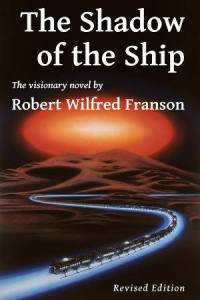
Review of Robert Wilfred Franson’s “The Shadow of the Ship” – Article by G. Stolyarov II

Review of Robert Wilfred Franson’s “The Shadow of the Ship” – Article by G. Stolyarov II

The New Renaissance Hat
G. Stolyarov II
January 17, 2015
******************************
Shadow_of_the_Ship_Cover

               The Shadow of the Ship by Robert Wilfred Franson is a science-fiction novel set in a universe with a unique premise for methods of interstellar travel. A novel with strong individualist and life-extensionist themes, this book has much to recommend itself to libertarians and transhumanists alike. The Second Edition of The Shadow of the Ship was released in Kindle format in December 2014, after Franson regained the rights to the work from the publisher of the 1983 First Edition. The Second Edition contains major enhancements, including more extensive character development, explanation of key aspects of the world within which the novel takes place, and an ending that clearly sets the stage for additional books in what is to be Franson’s Overflight series.

                Space travel in The Shadow of the Ship is accessible to a society that is otherwise technologically far behind our own. The Trails Culture is dispersed among tens of worlds but lacks access even to most twentieth-century technology, such as powered flight or electricity. A series of trails across the “meadow” of subspace connects planets and can be traversed by caravans conveyed by waybeasts (squeakers) who are uniquely suited to crossing them. The book’s protagonist, Hendrikal Eiverdein Rheinallt, is originally from Earth and has been stranded within the region inhabited by the Trails Culture ever since his spaceship crashed on a nearby world. He and his friend Arahant, an intelligent aircat with the ability to speak and compose operas, are “bloodswayers” – practitioners of a rare and challenging discipline that allows the channeling of the body’s energies toward repair and rejuvenation. Rheinallt and Arahant are therefore indefinitely lived and more resilient than ordinary humans, though not indestructible. Rheinallt is approximately six centuries old and endeavors to use his vast scientific knowledge to eventually find his way back to Earth. In the meantime, he carefully advances the scientific and technical knowledge of the inhabitants of the Blue Free Nation, the most tolerant and least regimented of the societies within the Trails Culture.

                The book’s events take place aboard a caravan headed by Rheinallt with the purpose of investigating rumors of a crashed starship along the Blue Trail. The starship would be a paradigm-changing find for the people of the Trails Culture, as it would permit space travel without the limitations that the Trails pose; it could also be Rheinallt’s means to return home. The caravan includes many travelers who join out of scientific curiosity or a desire for fame, while others have more personal motives. Accompanying Rheinallt is his wife and beast-master Whitnadys, as well as a small contingent of crew to defend the caravan and provide essential logistical support. Although Rheinallt is the captain of the caravan, interactions aboard are largely guided by a spontaneous order without explicit laws and with virtually no authority for the captain to impose preemptive restrictions or discipline. Rheinallt, apart from making sure that the caravan is properly organized and maintained, only has the same prerogatives as ordinary passengers – such as the right of self-defense and the ability to protect the caravan against threats that have already manifested themselves. He considers the circumstances carefully and is reluctant to resort to force unless the existence of a physical threat is incontrovertible, as he does not wish for the passengers to lose trust in his leadership or the legitimacy of his decisions.

                Apart from the mostly anarchistic order aboard the caravan – a reflection of the broader lack of centralized authority within the Blue Free Nation – there are competing visions presented in the book, including an attempt by the Federated Trailmen, the area’s guild of caravaneers, to bring subspace travel within their sphere of control, as well as the efforts by the government of Fleurage – a world on the Yellow Trail – to clamp down on political dissent and quash “subversive” innovators who threaten an establishment rapidly spiraling toward totalitarianism. Various passengers on the caravan represent these conflicting visions, which come to challenge Rheinallt’s ability to peacefully coordinate the expedition.

                As much of the novel centers around the mystery of the ship and the stories of the passengers aboard, I will not delve into too much detail regarding events that are crucial to the story’s suspense and surprise. I note, however, that the Second Edition contains significant additions, including thorough expositions of the main characters’ backgrounds and key aspects of Franson’s universe – such as subspace travel, the bloodswayer discipline, and the cultural and technological environment of the Trails Culture. The newly added content allows for foreshadowing of important discoveries and a more definitive elaboration on the threads of the story that would be continued in subsequent novels of the series. Furthermore, the revised ending is quite moving and immerses the reader more deeply into the novel’s characters.

                Indeed, the characters of Rheinallt and Arahant should be of interest to all supporters of indefinite life extension, as here we have fine examples of literary protagonists who do not senesce and are not condemned to an inevitable demise – and who are also intelligent, rational, benevolent, witty, creative, and resourceful. Their range of abilities and vulnerabilities is much closer to what actual indefinitely lived organisms would experience: they can still suffer from accidents and external physical harm, but they lack a built-in expiration. Therefore, their interactions in the environment of subspace are still fraught with peril, but they have sufficient abilities and strengths to give them a fighting chance – much like the fighting chance we humans will need when faced with the many phenomena in the universe that are far bigger than ourselves. The more positive examples of protagonists with unlimited lifespans arise in fiction, the greater will be the cultural acceptance of the idea’s eventual application to our world. For this reason and many others, readers should eagerly anticipate the continuation of Franson’s Overflight series, which will finally bring the universe and ideas of The Shadow of the Ship into renewed prominence after more than three decades.

“Death is Wrong” Reviewed by Robert W. Franson of Troynovant

“Death is Wrong” Reviewed by Robert W. Franson of Troynovant

Read the excellent new review by science-fiction author and literary essayist Robert W. Franson of Death is Wrong. The review is published on Mr. Franson’s website Troynovant, which offers extensive literary and philosophical analysis.

Here is an excerpt: “Death is Wrong is a short book, clearly written and easy to read. I like the personal approach: it doesn’t talk down and is quite accessible. A striking concept presented quite reasonably and supported matter-of-factly. There are apt quotations from a variety of thinkers, including several of my personal heroes of modern times: Francis Bacon, Benjamin Franklin, Friedrich Nietzsche. These people and some scenes from nature are nicely illustrated by Wendy Stolyarov. For readers who want a little more about the background concepts, there is a brief Appendix discussing the seven basic causes of senescence, such as cell loss and atrophy. There are some links for further learning. It’s a good book, entertaining and thoughtful, and certainly gives us a challenge to think about.

Updates on a Crowdfunded Mouse Lifespan Study – Article by Reason

Updates on a Crowdfunded Mouse Lifespan Study – Article by Reason

The New Renaissance Hat
Reason
January 3, 2015
******************************

For all that I think it isn’t an efficient path forward, one likely to produce meaningful results in moving the needle on human life spans, there is considerable interest in testing combinations of existing drugs and various dietary compounds in mice to see if healthy life is extended. I expect that as public interest grows in the prospects for aging research to move from being an investigative to an interventional field, wherein researchers are actively trying to treat aging, we’ll only see more of this. There is certainly a sizable portion of the research community who think that the the best path ahead is in fact the pharmaceutical path of drug discovery in search of ways to slightly slow the aging process. To their eyes slightly slowing the aging process is all that is plausible, and adding five healthy years to life by 2035 would be a grand success. Google’s Calico initiative looks set to take that path, for example, which I is why I’m not all that hopeful it will produce meaningful results in terms of healthy years gained and ways to help the old suffer less.

There is a considerable overlap between researchers aiming to gently slow aging via drug discovery and researchers whose primary motivation is still investigation, not intervention: to produce a complete catalog of metabolism and how it changes with age, and it’s someone else’s problem to actually use that data. So we have, for example, the Interventions Testing Program at the NIA. This program was long fought for by researchers tired of the lack of rigor in most mouse life span studies, and the people involved are essentially engaged in replacing a lot of carelessly optimistic past results with the realistic view that very little other than calorie restriction and exercise actually does reliably extend life in mice if you go about the studies carefully. This is good science, but it isn’t the road to extended human life spans: it instead has much more to do with understanding the process of aging at a very detailed level. That task is vast and will take a very long time even in this age of computing and biotechnology.

To my eyes the right way to go is the repair approach: build the biotechnologies needed to repair the forms of cellular and molecular damage produced as a side-effect of the normal operation of metabolism, and which clearly distinguish old tissues from young tissues. If you want rejuvenation of the old, a path to adding decades to healthy life, and to eliminate all age-related disease, then repair is the way to go. Fix the damage, don’t just tinker with the engines of life in ways that might possibly slow down damage accumulation just a little. This strategic direction can allow researchers to largely bypass the great complexity of the progression of aging and focus instead on fixing things that are already well known and well cataloged. But I say this a lot, and will continue to do so until more than just a small fraction of the research community agree with me.

Back to mice and lifespan studies: in this day and age institutional research is far from the only way to get things done. Early-stage research is becoming quite cheap as the tools of biotechnology improve, and the global economy allows quality scientific work to be performed in locations that are lot less expensive than the US or Western Europe. We have crowdfunding, the internet, and a supportive community, which means that any group of ambitious researchers can raise a few tens of thousands of dollars and set an established lab in the Ukraine to running a set of mouse lifespan studies. So that happened back in 2013, and has been ongoing since then despite the present geopolitical issues in that part of the world. It is perhaps worth noting that this is the same group that found no effect on longevity from transfusions of young blood plasma into old mice. The studies mentioned below used pre-aged mice, starting at old age as a way to try to discover effects more rapidly, an approach that is fairly widespread.

I am a little mouse and I want to live longer: updates

Quote:

Dear contributors, we wish you a happy New Year! We are sorry to be taken by a very-expected but very time-consuming c60 lifespan study to digest the data in a way to make the long report we had announced. So, for the New Year and in order for you not to wait longer, please find at least the main results so far:

1) 23 months old C57BL6 mice received a mixture of 6 therapies that had already been reported to extend the lifespan of mice: Aspirin; Everolimus (mTOR inhibitor, similar action as rapamycin); Metoprolol (beta blocker); Metformin (anti-diabetic drug); Simvastatin (lowers LDL cholesterol); Ramipril (ACE inhibitor).

The drugs were given in the food, at doses that had been reported to extend lifespan … when taken individually. Some people are given that combination of medicines so we hoped that the drug interaction would not be too damaging, and we had wondered if some lifespan synergy within some of these drugs could lead to an overall high lifespan (e.g. if the different drugs improve different functions). But we observed a lifespan reduction in males and in females.

2) In the food of some remaining females we mixed low doses of 4 medications against cardiovascular conditions: Simvastatin; Thiazide (lowers blood pressure); Losartan potassium (angiotensin receptor blocker, lowers blood pressure); Amlodipine (calcium channel blocker, lowers blood pressure).

The question was: taken at a low-to-medium dose, could these drugs that many aged persons take have some overall preventive effect? We transposed to mice an ongoing polypill clinical trial in the UK, using a basic human-mouse conversion scale. Again, a decrease in lifespan was observed.

3) Adaptations of the first combination of drugs actually extended lifespan!

We started at age 18 months instead of 23 months, reduced the dose (as a function of weight) and gave a) the 6 compounds b) ‘only’ aspirin+metformin+everolimus. The results are to be analysed in greater details as we haven’t analyzed the latest data yet. Also, whatever the refined analysis, we would already like to indicate that it would be good to reproduce the experiment in some other conditions, e.g. hybrid mice; in particular as the mortality rates of these mice was higher than the first series (but in a consistent way that supports the life extending effect).

4) Ongoing C60 experiments

After many difficulties in setting the experiment (cross-border transportation in current geopolitical times, checking absorption in mice/ detecting C60/correct source of C60, administration tried in food and replaced by gavage, training for gavage and various measures) we have transposed the popular lifespan test with c60 fullerenes reported in rats by Baati et al. to mice (CBA strain, common in the lab) and with more animals (N=17 per group). There are three groups (gavage of water, of olive oil, of C60 dissolved in olive oil), there are … a lot of health measures and a lot of gavage (at the beginnings of the experiment as administrations are first very frequent and then gradually less frequent). Given that the experiment starts with mid-aged animals, the results are expected for the beginning of 2016.

The original C60 results from a few years back were greeted with some skepticism in the research community, given the very large size of the effect claimed and the small number of animals tested. There was, I think, also a certain annoyance: now that someone had made what was on the face of it an unlikely claim of significant lifespan extension via administration of C60, then some other group was going to have to waste their time in disproving it. We’ll see how that all turns out, I suppose. This is science as it works in practice.

At some point the broad structural classes of research illustrated by the Interventions Testing Program and this crowdfunded mouse study will meet in the middle, and the process of funding and organizing scientific programs will be a far more complicated, dynamic, and public affair than is presently the case. I think this will be for the better. All that we have we owe to science, and a majority of the public thinks all too little of the work that will determine whether they live in good health or suffer and die a few decades from now. The more they can see what is going on, the better for all of us in the end, I think.

Reason is the founder of The Longevity Meme (now Fight Aging!). He saw the need for The Longevity Meme in late 2000, after spending a number of years searching for the most useful contribution he could make to the future of healthy life extension. When not advancing the Longevity Meme or Fight Aging!, Reason works as a technologist in a variety of industries. 
***

This work is reproduced here in accord with a Creative Commons Attribution license. It was originally published on FightAging.org.

The Plasticity of Aging and Longevity Continues – Article by Reason

The Plasticity of Aging and Longevity Continues – Article by Reason

The New Renaissance Hat
Reason
December 4, 2014
******************************

When looking at most of the past extension of human life since the 1700s the major causes were better sanitation and control of infectious disease, with the largest effects on life expectancy at birth arising from lowered childhood mortality, even though there was also a steady increase in adult life expectancy. When looking back at the late 20th and early 21st century period from a safe distance of a century or so, the similar high level summary of the drivers of life extension will probably focus on greatly increased control over cardiovascular disease and the resulting steep decline in late life mortality due to this cause. There are many other improvements in medicine that have occurred in the past fifty years, but this is the one that stands out if you look at the data.

This period of medical strategy and development is coming to an end, however, and the summary of the next age in medicine with regard to its effects on human longevity will be that this was the time in which researchers started to directly address the processes of aging and, separately, brought cancer largely under medical control. Progress in the future of life expectancy at this point in time is overwhelmingly a matter of success in intervening in the aging process, building biotechnologies to repair the cellular and molecular damage that causes aging and thus prevent or turn back age-related frailty and disease.

If aging is purely a matter of damage we should expect all improvements in long-term health to also extend life to some degree. If there is less damage then the machinery lasts longer – it really is that simple a concept, even though the machinery of our biology is very complex. Studies of changing life expectancy such as the one quoted below continue to find that aging appears to be plastic, and that present trends in reduced old age mortality are continuing in those regions with better access to medical technology. The only limits on life are imposed by a present inability to fix the problems that kill us, and that can be changed by funding the right research:

Quote:

In high-income countries, life expectancy at age 60 years has increased in recent decades. Falling tobacco use (for men only) and cardiovascular disease mortality (for both men and women) are the main factors contributing to this rise. In high-income countries, avoidable male mortality has fallen since 1980 because of decreases in avoidable cardiovascular deaths. For men in Latin America, the Caribbean, Europe, and central Asia, and for women in all regions, avoidable mortality has changed little or increased since 1980. As yet, no evidence exists that the rate of improvement in older age mortality (60 years and older) is slowing down or that older age deaths are being compressed into a narrow age band as they approach a hypothesised upper limit to longevity.

Link: http://dx.doi.org/10.1016/S0140-6736(14)60569-9

Reason is the founder of The Longevity Meme (now Fight Aging!). He saw the need for The Longevity Meme in late 2000, after spending a number of years searching for the most useful contribution he could make to the future of healthy life extension. When not advancing the Longevity Meme or Fight Aging!, Reason works as a technologist in a variety of industries. 
***

This work is reproduced here in accord with a Creative Commons Attribution license. It was originally published on FightAging.org.

Transhuman Libertarianism – Article by Kyrel Zantonavitch

Transhuman Libertarianism – Article by Kyrel Zantonavitch

Editor’s Note and Announcement: The Rational Argumentator is hosting a series of articles on the relationship between libertarianism and transhumanism and the question of whether, and – if so – in what manner and to what extent, advocates of indefinite life extension should ever pursue government funding or programs with the aim of lengthening human lifespans.

This article below presents a perspective from Kyrel Zantonavitch, who strongly argues against government support for life-extension research and instead sees solely private research as being the most capable of achieving indefinite lifespans in our lifetimes.

Mr. Stolyarov’s own views are detailed in his articles “Six Libertarian Reforms to Accelerate Life Extension” and “Liberty Through Long Life” and “Liberty or Death: Why Libertarians Should Proclaim That Death is Wrong“.

The Rational Argumentator invites all advocates of indefinite life extension to share their views regarding these questions, and many perspectives will be considered and published – so long as the authors genuinely support the goal of lengthening human lifespans through science and technology. All articles submitted in response to this request will be linked alongside one another once a critical mass has accumulated, so that readers would be able to analyze the viewpoints presented and formulate their own conclusions.

~ G. Stolyarov II, Editor-in-Chief, The Rational Argumentator, December 4, 2014

The New Renaissance Hat
Kyrel Zantonavitch
December 4, 2014
******************************

All transhumanists are libertarians. They are all believers in, and future practitioners of, laissez-faire capitalism. They’re advocates of 100% liberty in politics, economics, and sociology. Transhumanists never initiate force against their fellow man; they never aggress upon or attack them. Transhumanists think people and property are sacred and untouchable. All transhumanists are political and socio-economic freedom-fighters and libertarians to the point of infinity.

Or at least they should be.

Because nothing advances human biological/physical development, and intellectual/spiritual ascent, faster than political and socio-economic freedom. Nothing improves quality and quantity of life more deftly or more powerfully. For immortality to have even a remote chance of being achievable within the next generation or two, government-protected justice and liberty must be pure and limitless.

Nothing generates more opportunity for general and particular success and triumph than freedom. Nothing germinates more innovation and genius — more radical and revolutionary brilliance. And make no mistake: immortality within the next 20-40 years will require a lot of innovation and genius.

For this and reasons of fundamental morality, massive government subsidies of science and medicine, via the evil and tyrannical welfare state, are emphatically not the way to go. It would be like suddenly, militarily seizing the powers of world government, and then trying to physically coerce almost everyone on Earth into studying technology and healthcare. Whips and guns (and chains and cattle-prods) are not the path to longevity. As the philosopher Ayn Rand noted: “You cannot force a mind.”

Firstly, such government funding is a type of slavery. Coercive taxation, especially for non-freedom purposes, is evil at its foundation. And no good thing can ever flower from such bad roots. The ends never justify the means. Tyranny and depravity are never practical or workable.

Those who are talented and slick at obtaining government grants, and those who willingly, passively submit to government edicts, are virtually never good scientists or doctors. Meanwhile, the good and great scientists and doctors — mankind’s innovators, creators, geniuses, saints, and heroes — will be hugely misled. With minimalist political knowledge, they’ll massively tend to follow the money and prestige trail; these brainiacs will massively tend to go work for the Big Brother bozos and frauds. At the least, the Good Guys will solidly incline toward reading the Dumb Guys’ (mountains of worthless) papers, and following them and their organizations intellectually. Thus the only real hopes of mankind will overwhelmingly tend to be side-tracked down a dead end.

The purpose of government is to protect individual rights — not expand the human life span. The state has no ability whatsoever to accomplish the later. It can only get in the way. It can only hurt the cause. Anyone who hijacks the government for longevity purposes is sure to massively damage both liberty and transhumanism.

However ironic, the more state funds are spent on transhumanism, and the more people are forced by government to engage in transhumanist research, the slower progress will be. It’ll be a repeat of the U.S. government’s buffoonish 1970s’ “war on cancer.” We’ll go backward. The effort will be counter-productive. It’ll be like throwing money down a bottomless rat hole — only worse.

The reality of today’s welfare state world is that if we finally get around to terminating all government funding of education, science, and technology, then these three fields will have to turn to private industry and free enterprise. This, in turn, will cause human knowledge in general, and transhumanism in particular, to rise like a rocket.

If, say, a very plausible 10% of the world’s G.D.P. is voluntarily dedicated to transhumanist education, investigation, and experimentation via capitalism, this will generate far more progress than if a wildly unlikely 75% of the world’s G.D.P. is coercively dedicated to transhumanist research via welfare statism.

The paramount and stunning reality is one social system will create new versions of Leonardo da Vinci, Thomas Edison, and Steve Jobs. The other will create new, mindless bureaucrats and lifeless, soulless, hack, quack, bozo drones.

And pray note that the above discussion isn’t trivial or merely theoretical; nor is it some ideologue’s and freak’s dubious mere political opinion. It’s the way reality is. It’s the way government and science really interact and work. Misunderstand this, transhumanists, and we’re all gonna die.

Kyrel Zantonavitch is the founder of The Liberal Institute  (http://www.liberalinstitute.com/) and a writer for Rebirth of Reason (http://www.rebirthofreason.com). He can be contacted at zantonavitch@gmail.com.