Browsed by
Tag: life extension

The Rational Argumentator’s Thirteenth Anniversary Manifesto

The Rational Argumentator’s Thirteenth Anniversary Manifesto

The New Renaissance Hat
G. Stolyarov II
August 31, 2015
******************************

On August 31, 2015, The Rational Argumentator celebrates a successful end to its thirteenth year of existence. While TRA’s visitation is still recovering from the Yahoo-initiated closure of Yahoo! Voices in 2014, publication activity continues to be abundant. With the addition of Wendy Stolyarov as an Assistant Editor, more rapid and efficient publication of articles is now possible and has been ongoing for several months. As always, TRA continues to emphasize quality of content to set itself apart as a bastion of high intellectualism and thoughtful discourse that resists both information overload and the dumbing-down effects of the “bite-sized” media culture.

Total thirteenth-year visitation for all TRA features was 892,082 page views – compared to 1,430,226 page views during the twelfth year. The 37.6% decline in visitation is explained by the unfortunate closure of Yahoo! Voices (formerly Associated Content) in July 2014, which eliminated a popular channel through which TRA content was previously accessed and read. However, the milestone of 9 million cumulative views was still exceeded during TRA’s thirteenth year. TRA’s lifetime visitation stands at 9,068,668 page views. I am hopeful that, during TRA’s fourteenth year of operation, the 10-million-view threshold will be exceeded due to an increase to visits directly to The Rational Argumentator’s domain. TRA’s thirteenth year was marked by the publication of 228 regular features, compared to 314 regular features published during the twelfth year, 208 regular features published during the eleventh year, and 306 features published during the tenth year.

Growth in special features has also occurred during the thirteenth year, including special pages dedicated to new Minecraft skyscrapers, The Actuary’s Free, Open-Source Study Guide for SOA Exam GIADV: Advanced Topics in General Insurance (the only study guide for this exam known to me to exist at this time), and six of my new musical compositions. Furthermore, all of my past musical compositions have been remastered and are now available on YouTube in a playlist where they can be listed to in chronological order of their composition, accompanied by my works of fractal art or other inspiring imagery. Listeners can now conveniently hear all 82 of my compositions to date from one convenient location, with automatic transitions between individual works.

A significant innovation in TRA’s outreach activities occurred in 2015 in the form of new video panel discussions held via Google Hangouts on Air, where I recorded conversations with a variety of philosophers, technologists, and futurists – including Demian Zivkovic, Peter Rothman, Kyrel Zantonavitch, Franco Cortese (here and here), Adam Alonzi (here and here) and also facilitated discussions among multiple guests regarding how to accelerate technological progress and how to encourage more people to become techno-optimists. A major public-relations success, facilitated by the same means, was the Movement for Indefinite Life Extension (MILE) Demonstration of March 21, 2015, of which I and Wendy Stolyarov hosted the first three-hour segment.

The spread of my most famous work, Death is Wrong, has continued. This children’s book on indefinite life extension, illustrated by Wendy Stolyarov, is now available in four languages: English, Russian, Spanish, and French. The French Edition of Death is Wrong – La mort, c’est mal! – was published in May 2015 and was made possible due to the generous translation efforts of Philippe Castonguay. We continue to welcome and greatly appreciate any volunteer efforts to translate this vitally important book into as many languages as possible. Since Death is Wrong was made available as a free PDF download, a total of 3,440 copies have been downloaded from TRA directly – and likely, many more have been downloaded from external file-sharing sites to whose data I do not have access. As a result, the electronic versions of the book have now reached over three times more people than the 1,029 paperback copies that were shipped for distribution to children in 14 countries in 2014. I am pleased by this impact, but wish to see it continue and expand by orders of magnitude. The more awareness there is of the feasibility and desirability of reversing senescence and greatly reducing the probability of involuntary death, the more likely the majority of people will recognize the imperative of greatly accelerating technological progress in our lifetimes.

As TRA enters into its fourteenth year, it will continue to be characterized by the quest for permanence and the expansion of its voluminous content base through the publication of additional thoughtful and thought-provoking features. The promotion of individual liberty, rational philosophy, indefinite life extension, and uplifting esthetics will remain hallmarks of TRA’s mission and output. We will continue to exert a positive, enlightening influence on cultural and political discourse, while always adhering to the high standards and unyielding moral principles that have enabled TRA to endure while short-term-oriented publications have faltered. The Rational Argumentator is now among the oldest extant Internet-only publications, and it shall long outlive many of its more ephemeral counterparts.

International Longevity Day – October 1, 2015 – Press Release by Ilia Stambler

International Longevity Day – October 1, 2015 – Press Release by Ilia Stambler

The New Renaissance HatIlia Stambler
August 30, 2015

******************************

International-Longevvity-Day Dear friends,

There has been emerging a tradition by longevity researchers and activists around the world to organize events dedicated to promotion of longevity research on or around October 1 – the UN International Day of Older Persons.

This day is sometimes referred to in some parts of the longevity activists community as the “International Longevity Day”. As this is the official UN Day of Older Persons, this provides the longevity research activists a perfect opportunity, perhaps even a perfect “excuse”, to emphasize the importance of aging and longevity research for the development of effective health care for the elderly, in the wide public as well as among decision makers.

The critical importance and the critical need to promote biological research of aging derives from the realization that tackling the degenerative processes and negative biological effects of human aging, at once and in an interrelated manner, can provide the best foundations to find holistic and effective ways for intervention and prevention against age-related ill health. Such an approach has been supported by scientific proofs of concept, involving the evidential increase in healthy lifespan in animal models and the emerging technological capabilities to intervene into fundamental aging processes. The focus on intervention into degenerative aging processes can provide solutions to a number of non-communicable, age-related diseases (such as cancer, heart disease, type 2 diabetes and neurodegenerative diseases), insofar as such diseases are strongly determined by degenerative aging processes (such as chronic inflammation, cross-linkage of macromolecules, somatic mutations, loss of stem cell populations, and others). This approach is likely to decrease susceptibility of the elderly also to communicable, infectious diseases due to improvements in immunity. The innovative, applied results of such research and development will lead to sustainable, economically viable solutions for a large array of age-related medical and social challenges, that may be globally applicable. Furthermore, such research and development should be supported on ethical grounds, to provide equal health care chances for the elderly as for the young.

Therefore it is the societal duty, especially of the professionals in biology, medicine, health care, economy and socio-political organizations, to strongly recommend greater investments, incentives and institutional support for the research and development dealing with the understanding of mechanisms associated with the human biological aging process and translating these insights into safe, affordable and universally available applied technologies and treatments.

October 1 – the International Day of Older Persons — provides the researchers and advocates an opportunity to raise these points and make these demands.

http://www.longevityforall.org/the-critical-need-to-promote-research-of-aging-around-the-world/

In 2013, events during or around that day – ranging from small meetings of friends to seminars and rather large conferences, alongside special publications, distributions of outreach materials (petitions and flyers) and media appearances – were held in over 30 countries, and in 2014 in over 20 countries. (Sometimes the events’ dates vary several days around October 1, or even through the entire month of October, designated as the “International Month of Older Persons” or the “International Longevity Month”, and sometimes the events are organized independently and without prior knowledge of other events, but they are all nonetheless unified by the common action and purpose.)

http://www.longevityforall.org/october-1-international-day-of-older-persons-longevity-day-2013-2014/

Let us maintain and strengthen this tradition! Let us plan and organize a mutually reinforcing network of events worldwide. If you plan to organize an event for that day – either live meetings or on-line publications and promotions – please let know. Together we can create an activism wave of strong impact. 

Following the collection of an impressive number of longevity promoting events worldwide in honor of that day, a general public appeal will be issued, both widely disseminated and addressed to relevant officials, both governmental and supra-governmental. Yet, the strength of the appeal will depend on the strength of all the individual events and actions.

Among the materials for discussion, distribution and promotion, one may use the position paper on the “Critical need to promote research of aging and aging-related diseases to improve health and longevity of the elderly population”, briefly describing the rationales, technologies and policies needed to promote this research. The position paper is available in 9 languages and can serve as a “universal advocacy paper” both for the grass roots discussions and promotions and for the outreach to officials: http://www.longevityforall.org/the-critical-need-to-promote-research-of-aging-around-the-world/. Also one may use in the preparation a presentation briefly listing some topics in longevity science promotion, such as the feasibility and desirability of achieving healthy longevity and public actions that can be taken to achieve it – http://www.longevityhistory.com/articles/ab7.php – or any other materials of your choice.

So far, events for that day – including meetings, publications and promotions – are already planned to be held around the world, in over 30 countries on 5 continents, including:

In the US, a conference will be held at the headquarters of the International Society on Aging and Disease (ISOAD), at the University of North Texas Health Science Center, in Fort Worth, Texas. This action will be endorsed and promoted by the US Healthspan Campaign (http://www.healthspancampaign.org/).

The Longevity Day action will also be promoted by the US Transhumanist Party, during their campaign tour that coincides with October 1.

Also in the US, online promotions will be held by the MILE campaign and by the Christian Transhumanist Association.

MILE-Panel-Cover

A special promotion will be done by LEAF – Life Extension Advocacy Foundation – via its crowdfunding platform for longevity research (http://www.lifespan.io/).

A fundraising action will be launched on that day for SENS Research Foundation by Fight Aging (https://www.fightaging.org/fund-research/).

In Israel, a seminar will be held in Bar Ilan University, by the Israeli Longevity Alliance. Toward that day, Israeli activists will also freely distribute an e-book on the history of longevity research (http://www.longevityhistory.com/).

In Moscow, Russia, a conference will be organized by the Russian Longevity Alliance. Another large conference will take place in Moscow, on the “Quality of Life of Older Persons”, supported by the Gerontological Society of the Russian Academy of Sciences, focusing on geroprotective substances and therapies.

In Gomel, Byelorussia, at the end of September, a conference will take place on the general subject of Radiobiolgy, at the Institute of Radiobiology of the National Academy of Sciences of Byelorussia, with a leading section on the biology of aging and longevity (“gerontological aspects of man-made factors”).

Another  small conference will take place in New Delhi, India, organized by the Solutions For the Future, with the help of India Future Society, and ISOAD India.

A series of events is planned in Pakistan, by the Pakistan National Academy of Young Scientists and the Universities of Lahore and of Malakand. The newly formed Pakistan Aging Research Society (PARS) organizes an entire month long campaign, “Go for Life” – from September 1 until October 1 – to encourage physical activity of older persons.

In Rome, Italy, a conference will be organized by the Italian Transhumanist Association and the Italian Longevity Alliance.

Additional meetings and promotions are planned by the European Healthy Life Extension Society (HEALES) in Brussels, Belgium, including a Competition for the Best Short Film on Life Extension.

A conference on longevity/life-extension science will be held by the Waag Society – Do It Together Bio in Amsterdam, Netherlands.

In Germany, meetings will be held by two new officially registered political parties that emphasize the development of biomedical research in their programs: in Berlin, by the German Health Research Party and in Stuttgart by the German Transhumanist Party.

An online promotion (videoconference) in Spanish will be organized by the Venezuela Longevity Alliance (together with activists from across Latin America). A similar videoconference (to be recorded) in Portuguese will be organized for Brazil by the Brazil Longevity Alliance.

A pro-longevity documentary promotion will be done in Helsinki by Longevity Finland – Pitkäikäinen Suomi.

A meeting will be held in Stockholm, Sweden, by Aldrandefonden/Svenska Livsförlängningssällskapet SLFS – Swedish Life Extension Society.

In the UK, the London Futurist community will celebrate longevity research as a part of a discussion of emerging technologies in London.

In Larnaca, Cyprus, the ELPIS Foundation, together with the local gerontological community, will hold a seminar “Health in Older Life” and a local TV show in honor of that day.

In Perth, Australia, a meeting will be held by the “Healthy Longevity Philosophy” society. Another promotion will be done by Science, Technology and the Future society in Melbourne, Australia.

In Kiev, Ukraine, a seminar will be held on behalf of the Kiev Institute of Gerontology of the Ukrainian Academy of Medical Sciences.

In Beijing, China, a meeting will be organized by the Technium community.

In Uganda, the Kasese Freethinkers Sports Academy will educate about the connection between physical activity and longevity.

A mini-seminar will be held in Lekki, Lagos, Nigeria, by Longevity Nigeria group.

In Romania, a conference will be held at Äna Aslan National Institute of Gerontology and Geriatrics, in Bucharest, toward the end of October, with earlier promotions.

In Vietnam, Hanoi, the Vietnam Public Health Association will hold a conference on the Mental Health of the Elderly, emphasizing biomedical research on neurodegenerative diseases.

In Singapore, a seminar on biology of aging will be organized at the National University of Singapore. This will precede a large Biology of Aging Conference organized by the Singapore Immunology Network (A*Star) – not “officially” a part of the “Longevity Day” events, but perhaps of the “Longevity Month.”

At about the same time, the 10th Asia / Oceania Congress of Gerontology and Geriatrics 2015 for “Healthy Aging Beyond Frontiers” will take place in Chiangmai, Thailand, including sections on biology of aging.

In Paris, France, a seminar will be organized at the Biopark Cancer Campus, University Paris Sud.

In South Korea, the Korean Branch of Solutions for the Future will organize a meetup in Seoul.

In Switzerland, Zurich, the Swiss Longevity Alliance will have a presentation on longevity research. This will shortly follow a large international symposium on geroprotectors in Basel.

In Poland, the Warsaw University Students Association will support the organization of a discussion on life extension science.

In Canada, at Huntington University, an event will be held by the Canadian Institute for Studies in Aging (CISA). In Alberta University, Canada, a special discussion on Technology and the Future of Medicine will be dedicated to that day.

In Iran, a study group will be conducted in Tehran on behalf of the Iran Longevity Alliance: http://www.iranlongevity.com/.

Yet another study group will be held in Cairo, Egypt, by the Egypt Longevity Alliance: http://www.egyptplus.org/.

And yet another free discussion of longevity science will take place in Tirana, Albania – the first longevity research activism event in the country.

In Bulgaria, events toward the International Longevity Day will start earlier in September with a conference in Ravda, organized by the University for National and World Economy, Department of Management and BASAGA – Bulgarian Academic Simulation and Gaming Association, including a section on Futurism, Transhumanism and Longevity, and continuing up to the date itself with more live and online discussions and publications and a special appeal in honor of that day.

In Tokyo, Japan, Exponential Technologies Institute will hold a meetup on longevity science in the framework of Tokyo-Singularity-Meetup.

A meeting will be held in the National Library in Tbilisi, Georgia, by activists of the Georgian Longevity Alliance, including presentations on the development of longevity science in Georgia and the world, and debates.

More events and expressions of support are expected to be initiated in the very near time in different countries.

Please add your support and more events and publications for this initiative! If you would like to get involved, please let know!

You are also welcome to promote this initiative on social media:

https://www.facebook.com/events/1017229998296364/

https://www.facebook.com/LongevityDay

Preparations for the next year’s International Longevity Day – October 1 – already started as well. The next global conference of the International Society on Aging and Disease (ISOAD) will take place in Stanford on October 1-2, 2016. The topics will range from interventions for longevity through stem cell research, genetics and systems biology of aging, to public support for aging research. The submission of abstracts and proposals is already started and welcome. And a conference is being planned in Brussels, for September 29-October 1, 2016, by the European Healthy Life Extension Society – Heales.

Hopefully, thanks to these and many other events, in this year and in the years to come, the importance of biological aging and longevity research will gradually become a strong theme of the international healthcare agenda, for the elderly and for the entire population.

Ilia Stambler, PhD.

Outreach coordinator. International Society on Aging and Disease (ISOAD)

http://isoad.org/

ilia.stambler@gmail.com

Thank you!

Ilia Stambler, Ph.D. is an IEET Affiliate Scholar, researcher at Bar-Ilan University, Israel, and activist at the International Longevity Alliance. He is author of A History of Life-Extensionism in the Twentieth Century.
 
He studied biomedical engineering at the Moscow Polytechnical Institute, biology at the Technion, Israel Institute of Technology, and earned his MA in English literature from Bar-Ilan University. He earned his Ph.D. at the Department of Science, Technology, and Society, at Bar-Ilan University. His thesis subject, and his main interest, is the History of Life-Extensionism in the Twentieth Century.
 
In addition, Ilia authored Life extension — a conservative enterprise? Some fin-de-siècle and early twentieth-century precursors of transhumanism, Demonstration for Radical Life Extension in Tel Aviv, and Heroic Power in Thomas Carlyle and Leo Tolstoy, and coauthored Breast cancer detection by Michaelis–Menten constants via linear programming, and Comparative analysis of cell parameter groups for breast cancer detection. Read the full list of his publications!
 
He speaks Hebrew, English, Russian, German, and Yiddish. He is active in the Israeli chapter of Humanity Plus, the Israeli Society for the Biology of Aging, and the International Longevity Alliance.
 
Watch Demonstration for Radical Life Extension in Tel Aviv 5: Ilia Stambler. Read 10 Answers by Ilia Stambler. Visit his Facebook page. Read his Google+ profile and his LinkedIn profile. Read his blog Singularity | Life Extension | Transhumanism (Hebrew).

Life Extension Advocacy Foundation Launches Lifespan.io – Press Release by Life Extension Advocacy Foundation

Life Extension Advocacy Foundation Launches Lifespan.io – Press Release by Life Extension Advocacy Foundation

The New Renaissance HatLife Extension Advocacy Foundation
August 28, 2015

******************************

Editor’s Note: Visit and contribute to Lifespan.io’s first crowdfunding research project, the SENS Research Foundation’s MitoSENS Mitochondrial Repair Project, here. I have personally donated $100 and encourage all supporters of life-extension research to assist this effort in reaching its $30,000 funding goal. ~ Gennady Stolyarov II, August 27, 2015

LEAF_1NEW YORK, Aug. 26, 2015 – The Life Extension Advocacy Foundation (LEAF) officially launches Lifespan.io, an online platform designed to bridge the gap between longevity researchers and the public who support breakthroughs happening in this burgeoning field.

Lifespan.io is a website designed to house today’s most promising life extension projects. People are invited to contribute financially to the ones they wish to support. This unique approach to crowdfunding gives the public the opportunity to learn about longevity research, meet the people making it happen, and allows them to be a part of promising, historical breakthroughs in life extension technologies.

Supported by biologists George Church and David Sinclair, who are members of LEAF’s Scientific Advisory Board, Lifespan.io is a collaborative environment that invites projects from a wide variety of sources.  Research organizations, nonprofit institutions, citizen scientists, as well as forprofit entities, may submit their projects. Submissions are evaluated and approved based on the legitimacy, the extent of the focus on extending healthy human lifespan, and the viability of the venture.

Organizations submitting launch projects include Harvard Medical School and the SENS Research Foundation.

LEAF President Keith Comito says, “By inviting the public to participate, the organization is creating an environment where everyone can be involved and have a stake in the results. Equitable distribution of the benefits that life extension technologies have to offer is the key to achieving the results we all want: healthier and longer lives. LEAF welcomes everyone to join us and discover more.”

LEAF also aims to educate and inform the public about longevity research and life-expanding advancements. Lifespan.io has a YouTube Channel, Facebook, and Twitter profile where people can find the latest in lifespan, aging, and longevity news. To participate in and lend support to current projects, visit www.Lifespan.io. Join the conversation with the #CrowdFundtheCure hashtag.

Those wishing to submit a project for funding consideration, or who want additional information about the various methods of promotional and scientific counseling offered by LEAF, are also invited to learn more on the website.

LEAF_2ABOUT LIFE EXTENSION ADVOCACY FOUNDATION

The Life Extension Advocacy Foundation is a nonprofit 501(C)(3) organization dedicated to promoting life extension, longevity, and aging research through crowdfunding and advocacy initiatives. Its mission is to connect the researchers and scientists developing the latest advancements with the people who support them through the Lifespan.io platform. Endorsed by top scientific leaders and experts from multiple disciplines, LEAF’s goal is to make all human life healthier and more vital, as well as longer. For more information, please visit www.Lifespan.io.

Photo – http://photos.prnewswire.com/prnh/20150825/260842

Media Contact: Desireé Duffy, Life Extension Advocacy Foundation, 6614789165, info@lifespan.io

News distributed by PR Newswire iReach: https://ireach.prnewswire.com

SOURCE: Life Extension Advocacy Foundation

The Imperative of Technological Progress: Why Stagnation Will Necessarily Lead to Disaster and How Techno-Optimism Can Overcome It – Article by G. Stolyarov II

The Imperative of Technological Progress: Why Stagnation Will Necessarily Lead to Disaster and How Techno-Optimism Can Overcome It – Article by G. Stolyarov II

The New Renaissance HatG. Stolyarov II
August 14, 2015
******************************

“He who moves not forward, goes backward.”
~ Johann Wolfgang von Goethe

It is both practically desirable and morally imperative for individuals and institutions in the so-called “developed” world to strive for a major acceleration of technological progress within the proximate future. Such technological progress can produce radical abundance and unparalleled improvements in both length and quality of life – whose possibilities Peter Diamandis and Steven Kotler outlined in their 2012 book Abundance: The Future is Better Than You Think. Moreover, major technological progress is the only way to overcome a devastating step backward in human civilization, which will occur if the protectionist tendencies and pressures of existing elites are allowed to freeze the status quo in place.

If the approximate technological and economic status quo persists, massive societal disintegration looms on the horizon. A Greece-style crisis of national-government expenditures may occur as some have predicted, but would only be a symptom of a greater problem. The fundamental driver of crisis since at least September 11, 2001, and more acutely since the Great Recession and the national-government bailouts of legacy financial and manufacturing institutions, is an increasing disconnect between the powerful and everybody else. The powerful – i.e., the politically connected, including the special interests of the “private sector” – seek to protect their positions through political barriers, at the expense of individual rights, upward social mobility, and economic/technological progress. Individuals from a relatively tiny politically connected elite caused the 2008 financial crisis, lobbied for and received unprecedented bailouts and lifelines for the firms whose misbehavior exacerbated the crisis, and then have attempted to rig the political “rules of the game” to prevent themselves from being unseated from positions of wealth and influence by the dynamics of market competition. The system created by these elites has been characterized by various observers as crony capitalism, corporatism, corporate fascism, neo-mercantilism, and a neo-Medieval guild system.

The deleterious influence of the politically connected today is reflected in the still-massive rates of unemployment and underemployment for the millennial generation, while many established industries fail to make openings for young people to ascend and fail to accommodate the emerging technologies with which young people thrive. While the millennial generation had nothing to do with the Great Recession, it has suffered its greatest fallout. Many millennials now encounter tremendous diminution in economic opportunity and living standards (think of young people in New York City paying several thousand dollars a month to share a tiny, century-old apartment among three people – or the emerging trend of shipping containers being converted into the only type of affordable housing for young people in San Francisco). The “Occupy” movement was a reflection of the resulting discontentment – a reflexive and indiscriminate backlash by young people who knew that their circumstances were unjustly bad, but did not understand the root causes or the culprits.

The only way for a crisis to be averted is for the current elites to stop blocking people from the millennial generation from opportunities to achieve upward mobility. The elite must also stop bailing out obsolete and poorly managed legacy institutions, and cease erecting protectionist barriers to the existence of innovative businesses that young people can and have tried to start. If the millennial generation continues to be shut out of the kinds of opportunities available to the preceding generation, however, I can envision two crisis scenarios. Each of these characterizations is not a prediction (but rather a nightmare which I hope can be avoided), is somewhat broad and, of course, is tentative. However, these scenarios are rough outlines of how the West could falter in the absence of significant technological progress.

Crisis Scenario 1: “Occupy” Times Ten: Millions of unemployed thirty-somethings (millennials in five to ten years) riot in the streets, indiscriminately destroying storefronts and setting cars alight. Economic activity and sophisticated production are ground to a halt because of the turmoil. The continuity of knowledge transfer and intergenerational symbiosis involved in human civilization are completely interrupted. Clashes with police create martyrs who are then invoked by opportunistic thugs as an excuse to loot and burn. Without the opportunity for peaceful economic cooperation, society degenerates into armed gangs, some left-wing (e.g., “Black Bloc” violent anarchists), others right-wing (e.g., survivalist militia groups). Thoughtful and intellectual people, who want the violence to end and see an imperfect peace as better than a war of all against all, are universally despised by the new tribes and cannot find a safe environment in which to work and innovate. The infrastructure of everyday life is critically damaged, and nobody maintains or repairs it. Roads, bridges, pipes, and electrical grids are either destroyed or become unusable after years of decay. The West becomes Ukraine writ large, eventually regressing into premodernity.

Crisis Scenario 2: The Reaction: Current political and crony-capitalist elites crack down with extreme force, either in response to actual riots or, more likely, to the threat thereof. Civil liberties are obliterated and an economic underclass enforced through deliberate restrictions on entry into any remunerative occupations – much like the 17th-century mercantilists advocated for maximum wages and prohibitions on perceived luxuries for the working classes. Those who do get jobs are required to work 60 or more hours per week and so have no time for anything else in life. All established industries are maintained in their current form through legal protections and bailouts, and there is an official policy that the structure of the economy must not be allowed to change for any reason. (Think of Directive 10-289 from Ayn Rand’s Atlas Shrugged.) Licensing requirements for professions become ubiquitous and burdensome, laden with Catch-22 provisions so that few or no new entrants can make it into the system. Only an elite cadre of Baby Boomers enjoys wealth and uses the force of legal entry barriers to prevent anyone else from having the opportunity to earn their own. They have ground technological progress to a halt, seeking to keep established business models in place and thwart all competition. The national government develops a massive spying capability and enforces social order through the ability to detect behaviors that might even be algorithmically correlated with dissent. All ordinary citizens are routinely humiliated in public under the pretense of thwarting crime or terrorism. TSA body searches have expanded beyond airports to highway checkpoints, shopping centers, and random stops by police on city streets. People’s homes are routinely raided by SWAT teams at the mildest pretext. This is done to make people meek and subservient to the established order. To keep young people from rioting (and get rid of the “excess” unemployed youths), the elites concoct jingoistic justifications to inflame endless foreign wars, and young people are conscripted and sent to die abroad. If any of these wars aggravate the regimes of either Russia or China, this scenario has the added risk of putting the world back on the verge of nuclear conflict. The fast-senescing crony-capitalist elites have cut off future biomedical progress and so will die eventually, but only the children of the elite will inherit any wealth. A neo-feudal oligarchy is established and becomes gradually ossified throughout the generations, while the industrial and technological base built over the past 200 years, as a legacy of the Enlightenment and individual rights, will deteriorate, eventually bringing the West back into premodernity.

I see an ossification of the status quo as leading to one or both of the above crisis scenarios. A return of premodernity is the logical conclusion of the dynamics of a fundamentally unaltered status quo. If humankind does not move technologically forward, it will go backward in a spiral of destruction and repression.

The only way for either crisis scenario to be averted is for technological progress to occur at no slower than the rates experienced during the twentieth century. Overt political revolution, even if it begins peacefully, is dangerous. To understand why this is so, one needs look no further than the recent Arab Spring uprisings – initially motivated by liberally minded dissidents and ordinary people who could no longer tolerate corrupt dictatorships, but ultimately hijacked by Islamist militants, military juntas, or both. A case even closer to the contemporary Western world is the recent Maidan revolution in Ukraine, which, while initially motivated by peaceful and well-intentioned pro-European activists, replaced a corrupt regime that occasionally persecuted dissidents with a fiercely militant, nationalistic regime that tolerates no dissent, engages in coercive historical revisionism, prohibits criticism of Nazi and neo-Nazi thugs, conscripts some of its citizens to die in civil war, and indiscriminately shells others of its citizens in the East. Revolutions always have the potential of replacing a lethargically bad regime with an aggressively destructive one.

This is why it is better for any societal transformation to be driven primarily by technological and economic development, rather than by political turmoil. The least turbulent transformations should be somewhat gradual and at least grudgingly accepted by the existing elites, who need to be willing to alter their own composition and accept bright minds from any background – not just their own progeny. A sufficient rate of technological advancement – especially due to the growth in 3D printing, robotics, nanotechnology, biotechnology, genetic engineering, vertical farming, and renewable energy – can ensure near-universal abundance within a generation, untethered from permission-granting institutions to which most people today owe a living. Such prosperity would enable most people to experience what are today upper-middle-class living standards, therefore having no motivation to riot. Technological progress can also preserve individual liberty by continually creating new spheres where politicians and lobbyists are incapable of control and individuals can outmaneuver most political restrictions.

Technological progress, particularly radical extension of the human lifespan through periodic rejuvenation that can restore the body to a more youthful condition, is also the only hope for remedying unsustainable expenditures of national governments, which are presently primarily intended to support people’s income and healthcare needs in old age. Rejuvenation biotechnology of the sort championed by Dr. Aubrey de Grey’s SENS Research Foundation could be developed with sufficient investment into the research, and could become disseminated by biotechnology entrepreneurs, ensuring that older people do not become decrepit or incapable of productive work as they age. The only way to sustainably extend average lifespans past about 85 years would be to turn back the clock of biological aging. It is not possible for most people (who do not have some degree of genetic luck) to live much longer beyond that without also becoming more youthful.

Many people who receive rejuvenation treatments will not want to retire – at least not from all work – if they still feel the vitality of youth. They will seek out activities to support human well-being and high living standards, even if they have saved enough money to consider it unnecessary to take a regular 8-to-5 job. With the vitality of youth combined with the experience of age, these people will be able to make sophisticated, persistent contributions to human civilization and will tend to plan for the longer term, as compared to most people today. If automation takes care of basic human needs, then human labor will be freed for more creative and fulfilling tasks.

Effective rejuvenation will not arrive right away, but immigration can keep the demographic disparity between the young and the old from being a severe problem in the meantime. This is another reason to reject protectionist policies and instead pursue approaches that allow more people to contribute to and benefit from the material prosperity of the “developed” world. Birth rates tend to fall anywhere there are major rises in standards of living after an industrial revolution, as children stop becoming productive helpers in an agricultural economy and instead become expensive to raise and educate so that they can participate in a knowledge-based economy. However, birth rates are still higher in many less-developed parts of the world, and people from those areas will readily seek opportunities for economic advancement in more developed countries, if given the option.

Fortunately, there are glimmers of hope that the path of gradual embrace of ever-accelerating progress will be the one taken in the early-21st-century Western world. The best outcome would be for an existing elite to facilitate mechanisms for its own evolution by offering people of merit but from humble backgrounds a place in real decision-making.

Some of that evolution can occur through market competition – new, upstart businesses displacing incumbents and gradually amassing significant resources themselves. The best instantiation of this in the United States today is the Silicon Valley entrepreneurial culture – which, incidentally, tends to finance the majority of longevity research. The most massive infusion of funds into longevity-related research has been from an offshoot of Google – Calico – founded in 2013 and currently partnering with a large pharmaceutical company, AbbVie. Calico has been somewhat secretive as to the details of its research, but there are other large businesses that are beginning to invest in similar endeavors – e.g., Craig Venter’s Human Longevity, Inc. Moreover, the famous libertarian venture capitalist Peter Thiel has given millions of dollars to Dr. Aubrey de Grey’s SENS Research Foundation – a smaller-scale organization but perhaps the most ambitious in its goals to bring about a reversal of human senescence through advances in rejuvenation treatments within the next quarter-century.

These developments are evidence that the United States today is characterized not by one elite, but by several – and the old “Paper Belt” elite is clearly in conflict with the new Silicon Valley elite. Politicians tend, surprisingly, not to be the most decisive players in this conflict, since they typically depend on harnessing pre-existing cultural currents in order to get elected and stay in office. Thus, they will tend to side with whatever issues and special interests they consider to be gaining ground at a given time. For this reason, many thinkers have characterized politics as a lagging indicator, responding to rather than triggering the defining events of an era. The politicians ride the currents to power, but something else creates those currents.

Differences in the breadth of vision among elites also matter. For instance, breakthroughs in human longevity could actually be a great boon for medical providers and the first pharmaceutical companies that offer effective products/treatments. Even the most ambitious proponents of life extension do not think it possible to develop a magic immortality pill. Rather, the treatments involved (which will be quite expensive at first) would require periodic regeneration of the cells and tissues within a person’s body – essentially resetting the biological clock every decade or so, while further innovation uncovers ways to reverse the damage more cheaply, safely, and effectively. This is a field ripe with opportunities for enterprising doctors, researchers, and engineers (while, at the same time, certainly endangering many extant business models). Some government officials, if they are sufficiently perceptive, could also be persuaded to support these changes – if only because they could prevent a catastrophic collapse of Social Security and Medicare. Approximately 30% of Medicare expenditures occur during the last year of patients’ lives, when the body is often fighting back multiple ailments in a losing battle. If this situation were simply prevented in the first place, and if most people became biologically young again and fully capable of working for a living or financing their own retirements, the expenses of both Social Security and Medicare could plummet until these programs became wholly unnecessary in the eyes of most voters.

The key to achieving a freer, more prosperous, and longer-lived future is to educate both elites and the general public to accurately weigh the opportunities and risks of emerging technologies. Too many individuals today, both elites and ordinary people, view technological progress with suspicion, conjuring in their minds every possible dystopian scenario and every possible malfunction, inconvenience, lost opportunity, moral reservation, or esthetic dislike they can muster against breakthroughs in life extension, artificial intelligence, robotics, autonomous vehicles, genetic engineering, nanotechnology, and many other areas of advancement that could vastly benefit us all. This techno-skeptical mindset is the biggest obstacle for proponents of progress and a better future to overcome. Fortunately, we do not need to be elites to play important roles in overcoming it. By simply arguing the techno-optimist case and educating people from all walks of life about the tremendous beneficial potential of emerging technologies, we can each do our part to ensure that the 21st century will become known as an era of humankind’s great liberation from its age-old limitations, and not a lurch back into the bog of premodern barbarism.

If we have a modicum of technological progress, the West might be able to muddle through the next several decades. If we have an acceleration of technological progress, the West will leave its current problems in the dust. The outcome will be a question of whether people (both elites and ordinary citizens) are, on balance, held hostage to the fear of the new or, rather, willing to try out technological alternatives to the status quo in the hopes of achieving improvement in their lives.

This essay may be freely reproduced using the Creative Commons Attribution Share-Alike International 4.0 License, which requires that credit be given to the author, G. Stolyarov II. Find out about Mr. Stolyarov here.
How Anti-Individualist Fallacies Prevent Us from Curing Death – Article by Edward Hudgins

How Anti-Individualist Fallacies Prevent Us from Curing Death – Article by Edward Hudgins

The New Renaissance HatEdward Hudgins
July 3, 2015
******************************

Are you excited about Silicon Valley entrepreneurs investing billions of dollars to extend life and even “cure” death?

It’s amazing that such technologically challenging goals have gone from sci-fi fantasies to fantastic possibilities. But the biggest obstacles to life extension could be cultural: the anti-individualist fallacies arrayed against this goal.

Entrepreneurs defy death

 A recent Washington Post feature documents the “Tech titans’ latest project: Defy death. “ Peter Thiel, PayPal co-founder and venture capitalist, has led the way, raising awareness and funding regenerative medicines. He explains: “I’ve always had this really strong sense that death was a terrible, terrible thing… Most people end up compartmentalizing and they are in some weird mode of denial and acceptance about death, but they both have the result of making you very passive. I prefer to fight it.”

Others prefer to fight as well. Google CEO Larry Page created Calico to invest in start-ups working to stop aging. Oracle’s Larry Ellison has also provided major money for anti-aging research. Google’s Sergey Brin and Facebook’s Mark Zuckerberg both have funded the Breakthrough Prize in Life Sciences Foundation.

Beyond the Post piece we can applaud the education in the exponential technologies needed to reach these goals by Singularity U., co-founded by futurist Ray Kurzweil, who believes humans and machines will merge in the decades to become transhumans, and X-Prize founder Peter Diamandis.

The Post piece points out that while in the past two-thirds of science and medical research was funded by the federal government, today private parties put up two-thirds. These benefactors bring their entrepreneurial talents to their philanthropic efforts. They are restless for results and not satisfied with the slow pace of government bureaucracies plagued by red tape and politics.

“Wonderful!” you’re thinking. “Who could object?”

Laurie Zoloth’s inequality fallacy

 Laurie Zoloth for one. This Northwestern University bioethicist argues that “Making scientific progress faster doesn’t necessarily mean better — unless if you’re an aging philanthropist and want an answer in your lifetime.” The Post quotes her further as saying that “Science is about an arc of knowledge, and it can take a long time to play out.”

Understanding the world through science is a never-ending enterprise. But in this case, science is also about billionaires wanting answers in their lifetimes because they value their own lives foremost and they do not want them to end. And the problem is?

Zoloth grants that it is ”wonderful to be part of a species that dreams in a big way” but she also wants “to be part of a species that takes care of the poor and the dying.” Wouldn’t delaying or even eliminating dying be even better?

The discoveries these billionaires facilitate will help millions of people in the long-run. But her objection seems rooted in a morally-distorted affinity for equality of condition: the feeling that it is wrong for some folks to have more than others—never mind that they earned it—in this case early access to life-extending technologies. She seems to feel that it is wrong for these billionaires to put their own lives, loves, dreams, and well-being first.

We’ve heard this “equality” nonsense for every technological advance: only elites will have electricity, telephones, radios, TVs, computers, the internet, smartphones, whatever. Yes, there are first adopters, those who can afford new things. Without them footing the bills early on, new technologies would never become widespread and affordable. This point should be blindingly obvious today, since the spread of new technologies in recent decades has accelerated. But in any case, the moral essential is that it is right for individuals to seek the best for themselves while respecting their neighbors’ liberty to do the same.

Leon Kass’s “long life is meaningless” fallacy

 The Post piece attributes to political theorist Francis Fukuyama the belief that “a large increase in human life spans would take away people’s motivation for the adaptation necessary for survival. In that kind of world, social change comes to a standstill.”

Nonsense! As average lifespans doubled in past centuries, social change—mostly for the better—accelerated. Increased lifespans in the future could allow individuals to take on projects spanning centuries rather than decades. Indeed, all who love their lives regret that they won’t live to see, experience, and help create the wonders of tomorrow.

The Post cites physician and ethicist Leon Kass who asks: “Could life be serious or meaningful without the limit of mortality?”

Is Kass so limited in imagination or ignorant of our world that he doesn’t appreciate the great, long-term projects that could engage us as individuals seriously and meaningfully for centuries to come? (I personally would love to have the centuries needed to work on terraforming Mars, making it a new habitat for humanity!)

Fukuyama and Kass have missed the profound human truth that we each as individuals create the meaning for our own lives, whether we live 50 years or 500. Meaning and purpose are what only we can give ourselves as we pursue productive achievements that call upon the best within us.

Francis Fukuyama’s anti-individualist fallacy

 The Post piece quotes Fukuyama as saying “I think that research into life extension is going to end up being a big social disaster… Extending the average human life span is a great example of something that is individually desirable by almost everyone but collectively not a good thing. For evolutionary reasons, there is a good reason why we die when we do.”

What a morally twisted reason for opposing life extension! Millions of individuals should literally damn themselves to death in the name of society. Then count me anti-social.

Some might take from Fukuyama’s premise a concern that millions of individuals living to 150 will spend half that time bedridden, vegetating, consuming resources, and not producing. But the life extension goal is to live long with our capacities intact—or enhanced! We want 140 to be the new 40!

What could be good evolutionary reasons why we die when we do? Evolution only metaphorically has “reasons.” It is a biological process that blindly adapted us to survive and reproduce: it didn’t render us immune to ailments. Because life is the ultimate value, curing those ailments rather than passively suffering them is the goal of medicine. Life extension simply takes the maintenance of human life a giant leap further.

Live long and prosper

 Yes, there will be serious ethical questions to face as the research sponsored by benevolent billionaires bears fruit. But individuals who want to live really long and prosper in a world of fellow achievers need to promote human life as the ultimate value and the right of all individuals to live their own lives and pursue their own happiness as the ultimate liberty.

Dr. Edward Hudgins directs advocacy and is a senior scholar for The Atlas Society, the center for Objectivism in Washington, D.C.

Copyright, The Atlas Society. For more information, please visit www.atlassociety.org.

Changing the View of Aging: Are We Winning Yet? – Article by Reason

Changing the View of Aging: Are We Winning Yet? – Article by Reason

The New Renaissance Hat
Reason
June 28, 2015
******************************

Peter Thiel, who has invested millions into the SENS rejuvenation research programs over the past decade, has of late been talking much more in public on the topic of treating aging. Having wealth gives you a soapbox, and it is good that he is now using it to help the cause of treating aging as a medical condition. One of Thiel’s recent public appearances was a discussion on death and religion in this context.

In the struggle to produce meaningful progress in rejuvenation research, the tipping point can come from either a very large amount of money, hundreds of millions of dollars at least, dedicated to something very similar to the SENS research programs, or from a widespread shift in the commonplace view of aging. At the large scale and over the long term, medical research priorities reflect the common wisdom, and it is my view that public support is needed to bring in very large contributions to research. The wealthiest philanthropists and largest institutional funding bodies follow the crowd as a rule; they only rarely lead it. They presently give to cancer and stem-cell research precisely because the average fellow in the street thinks that both of these are a good idea.

So it is very important that we reach a point at which research into treating degenerative aging is regarded as a sensible course of action, not something to be ridiculed and rejected. Over the past decade or two a great deal of work has gone into this goal on the part of a small community advocates and researchers. It is paying off; the culture of science and the media’s output on aging research is a far cry from what it was ten years ago. When ever more authorities and talking heads are soberly discussing the prospects of extended healthy life and research into the medical control of aging, it is to be hoped that the public will follow. Inevitably religion is drawn in as a topic in these discussions once you start moving beyond the scientific community:

Quote [Source: “Peter Thiel, N.T. Wright on Technology, Hope, And The End of Death” by Max Anderson – Forbes/Tech – June 24, 2015]:

The Venn diagram showing the overlap of people who are familiar with both Peter Thiel and N.T. Wright is probably quite small. And I think it is indicative of a broader gap between those doing technology and those doing theology. It is a surprise that a large concert hall in San Francisco would be packed with techies eager to hear a priest and an investor talk about death and Christian faith, even if that investor is Peter Thiel.

Thiel has spoken elsewhere about the source of his optimism about stopping and even reversing aging. The idea is to do what we are doing in every other area of life: apply powerful computers and big data to unlock insights to which, before this era, we’ve never had access. Almost everyone I talk with about these ideas has the same reaction. First there is skepticism  – that can’t really happen, right? Second, there is consideration  – well those Silicon Valley guys are weird, but if anyone has the brains and the money to do it, it’s probably them. Finally comes reflection, which often has two parts – 1. I would like to live longer. 2. But I still feel a little uneasy about the whole idea.

The concept of indefinite life extension feels uncomfortable to people, thinks Thiel, because we have become acculturated to the idea that death, like taxes, is inevitable. But, he says, “it’s not like one day you’ll wake up and be offered a pill that makes you immortal.” What will happen instead is a gradual and increasingly fast march of scientific discovery and progress. Scientists will discover a cure for Alzheimer’s and will say, “Do you want that?” Of course our answer will be “Yes!” They will find a cure for cancer and say, “Do you want that?” And again, of course, our answer will be “Yes!” What seems foreign and frightening in the abstract will likely seem obvious and wonderful in the specific. “It seems,” Thiel said, “that in every particular instance the only moral answer is to be in favor of it.”

One of Wright’s objections was to articulate a skepticism about whether the project of life extension really is all that good, either for the individual or for the world. “If [I] say, okay I’ll live to be 150. I’ll still be a sinner. I’ll still be conflicted. I’ll still have wrong emotions. Do I really want to go on having all that stuff that much longer? Will that be helpful to the world if I do?” This roused Thiel. “I really have to disagree with that last formulation…it strikes me as very Epicurean in a way.” For Peter Thiel, Epicureanism is akin to deep pessimism. It means basically giving up. One gets the sense he finds the philosophy not just disagreeable but offensive to his deepest entrepreneurial instincts and life experience. “We are setting our sights low,” he argued, “if we say everyone is condemned to a life of death and suffering.”

Reason is the founder of The Longevity Meme (now Fight Aging!). He saw the need for The Longevity Meme in late 2000, after spending a number of years searching for the most useful contribution he could make to the future of healthy life extension. When not advancing the Longevity Meme or Fight Aging!, Reason works as a technologist in a variety of industries. 
 ***

This work is reproduced here in accord with a Creative Commons Attribution license. It was originally published on FightAging.org.

Rise to Meet the Enemies at the Gates: Join the Battle against Disease and Death – Article by Eric Schulke

Rise to Meet the Enemies at the Gates: Join the Battle against Disease and Death – Article by Eric Schulke

The New Renaissance HatEric Schulke
June 25, 2015
******************************

A lot of your great-grandfathers and great-grandmothers have prepared and gone through the fire of war. This happened time and time again over the centuries. It was nearly routine.

The video “World Battleground, 1000 Years of War in 5 Minutes” adds some good perspective to the frequency of larger-scale conflicts.

If you didn’t have the genes for it, didn’t have it in you to put up a staunch defense or go on a successful offense when necessary, then you and your people didn’t survive as often. It is unfortunate that such a terrible trait has played such a fundamental role in shaping who we are, but that seems to be the way it is.

It is in us to adrenalize in the face of battle and do what it takes to find victory. Most of us don’t directly chase it, and we shy away from it when necessary, but when cornered or challenged, when our towns are burned down or our family and neighbors are murdered on the trails, we draw our weapons and pursue the enemy to the corners of the lands, taking them dead or alive.

Aging and diseases have us cornered. So what are we to do? Should we approach it like it is peacetime? Should we get up in the morning and think of aging and disease as another day at the office or another bill to pay, another fish to be caught for supper or another window to be boarded up for a storm?

When an adjacent empire marches in and demands allegiance to expand its power, with the alternative of impalement or crucifixion for everybody you’ve ever known, you churn out ramparts, build your defenses, get the trenches dug, get the spit and sweat out, and make a stand for life against a bunch of killing scum-bags like you’re supposed to do. There is a time for the industry of peacetime, and there is a time for war.

It is like wartime right now.

In this war against aging, other diseases, and death in general, we don’t need guns, and – it’s incredibly lucky for us – we don’t even need to spill guts. Our enemy causes our guts to be spilled, but these gutless intruders don’t even have them to spill. They are microscopic misalignments, cellular maladjustment, biological disrepair, but they are terrible opponents nonetheless. They snatch our lives away from us. That’s why we put up staunch defenses, and beyond that, prepare a fierce, forceful, battering offense in the form of a worldwide expedition in support of the philosophy and research of indefinite life extension – of extended healthy longevity.

If winning a war involves spilling forth solutions from your head and not guts from people’s bodies, and you won’t do it, then we can only be left to assume that winning isn’t worth it for you unless you can dismantle flesh. That’s not the case, is it? It is catastrophic to the outcome of an urgent fight for life if we can’t recognize that a deadly enemy that doesn’t bleed is still an enemy.

Comanches on the warpath had a lot less to lose than you do, and yet they put up a lot more of a fight. Match them, at the least. You have it in you, and we desperately need you at these front lines of the diseases of aging and general death.

We can’t win this unless we expedite, instill energy, move fast, work hard – work wartime hard. And why shouldn’t we get serious if it means a great shot at winning this? Indifference is one of our biggest obstacles here, and that indifference comes in large part from this phenomenon of the children of warriors not recognizing war without enemy blood. As more battle cries go up around the world, those centuries-old frequencies of battle will begin to ring in the DNA of more brave new life-extension advocate centurions and soldiers like you. With a little time, a great army can be raised up in this showdown with the Grim Reaper and its despicable harbingers of aging, and other forms of diseases and death.

Attack disease and death with this attitude. Get pumped up: it’s the only way to accelerate the pace and save life. Join the battle.

You weren’t bred to back down and wimp out. You are the sum total of the survivors of thousands of years of constant brutal wartime. Respect your ancestors by harnessing that fury and stepping up to this call of duty. Report to your nearest life-extension organization or project. Fight for the Movement for Indefinite Life Extension with everything you’ve got.

Pick your legion, be it Fight Aging, the Methuselah Foundation, Longecity, the SENS Research Foundation, Foresight Nanotech Institute, the California Life Company (Calico), the Institute for Ethics and Emerging Technologies, the Longevity Party, the Transhumanist Party, the Buck Institute, Alcor Life Extension Foundation, the Life Extension Foundation, or another, and report.

The Movement for Indefinite Life Extension supports and lists as many of the core, main organizations as possible on this page.

The world is at stake. We all need you.

This song, not affiliated with this movement (yet. Call us, Rammstein), illustrates the concept well.

Translated lyrics:

Even on the waves there is fighting
Where fish and flesh are woven into sea
One stabs the lance while in the army
Another throws it into the ocean

Ahoy

Arise, arise seaman arise
Each does it in his own way
One thrusts the spear into a man
Another then into the fish

Arise, arise seaman arise
And the waves cry softly
In their blood a spear is lodged
They bleed softly into the ocean

The lance must be drowned in flesh
Fish and man sink to the depths
Where the black soul dwells
There is no light on the horizon

Ahoy

Arise, arise seaman arise
Each does it in his own way
One thrusts the spear into a man
Another then into the fish

Arise, arise seaman arise
And the waves cry softly
In their blood a spear is lodged
They bleed softly into the ocean

Arise, arise seaman arise
And the waves cry softly
In their heart a spear is lodged
They bleed themselves dry on the shore

Eric Schulke was a director at LongeCity during 2009-2013. He has also been an activist with the Movement for Indefinite Life Extension and other causes for over 15 years.

“La mort, c’est mal!” – French Translation of “Death is Wrong” – Translated by Philippe Castonguay – Post by G. Stolyarov II

“La mort, c’est mal!” – French Translation of “Death is Wrong” – Translated by Philippe Castonguay – Post by G. Stolyarov II

The New Renaissance Hat
G. Stolyarov II
May 16, 2015
******************************

La mort, c’est mal! – the French translation of Death is Wrong – is now available for download from The Rational Argumentator. You can obtain your free PDF copy here and may spread it to French-speaking audiences as widely as you wish.

La mort, c’est mal! was generously translated into French by Philippe Castonguay.

Death_is_Wrong_French_CoverPaperback copies of La mort, c’est mal! can be purchased in the following venues:

Createspace – $9.48

Amazon – $9.48

Kindle copies of La mort, c’est mal! can be purchased on Amazon for $0.99.

***

Si vous avez déjà demandé « pourquoi les gens doivent-ils mourir? » alors ce livre est pour vous. La vérité est que non, la mort n’est ni bonne, ni nécessaire, ni inévitable. En fait, la mort, c’est mal! La mort est notre ennemie à tous et toutes et doit être combattue par la médecine, la science et la technologie. Ce livre vous introduit au plus grand défi de notre espèce, à son mouvement le plus révolutionnaire; celui d’augmenter radicalement l’espérance de vie humaine pour que vous n’ayez plus à mourir, du tout.

Vous trouverez dans ce livre des plantes et des animaux à la longévité spectaculaire, des découvertes scientifiques récentes pavant le chemin vers l’augmentation de la durée des vies humaines, ainsi que de simples, mais puissants arguments pour affronter ceux en faveur de la mort. Si vous avez déjà pensé que la mort était injuste et qu’elle devrait être vaincue, sachez que vous n’êtes pas seul. Lisez ce livre et prenez part à la plus importante quête de l’histoire de l’humanité.

Ce livre a été écrit par le philosophe et futuriste Gennady Stolyarov II et illustré par l’artiste Wendy Stolyarov. Ici, il vous sera démontré que, peu importe qui vous êtes et peu importe vos habiletés, il vous est toujours possible d’aider l’humanité dans sa lutte contre la mort.

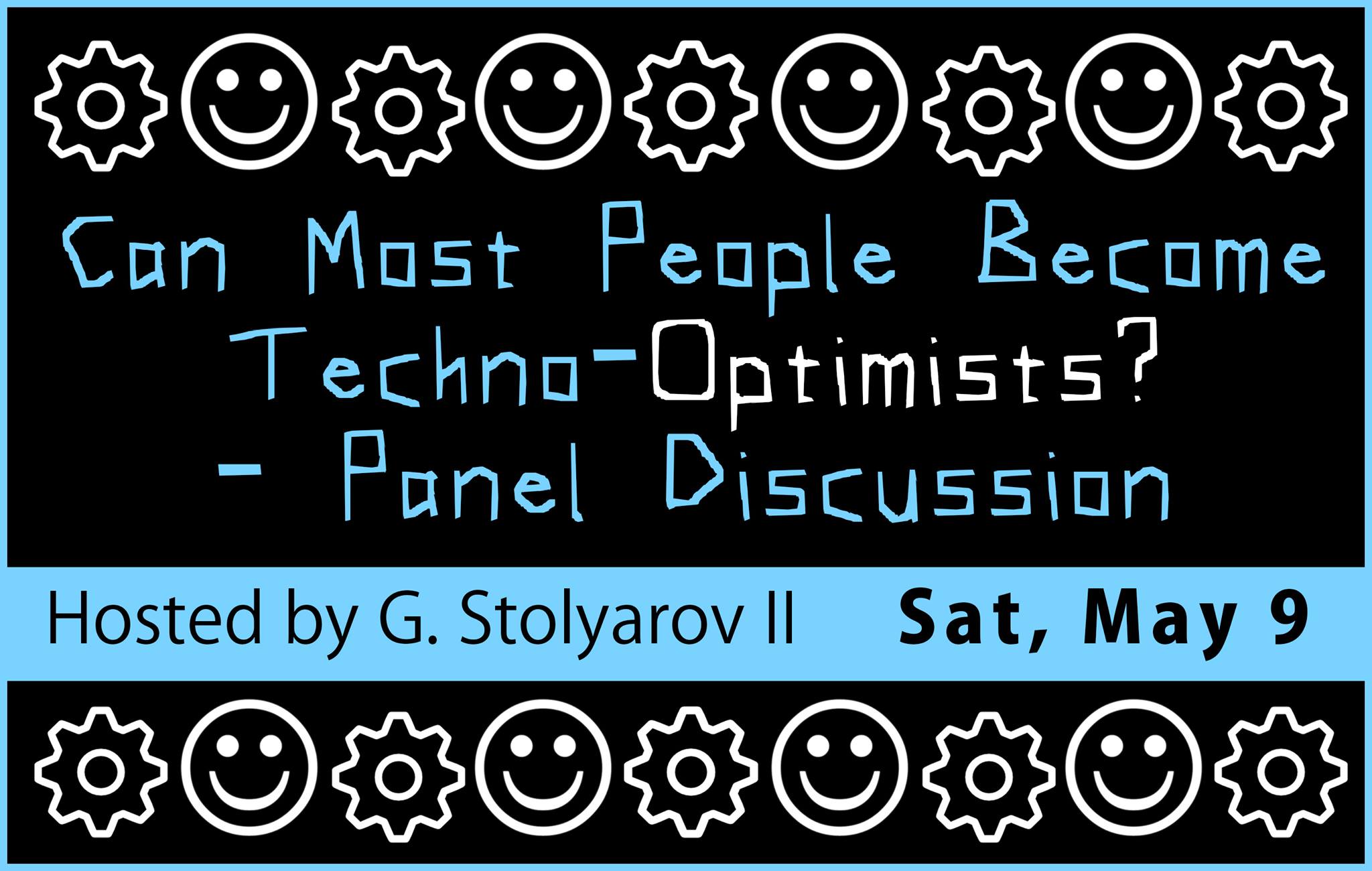
Can Most People Become Techno-Optimists? – Panel Discussion by G. Stolyarov II, Demian Zivkovic, Philippe Castonguay, Roen Horn, Sylvester Geldtmeijer, and Laurens Wes

Can Most People Become Techno-Optimists? – Panel Discussion by G. Stolyarov II, Demian Zivkovic, Philippe Castonguay, Roen Horn, Sylvester Geldtmeijer, and Laurens Wes

Techno-Optimism_Panel_ImageThe New Renaissance Hat

G. Stolyarov II, Demian Zivkovic, Philippe Castonguay, Roen Horn, Sylvester Geldtmeijer, and Laurens Wes

May 9, 2015
******************************

What are the key approaches and opportunities for restoring an optimistic view of technology, progress, and the future among the majority of people – and to counter apocalyptic, Malthusian, and neo-Luddite thinking?

On May 9, 2015, Mr. Stolyarov, the author of Death is Wrong – the illustrated children’s book on indefinite life extension  – invited a panel of future-oriented thinkers to discuss this question. Watch the discussion here.

Panelists

***

Demian Zivkovic is a student of artificial intelligence and philosophy, and founder and president of the Institute of Exponential Sciences – https://www.facebook.com/IEScience/ –  an international transhumanist think tank / education institute comprised of a group of transhumanism-oriented scientists, professionals, students, journalists and entrepreneurs interested in the interdisciplinary approach to advancing exponential technologies and promoting techno-positive thought.

Demian and the IES have been involved in several endeavors, including interviewing professor Aubrey de Grey, organizing lectures on exponential sciences with guests including de Grey, and spreading “Death is Wrong” – Mr. Stolyarov’s illustrated children’s book on indefinite life extension – in The Netherlands. Demian Zivkovic is a strong proponent of transhumanism, hyperreality, and hypermodernism. He is currently working on his ambition of raising enough capital to make a real difference in life extension and transhumanist thought.

Demian invites anybody who is interested in forwarding a technologically positive vision of the future to get involved with the Institute of Exponential Sciences via its Facebook page – https://www.facebook.com/IEScience/.

***

Philippe Castonguay is currently pursuing a B.Sc. in Psychology while doing research in computational neuroscience. His main research topics are the influence of noise on the stability of chaotic neural network models, mechanisms of recurrent neural integration on a network scale and high-dimensional data representations. Philippe is also an executive member of Bricobio, a DIY biohacking group in Montreal and co-founder of Montreal Futurists, a Montreal group that wants to promote transhumanist/futurist ideas and prepare the population for the integration of related technologies in the society.

***

Sylvester Geldtmeijer is a Dutch citizen and sound designer. He has been interested in transhumanism, science, and technology since childhood, when he was fascinated with science fiction and imagining a highly advanced technological world where every problem can be solved with science. He emphasizes the ability of science to help people, especially through medical advancements, and considers Deep Brain Stimulation to be one of the most important inventions of our time. He hopes that technological advances will produce an era in which children can grow up without struggling with any learning difficulties or physical obstacles.

Sylvester would like to share the following words of inspiration with our viewers:

For some the age of reason is too far,
For some the age of utopization will also be too far.
But for idealists reason is not just an accomplishment;
It’s development –
Just like utopia isn’t a place;
It’s a state of mind.

***

Roen Horn is a philosopher and lecturer on the importance of trying to live forever. He founded the Eternal Life Fan Club – http://eternallifefanclub.com/ – in 2012 to encourage fans of eternal life to start being more strategic with regard to this goal. To this end, one major focus of the club has been on life-extension techniques, everything from lengthening telomeres to avoiding risky behaviors. Currently, Roen’s work may be seen in the many memes, quotes, essays, and video blogs that he has created for those who are exploring their own thoughts on this, or who want to share and promote the same things. Like many other fans of eternal life, Roen is in love with life, and is very inspired by the world around him and wants to impart in others the same desire to discover all this world has to offer.

***

Laurens Wes is a Dutch engineer and chief engineering officer at the Institute of Exponential Sciences. Furthermore he is the owner of Intrifix, a company focused on 3D-printing and software solutions. Aside from these tasks, Laurens is very interested in transhumanism, longevity, just about all fields of science, entrepreneurship, and expressing creativity. He is a regular speaker for the IES and is very committed to educating the public on accelerated technological developments and exponential sciences.

Protein Modification as a Biomarker of Aging – Article by Reason

Protein Modification as a Biomarker of Aging – Article by Reason

The New Renaissance Hat
Reason
April 19, 2015
******************************

The development of fairly consistent, accurate means to measure biological age – as opposed to chronological age – from a tissue sample is an important thread in aging research. Aging is a process of damage accumulation, and rejuvenation would be achieved through damage repair. Research and development aimed at significant extension of healthy life span can only become cost-effective given good ways to measure damage, however. There must be some reliable means to quickly assess the results of a treatment that claims a degree of rejuvenation through the partial repair of a specific form of cellular or molecular damage. In some cases this might seem easy. Take senescent cell clearance, for example: you run the therapy in mice, and compare a range of measures known to scale by senescent cell count in tissue samples before and after the treatment regimen. However, all that really tells you is how well the therapy clears senescent cells. All aspects of biology interact with one another, and age is a global phenomenon. To determine how aged an individual is and how effective a treatment might be when it comes to the practical outcome of additional healthy life span added there is presently little to be done other than wait and see.

The biggest challenge in the development of life-extending therapies is funding and cost. On the one hand there is far too little funding directed towards finding ways to treat aging. On the other hand effectively evaluating an alleged means of treating aging currently requires lifespan studies, and even in mice that takes far too long and costs far too much to be done casually. If there were standardized, quick and easy markers of physiological age that could be assessed before and after a treatment, then this research and development might be able to proceed ten times as rapidly, and evaluation of possible therapies would be open to far more research groups. There are many, many more laboratories with the capacity and funding to carry out a speculative $100,000 study versus a speculative $1,000,000 study.

All of this is to explain why there is considerable interest in developing a cheap biomarker of aging that can reliably assess physiological age from a tissue sample. No-one wants to run a five-year mouse study if there is a ten-minute alternative that produces an answer of about the same accuracy. That ten-minute alternative doesn’t yet exist, but some lines of research seem promising, such as work on DNA methylation patterns that appear to be fairly consistent among individuals over the course of aging. There is also the suggestion that the approach should be to measure the fundamental forms of damage thought to cause aging – but all of them, not just the one being treated by the therapy under consideration. At the present time that might be more onerous than finding a good set of secondary consequences that are reactions to damage, such as epigenetic changes.

The open-access paper linked below covers a fairly wide range of topics. The structures of our cells and tissues are built of proteins, and these proteins are constantly damaged and replaced. Many varied mechanisms toil constantly to remove proteins and cellular components as soon as they show damage or dysfunction. Nonetheless the difference between young tissue and old tissue is that old tissues have far more damage: misfolded proteins, malfunctioning structures inside cells, metabolic waste products such as advanced glycation endproducts (AGEs) gumming together structures in between cells, and so on and so forth. The damage leaks through, and even damage repair mechanisms are not invulnerable; they falter with age due to much the same set of issues as causes dysfunction elsewhere. In the future repair technologies, such as those outlined in the SENS proposals, will bring about rejuvenation by reversing these forms of damage. Since these issues are a part of full set of causes of aging, they are also potential markers of aging.

Protein modification and maintenance systems as biomarkers of ageing

Changes in the abundance and post-translational modification of proteins and accumulation of some modified proteins have been proposed to represent hallmarks of biological ageing. Non-enzymatic protein glycation is a common post-translational modification of proteins in vivo, resulting from reactions between glucose or its metabolites and amino groups on proteins, this process is termed “Maillard reaction” and leads to the formation of advanced glycation endproducts (AGEs). During normal ageing, there is accumulation of AGEs of long-lived proteins such as collagens and several cartilage proteins. AGEs, either directly or through interactions with their receptors, are involved in the pathophysiology of numerous age-related diseases, such as cardiovascular and renal diseases and neurodegeneration.
 ***
Beside protein glycation, it is also well known that levels of oxidised proteins increase with age, due to increased protein damage induced by reactive oxygen species (ROS), decreased elimination of oxidized protein (i.e. repair and degradation), or a combination of both. Since the proteasome is in charge of both general protein turnover and removal of oxidized protein, its fate during ageing has received considerable attention, and evidence has been provided for impairment of the proteasome function with age in different cellular systems. Thus, these protein maintenance systems may also be viewed as potential biomarkers of ageing.
  ***
It is expected that a combination of several biomarkers will provide a much better tool to measure biological age than any single biomarker in isolation. For the most part, the markers based on proteins and their modifications that have been chosen are directly related with mechanistic aspects of the ageing process. Indeed, they are relevant to such important physiological features such as protein homeostasis and glycoprotein secretion that have been previously documented as being altered with age. Therefore, it is expected that they may be less influenced by other factors not necessarily related with ageing.
Reason is the founder of The Longevity Meme (now Fight Aging!). He saw the need for The Longevity Meme in late 2000, after spending a number of years searching for the most useful contribution he could make to the future of healthy life extension. When not advancing the Longevity Meme or Fight Aging!, Reason works as a technologist in a variety of industries. 
 ***

This work is reproduced here in accord with a Creative Commons Attribution license. It was originally published on FightAging.org.