Browsed by
Tag: reason

A Simpler Path to Creating Pluripotent Stem Cells – Article by Reason

A Simpler Path to Creating Pluripotent Stem Cells – Article by Reason

The New Renaissance Hat
Reason
January 31, 2014
******************************

An improvement on current methods of creating pluripotent stem cells has been in the news the past few days. It involves stressing cells with simple mechanisms, and is straightforward enough that I hear numerous laboratories and individual researchers have started in on trying it out immediately, as well as revisiting other variants of stressing cells to see what the outcome might be. The methodology is something that DIYbio enthusiasts could carry out as a weekend project with minimal cost and equipment, which is a great improvement over prior standard methods involving delivery of genes or similar operations.

As with all such potential infrastructure improvements, one pillar of importance is the reduction in cost and difficulty of research. When someone figures out a much cheaper way of achieving any particular goal, all further work that builds on that goal moves more rapidly: existing groups can do more, and new groups that previously couldn’t afford to join in now start work. Cell pluripotency is near the base of regenerative medicine and tissue engineering: ways to better achieve it accelerate the whole field.

As you can see, there are also other ramifications, however, such as for persistent reports of pluripotent stem cells isolated from adult tissues – VSELs and others – and the debate over difficulties in replicating that research.

Quote:

In 2006, Japanese researchers reported a technique for creating cells that have the embryonic ability to turn into almost any cell type in the mammalian body – the now-famous induced pluripotent stem (iPS) cells. In papers published this week, another Japanese team says that it has come up with a surprisingly simple method – exposure to stress, including a low pH – that can make cells that are even more malleable than iPS cells, and do it faster and more efficiently.

“It’s amazing. I would have never thought external stress could have this effect,” says Yoshiki Sasai. It took Haruko Obokata, a young stem-cell biologist at the same centre, five years to develop the method and persuade Sasai and others that it works. “Everyone said it was an artefact – there were some really hard days.”

The results could fuel a long-running debate. For years, various groups of scientists have reported finding pluripotent cells in the mammalian body. But others have had difficulty reproducing such findings. Obokata started the current project by looking at cells thought to be pluripotent cells isolated from the body. But her results suggested a different explanation: that pluripotent cells are created when the body’s cells endure physical stress.

Obokata has already reprogrammed a dozen cell types, including those from the brain, skin, lung and liver, hinting that the method will work with most, if not all, cell types. On average, she says, 25% of the cells survive the stress and 30% of those convert to pluripotent cells – already a higher proportion than the roughly 1% conversion rate of iPS cells.

Link: http://www.nature.com/news/acid-bath-offers-easy-path-to-stem-cells-1.14600

Reason is the founder of The Longevity Meme (now Fight Aging!). He saw the need for The Longevity Meme in late 2000, after spending a number of years searching for the most useful contribution he could make to the future of healthy life extension. When not advancing the Longevity Meme or Fight Aging!, Reason works as a technologist in a variety of industries. 

This work is reproduced here in accord with a Creative Commons Attribution license. It was originally published on FightAging.org.

Why Prioritize SENS Research for Human Longevity? – Article by Reason

Why Prioritize SENS Research for Human Longevity? – Article by Reason

The New Renaissance Hat
Reason
December 29, 2013
******************************

Why do I vocally support rejuvenation research based on the Strategies for Engineered Negligible Senescence (SENS) over other forms of longevity science? Why do I hold the view that SENS and SENS-like research should be prioritized and massively funded? The short answer to this question is that SENS-derived medical biotechnology has a much greater expected utility – it will most likely produce far better outcomes, and at a lower cost – than other presently ongoing lines of research into creating greater human longevity.

What is SENS?

But firstly, what is SENS? It is more an umbrella collection of categories than a specific program, though it is the case that narrowly focused SENS research initiatives run under the auspices of the SENS Research Foundation. On the science side of the house, SENS is a synthesis of existing knowledge from the broad mainstream position regarding aging and the diseases of aging: that aging is caused by a stochastic accumulation of damage at the level of cells and protein machinery in and around these cells. SENS is a proposal, based on recent decades of research, as to which of the identified forms of damage and change in old tissues are fundamental – i.e. which are direct byproducts of metabolic operation rather than cascading effects of other fundamental damage. On the development side of the house, SENS pulls together work from many subfields of medical research to show that there are clear and well-defined ways to produce therapies that can repair, reverse, or make irrelevant these fundamental forms of biological damage associated with aging.

(You can read about the various forms of low-level damage that cause aging at the SENS Research Foundation website and elsewhere. This list includes: mitochondrial DNA mutations; buildup of resilient waste products inside and around cells; growing numbers of senescent and other malfunctioning cells; loss of stem cells; and a few others).

Present arguments within the mainstream of aging research are largely over the relative importance of damage type A versus damage type B, and how exactly the extremely complex interaction of damage with metabolism progresses – but not what that damage actually is. A large fraction of modern funding for aging research goes towards building a greater understanding this progression; certainly more than goes towards actually doing anything about it. Here is the thing, however: while understanding the dynamics of damage in aging is very much a work in progress, the damage itself is well known. The research community can accurately enumerate the differences between old tissue and young tissue, or an old cell and a young cell – and it has been a good number of years since anything new was added to that list.

If you can repair the cellular damage that causes aging, it doesn’t matter how it happens or how it affects the organism when it’s there. This is the important realization for SENS – that much of the ongoing work of the aging research community is largely irrelevant if the goal is to get to human rejuvenation as rapidly as possible. Enough is already known of the likely causes of aging to have a reasonable expectation of being able to produce laboratory demonstrations of rejuvenation in animal models within a decade or two, given large-scale funding.

Comparing Expected Values

Expected value drives human endeavor. What path ahead do we expect to produce the greatest gain? In longevity science the investment is concretely measured in money and time, and we might think of the expected value in terms of years of healthy life added by the resulting therapies. The cost of these therapies really isn’t much of a factor – all major medical procedures and other therapies tend to converge to similar costs over time, based on their category: consider a surgery versus an infusion versus a course of pills, for example, where it’s fairly obvious that the pricing derives from how much skilled labor is involved and how much care the patient requires as a direct result of the process.

On the input side, there are estimates for the cost in time and money to implement SENS therapies for laboratory mice. For the sake of keeping things simple, I’ll note that these oscillate around the figures of a billion dollars and ten years for the crash program of fully-funded research. A billion dollars is about the yearly budget of the NIA these days, give or take, which might be a third of all research funding directed towards aging – by some estimates, anyway, though this is a very hard figure to verify in any way. It’s by no means certain the that the general one-third/two-thirds split between government and private research funding extends to aging research.

On the output side, early SENS implementations would be expected to take an old mouse and double its remaining life expectancy – e.g. produce actual rejuvenation, actual repair, and reversal of the low-level damage that causes aging, with repeated applications at intervals producing diminishing but still measurable further gains. This is the thing about a rejuvenation therapy that works; you can keep on applying it to sweep up newly accruing damage.

So what other longevity science do we have to compare against? The only large running programs are those that have grown out of the search for calorie-restriction mimetic drugs. So there is the past decade or so of research into sirtuins, and there is growing interest in mTOR and rapamycin analogs that looks to be more of the same, but slightly better (though that is a low bar to clear).

In the case of sirtuins, money has certainly flowed. Sirtris itself sold for ~$700 million, and it’s probably not unreasonable to suggest that a billion dollars have gone into broader sirtuin-related research and development over the past decade. What does the research community have to show for that? Basically nothing other than an increased understanding of some aspects of metabolism relating to calorie restriction and other adaptations that alter lifespan in response to environmental circumstances. Certainly no mice living longer in widely replicated studies as is the case for mTOR and rapamycin – the sirtuin results and underlying science are still much debated, much in dispute.

The historical ratio of dollars to results for any sort of way to manipulate our metabolism to slow aging is exceedingly poor. The thing is, this ratio shouldn’t be expected to get all that much better. Even if marvelously successful, the best possible realistic end result of a drug that slows aging based on what is known today – say something that extracts the best side of mTOR manipulation with none of the side-effects of rapamycin – is a very modest gain in human longevity. It can’t greatly repair or reverse existing damage, it can’t much help those who are already old become less damaged, it will likely not even be as effective as actual, old-fashioned calorie restriction. The current consensus is that calorie restriction itself is not going to add more than a few years to a human life – though it certainly has impressive health benefits.

(A sidebar: we can hope that one thing that ultimately emerges from all this research is an explanation as to how humans can enjoy such large health benefits from calorie restriction, commensurate with those seen in animals such as mice, without also gaining longer lives to match. But if just eating fewer calories while obtaining good nutrition could make humans reliably live 40% longer, I think that would have been noted at some point in the last few thousand years, or at least certainly in the last few hundred).

From this perspective, traditional drug research turned into longevity science looks like a long, slow slog to nowhere. It keeps people working, but to what end? Not producing significant results in extending human longevity, that’s for sure.

Ergo…

The cost of demonstrating that SENS is the right path or the wrong path – i.e. that aging is simply an accumulation of damage, and the many disparate research results making up the SENS vision are largely correct about which forms of change in aged tissue are the fundamental forms of damage that cause aging – is tiny compared to the cost of trying to safely eke out modest reductions in the pace of aging by manipulating metabolism via sirtuins or mTOR.

The end result of implementing SENS is true rejuvenation if aging is caused by damage: actual repair, actual reversal of aging. The end result of spending the same money and time on trying to manipulate metabolism to slow aging can already be observed in sirtuin research, and can reasonably be expected to be much the same the next time around the block with mTOR – it produces new knowledge and little else of concrete use, and even when it does eventually produce a drug candidate, it will likely be the case that you could do better yourself by simply practicing calorie restriction.

The expectation value of SENS is much greater than that of trying to slow aging via the traditional drug-discovery and development industry. Ergo the research and development community should be implementing SENS. It conforms to the consensus position on what causes aging, it costs far less than all other proposed interventions into the aging process, and the potential payoff is much greater.

Reason is the founder of The Longevity Meme (now Fight Aging!). He saw the need for The Longevity Meme in late 2000, after spending a number of years searching for the most useful contribution he could make to the future of healthy life extension. When not advancing the Longevity Meme or Fight Aging!, Reason works as a technologist in a variety of industries. 

This work is reproduced here in accord with a Creative Commons Attribution license.  It was originally published on FightAging.org.

A Brace of Papers from the Longevity Genetics Community – Article by Reason

A Brace of Papers from the Longevity Genetics Community – Article by Reason

The New Renaissance Hat
Reason
December 29, 2013
******************************

You’ll find quite a few papers on longevity and genetics in the preprint queue of Current Vascular Phamacology at the moment. This is a portion of the output of that part of the research community focused on developing a full understanding of the molecular biology of how aging progresses and varies between individuals and species. Biology is fantastically complex, and obtaining that full understanding will be a much, much more challenging endeavor than merely successfully treating or reversing aging.

Treating and even curing aging are goals that might be achieved without a full understanding of exactly how aging progresses. Consider this: you don’t need anything even close to a full molecular model of the progression of rust to greatly extend the life of metal equipment through scrubbing and protective coating. Exactly the same argument about knowledge and action can be applied to biology and medicine. Knowing what the damage is and having a complete understanding of how that damage progresses to cause the visible symptoms of aging are two very different things, the latter much more complex than the former, and only the former actually needed to produce useful therapies.

Nonetheless, most of the present work and funding in the aging science community is focused on developing an understanding of how degenerative aging progresses, not on damage repair and treatment of aging. So most of the output of the research community looks much along the lines of these first few papers I’m going to point out today.

The Challenges in Moving from Ageing to Successful Longevity

Quote:

During the last decades survival has significantly improved and centenarians are becoming a fast-growing group of the population. Genetic factors contribute to the variation of human life span by around 25%, which is believed to be more profound after 85 years of age. It is likely that multiple factors influence life span and we need answers to questions such as: 1) What does it take to reach 100?, 2) Do centenarians have better health during their lifespan compared with contemporaries who died at a younger age?, 3) Do centenarians have protective modifications of body composition, fat distribution and energy expenditure, maintain high physical and cognitive function, and sustained engagement in social and productive activities?, 4) Do centenarians have genes which contribute to longevity?, 5) Do centenarians benefit from epigenetic phenomena?, 6). Is it possible to influence the transgenerational epigenetic inheritance (epigenetic memory) which leads to longevity?, 7) Is the influence of nutrigenomics important for longevity?, 8) Do centenarians benefit more from drug treatment, particularly in primary prevention?, and, 9) Are there any potential goals for drug research?

Genes Of Human Longevity: An Endless Quest?

Quote:

Human longevity is a complex trait which genetics, epigenetics, environmental and stochasticity differently contribute to. To disentangle the complexity, our studies on genetics of longevity were, at the beginning, mainly focused on the extreme phenotypes, i.e. centenarians who escaped the major age-related diseases compared with cross sectional cohorts.

In association studies on candidate genes many SNPs, positively or negatively correlated with longevity have been identified. On the other hand, the identification of longevity-related genes does not explain the mechanisms of healthy aging and longevity, but it opens a huge amount of questions on epigenetic contribution, gene regulation and the interactions with essential genomes, i.e. mitochondrial DNA and microbiota.

Centenarian Offspring: a model for Understanding Longevity

Quote:

A main objective of current medical research is the improving of life quality of elderly people as priority of the continuous increase of ageing population. Accordingly, the research interest is focused on understanding the biological mechanisms involved in determining the positive ageing phenotype, i.e. the centenarian phenotype. Centenarians have been used as an optimal model for successful ageing. However, it is characterized by several limitations, i.e. the selection of appropriate controls for centenarians and the use itself of the centenarians as a suitable model for healthy ageing. Thus, the interest has been centered on centenarian offspring, healthy elderly people. They may represent a model for understanding exceptional longevity for the following reasons: to exhibit a protective genetic background, cardiovascular and immunological profile as well as a reduced rate of cognitive decline than age-matched people without centenarian relatives.

Phenotypes and Genotypes of High Density Lipoprotein Cholesterol in Exceptional Longevity

Quote:

A change in the lipoprotein profile is a metabolic hallmark of aging and has been the target for modern medical developments. Although pharmaceutical interventions aimed at lipid lowering substantially decrease the risk of cardiovascular disease, they have much less impact on mortality and longevity. Moreover, they have not affected death from other age-related diseases.

In this review we focus on high density lipoprotein (HDL) cholesterol, the levels of which are either elevated or do not decrease as would be expected with aging in centenarians, and which are associated with lower prevalence of numerous age-related diseases; thereby, suggesting a potential HDL-mediated mechanism for extended survival. We also provide an update on the progress of identifying longevity-mediating lipid genes, describe approaches to discover longevity genes, and discuss possible limitations. Implicating lipid genes in exceptional longevity may lead to drug therapies that prevent several age-related diseases, with such efforts already on the way.

It has to be said, however, that some areas of research are close enough to the development of actual rejuvenation treatments – those addressing at least some of the root cause damage of aging rather than downstream consequences – that even the scientific mainstream is coming around to the idea. The impact of cellular senescence on aging is one such field, as several obvious and existing applications of medical technology may aid in removal of the senescent cells that accumulate with age, and early work in mice confirms that such treatments should prove helpful:

Cellular Senescence in Ageing, Age-Related Disease and Longevity

Quote:

Cellular senescence is the state of permanent inhibition of cell proliferation. There is mounting evidence that senescent cells contribute to ageing and age-related disease by generating a low grade inflammation state (senescence-associated secretory phenotype-SASP). Even though cellular senescence is a barrier for cancer it can, paradoxically, stimulate development of cancer via proinflammatory cytokines. There is evidence that senescent vascular cells, both endothelial and smooth muscle cells, participate in atherosclerosis and senescent preadipocytes and adipocytes have been shown to lead to insulin resistance.

Thus, modulation of cellular senescence is considered as a potential pro-longevity strategy. It can be achieved in several ways like: elimination of selected senescent cells, epigenetic reprogramming of senescent cells, preventing cellular senescence or influencing the secretory phenotype. Some pharmacological interventions have already been shown to have promising activity in this field.


Reason is the founder of The Longevity Meme (now Fight Aging!). He saw the need for The Longevity Meme in late 2000, after spending a number of years searching for the most useful contribution he could make to the future of healthy life extension. When not advancing the Longevity Meme or Fight Aging!, Reason works as a technologist in a variety of industries. 

This work is reproduced here in accord with a Creative Commons Attribution license.  It was originally published on FightAging.org.

Putting Randomness in Its Place – Video by G. Stolyarov II

Putting Randomness in Its Place – Video by G. Stolyarov II

A widespread misunderstanding of the meaning of the term “randomness” often results in false generalizations made regarding reality. In particular, the view of randomness as metaphysical, rather than epistemological, is responsible for numerous commonplace fallacies.

Reference
– “Putting Randomness in Its Place” – Essay by G. Stolyarov II

23andMe and the FDA’s Travesty of Justice – Video by G. Stolyarov II

23andMe and the FDA’s Travesty of Justice – Video by G. Stolyarov II

Mr. Stolyarov explains that the US Food and Drug Administration has hit a new low in warning the genetic testing service 23andMe to halt sales of its $99 testing kits. The kits are not a drug or medical treatment; they merely provide information and violate no one’s rights. The irrationality of some people is used as an excuse to deny everyone else potentially life-saving information while establishing artificial barriers that would prevent declines in the cost of medical care.

References
– “FDA warns Google-backed 23andMe to halt sales of genetic tests” – Toni Clarke – Reuters – November 25, 2013
– 23andMe Website
– Petition to “overrule the FDA’s decision to bar 23andMe from selling their potentially life-saving diagnostic kits”

Individualism, Objective Reality, and Open-Ended Knowledge – Video by G. Stolyarov II

Individualism, Objective Reality, and Open-Ended Knowledge – Video by G. Stolyarov II

Mr. Stolyarov explains how an objective reality governed by physical laws is compatible with individual self-determination and indeed is required for individuals to meaningfully expand their lives and develop their unique identities.

Reference

– “Individualism, Objective Reality, and Open-Ended Knowledge” – Post by G. Stolyarov II

Radical Life Extension Won’t Cause Resource Shortages – Article by Reason

Radical Life Extension Won’t Cause Resource Shortages – Article by Reason

The New Renaissance Hat
Reason
October 6, 2013
******************************

That overpopulation exists at all is one of the most prevalent delusions in the modern world: thanks to the environmentalist movement, a cause that has ascended near to the status of civic religion, the average fellow in the street thinks that there are too many people alive today, that resources are stretched to breaking point, that the future is one of Malthusian decline, and that horrible poverty in the third world is caused by the existence of too many people. All of these points are flat-out wrong. Humanity is wealthier and has greater access to resources today than at any time in history, the variety and amounts of available resources are growing at an accelerating pace due to technological progress, the earth could support many times more people than are alive today, and where there is poverty it exists due to terrible, predatory governance and the inhumanity of man – it exists due to waste and aggression amidst the potential for plenty.

Even this pro-longevity piece by George Dvorsky subscribes, as many do, to the false idea that somehow we are consuming too many resources and will run out. This is silly: resources are infinite, because through technological progress we constantly develop new ones. People live in an age of change, with each new decade clearly different from the last, and yet live under the assumption that everything will remain the same going forward. Being worried about running out of anything that we use today is like being worried about running out of candle wax in 1810, or running out of room for horse breeding operations in 1840, or running out of food in 1940. All false concerns, and all false for exactly the same reasons: we are not static consumers of resources, we are net producers of resources.

Quote:

Make no mistake, it’ll take us a long, long time to get there, but we’ll eventually find a way to halt the aging process. Owing to advanced medical, regenerative, and cybernetic technologies, future humans will enter into a state of “negligible senescence,” a condition marked by the cessation of aging and the onset of everlasting youth. It sounds utopian, but as biogerontologist Aubrey de Grey has repeatedly noted, it’s simply an engineering problem – one that’s not intractable.

I’ve been debating this issue for the better part of a decade, and I’ve heard virtually every argument there is to be said both in favor of and in condemnation of the possibility. I’m not going to go over all of them here. But without a doubt the single most prominent argument set against radical life extension is the issue of overpopulation and environmental sustainability.

As a final note, there’s a certain inevitability to radical life extension. It’s the logical conclusion to the medical sciences. So rather than futilely argue against it, we should come up with constructive solutions to ensure that it unfolds in the most non-disruptive way possible.

Link: http://io9.com/no-extreme-human-longevity-won-t-destroy-the-planet-1440148751

Reason is the founder of The Longevity Meme (now Fight Aging!). He saw the need for The Longevity Meme in late 2000, after spending a number of years searching for the most useful contribution he could make to the future of healthy life extension. When not advancing the Longevity Meme or Fight Aging!, Reason works as a technologist in a variety of industries.  

This work is reproduced here in accord with a Creative Commons Attribution license.  It was originally published on FightAging.org.

The Last Generation to Die – Article by Reason

The Last Generation to Die – Article by Reason

The New Renaissance Hat
Reason
September 27, 2013
******************************

The last generation whose members will be forced into death by aging is alive today. It won’t be the youngest of us, born in the past few years – they, most likely, have thousands of years ahead of them. It won’t be the oldest of us either, as even under the plausible best of circumstances we are twenty to thirty years away from a widespread deployment of rejuvenation therapies based on the SENS research program. As to the rest of us, just who is left holding the short straw at the end of the day depends on the speed of progress in medical science: advocacy, fundraising, and the effectiveness of research and development initiatives. Persuasion and money are far more important at this early stage than worrying about how well the researchers are doing their jobs, however.

We live in a world in which the public is only just starting to come around to the idea that aging can be treated, and demonstrations of rejuvenation in the laboratory could be achieved in a crash program lasting ten to twenty years, at a comparatively small cost. But still, most people don’t care about living longer, and most people try not to think about aging, or the future of degeneration and sickness that awaits. They think it is inevitable, but that is no longer true. If you are in early middle age today in the first world, then you have a good shot at living for centuries if the world suddenly wakes up tomorrow and massive funding pours into rejuvenation research. You will age and die on a timescale little different from that of your parents if that awakening persistently fails to happen.

So, roll the dice, or help out and try to swing the odds in your favor. Your choice.

Crowdfunding on Kickstarter and related sites is still the new new thing, the shine not yet worn off. One of the truths that this activity reinforces is that it is far, far easier to raise funding for the next throwaway technological widget than for medical research projects aimed at the betterment of all humanity. Research crowdfunding is a tiny, distant moon orbiting the great mass of comics, games, and devices on Kickstarter, Indiegogo, and others. Hell, it’s easier to crowdfund a short film that points out how close human rejuvenation might be to the present day than it is to crowdfund a project to actually conduct a portion of that research. Is this a reflection of rationality? You decide, though it could be argued either way regarding whether a dollar given to raising awareness is more valuable than a dollar given to the researchers at this point in time. Both research and persuasion need to happen.

The Last Generation To Die – A Short Film

Quote:

Set in the future when science first begins to stop aging, a daughter tries to save her father from natural death. The story takes place roughly 30 years in the future at the moment when science has first figured out how to stop aging through genetics. It is framed around the gulf between generations that would occur with the first release of this technology. A daughter who works for a company called Aperion Life – the first to bring this new technology to the public – wants to save her aging father. She starts him on the trials but he soon stops coming. The film continues with the conflict rising between them as she wants him to live on with her while he feels a natural ending is more human.The film centers itself around the natural conflict that would exist at this divide. Upon developing this story, I’ve asked many people and I’ve found a pretty even 50/50 divide of opinions strongly on one side or the other- either they want to die naturally and believe there is beauty in finality, or they want to see what the future holds and have more time to explore and learn more in life. I’d like to turn the question to you… Which side are you on? Would you want to live on or die naturally?

I feel this is a film that needs to be made. Asking these questions in the form of art and story will help start the discussion. Our world is changing very fast and the rate of technology is speeding up. What does all of this mean for humanity? Everything we know, from a book to a play to a song, ends… What does it mean when there is no ending? Would we be more complacent? Would life be as meaningful? Is there more of a beauty in the way it has always been with our passing or is there more beauty in our bodies and minds staying fresh and alive for many, many years to come? What about social justice and overpopulation? Would life become boring after living on indefinitely or would you find it exhilarating to have time to learn new languages, instruments, subjects – to read more books, to love more – to live several lifetimes? Would it be worth it if some of your most loved friends or relatives passed on and wouldn’t live on with you? Are you interested in seeing what the future brings in technology and social evolution or are you happy to have contributed and be a part of it for a short time?

Tim Maupin’s Film, ‘The Last Generation to Die’, to Explore Longevity and Life Extension

Quote:

Chicago filmmaker Tim Maupin launched a Kickstarter for a short film titled, “The Last Generation to Die.” Maupin thinks now is a great time to start a conversation about life extension. And he’s right. The idea that within decades a genetic fountain of youth may plausibly reverse the aging process, even indefinitely stave off death, seems to be rising up in pop culture. Maupin’s Kickstarter has so far raised over $15,000 – $6,000 more than its initial funding goal. Encouraged by the positive response, they’re dreaming bigger and hope to fund a stretch goal of $25,000 in the last 10 days of the campaign.

Reason is the founder of The Longevity Meme (now Fight Aging!). He saw the need for The Longevity Meme in late 2000, after spending a number of years searching for the most useful contribution he could make to the future of healthy life extension. When not advancing the Longevity Meme or Fight Aging!, Reason works as a technologist in a variety of industries.  

This work is reproduced here in accord with a Creative Commons Attribution license.  It was originally published on FightAging.org.

Editor’s Note from G. Stolyarov II: I am proud to have donated $50 to help make the film The Last Generation to Die a success. I encourage all readers to donate during the remaining nine days in which the Kickstarter project is open to accepting funds.

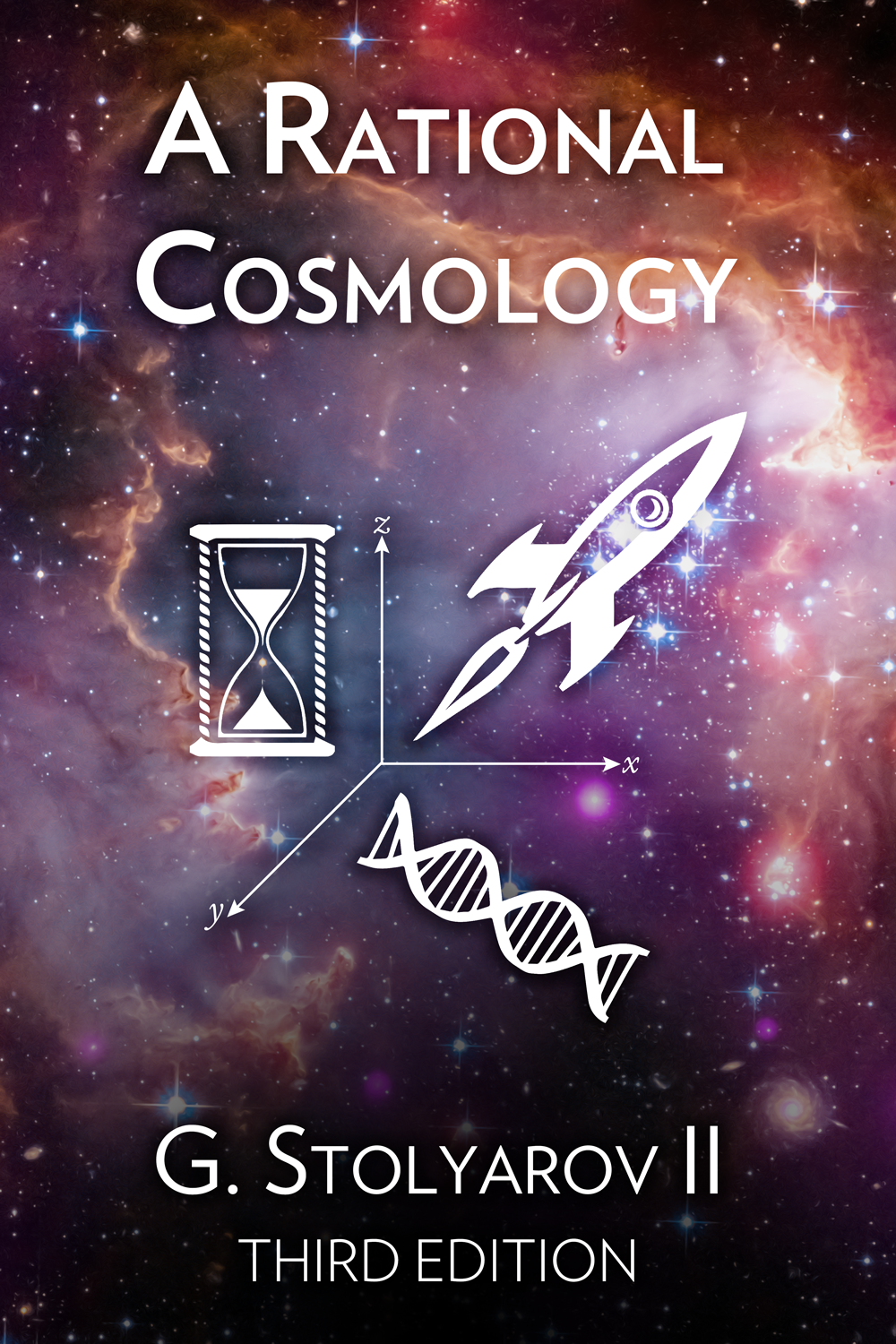
A Rational Cosmology – Treatise by G. Stolyarov II – Third Edition

A Rational Cosmology – Treatise by G. Stolyarov II – Third Edition

A Rational Cosmology - Third Edition - by G. Stolyarov II

A Rational Cosmology – Third Edition – by G. Stolyarov II

Contemporary science does not make as much progress as it could, due the fallacy of empiricism-positivism – the idea that no knowledge is certain beyond refutation and that every claim is contingent on highly narrow, particular, and expensive experiments. A Rational Cosmology, however, provides a thorough refutation of prevalent empiricist-positivist fallacies, both in content and in method. It shatters some of the erroneous philosophical interpretations of theories such as Relativity and Quantum Mechanics. Moreover, it refutes the ex nihilo origin of the universe – including its manifestation in popular views of the Big Bang and Big Crunch – the particle/wave view of light, and a host of other fallacious ideas, using the proper, axiomatic-deductive methodology of identifying those theories’ conceptual flaws and internal contradictions.

As constructive alternatives to these fallacies, A Rational Cosmology presents objective, absolute, rationally grounded views of terms such as universe, matter, volume, space, time, motion, sound, light, forces, fields, and even the higher-order concepts of life, consciousness, and volition. The result is a system verified by ubiquitous observation and common sense, the underpinnings of objective science which demonstrate a knowable, fathomable reality and set the stage for unfettered progress, confidence in reason, and full-scale logical investigation of just about everything existence has to offer.

The Third Edition of A Rational Cosmology has been enhanced and edited, with augmentations and revisions to several of the previous essays. There is a new, beautiful cover design by Wendy D. Stolyarov. Furthermore, there are two additional numbered essays and more recent writings within the Related Essays section.

For the first time, A Rational Cosmology is available for free download in the form of unified files. There are four options to choose from.

Download the PDF version.

Download the MOBI version.

Download the EPUB version.

Download the AZW3 version.

The Rational Argumentator welcomes your reviews of A Rational Cosmology. You can submit them to TRA by sending them to gennadystolyarovii@yahoo.com. You are also encouraged to spread the word by reprinting the information on this page or your own comments concerning the book on other media outlets.

Individualism, Objective Reality, and Open-Ended Knowledge – Article by G. Stolyarov II

Individualism, Objective Reality, and Open-Ended Knowledge – Article by G. Stolyarov II

The New Renaissance Hat
G. Stolyarov II
September 11, 2013
******************************

I am an individualist, but not a relativist. While I have no dispute with individuals determining their own meaning and discovering their own significance (indeed, I embrace this), this self-determination needs to occur within an objective physical universe. This is not an optional condition for any of us. The very existence of the individual relies on absolute, immutable physical and biological laws that can be utilized to give shape to the individual’s desires, but that cannot be ignored or wished away. This is why we cannot simply choose to live indefinitely and have this outcome occur. We need to develop technologies that would use the laws of nature to bring indefinite longevity about.

In other words, I am an ontological absolutist who sees wisdom in Francis Bacon’s famous statement that “Nature, to be commanded, must be obeyed.” Individual choice, discovery, and often the construction of personal identity and meaning are projects that I embrace, but they rely on fundamental objective prerequisites of matter, space, time, and causality. Individuals who wish to shape their lives for the better would be wise to take these prerequisites into account (e.g., by developing technologies that overcome the limitations of unaided biology or un-transformed matter). My view is that a transhumanist ethics necessitates an objective metaphysics and a reason-and-evidence-driven epistemology.

This does not, however, preclude an open-endedness to human knowledge and scope of generalization about existence. Even though an absolute reality exists and truth can be objectively known, we humans are still so limited and ignorant that we scarcely know a small fraction of what there is to know. Moreover, each of us has a grasp of different aspects of truth, and therefore there is room for valid differences of perspective, as long as they do not explicitly contradict one another. In other words, it is not possible for both A and non-A to be true, but if there is a disagreement between a person who asserts A and a person who asserts B, it is possible for both A and B to be true, as long as A and B are logically reconcilable. A dogmatic paradigm would tend to erroneously classify too much of the realm of ideas as non-A, if A is true, and hence would falsely reject some valid insights.

These insights illustrate the compatibility of objective physical and biological laws (physicalism) with individual self-determination (volition or free will). There is a similar relationship between ontology and ethics. An objective ontology (based on immutable natural laws) is needed as a foundation for an individualistic ethics of open-ended self-improvement and ceaseless progress.