Browsed by
Tag: reason

Paradoxes, Not Contradictions – Post by G. Stolyarov II

Paradoxes, Not Contradictions – Post by G. Stolyarov II

The New Renaissance Hat
G. Stolyarov II
September 10, 2013
******************************

I am personally fond of Ayn Rand’s identification of certain matters as “paradoxes, but not contradictions”. In my view, contradictions do not exist in reality, though there may be elements that are difficult to reconcile mentally because of incomplete information or preliminary errors in one’s perception of existence.

A paradox arises when a person’s initial intuitions do not appear to hold. This means that either the initial intuitions are wrong, or one’s information is incomplete. For instance, the famous “water-diamond paradox” of Classical economics was an inability to explain why the price of water, which is essential for life, was so much lower than the price of diamonds, which, at the time, only had uses in jewelry and decoration. The 1871 Marginalist Revolution (a development independently arrived at by Carl Menger, Leon Walras, and William Stanley Jevons) resolved the paradox by explaining a key fact about human valuation that the Classical economists had missed – namely, that a person does not evaluate the entire stock of a given good, but only considers particular quantities of goods at the margin. So the paradox was resolved in an entirely rational, non-contradictory manner, by demonstrating that the abundance of water has enabled its life-sustaining uses to be fulfilled for most individuals, while the relative scarcity of diamonds means that, for most consumers, any diamond they obtain would be put to the highest-valued purpose they would find for a diamond.
***

I see the progress of human civilization as, in part, consisting of the increasing resolution of paradoxes. While, of course, it is possible that new paradoxes would arise as the old ones are resolved, these paradoxes arise on the boundaries of the new intellectual territory that is yet to be fathomed and incorporated into the domain of human mastery. Paradoxes, mysteries, and unresolved questions occur on the outermost edges of human advancement at any given time. As the edges expand, old mysteries and paradoxes are solved and new ones may arise in territory that was previously completely unexplored. In this sense, encountering a paradox can be seen as a challenge – a call to resolve the quandary and thereby score gains for human progress. As a meliorist who sees no limits to the potential of human reason and technology, I think that all questions are ultimately answerable and all paradoxes are solvable, given enough time, effort, and proper means. Sometimes the resolution of a paradox requires highly creative, unorthodox, and unprecedented thinking – which must transcend conventional dichotomies and posited antagonisms in order to arrive at a new understanding.

Aubrey de Grey Comments on the “Hallmarks of Aging” Paper – Article by Reason

Aubrey de Grey Comments on the “Hallmarks of Aging” Paper – Article by Reason

The New Renaissance Hat
Reason
September 8, 2013
******************************

The Hallmarks of Aging paper was published earlier this year. It is an outline by a group of noted researchers that divides up degenerative aging into what they believe are its fundamental causes, with extensive references to support their conclusions, and proposes research strategies aimed at building the means to address each of these causes. This is exactly what we want to see more of in the aging research community: deliberate, useful plans that follow the Strategies for Engineered Negligible Senescence (SENS) model of approaching aging.

Read through the Hallmarks of Aging and you’ll see that it is essentially a more mild-mannered and conservative restatement of the SENS approach to aging – written after more than ten years of advocacy and publication and persuasion within the scientific community by SENS supporters. To my eyes, the appearance of such things shows that SENS is winning the battle of ideas within the scientific community, and it is only a matter of time before it and similar repair-based efforts aimed at human rejuvenation dominate the field. Rightly so, too, and it can’t happen soon enough for my liking. SENS and SENS-like research is the only way we’re likely to see meaningful life extension technologies emerge before those of us in middle age now die, so the more of it taking place the better.

Aubrey de Grey, author of the original SENS proposals and now Chief Science Officer of the SENS Research Foundation that funds and guides rejuvenation research programs, is justifiably pleased by the existence of the Hallmarks of Aging. See this editorial in the latest Rejuvenation Research, for example:

A Divide-and-Conquer Assault on Aging: Mainstream at Last

Quote:

On June 6th, a review appeared concerning the state of aging research and the promising ways forward for the field. So far, so good. But this was not any old review. Here’s why: (a) it appeared in Cell, one of the most influential journals in biology; (b) it is huge by Cell’s standards – 24 pages, with well over 300 references; (c) all its five authors are exceptionally powerful opinion-formers – senior, hugely accomplished and respected scientists; (d) above all, it presents a dissection of aging into distinct (though inter-connected) processes and recommends a correspondingly multi-pronged (“divide and conquer”) approach to intervention.

It will not escape those familiar with SENS that this last feature is not precisely original, and it may arouse some consternation that no reference is made in the paper to that prior work. But do I care? Well, maybe a little – but really, hardly at all. SENS is not about me, nor even about SENS as currently formulated (though a depressing number of commentators in the field persist in presuming that it is). Rather, it is about challenging a profound, entrenched, and insidious dogma that has consumed biogerontology for the past 20 years, and which this new review finally – finally! – challenges (albeit somewhat diplomatically) with far more authority than I could ever muster.

…

Aging has been shown, over several decades, to consist of a multiplicity of loosely linked processes, implying that robust postponement of age-related ill-health requires a divide-and-conquer approach consisting of a panel of interventions. Because such an approach is really difficult to implement, gerontologists initially adopted a position of such extreme pessimism that all talk of intervention became unfashionable. The discovery of genetic and pharmacological ways to mimic [calorie restriction], after a brief period of confused disbelief, was so seductive as a way to raise the field’s profile that it was uncritically embraced as the fulcrum of translational gerontology for 20 years, but finally that particular emperor has been decisively shown to have no biomedically relevant clothes.

The publication of so authoritative a commentary adopting the “paleogerontological” position, that aging is indeed chaotic and complex and intervention will indeed require a panel of therapies, but now combined with evidence-based optimism as to the prospects for implementing such a panel, is a key step in the elevation of translational gerontology to a truly mature field.

In essence, as de Grey points out, work on aging has been following the wrong, slow, expensive, low-yield path for a couple of decades: the path of deciphering the mechanisms of calorie restriction and altering genes and metabolism to slightly slow down aging. This path cannot result in large gains in life expectancy and long-term health, and it cannot result in therapies that will greatly help people who are already old. What use is slowing down the accumulation of the damage of aging if you are already just a little more damage removed from death, and frail and suffering because of it, and the treatment will meaningfully alter none of that? If we want to add decades or more to our healthy life spans before we die, then rejuvenation and repair of damage are what is needed: ways to reverse frailty, remove suffering, and restore youthful function.

Reason is the founder of The Longevity Meme (now Fight Aging!). He saw the need for The Longevity Meme in late 2000, after spending a number of years searching for the most useful contribution he could make to the future of healthy life extension. When not advancing the Longevity Meme or Fight Aging!, Reason works as a technologist in a variety of industries.  

This work is reproduced here in accord with a Creative Commons Attribution license.  It was originally published on FightAging.org.

Arguing by Induction for an Absence of Boredom in an Ageless, Greatly Extended Healthy Life – Article by Reason

Arguing by Induction for an Absence of Boredom in an Ageless, Greatly Extended Healthy Life – Article by Reason

The New Renaissance Hat
Reason
June 19, 2013
******************************
Originally published on the Fight Aging! website.
***

It is usually the case that the first knee-jerk reaction in opposition to increased human longevity is based on the mistaken belief that life-extension technologies would lead to people being ever more frail and decrepit for a very long time. This is far from the case, and it’s probably not even possible to cost-effectively engineer a society of long-lived frail people – even if that was the goal to hand. If you are frail and decrepit, then you have a high mortality rate due to the level of age-related cellular and molecular damage that is causing the failure and degeneration of your body and its organs. You won’t be around for long. No, the only way to engineer longer healthy life is to extend the period of youth and vitality, a time in which you have little age-related damage and your mortality rate is very low. Most present strategies are aimed to prolong that period of life, either by slowing the rate at which damage occurs (not so good) or finding ways to periodically repair the damage and thus rejuvenate the patient (much better).

Once people grasp that longevity science is the effort to make people younger for far longer, then the second knee-jerk objection arises. This is the belief that a very long-lived individual would become overwhelmed by boredom: they would run out of interest and novelty. This is by far the sillier objection, and there is absolutely no rational basis for it. Even a few moments of thought should convince you that there is far more to do and learn that you could achieve in a thousand life spans – and it’s a little early in the game to be objecting to enhanced longevity on the basis that you can’t think of what to do with life span number number 1001.

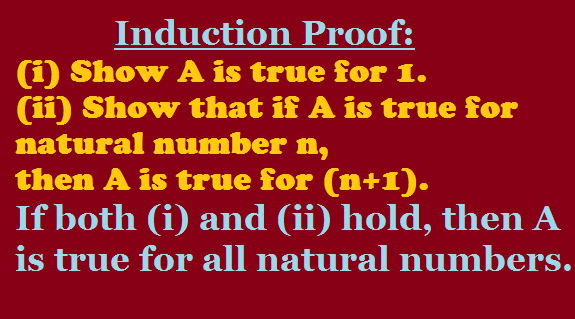
Considering boredom, futility, meaningless, and related matters, I noticed what appears to be an argument by induction in the article below. Mathematical induction is a tool used in formal proofs wherein if you can prove that something is generally true for n and n+1 (where n is a natural number), and then show that it is true for 1, then you can conclude it must be true for all natural numbers. If it is true for 1, then it must be true for 1+1 = 2, and true for 2+1 = 3, and so on.

Basics of an Induction Proof 

Life Extension Leads to Meaningless Days? NO! – by Extropia DaSilva

Person 1 lives a fulfilling and meaningful life for X number of years before that life is terminated by a sudden, massive heart attack. Now, imagine another person whom we shall label (not too creatively) ‘Person 2′. Person 2’s life follows the same general path as that of Person 1, with one exception: It is one day longer than Person 1’s was. Now ask yourself: Is there any reason to suppose that this day – let us assume it is a Tuesday – strikes Person 2 as being meaningless despite the fact that all Tuesdays (and, indeed, every other day in Person 2’s past) seemed worth living? Personally I cannot see any reason to suppose that this Tuesday should not be as worth living through as the previous day was. Person 2’s life was as meaningful as that of Person 1, and the extra day Person 2 lived to see did not negatively affect quality of life (it might have positively affected it, but that is another matter).

OK, so now imagine yet another person who goes by the label of… yes, you guessed it, Person 3. You can probably also guess that Person 3 lives one day longer than Person 2. Once again, I can think of no reason why, where we have two people who live meaningful lives but one lives one day longer, that extra day would not seem worth experiencing. Put another way: If possible, would Persons 2 and 1 rather not be dead on Wednesday (the last day for Person 3) when Monday and all preceding days were worth experiencing? So far as I can see, the answer to that question is, ‘yes’.

There seems to be no reason why this argument should not hold for any number of hypothetical people, each one of which lives one day longer than the last.

Unfortunately you can’t prove conjectures about aspects of human nature with induction (or not yet, at least). What you can do is use it, as above, to mount a more convincing argument. This one is somewhat akin to one of the standard lines in any debate between a person who is in favor of greatly extending healthy life versus someone who isn’t.

Advocate: So you are fine with aging and dying?

Deathist: Yes.

Advocate: So you are fine with dying right now, done and finished?

Deathist: Well, no.

Advocate: Why would you think any differently ten days, or a hundred days, or decades from now, if you still had your health and vigor?

Deathist: Um…

There seems to be a strange disconnect in many people’s minds, in which they are vigorously in favor of being alive right this instant or next week, but they nonetheless believe that their future self of years ahead will be of a different opinion and want to die. Now if you’re on the downhill slope of aging, in great pain, and your body is falling apart, desiring a stopping point is not unreasonable. (With the best of present options for those in that position being cryonics). But in a world of rejuvenation therapies, in which older life is just as healthy, low-risk, and full of possibility as younger life, what mysterious thing is going to make people want to die?

Reason is the founder of The Longevity Meme (now Fight Aging!). He saw the need for The Longevity Meme in late 2000, after spending a number of years searching for the most useful contribution he could make to the future of healthy life extension. When not advancing the Longevity Meme or Fight Aging!, Reason works as a technologist in a variety of industries.  

This work is reproduced here in accord with a Creative Commons Attribution license.  It was originally published on FightAging.org.

Productivity Enhancement – Video Series by G. Stolyarov II

Productivity Enhancement – Video Series by G. Stolyarov II

The New Renaissance Hat
G. Stolyarov II
June 2, 2013
******************************

In this series on productivity enhancement, taken from Mr. Stolyarov’s e-book The Best Self-Help is Free, Mr. Stolyarov discusses the fundamental nature of productivity and approaches by which any person can become more productive.

This series is based on Chapters 7-14 of The Best Self-Help is Free.

Part 1 – What is Productivity?

The most reliable way to achieve incremental progress in your life is by addressing and continually improving your own productivity. Productivity constitutes the difference between a world in which life is nasty, brutish, and short and one in which it is pleasant, civilized, and ever-increasing in length.

Part 2 – Reason and the Decisional Component of Productivity

In order to properly decide what ought to be produced, man can ultimately consult only one guide: his rational faculty.

Part 3 – Perfectionism — The Number One Enemy of Productivity

Perfectionism engenders a pervasive sense of futility in its practitioner and mentally inhibits him from pursuing further productive work.

Part 4 – Quantification and Productivity Targets

Quantification enables an individual to set productivity targets for himself and to escape underachievement on one hand and perfectionism on the other.

Part 5 – Habit and the Elimination of the Quality-Quantity Tradeoff

A common fallacy presumes that there is a necessary tradeoff between the quantity of work produced and the quality of that work. By this notion, one can either produce a lot of mediocre units of output or a scant few exceptional ones. While this might be true in some cases, it overlooks several important factors.

Part 6 – The Importance of Frameworks for Productivity

Time-saving, productivity-enhancing frameworks can be applied on a personal level to enable one to overcome the human mind’s limited ability to hold and process multiple pieces of information simultaneously.

Part 7 – The Benefits of Repetition to Productivity

One of the most reliable ways to reduce the amount of mental effort per unit of productive output is to create many extremely similar units of output in succession. Mr. Stolyarov discusses the advantages of structuring one’s work so as to perform many similar tasks in close succession.

Part 8 – Making Accomplishments Work for You

Producing alone is not enough. If you just let your output lie around accumulating dust or taking up computer memory, it will not boost your overall well-being. Your accomplishments can help procure health, reputation, knowledge, safety, and happiness for you — if you think about how to put them to use.

A Brief History of Western Liberalism – Article by Kyrel Zantonavitch

A Brief History of Western Liberalism – Article by Kyrel Zantonavitch

The New Renaissance Hat
Kyrel Zantonavitch
June 1, 2013
******************************

This is a brief history of the philosophy and culture of liberalism. It describes a life-style and civilization which lifts human beings far above that of animals, chimpanzees, hominids, and even tribalist hunter-gatherers. Liberalism features man at his best. Liberals are clear-thinking and rational men: natural, sound, healthy, happy, uplifted, and heroic.

Liberalism is a fundamental category of philosophy and life-style – something broad and general. It constitutes a definitive concept – beyond which one cannot venture or improve – like life, happiness, greatness, transcendence, virtue, beauty, pleasure, thought, reality, existence, and the universe. Liberalism’s subsidiary concepts are also ultimate and final: rationality, egoism, and liberty.

In the story of mankind, first come bonobos, then semi-human Homo habilis, then primitive man Homo erectus, then highly advanced Neanderthals, then truly intelligent and impressive Cro-Magnons – who used their 100 IQs to exterminate their brutish competitors, invent sophisticated arrow technology, and make art such as those Venus statues and cave paintings.

By 9000 BC the last Ice Age ended, and humans immediately converted from hunter-gatherers to rancher-farmers. After domesticating multitudinous plants and animals, by 3300 BC human beings further cultivated them with irrigation on their new private property, backed by their revolutionary social institution called government. By 1700 BC men had well-established written laws, well-developed literature and art, easy personal transportation using horses, and elaborate international trade using sophisticated great ships.

All of this constituted impressive advances in humans’ quality of life; but none of it constituted philosophical or cultural liberalism.

Finally, by about 600 BC, the ancient Greeks created the indescribably magnificent phenomenon of Western liberalism. They invented rationality or “Greek reason” or syllogistic logic – or pure thought or epistemology. This is usually described as “the discovery of science and philosophy.”

But along with the stunning and wondrous epistemology of reason – naturally and inevitably and inherently – came the ethics of individualism, and the politics of freedom.

All of this can be fairly, accurately, and usefully denominated as the thought-system and life-style of Western liberalism – of liberal philosophy and culture, especially as exemplified by Aristotle, Epicurus, and Zeno the Stoic. These three theorists, ironically, were labelled by their intellectual opponents as “dogmatic.” This was not because these scientifically minded open debaters claimed to know everything based on faith, but because they claimed to know anything at all based on evidence and analysis.

By the 100s BC in Greece, the general ideology of liberalism was well-established in the middle and upper classes. Then the Romans conquered the Greeks and within a century made liberalism their own. They even advanced the noble ideas and ideals a bit, with such thinkers as Cicero, Lucretius, Virgil, Horace, and Aurelius.

But skepticism of reason ascended rapidly by the 200s AD, and with it came the decline of the greatest country in human history. The new phenomenon of monotheism began to dominate in the 300s AD, especially Christianity or “Plato for the masses.” By the middle of the 400s, the philosophy and culture of liberalism were dead, and so was Rome. A long, terrible Dark Age ensued.

This irrational, illiberal nightmare of Western civilization lasted for a millennium. The wretched and depraved philosophy of Jesus ruined everything.

But a bit of reason and hope came back into the world in the 1100s of northwest Europe with the mini-Renaissance. High-quality Greek thinkers were gradually reintroduced. Then came the 1300s and the Italian Renaissance.

By the 1500s a whole Europe-wide Renaissance began with France’s conquest of northern Italy. The French brought their reborn art and philosophy to everyone in the West. The beautiful general philosophy of liberalism ascended still higher while the ghastly evils of fundamentalist skepticism, Platonism, monotheism, and Christianity declined. The classical liberal era was brought about by radical and heroic innovators like Francis Bacon, John Locke, Voltaire, Adam Smith, and Thomas Jefferson.

The late 1700s Enlightenment and Age of Reason in Britain, France, Holland, and America featured liberalism at its height. But it was gradually and massively undermined by the irrational, nonsensical philosophers Bishop Berkeley, David Hume, Jean-Jacques Rousseau, Immanuel Kant, and Friedrich Hegel.

During and after the 1790s the French Revolution went astray and embraced ideological dogmatism, and self-sacrifice to the cause. It also converted itself into an early version of modern communism; as well as the false, evil, and illiberal ideologies of right-wing conservatism and left-wing progressivism. In the art world this was manifested by the slightly but definitely irrational Romantic movement of 1800-1850. Paintings started to turn ugly again.

Socialism and communism fairly quickly went into high gear after Karl Marx’s Communist Manifesto of 1848. Religion also somewhat revived in the late 1800s. These two monstrous ideologies backed the moral ideal of self-destruction, or the “Judeo-Christian ethic,” or, even better, the “religio-socialist ethic.” The fin de siècle of the 1890s was the giddy, despairing, hopeless, lost end of a noble era in the West – a dynamic, heroic, rational, liberal era.

A practical, real-world, irrational, illiberal dystopia was achieved in the mid-1900s with Stalin, Hitler, and Mao. Later in the 1900s there were Pol Pot, Idi Amin, Ayatollah Khomeini, and countless other despots. Illiberalism reached a hellish trough around 1985.

Then came Ronald Reagan in America, Margaret Thatcher in Britain, Mikhail Gorbachev in Russia, and Deng Xiaoping in China. These four political semi-revolutionaries, in four leading nations, used their governments to change world culture in a liberal direction.

These liberal leaders emerged on the world scene because theory always precedes practice, and the theory of liberalism began to rise again – at least intellectually, and in certain recherché circles – around the early 1900s. It began anew with Austrian economic thinkers like Ludwig von Mises, Henry Hazlitt, and Friedrich Hayek. In addition to the dry, mechanical realm of economics, these three addressed the fields of politics and sociology – and even ethics and epistemology. They filled in many of the gaps, and corrected many of the weaknesses and failures, of Locke, Smith, and company.

The Austrians also attacked the communism, socialism, and progressivism of Woodrow Wilson, Franklin Roosevelt, and Lyndon Johnson, among others. And they taught the fiery intellectual novelist Ayn Rand.

Rand converted from fiction to philosophy from the late 1950s to the late 1970s. She was by far the most liberal thinker in the history of man. She created the philosophy of Objectivism. Ayn Rand advanced human knowledge about as much as Bacon, Locke, Voltaire, Smith, and Jefferson combined.

Sadly, however, Rand undercut her liberal ideology with a heavy atmosphere and subtext of cultism and religiosity in her propaganda movement. This was understandable, considering how revolutionary and hated her philosophy was, but hardly rational or legitimate.

However, Rand died in 1982, and a highly rational and non-religious organization, organized around her discoveries, emerged in 1989. This brought the world Objectivism as a thought-system, not a belief-system; and Objectivism as a rational, benevolent, effective philosophy – not an irrational, malicious, weird cult.

There are currently three separate but related avant-garde liberal ideological movements: Austrian economics, libertarian politics, and Objectivist philosophy. All three are tiny but, based on historical intellectual standards, seemingly growing solidly.

Pure liberalism – a pure, clean, complete comprehension that reason was 100% right in epistemology, individualism was 100% right in ethics, and freedom was 100% right in politics – began in the early 21st century. Randroid illiberalism began to die out. A New Enlightenment is about to begin.

Kyrel Zantonavitch is the founder of The Liberal Institute  (http://www.liberalinstitute.com/) and a writer for Rebirth of Reason (http://www.rebirthofreason.com). He can be contacted at zantonavitch@gmail.com.

Mitochondrially Targeted Antioxidant SS-31 Reverses Some Measures of Aging in Muscle – Article by Reason

Mitochondrially Targeted Antioxidant SS-31 Reverses Some Measures of Aging in Muscle – Article by Reason

The New Renaissance Hat
Reason
May 26, 2013
******************************

Originally published on the Fight Aging! website.

Antioxidants of the sort you can buy at the store and consume are pretty much useless: the evidence shows us that they do nothing for health, and may even work to block some beneficial mechanisms. Targeting antioxidant compounds to the mitochondria in our cells is a whole different story, however. Mitochondria are swarming bacteria-like entities that produce the chemical energy stores used to power cellular processes. This involves chemical reactions that necessarily generate reactive oxygen species (ROS) as a byproduct, and these tend to react with and damage protein machinery in the cell. The machinery that gets damaged the most is that inside the mitochondria, of course, right at ground zero for ROS production. There are some natural antioxidants present in mitochondria, but adding more appears to make a substantial difference to the proportion of ROS that are soaked up versus let loose to cause harm.

If mitochondria were only trivially relevant to health and longevity, this wouldn’t be a terribly interesting topic, and I wouldn’t be talking about it. The evidence strongly favors mitochondrial damage as an important contribution to degenerative aging, however. Most damage in cells is repaired pretty quickly, and mitochondria are regularly destroyed and replaced by a process of division – again, like bacteria. Some rare forms of mitochondrial damage persist, however, eluding quality-control mechanisms and spreading through the mitochondrial population in a cell. This causes cells to fall into a malfunctioning state in which they export massive quantities of ROS out into surrounding tissue and the body at large. As you age, ever more of your cells suffer this fate.

In recent years a number of research groups have been working on ways to deliver antioxidants to the mitochondria, some of which are more relevant to future therapies than others. For example gene therapies to boost levels of natural mitochondrial antioxidants like catalase are unlikely to arrive in the clinic any time soon, but they serve to demonstrate significance by extending healthy life in mice. A Russian research group has been working with plastinquinone compounds that can be ingested and then localize to the mitochondria, and have shown numerous benefits to result in animal studies of the SkQ series of drug candidates.

US-based researchers have been working on a different set of mitochondrially targeted antioxidant compounds, with a focus on burn treatment. However, they recently published a paper claiming reversal of some age-related changes in muscle tissue in mice using their drug candidate SS-31. Note that this is injected, unlike SkQ compounds:

Mitochondrial targeted peptide rapidly improves mitochondrial energetics and skeletal muscle performance in aged mice

Quote:

Mitochondrial dysfunction plays a key pathogenic role in aging skeletal muscle resulting in significant healthcare costs in the developed world. However, there is no pharmacologic treatment to rapidly reverse mitochondrial deficits in the elderly. Here we demonstrate that a single treatment with the mitochondrial targeted peptide SS-31 restores in vivo mitochondrial energetics to young levels in aged mice after only one hour.

Young (5 month old) and old (27 month old) mice were injected intraperitoneally with either saline or 3 mg/kg of SS-31. Skeletal muscle mitochondrial energetics were measured in vivo one hour after injection using a unique combination of optical and 31 P magnetic resonance spectroscopy. Age-related declines in resting and maximal mitochondrial ATP production, coupling of oxidative phosphorylation (P/O), and cell energy state (PCr/ATP) were rapidly reversed after SS-31 treatment, while SS-31 had no observable effect on young muscle.

These effects of SS-31 on mitochondrial energetics in aged muscle were also associated with a more reduced glutathione redox status and lower mitochondrial [ROS] emission. Skeletal muscle of aged mice was more fatigue resistant in situ one hour after SS-31 treatment and eight days of SS-31 treatment led to increased whole animal endurance capacity. These data demonstrate that SS-31 represents a new strategy for reversing age-related deficits in skeletal muscle with potential for translation into human use.

So what is SS-31? If look at the publication history for these authors you’ll find a burn-treatment-focused open-access paper that goes into a little more detail and a 2008 review paper that covers the pharmacology of the SS compounds:

Quote:

The SS peptides, so called because they were designed by Hazel H. Sezto and Peter W. Schiler, are small cell-permeable peptides of less than ten amino acid residues that specifically target to inner mitochondrial membrane and possess mitoprotective properties. There have been a series of SS peptides synthesized and characterized, but for our study, we decided to use SS-31 peptide (H-D-Arg-Dimethyl Tyr-Lys-Phe-NH2) for its well-documented efficacy.

Studies with isolated mitochondrial preparations and cell cultures show that these SS peptides can scavenge ROS, reduce mitochondrial ROS production, and inhibit mitochondrial permeability transition. They are very potent in preventing apoptosis and necrosis induced by oxidative stress or inhibition of the mitochondrial electron transport chain. These peptides have demonstrated excellent efficacy in animal models of ischemia-reperfusion, neurodegeneration, and renal fibrosis, and they are remarkably free of toxicity.

Given the existence of a range of different types of mitochondrial antioxidant and research groups working on them, it seems that we should expect to see therapies emerge into the clinic over the next decade. As ever, the regulatory regime will ensure that they are only approved for use in treatment of specific named diseases and injuries such as burns, however. It’s still impossible to obtain approval for a therapy to treat aging in otherwise healthy individuals in the US, as the FDA doesn’t recognize degenerative aging as a disease. The greatest use of these compounds will therefore occur via medical tourism and in a growing black market for easily synthesized compounds of this sort.

In fact, any dedicated and sufficiently knowledgeable individual could already set up a home chemistry lab, download the relevant papers, and synthesize SkQ or SS compounds. That we don’t see this happening is, I think, more of a measure of the present immaturity of the global medical tourism market than anything else. It lacks an ecosystem of marketplaces and review organizations that would allow chemists to safely participate in and profit from regulatory arbitrage of the sort that is ubiquitous in recreational chemistry.

Reason is the founder of The Longevity Meme (now Fight Aging!). He saw the need for The Longevity Meme in late 2000, after spending a number of years searching for the most useful contribution he could make to the future of healthy life extension. When not advancing the Longevity Meme or Fight Aging!, Reason works as a technologist in a variety of industries.  

This work is reproduced here in accord with a Creative Commons Attribution license.  It was originally published on FightAging.org.

The Best Self-Help is Free – Treatise by G. Stolyarov II – Second Edition

The Best Self-Help is Free – Treatise by G. Stolyarov II – Second Edition

The Rational Argumentator is pleased to announce the publication of the Second Edition of The Best Self-Help is Free by G. Stolyarov II. This 85-page treatise has been enhanced with additional chapters and is available for free download in PDF, MOBI, and EPUB formats.

Cover Art by Wendy Stolyarov

The Best Self-Help is Free – G. Stolyarov II – Second Edition

Cover Design by Wendy Stolyarov

Public-Domain Cover Art by Albert Bierstadt (1865): Looking Down Yosemite Valley

The Best Self-Help is Free is not your conventional self-help book. Instead of leaving you poorer for purchasing it, this book can only benefit you at no monetary cost to you and with no strings attached.  G. Stolyarov II – author, actuary, philosopher, and rational individualist – presents common-sense, reason-based approaches to improving quality of life, enhancing productivity, and clearly perceiving fundamental realities in the face of widespread obfuscations, fallacies, and illusions. Unlike many self-help books, this one will not attempt to diminish you, break you down, or build you back up in the author’s image. Rather, it is written as a set of respectful deliberations on self-improvement from one fundamentally decent, intelligent person to another, based on the author’s own experiences and discoveries of approaches that truly work to achieve results.

This is the Second Edition of The Best Self-Help is Free, made available (of course) for free. The majority of this 85-page treatise was originally written in 2008. The Second Edition includes five new chapters, written in 2009 and 2012.

The Second Edition of The Best Self-Help is Free is available in PDF, MOBI, and EPUB formats.


Download the PDF version.

Download the MOBI version.

Download the EPUB version.


The Rational Argumentator welcomes your reviews of The Best Self-Help is Free. You can submit them to TRA by sending them to gennadystolyarovii@yahoo.com. You are also encouraged to spread the word by reprinting the information on this page or your own comments concerning the book on other media outlets.

Always Think! – Video by G. Stolyarov II

Always Think! – Video by G. Stolyarov II

Mr. Stolyarov explains why thinking is essential and indispensable for everyone; that includes you. He discusses the fundamental purpose of his videos – to cultivate an broadly oriented intellectual mindset among viewers, in an effort to further the progress and maintenance of human civilization.

Remember to LIKE, FAVORITE, and SHARE this video in order to spread rational discourse on this issue.

Morality Needs Immortality to Live – Article by Franco Cortese

Morality Needs Immortality to Live – Article by Franco Cortese

“In Order to be Go(o)d, We Can’t Die!” Says Kant

The New Renaissance Hat
Franco Cortese
May 2, 2013
******************************

Dead Immortalist Sequence –  #1: Immanuel Kant (1724-1804)

Kant is often misconstrued as advocating radical conformity amongst people, a common misconception drawn from his Categorical Imperative, which states that each should act as though the rules underlying his actions can be made a universal moral maxim. The extent of this universality, however, stops at the notion that each man should act as though the aspiration towards morality were a universal maxim. All Kant meant, I argue, was that each man should act as though the aspiration toward greater morality were able to be willed as a universal moral maxim.

This common misconception serves to illustrate another common and illegitimate portrayal of the Enlightenment tradition. Too often is the Enlightenment libeled for its failure to realize the ideal society. Too often is it characterized most essentially by its glorification of strict rationality, which engenders invalid connotations of stagnant, statuesque perfection – a connotation perhaps aided by the Enlightenment’s valorization of the scientific method, and its connotations of stringent and unvarying procedure and methodology in turn. This takes the prized heart of the Enlightenment tradition and flips it on its capsized ass. This conception of the Enlightenment tradition is not only wrong, but antithetical to the true organizing gestalt and prime impetus underlying the Age of the Enlightenment.

The Enlightenment wasn’t about realizing the perfect society but rather about idealizing the perfect society – the striving towards an ever-inactualized ideal which, once realized, would cease to be ideal for that very reason. The Enlightenment was about unending progress towards that ideal state – for both Man as society and man as singular splinter – of an infinite forward march towards perfection, which, upon definitively reaching perfection, will have failed to achieve its first-sought prize. The virtue of the Enlightenment lies in the virtual, and its perfection in the infinite perfectibility inherent in imperfection.

This truer, though admittedly less normative, interpretation of the Enlightenment tradition, taking into account its underlying motivations and projected utilities – rather than simply taking flittered glints from the fallacious surface and holding them up for solid, tangible truth – also serves to show the parallels between the Enlightenment gestalt and Transhumanism. James Hughes, for one, characterizes Transhumanism as a child of the Enlightenment Tradition [1].

One can see with intuitive lucidity that characterizing the Enlightenment’s valorization of rationality goes against the very underlying driver of that valorization. Rationality was exalted during the Age of Enlightenment for its potential to aid in skepticism toward tradition. Leave the chiseled and unmoving, petty perfection of the statue for the religious traditions the Enlightenment was rebelling against – the inviolable God with preordained plan, perfect for his completion and wielding total authority over the static substance of Man; give the Enlightenment rather the starmolten fire-afury and undulate aspiration toward ever-forth-becoming highers that it sprang from in the first place. The very aspects which cause us to characterize the enlightenment as limiting, rigid, and unmolten are those very ideals that, if never realized definitively – if instead made to form an ongoing indefinite infinity – would thereby characterize the Enlightenment tradition as a righteous roiling rebellion against limitation and rigour – as a flighty dive into the molten maelstrom of continuing mentation toward better and truer versions of ourselves and society that was its real underlying impetus from the beginning.

This truer gestalt of the Enlightenment impinges fittingly upon the present study. Kant is often considered one of the fathers of the Enlightenment. In a short essay entitled “What is the Enlightenment?” [2], Kant characterizes the essential archetype of Man (as seen through the lens of the Enlightenment) in a way wholly in opposition to the illegitimate conceptions of the Enlightenment described above – and in vehement agreement with the less-normative interpretation of the Enlightenment that followed. It is often assumed, much in line with such misconceptions, that the archetype of Man during the Age of the Enlightenment was characterized by rational rigour and scientific stringency. However, this archetype of the mindless, mechanical automaton was the antithesis of Man’s then-contemporary archetype; the automaton was considered rather the archetype of animality – which can be seen as antithetical to the Enlightenment’s take on Man’s essence, with its heady rationality and lofty grasping towards higher ideals. In his essay, Kant characterizes the Enlightenment’s archetype of Man as the rebellious schoolboy who cannot and shall not be disciplined into sordid subservience by his schoolmasters. Here Kant concurs gravely from beyond the grave that Man’s sole central and incessant essence is his ongoing self-dissent, his eschewing of perverse obligation, his disleashing the weathered tethers of limitation, and his ongoing battle with himself for his own self-creation.

It is this very notion of infinite progress towards endlessly perfectable states of projected perfection that, too, underlies his ties to Immortalism. Indeed, his claim that to retain morality we must have comprehensively unending lives – that is, we must never ever die – rests crucially on this premise.

In his Theory of Ethics [3] under “Part III: The Summum Bonum, God and Immortality” [4], Kant argues that his theory of ethics necessitates the immortality of the soul in order to remain valid according to the axioms it adheres to. This is nothing less than a legitimation of the desirability of personal immortality from a 1700’s-era philosophical rockstar. It is important to note that the aspects making it so crucial in concern to Kant’s ethical system have to do with immortality in general, and indeed would have been satisfied according to non-metaphysical (i.e. physical and technological) means – having more to do with the end of continued life and indefinite longevity or Superlongevity in particular, than with the particular means used to get there, which in his case is a metaphysical means. Karl Ameriks writes in reference to Kant here: “… the question of immortality is to be understood as being about a continued temporal existence of the mind. The question is not whether we belong to the realm beyond time but whether we will persist through all time…Kant also requires this state to involve personal identity.” [5]. While Kant did make some metaphysical claims tied to immortality – namely the association of degradation and deterioration with physicality, which when combined with the association of time with physicality may have led to his characterization of the noumenal realm (being the antithesis of the phenomenal realm) as timeless and free from causal determination – these claims are beyond the purview of this essay, and will only be touched upon briefly. What is important to take away is that the metaphysical and non-metaphysical justifications are equally suitable vehicles for Kant’s destination.

Note that any italics appearing within direct quotations are not my own and are recorded as they appeared in the original. All italics external to direct quotations are my own. In  the 4th Section, The immortality of the soul as a postulate of pure practical reason, of the 3rd Part of Theory of Ethics, Kant writes: “Pure  practical reason postulates the immortality of the soul, for reason in the pure and practical sense aims at the perfect good (Summum Bonum), and this perfect good is only possible on the supposition of the soul’s immortality.” [5]

Kant is claiming here that reason (in both senses with which they are taken into account in his system – that is, as pure reason and practical reason) is aimed at perfection, which he defines as continual progress towards the perfect good – rather than the attainment of any such state of perfection, and that as finite beings we can only achieve such perfect good through an unending striving towards it.

In a later section, “The Antinomy of Practical Reason (and its Critical Solution)” [6], he describes the Summum Bonum as “the supreme end of a will morally determined”. In an earlier section, The Concept of the Summum Bonum [7], Kant distinguishes between two possible meanings for Summum; it can mean supreme in the sense of absolute (not contingent on anything outside itself), and perfect (not being part to a larger whole). I take him to claim that it means both.

He also claims personal immortality is a necessary condition for the possibility of the perfect good. In the same section he describes the Summum Bonum as the combination of two distinct features: happiness and virtue (defining virtue as worthiness of being happy, and in this section synonymizing it with morality). Both happiness and virtue are analytic and thus derivable from empirical observation.

However, their combination in the Summum Bonum does not follow from either on its own and so must be synthetic, or reliant upon a priori cognitive principles, Kant reasons. I interpret this as Kant’s claiming that the possibility of the Summum Bonum requires God and the Immortality of the Soul because this is where Kant grounds his a priori, synthetic, noumenal world – i.e. the domain where those a priori principles exist (in/as the mind of God, for Kant).

Kant continues:

“It is the moral law which determines the will, and in this will the perfect harmony of the mind with the moral law is the supreme condition of the summum bonum… the perfect accordance of the will with the moral law is holiness, a perfection of which no rational being of the sensible world is capable at any moment of his existence. Since, nevertheless, it is required as practically necessary, it can only be found in a progress in infinitum towards that perfect accordance, and on the principles of pure practical reason is nonetheless necessary to assume such a practical progress as the real object of our will.” [8]

Thus not only does Kant argue for the necessitated personal immortality of the soul by virtue of the fact that perfection is unattainable while constrained by time, he argues along an alternate line of reasoning that such perfection is nonetheless necessary for our morality, happiness and virtue, and that we must thus therefore progress infinitely toward it without ever definitively reaching it if the Summum Bonum is to remain valid according to its own defining attributes and categorical-qualifiers as-such.

Kant decants:

“Now, this endless progress is only possible on the supposition of an endless duration of existence and personality of the same rational being (which is called the immorality of the soul). The Summum Bonum, then, practically is only possible on the supposition of the immortality of the soul; consequently this immortality, being inseparably connected with the moral law, is a postulate of pure practical reason (by which I mean a theoretical proposition, not demonstrable as such, but which is an inseparable result of an unconditional a priori practical law). This principle of the moral destination of our nature, namely, that it is only in an endless progress that we can attain perfect accordance with the moral law… For a rational but finite being, the only thing possible is an endless progress from the lower to higher degrees of moral perfection. In Infinite Being, to whom the condition of time is nothing… is to be found in a single intellectual intuition of the whole existence of rational beings. All that can be expected of the creature in respect of the hope of this participation would be the consciousness of his tried character, by which, from the progress he has hitherto made from the worse to the morally better, and the immutability of purpose which has thus become known to him, he may hope for a further unbroken continuance of the same, however long his existence may last, even beyond this life, and thus may hope, not indeed here, nor in any imaginable point of his future existence, but only in the endlessness of his duration (which God alone can survey) to be perfectly adequate to his will.” [9]

So, Kant first argues that the existence of the Summum Bonum requires the immorality of the soul both a.) because finite beings conditioned by time by definition cannot achieve the absolute perfection of the Summum Bonum, and can only embody it through perpetual progress towards it, and b.) because the components of the Summum Bonum (both of which must be co-present for it to qualify as such) are unitable only synthetically through a priori cognitive principals, which he has argued elsewhere must exist in a domain unconditioned by time (which is synonymous with his conception of the noumenal realm) and which must thus be perpetual for such an extraphysical realm to be considered unconditioned by time and thus noumenal. The first would correspond to Kant’s strict immortalist underpinnings, and the second to the alternate (though not necessarily contradictory) metaphysical justification alluded to earlier.

Once arguing that the possibility of the Summum Bonum requires personal immortality, he argues that our freedom/autonomy, which he locates as the will (and further locates the will as being determined by the moral law) also necessitates the Summum Bonum. This would correspond to his more embryonically Transhumanist inclinations. In the first section (“The Concept of Summum Bonum”) he writes, “It is a priori (morally) necessary to produce the summum bonum by freedom of will…” I interpret this statement in the following manner. He sees morality as a priori and synthetic, and the determining principle which allows us to cause in the world without being caused by it – i.e., for Kant our freedom (i.e., the quality of not being externally determined) requires the noumenal realm because otherwise we are trapped in the freedom-determinism paradox. Thus the Summum Bonum also vicariously necessitates the existence of God, because this is necessary for the existence of a noumenal realm unaffected by physical causation (note that Kant calls physicality ‘the sensible world’). Such a God could be (and indeed has been described by Kant in terms which would favor this interpretation) synonymous with the entire noumenal realm, with every mind forming but an atom as it were in the larger metaorganismal mind of a sort of meta-pantheistic, quasi-Spinozian conception of God – in other words, one quite dissimilar to the anthropomorphic connotations usually invoked by the word.

Others have drawn similar conclusions and made similar interpretations. Karl Ameriks summarizes Kant’s reasoning here thusly:

“All other discussions of immortality in the critical period are dominated by the moral argument that Kant sets out in the second critique. The argument is that morality obligates us to seek holiness (perfect virtue), which therefore must be possible, and can only be so if God grants us an endless afterlife in which we can continually progress… As a finite creature man is incapable of ever achieving holiness, but on – and only in – an endless time could we supposedly approximate to it (in the eyes of God) as fully as could be expected… Kant is saying not that real holiness is ever a human objective, but rather that complete striving for it can be, and this could constitute for man a state of ‘perfect virtue’…” [10]

The emphasis on indefinity is also present in the secondary literature; Ameriks remarks that Kant ”…makes clear that the ‘continual progress’ he speaks of can ultimately have a ‘non-temporal’ nature in that it is neither momentary nor of definitive duration nor actually endless”. Only through never quite reaching our perfected state can we retain the perfection of lawless flawedness.

Paul Guyer corroborates my claim that the determining factor is not the claim that mind is an extramaterial entity or substance, but because if morality requires infinite good and if we are finite beings, then we must be finite beings along an infinite stretch of time in order to satisfy the categorical requirements of possessing such an infinity. He writes that ”..the possibility of the perfection of our virtuous disposition requires our actual immortality…” [11] and that ”…God and immortality are conditions specifically of the possibility of the ultimate object of virtue, the highest good – immortality is the condition for the perfection of virtue and God that for the realization of happiness…[12]

In summary, it doesn’t matter that Kant’s platform was metaphysical rather than technological, because the salient point and determining factors were not the specific operation or underlying principles (or the “means”) used to achieve immortality, but rather the very ends themselves. Being able to both live and progress in(de)finitely was the loophole that provided, for Kant, both our freedom and our morality. Kant said we can’t die if we want to be moral, that we can’t die if we want to gain virtue, and that we can’t die if we want to remain free.

Franco Cortese is an editor for Transhumanity.net, as well as one of its most frequent contributors.  He has also published articles and essays on Immortal Life and The Rational Argumentator. He contributed 4 essays and 7 debate responses to the digital anthology Human Destiny is to Eliminate Death: Essays, Rants and Arguments About Immortality.

Franco is an Advisor for Lifeboat Foundation (on their Futurists Board and their Life Extension Board) and contributes regularly to their blog.

References:

[1] Hughes, J. J. (2001). The Future of Death: Cryonics and the Telos of Liberal Individualism. Journal of Evolution &  Technology, 6 .

[2] Kant, I. (1996). In M.J. Gregor Practical Philosophy, Cambridge University Press.

[3] Kant, I. (1957). In T. M. Greene Kant selections, New York: Charles Scribner’s Sons.

[4] Ibid,. p. 350.

[5] Ameriks, K. (2000). Kant’s  Theory of Mind: An Analysis of the Paralogisms of Pure Reason: Oxford University Press.

[6] Ibid., p. 352.

[7] Ibid., p. 350.

[8] Ibid,. p. 358.

[9] Ibid,. p. 359.

[10] Ameriks, K. (2000). Kant’s Theory of Mind: An Analysis of the Paralogisms of Pure Reason: Oxford University Press.

[11] Freydberg, B. (2005). Imagination of  Kant’s critique of practical reason: Indiana University Press.

[12] Guyer, P. (2000). Kant on Freedom, Law,  and Happiness: Cambridge University Press.

This TRA feature has been edited in accordance with TRA’s Statement of Policy.

On Costs and Opportunity Costs of Aging – Article by Reason

On Costs and Opportunity Costs of Aging – Article by Reason

The New Renaissance Hat
Reason
April 7, 2013
******************************

Originally published on the Fight Aging! website.

Few people seem terribly interested in noting the opportunity costs of aging, for all that a great deal of work goes into trying to build models for the direct costs. Insurers, government program administrators, and so forth, are all eager to put numbers to their potential future outlays – but they have fewer incentives to work on better numbers for the lost ability to earn that comes with advancing age. Here are some figures from a recent paper on dementia in the US, for example:

“The estimated prevalence of dementia among persons older than 70 years of age in the United States in 2010 was 14.7%. The yearly monetary cost per person that was attributable to dementia was either $56,290 (95% confidence interval [CI], $42,746 to $69,834) or $41,689 (95% CI, $31,017 to $52,362), depending on the method used to value informal care. These individual costs suggest that the total monetary cost of dementia in 2010 was between $157 billion and $215 billion. Dementia represents a substantial financial burden on society, one that is similar to the financial burden of heart disease and cancer.“

If you go digging around in US census data on income, or the quick summaries thereof, you’ll see that median income sits somewhere a little under $40,000/year in the prime earning years of life. It tapers off to a little more than half of that for surviving members of the 75 and older demographic. So while one of seven completely median older people incurs costs of roughly $40,000/year for dementia, all seven completely median older people suffer an opportunity cost of roughly $20,000/year as a result of becoming old. A range of income that might have been earned if still healthy and vigorous is no longer within reach.

These are very rough and ready comparisons, but you can see that even piling in a bunch of other direct medical costs for the rest of the population – cancer, diabetes, cardiovascular disease, and the other common foes – the opportunity costs of being old still look sizable in comparison. In another study that gives average medical costs over time for people in Japan aged between 40 and 80 followed over 13 years, the average yearly expenditure was in the ~$3,500 range, rising to more like ~$25,000 in the last year prior to death. The error bars for casual use of any of the numbers mentioned in this post are large – probably a factor of two, given all of the oddities and politics that goes into medical expenditures and recording of income, and especially when comparing data between different regions on the world. But you can still draw very rough conclusions about relative sizes.

Lastly, I should note that all of the above only considers the living. Once you get to the age 75 demographic in the US, half of the original population is dead, give or take. The dead accrue even higher opportunity costs than those mentioned above, as they have (for the most part) lost all ability to earn or contribute to building new things.

So aging causes a largely unseen cost to go along with what is seen, the cost of what might have been but for disability and death. As is often the case, the cost of research and development to build the means of rejuvenation is small in comparison to what is lost to aging – and also in comparison to what is spent in coping with the aftermath of loss rather than trying to prevent it.

Reason is the founder of The Longevity Meme (now Fight Aging!). He saw the need for The Longevity Meme in late 2000, after spending a number of years searching for the most useful contribution he could make to the future of healthy life extension. When not advancing the Longevity Meme or Fight Aging!, Reason works as a technologist in a variety of industries.  

This work is reproduced here in accord with a Creative Commons Attribution license.  It was originally published on FightAging.org.