Browsed by
Category: Technology

Does Star Trek Boldly Go Beyond Scarcity? – Article by Frederik Cyrus Roeder

Does Star Trek Boldly Go Beyond Scarcity? – Article by Frederik Cyrus Roeder

The New Renaissance HatFrederik Cyrus Roeder
******************************

As a long-time Trekkie (with several conventions and selfies with William Shatner) and an economist, I was more than delighted when a good friend of mine gave me the recently published book Trekonomics: The Economics Behind Star Trek by Manu Saadia.

Saadia’s highly exciting book attempts to explain the economy of Star Trek and describes the Federation of United Planets (which includes Earth) as a post-scarcity society that no longer uses money because everyone maximizes their utility by just doing what they want to do. The main driving force behind people’s behavior is vanity, not profit. He calls this economic system “Trekonomics.”

Economics Is an Intergalactic Concept

While describing a post-scarcity society, Saadia admits that there are some resources that are scarce. He mainly focuses on dilithium crystals that are the source of energy in the Star Trek universe:

Logic would dictate that near-absolute abundance has driven prices to zero on all but few strategic goods. These strategic goods are of limited use for most people anyway. I do not need a big chunk of dilithium crystals in the course of my everyday life. Matter-antimatter power plants require it, whether on board starships or on the ground, but not me. I am not in the market for it, society as a whole is.

While Saadia praises the replicator (Star Trek’s version of the universal 3D printer) as the driving force behind post-scarcity, he omits the fact that replicators (and holodecks, and warp drives needed in delivery shuttles bringing the latest vintage of Chateau Picard to your cottage on Mars) require energy in order to create food out of nothing.

If there’s a shortage of dilithium, there needs to be a market in order to efficiently allocate energy. Therefore, every individual is interested in a sufficient supply of dilithium crystals. An analogy to our world can be seen in oil dwells or nuclear power plants. While individuals rarely explore oil fields or build power plants, they do purchase their product (energy) on a daily basis.

Even if every one of the tens of billions of citizens of the Federation would act altruistically, it would be impossible to allocate energy to the projects with the highest priority. Only central planning or a market for energy can solve this.

The 24th century’s technological progress has reduced all physical resources to one: energy. Humans and aliens can nearly produce everything out of energy. This is great and probably significantly cuts down value/supply-chains, but there is still scarcity.

Price Controls in the Trek Universe

The value chain of the Federation’s economy most likely includes the following few stakeholders: dilithium explorers and miners, dilithium transporters/shippers, dilithium power plant operators, power grid operators, B2B replicator manufacturers (those replicators that replicate replicators), replicator owners, and replicator maintenance providers. 

Assuming there’s a natural monopoly in running these services, one company or institution running all of this might also be thinkable (though given our experiences with centrally managed energy supply, I would highly doubt that there’s a natural monopoly in the dilithium value chain).

Without a price for the resource energy, a single individual could deplete the Federation’s dilithium supplies by merely replicating a galaxy full of larger-than-life Seven of Nine action figures. Thus a price system for energy is crucial in order to allow consumer choice in the Federation. The only other way to solve this issue would be the creation of the United Socialist Republics of the Galaxy (USRG) and centrally plan the energy distribution. Good luck with queuing for holodeck time in that USRG!

Light-Speed, Among Other Things, Isn’t Immune to Scarcity

Dilithium seems to perfectly qualify as a private good because both rivalry (it is scarce and you need to find it somewhere in deep and hostile space) and exclusivity (it’s pretty easy to cut someone off the energy grid) apply.

While Saadia acknowledges the scarcity of dilithium, he misses several other scarce goods:

Private Property: rivalry also exists when it comes to the use of land. Imagine a beautiful cliff in Europe that gives you a perfect view of Saturn during sunset. The cliff has space for exactly one cottage. Who decides who can build and live there? Galactic homesteading is probably a feasible means of solving this problem in times of early inter-planetary exploration, but the moment the galaxy gets more crowded, a land-registry proving property rights will be necessary in order to prevent and solve disputes and facilitate the transfer of ownership.

Unique locations and goods: Saadia admits that there’s a scarcity of seats at Sisko’s restaurant or bottles of the famous Chateau Picard, but as people have overcome the idea of enjoying status, they are not interested in over-consuming such gems in the galaxy.

In trekonomics, the absence of money implies that status is not tied to economic wealth or discretionary spending. Conspicuous consumption and luxury have lost their grip on people’s imaginations. The opposition between plenty and scarcity, which under our current conditions determines a large cross section of prices and purchasing behaviors, is no longer relevant.

This reasoning comes short in explaining how people demand dinner at Sisko’s or a good bottle of wine at all, and what happens if the demand is higher than the supply. Would first customers start hoarding? Are there black markets for these non-replicated goods and experiences?

Incentives: a Terran settler on Mars craves the 2309 vintage of Chateau Picard and wants to get it delivered in light speed from the South of France. How do we incentivize the shuttle pilot (beaming wine spoils the tannins) to stop soaking in the sun in the Mediterranean and swing his body behind the helm of a shuttle? How do we compensate him for the time and energy he spent delivering the wine to the Red Planet? If vanity is the major driving force in trekonomics, one can just hope that someone sees more vanity in the delivery of this excellent wine instead of chugging it day-in day-out himself. A more realistic way of getting people to do (annoying) things is to create incentives (e.g. to pay in dilithium units).

Live long and prosper as long the central planners allow it?

Star Trek Federation is a great thought experiment on what a post-scarcity society could look like. However, there are major shortcomings such as the allocation of property rights, a price system for energy, incentivization of services, and the existence of rivalry.

A free, prosperous, and open society such as the Federation can only function with a price system in place in order to deal with the scarcity of energy. If trekonomics would really be applied in the Federation, we would see a much more repressive version of this interplanetary union forcing its citizens to work in certain professions and rationing energy.

frederik-roeder


Frederik Cyrus Roeder

Fred Roeder is the Vice President of Students for Liberty and member of the Executive Board at Young Voices. He is based in Germany.

This article was originally published on FEE.org. Read the original article.
Public Opposition to Biotech Endangers Your Life and Health – Article by Edward Hudgins

Public Opposition to Biotech Endangers Your Life and Health – Article by Edward Hudgins

The New Renaissance HatEdward Hudgins
******************************

Do you want to be smarter, healthier, and live longer? Remarkably, a new Pew survey found that most Americans answer “No!” if it requires using certain new technologies. This is a wakeup call for scientists, Silicon Valley entrepreneurs, transhumanists, and all of us who value our lives: we must fight for our lives on the battlefield of values.

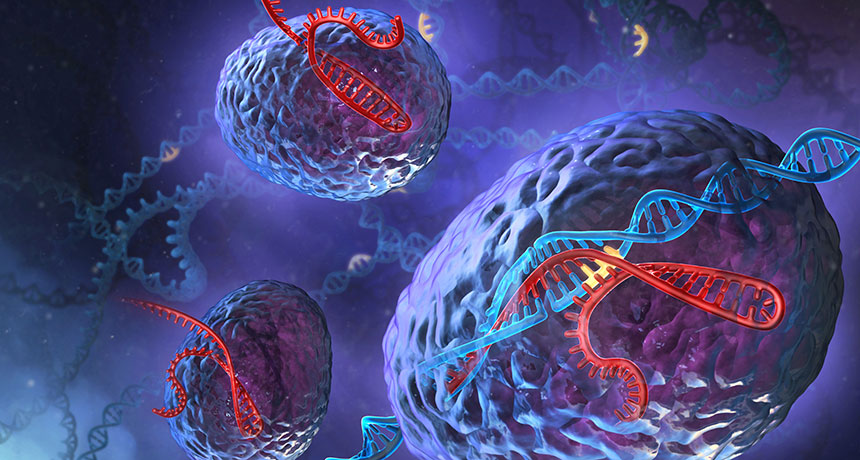
CRISPRWorries about human enhancement

We all understand how information technology has transformed our world with PCs, smartphones, the Internet, and Google. Nanotech, robotics, artificial intelligence, and, especially, genetic engineering are poised to unleash the next wave of wealth creation and improvements of the human condition.

But a new Pew survey entitled U.S. Public Wary of Biomedical Technologies to “Enhance” Human Abilities found that “Majorities of U.S. adults say they would be ‘very’ or ‘somewhat’ worried about gene editing (68%), brain chips (69%) and synthetic blood (63%),” technologies that in years to come could make us healthier, smarter, and stronger. While some say they “would be both enthusiastic and worried … overall, concern outpaces excitement.” Further, “More say they would not want enhancements of their brains and their blood (66% and 63%, respectively) than say they would want them (32% and 35%).”

Simply a reflection of individuals making decisions about their own lives, as is their right? Not quite. Their concerns about technology are already causing cultural and political pushback from left and right that could derail the advances sought by those of us who want better lives.

The Pew data reveals two ideological sources of opposition to new technologies.

Religion and meddling with nature

brain.chip_.grids_The survey found that 64% of Americans with a high religious commitment say “gene editing giving babies a much reduced disease risk” is “meddling with nature and crosses a line we should not cross.” Are you stunned that anyone could prefer to expose their own babies to debilitating or killer diseases when a prevention is possible?

And 65% with such a commitment have a similar opinion of “brain chip implants for much improved cognitive abilities.” Better to remain ignorant when a way to more knowledge is possible?

Obsession with inequality of abilities

When asked if “gene editing giving babies a much reduced disease risk” is an appropriate use of technology, 54% answered “Yes” if it results in people “always equally healthy as the average person.” But only 42% approved if it results in people “far healthier than any human known to date.” Similarly, 47% approved of synthetic blood if it results in physical improvements in individuals “equal to their own peak ability,” while only 28% approved if it results in improvements “far above that of any human known to date.”

Here we see the ugly side of egalitarianism. Better for everyone to be less healthy than for some to be healthier than others.

synthetic_blood-alamy_SmallThis inequality concern is another aspect of warped values we find in economic discussions. What if everyone enjoys rising levels of prosperity in a free-market system, but some individuals—Steve Jobs? Mark Zuckerberg?—become much wealthier than others through their own productive efforts? It’s win-win! But many would punish and demonize such achievers because they are the “top 1 percent,” even if such treatment means that those achievers produce less and, thus, everyone is less prosperous. Better we’re all poorer but more equal.

A disappearing digital divide

We saw this inequality concern in the 1990s when desktop PCs and the Internet were taking off. Some projected a “digital divide.” There would be more intelligent and advantaged individuals because they could access a universe of information through these technologies. And there would be those with little access who would fall further behind. Of course, what fell was the price of those technologies, which even then were accessible for free at most local libraries and now are in laptops, tablets, and smartphones, and affordable to most low-income individuals. The divide disappeared.

 Computers

There were early adopters prosperous enough to try new information technologies. Similarly, there will be early adopters of biomedical tech, which later will become accessible to all—but only if enough people value it rather than fear it and demand that the government stop it.

The fight for values

In a companion piece to the Pew survey, entitled Human Enhancement: The Scientific and Ethical Dimensions of Striving for Perfection, Pew senior writer David Masci offers a good overview of serious moral issues raised by biotech and other exponential technologies. And those of us who welcome these technologies must fight for the moral values on which they are based.

We truly value our lives, and the happiness and flourishing that we as individuals can get out of them through our own achievements. We must shake others out of their spiritual lethargy so that they too will not let their precious lives waste away.

We must promote the values of reason and science as the means to better technology and as guides for our individual lives. Misguided dogmas, whether religious or political, lead to social and personal stagnation.

We must develop and implement strategies to promote human achievement, including enhancement of our capacities, as a value in our culture through our institutions—schools, media—and our aesthetics—movies, art, music.

We must offer an exciting and compelling vision of a fantastic, nonfiction future, of a world as it can be and should be, especially to young people who thirst for a future that will be worth living.

The values on which this future is based will not sell themselves. We must not only create the technology that will allow us to live healthier, smarter and stronger. We must also create the culture that will encourage and celebrate the creation and use of such technology.

Edward Hudgins is the director of advocacy for The Atlas Society and the editor and author of several books on politics and government policy.

Copyright The Atlas Society. For more information, please visit www.atlassociety.org.

What Goes On In The Depths Of Space? – Art by Alastair Temple

What Goes On In The Depths Of Space? – Art by Alastair Temple

what_goes_on_in_the_depths_of_space__by_smiling_demon-d8wnz3yNote: Left-click on this image to get a full view of this digital work of art.

Created by digital artist Alastair Temple, this art was featured in the 26th Exhibition of The Luminarium, “Depth”. The entire exhibit can be viewed here.

Visit Alastair Temple’s DeviantArt page and view his other art.

This work is licensed under a Creative Commons Attribution-Noncommercial-No Derivative Works 3.0 License.

Apollo 11 on Human Achievement Day – Article by Edward Hudgins

Apollo 11 on Human Achievement Day – Article by Edward Hudgins

The New Renaissance HatEdward Hudgins
******************************

There are holidays and days of commemoration stretching from New Year’s to Independence Day to Christmas. A new one should be added to the calendar – informally rather than by government decree: Human Achievement Day — July 20th, the date in 1969 when human beings first landed on the Moon.

The most obvious benefit of living in society with others is that we can each specialize in the production of goods and services at which we are best and then trade with others, making us all prosperous. But in society we also have the opportunity to witness the achievements of others, which are constant reminders just how wonderful life can be. And among the greatest achievements in history, individuals using the three pounds of gray matter we each have in our heads figured out how to go to the Moon.

Think of the millions of parts and components and the engineering skills needed to make them function together in the Saturn V rocket, the Columbia Command module and the Eagle lunar lander that carried Neil Armstrong and Buzz Aldrin to the surface of another world. Think of the applications of old knowledge and the discovery of new knowledge needed to create those incredible systems.

Novelist-philosopher Ayn Rand understood the full moral meaning of these efforts when she wrote, “Think of what was required to achieve that mission: think of the unpitying effort; the merciless discipline; the courage; the responsibility of relying on one’s judgment; the days, nights and years of unswerving dedication to a goal; the tension of the unbroken maintenance of a full, clear mental focus; and the honesty.” It took the highest, sustained acts of virtue to create in reality what had only been dreamt of for millennia.

Ayn Rand‘s take on the landing was particularly instructive because of her novelist’s understanding of art, which, at its best, is a selective recreation of reality in light of the artist’s values. Thus Michelangelo’s David and Beethoven’s 9th portray humans as heroes. We go to art for emotional fuel and for the vision of the world as it can be and should be. In Apollo 11 she saw such a vision made manifest.

Concerning the pure exaltation from watching the launch from the Kennedy Space Center, Ayn Rand said that, “What we had seen in naked essentials – but in reality, not in a work of art – was the concretized abstraction of man’s greatness.” The mission “conveyed the sense that we were watching a magnificent work of art – a play dramatizing a single theme: the efficacy of man’s mind.” And “The most inspiring aspect of Apollo 11’s flight was that it made such abstractions as rationality, knowledge, science perceivable in direct, immediate experience. That it involved a landing on another celestial body was like a dramatist’s emphasis on the dimensions of reason’s power.”

Of course the Moon landings were government-funded; if the private sector had led the way we still probably would have traveled to the Moon, only some years later. Today it is private entrepreneurs — the kind who have given us the personal computers, Internet and information revolution — who are turning their creativity to the final frontier. Burt Rutan, who won the private X-Prize by placing a man into space twice in a two-week period on the private, reusable SpaceShipOne, follows in the spirit of Apollo. The celebration of those flights in late 2004 showed how healthy human beings relish the display of efficacious minds.

So on July 20th let’s each reflect on our achievements — as individuals and as we work in concert with others. Let’s recognize that achievements of all sorts — epitomized by the Moon landings — are the essence and the expected of human life. Let’s rejoice on this day and commemorate the best within us with, as Ayn Rand would say, the total passion for the total heights!

Edward Hudgins is the director of advocacy for The Atlas Society and the editor and author of several books on politics and government policy.

Copyright The Atlas Society. For more information, please visit www.atlassociety.org.

How Pokémon GO Brightened a Dark World – Article by Jeffrey A. Tucker

How Pokémon GO Brightened a Dark World – Article by Jeffrey A. Tucker

The New Renaissance HatJeffrey A. Tucker
******************************

All weekend, I’ve fielded texts from people who are despairing about the state of the country. Is some kind of unsolvable civil war developing between police and people, even between races? And how can politics solve this when the candidates seem to have every interest in actually exploiting and even exacerbating the problem? The opinion pages overflowed with expressions of deep sadness and warnings that, once again, the center is no longer holding. The nation is falling apart.

What could possibly be the solution here? These problems seem so deep as to be insoluble.

Oddly, the answer might be in your pocket. Through our smartphones and the app economy, we are being given tools to allow us to reach the world and connect with others in ways that were previously unimaginable. This is not a political solution; in fact, it might be solution precisely because it is not political.

Pokémon Brings Us Together

Poetically, it was exactly this weekend – following so much terrible news and after a season in which two-thirds of Americans report being alarmed by their coming presidential choices – that millions downloaded and played one of the most delightful digital apps to yet appear: Pokémon GO.

It has broken all records on the numbers of downloads in such a short time. In only a matter of a few days, the mobile app had nearly as many real-time users as Twitter. It now lives on more smartphones that even Tinder. As a term, Pokémon is top trending. If you follow your Facebook home feed, you know all about this. If any application could be described as having swept the nation, this was it.

How can a silly game lift up our hearts and give rise to the better angels of our nature?

That something marvelous had happened was obvious to anyone living in dense population areas. Parks filled up with people playing the game. They were hanging out in public areas around malls, at bus stops, in parking lots, and just about everywhere.

People were holding their phones, playing the game, laughing and moving around. Crucially, people were meeting each other with something in common – people of all races, classes, religions; none of it mattered. They found new friends and came together over a common love.

And there was a common feature to all the people doing this. We smiled. We smiled at each other. Even now, even in the midst of a world in which “the center no longer holds,” we actually found that center again: a heart-felt affection for something we love and an awareness that others share that same aspiration.

It was absolutely beautiful to watch. With an element of fantasy and the assistance of marvelous technology, we experienced the common humanity of our neighbors and strangers in our community. This kind of experience is key for building a social consensus in favor of universal human rights.

Why We Love It

The integration between digital and physical in the Pokémon GO game go beyond anything most people have ever experienced. Turn on your camera and you suddenly find opportunities for catching and collecting pocket monsters all around you. Head outdoors and chase them around, going up level after level and eventually find yourself at a gym where you can digitally battle other players in real space.

Dazzling doesn’t quite describe it. It is fun and imaginative, tapping into the inner kid of all of us. All the technological and intellectual discoveries over the last decades are on display. It all feels so real, all this capturing, collecting, and battling.

The industry calls it “augmented reality.” It’s a new level of gamification, not just something that happens on a screen. It reveals a layer of fantasy within the existing structure of reality itself, meaning that it brings to life the most delightful imaginings of our hearts. It helps us see what we would otherwise not see, and allows us to interact directly with the digitally existing thing.

In this way, Pokémon embodies something that we’ve all begun to intuit but haven’t been able to frame up completely. It is this: there is no longer a separation between what we once called real and what we think of as being a pure Internet fiction. The two are blending in ways that are dramatically enhancing our lives. We are to the point where we can no longer even imagine how the world even worked – and how our minds worked – before market forces blessed humanity with digital innovations.

The Great Blurring

Market-driven technology is not some invading imposition that makes people change the way they live without their permission. Instead it seeks to serve us and make our lives better; that’s its whole purpose and ethos. In the whole course of the digital revolution that began some twenty years ago, we’ve seen the gradual blurring between the physical and digital realms. What was created through code started to become just as substantial and meaningful in our lives as anything that took up physical space and we could touch.

We see this not only in games but also in health care, in finding our way around cities, in opening businesses, in driving, in dating, and in millions of life activities. Crucially, such apps are available to everyone regardless of life station. They spread capital and productivity across all classes of people, and more and more of our lives are migrating to this realm to escape the frustrating limits of physical space.

Of course the doubters have kvetched for two decades now. Old timers have screamed about how all this fascination with the Internet was causing a breakdown in human relationships, how the old-fashioned letter was so much better, why ebooks could never replace the glorious romance of physical books, how online music would kill the industry, how dating apps were killing romance, how time-killing blather on Facebook and Twitter were killing productivity, and so on.

Oh, and remember how video games were going to wreck our health by making us all sedentary? Now we have Pokémon GO players romping over hill and dale to “catch ‘em all.” As a wit on Facebook said, “Pokemon GO has done more for childhood obesity in the last 24 hours than Michelle Obama has in the past 8 years.”

Indeed, none of these fears have panned out. In fact, the opposite has proven true. The digital revolution has connected people as never before and given rise to more of what we love in life, whatever that happens to be.

Such doubters were missing something crucial. The key to the digital realm is its unrelenting adaptability to consumer preferences, thanks to the capacity of innovators to learn from the successes and failures of others. Digital innovation allows the crucial element of discovering and innovating to be crowd sourced, creating an environment of exponentially fast progress.

Market-driven technology is not some invading imposition that makes people change the way they live without their permission. Instead it seeks to serve us and make our lives better; that’s its whole purpose and ethos. Whatever it is we want to do – read, listen, play, study, create – the technology is there to make it easier and more widespread. It democratizes the tools we need to live better lives.

And what does it make possible? Whatever the human mind is capable of creating. And the element of surprise is always there. Just when we think we’ve reached an insuperable limit to the possible, something appears that surpasses that limit.

The individual human mind is not capable of outsmarting the brilliance of a market process that operates without limits.The challenge became very intense when Bitcoin came about in 2009, and the cryptocurrency gradually took on monetary properties. Economists claimed this could never happen, since money absolutely had to originate in a form of real-world scarcity of something you could hold.

I recall a conversation I was having with one skeptic on Skype who kept saying that Bitcoin can’t be money because it doesn’t exist. Frustrated, I asked him if the conversation we were having right then really existed. He said yes. I reminded him that I was not standing next to him and everything we were looking at and hearing was nothing but code.

Our conversation was purely fictional by his standards, simply because its only existence was in the digital realm. And yet it seemed to me to be actually happening. He was speechless.

The lesson here is that the individual human mind is not capable of outsmarting the brilliance of a market process that operates without limits. And within digital spaces today, we experience the closest thing we have to a free market. It is making things no one thought possible, and doing it daily, and doing it for everyone.

Overcoming Power with Humanity

Mobile apps like Pokémon GO can of course be dismissed as just another game, distractions that do not address serious life problems like race conflict and the tit-for-tat killings between police and citizens. But actually there is more going on here.

A few weeks ago, Facebook rolled out its live video functionality for all users – and keep in mind that this is free for everyone on the planet to use. When a police officer shot Philando Castile with four bullets during a routine traffic stop, his girlfriend Diamond Reynolds took out her phone and live streamed one of the most dramatic and powerful moments yet seen on the subject of police power.

It shocked the consciences of millions. Facebook was her 911. Had private enterprise not been there, the world would not have known. Now that we do, change is made more likely.

That’s the serious side of technology while Pokémon GO represents the delightful side. They work together, each making a valuable contribution to enabling a better life. What they have in common is that both are non-state solutions to crying human needs. No politician in history has ever achieved so much for the cause of human rights and human happiness.

Jeffrey Tucker

Jeffrey A. Tucker

Jeffrey Tucker is Director of Content for the Foundation for Economic Education and CLO of the startup Liberty.me. Author of five books, and many thousands of articles, he speaks at FEE summer seminars and other events. His latest book is Bit by Bit: How P2P Is Freeing the World.  Follow on Twitter and Like on Facebook. Email

This article was originally published on FEE.org. Read the original article.
Earth Day’s Subtle Pollution – Article by Edward Hudgins

Earth Day’s Subtle Pollution – Article by Edward Hudgins

The New Renaissance HatEdward Hudgins
******************************

On the first Earth Day on April 22, 1970, my high school class traveled to the Mall in D.C. to mark the occasion. Me? I skipped the trip. Instead, I stayed home to watch the crippled Apollo 13 spacecraft return to Earth. My classmates and I had different values. And in the years since, I’ve watched as some of the sub-rosa values of Earth Day have spread to pollute our culture.

save-the-planet-kill-yourselfEarth Day as soft indoctrination

To get the obvious out of the way, it is valid to be concerned about the measurable adverse effects on human health of raw sewage, or toxic waste dumped into rivers, or poisonous factory fumes pumped out to choking lungs. But that concern has metastasized into a cultural hypochondria, a fear that everything created by humans is dangerous and, worse, is dangerous to an abstraction called “the environment” rather than to humans. What happened? For four and a half decades Earth Day has spread a form of soft indoctrination. Every year, school kids cut out little paper trees and leaves, visit recycling plants, watch Al Gore’s Earth in the Balance, and are generally asked by teachers, “What are you doing to help the environment?” Local news reporters visit the Earth Day Greenpeace booths at the town park and interview local politicos or business folks about how they are conserving the planet.
 ***

All value is for humans

What’s missing from this picture? Humans! Certainly the messages are mixed. Certainly there is talk about our kids living healthier lives if they are not exposed to carcinogens and the like. But the subtle shift fostered by this annual April ritual is from the material world being of value to humans to the material world being of value in and of itself.

Forests are of value to humans because we can use their trees for lumber for our houses—good for our material well-being—or walk through them to enjoy their beauty—good for our spiritual well-being. But they are not of value in and of themselves. Yet Earth Day has conditioned two generations to anthropomorphize forests, rivers, oceans, and “the environment” as entities with rights apart from us, the conscious valuers. And these two generations are now susceptible to the appeals of the environmental extremists who argue, in essence, that humans are trespassers on the planet. Thus, we see arguments for public policies that would demonstrably harm humans, especially those in less developed countries.

The value of technology and achievement

Worse, an unthinking regard for the environment blinds many to real future challenges and their only solutions. As poorer countries develop higher living standards, they will not be able to consume resources at the rate Western countries did when they were industrializing. New technologies that allow for more efficient and, as a result, less polluting ways to use resources will be essential. Technology is what created cities, skyscrapers, factories, trains, planes, cars, rockets, and most things that radical environmentalists want to curtail. Technologies are achievements of the human mind that, in turn, empower us to achieve more in our lives and in the world.

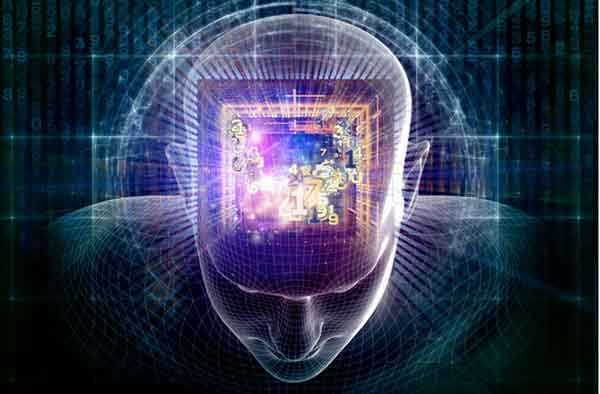
31st_centuryThis vision of the future is already grating on those who have been poisoned by the subtle extremist message of Earth Day. But the achievements in recent decades in information technology and the emerging achievements in nanotech, biotech, and artificial intelligence are causing many young people especially to shake off the destructive Earth Day ideology. These individuals understand not only that technology will help us meet true challenges to human well-being. They also appreciate that human well-being is the standard of value.

Let’s hope that in the future Earth Day is superseded by Human Achievement Day!

Dr. Edward Hudgins directs advocacy and is a senior scholar for The Atlas Society, the center for Objectivism in Washington, D.C.

Copyright The Atlas Society. For more information, please visit www.atlassociety.org.

Can Toyota and Reason Overcome Blindness? – Article by Edward Hudgins

Can Toyota and Reason Overcome Blindness? – Article by Edward Hudgins

The New Renaissance HatEdward Hudgins
******************************

If you’ve shut your eyes at the ugly spectacle of political and cultural decline around you, look in the right direction and you’ll see what’s best in the world, including innovations from Toyota that are helping the visually impaired.

Technology helping the blind see

The research department at the world-class auto maker is doing more than designing Priuses. It recently unveiled Project BLAID, a shoulder and neck-worn device that can help guide visually-impaired folks through building interiors with cameras, speakers and other technology. This is just one nice bit of good news in a world where the media is ruled by “if it bleeds, it leads.” This is one of many innovations in a world that is being transformed by exponential technologies.

For example, in January an Australian research team at Monash University announced development of another system to help the blind that it will test soon. It bypasses the eyeball, which is often damaged beyond use in blind people, and uses a pair of glasses that feeds visual data directly into the brain. At this time that technology at best would give blind people very limited vision, only enough to let them maneuver around like the Toyota technology does. But it’s a start.

Technology helping the deaf hear

Let’s remember that in recent decades, some 190,000 deaf individuals have received cochlear implants. These devises do not simply amplify sound as do hearing aids. They translate sound into electrical impulses that directly stimulate the cochlear nerve in the ear so the individuals can hear. It is estimated that around 150,000 children are born each year with hearing impairment so serious that they could benefit from such implants.

So as the costs of these implants decrease, we will see the gradual elimination of the ago-old scourge of deafness just as the blight of blindness will gradually disappear from list of human woes as companies like Toyota continue their work.

Reason as the cure

The proximate cause of all this good news is the exponential increase in information processing capability, usually called “Moore’s law.” Since the mid-1960s the capacities of semiconductors have doubled every eighteen months. A capacity of 1,000 at that time is 2,000,000,000 today. That means not only the advent of laptops, tablets, and smart phones but also medical devises that would have been thought science fiction decades ago.

But what is really behind these achievements is a moral code that treats rationality as our highest virtue and human achievement as our highest purpose. It is a commitment by individuals to objective reasoning and to understanding the world so that they can control it to enhance human life and flourishing. And it is a joy that individuals take in the process of understanding and creating.

Ayn Rand called machines “the frozen form of living intelligence.” Do you want to live in a world from which blindness and other illnesses or physical defeats are banished? Then fight for this morality of reason.

Dr. Edward Hudgins directs advocacy and is a senior scholar for The Atlas Society, the center for Objectivism in Washington, D.C.

Copyright The Atlas Society. For more information, please visit www.atlassociety.org.

What’s Changed Since 2010? – Article by Daniel Bier

What’s Changed Since 2010? – Article by Daniel Bier

The New Renaissance HatDaniel Bier
******************************

Quite a lot, it turns out

This interesting little table from Goldman Sachs shows a few ways the world changed in the last five years.

Some highlights since 2010:

  • The UN Food Price Index fell by a third.
  • The price of oil fell by two-thirds.
  • Venture capital investments in the US doubled.
  • Global smartphone penetration increased from 19 percent to 75 percent.
  • The cell phone price index fell by over half.
  • Average wages in China rose by more than 50 percent.
  • Beijing air pollution is down by a third.
  • The cost of sequencing a genome fell by 97 percent.
  • The number of summer AirBnB guests increased from 47,000 to 17 million.
  • Bitcoin’s value increased 1,500 fold.

But, as GS points out, 2015 was not all good news:

  • Economic growth has slowed.
  • Life expectancy has not changed much.
  • Africa’s share of global trade remained near 3 percent.
  • The Patriots won the Super Bowl.
  • Japanese GDP per capita remains flat.

Still — on the whole and for most people — things are changing for the better, in more ways than we could ever anticipate.

Here’s to a better today.

(Check out the other data below — lots of amusing and intriguing items.)

chart-11Click on the image for a larger version.

Daniel Bier is the editor of Anything Peaceful. He writes on issues relating to science, civil liberties, and economic freedom.

This article was published by The Foundation for Economic Education and may be freely distributed, subject to a Creative Commons Attribution 4.0 International License, which requires that credit be given to the author.

Sci-Fi City – Art by Maxime Delcambre

Sci-Fi City – Art by Maxime Delcambre

maxime-delcambre-sci-fi-city-md-bannerjpgNote: Left-click on this image to get a full view of this digital work of art.

Created by digital artist Maxime Delcambre, this futuristic matte painting portrays a flourishing science fiction cityscape.

Visit Maxime Delcambre’s portfolio for more of his matte paintings and illustrations.

This work is licensed under a Creative Commons Attribution-Noncommercial-No Derivative Works 3.0 License and was originally posted on DeviantArt.

Are We Entering The Age of Exponential Growth? – Article by Marian L. Tupy

Are We Entering The Age of Exponential Growth? – Article by Marian L. Tupy

The New Renaissance HatMarian L. Tupy
******************************

In his 1999 book The Age of Spiritual Machines, the famed futurist Ray Kurzweil proposed “The Law of Accelerating Returns.” According to Kurzweil’s law, “the rate of change in a wide variety of evolutionary systems (including but not limited to the growth of technologies) tends to increase exponentially.” I mention Kurzweil’s observation, because it is sure beginning to feel like we are entering an age of colossal and rapid change. Consider the following:

According to The Telegraph, “Genes which make people intelligent have been discovered [by researchers at the Imperial College London] and scientists believe they could be manipulated to boost brain power.” This could usher in an era of super-smart humans and accelerate the already fast process of scientific discovery.

Elon Musk’s SpaceX Falcon 9 rocket has successfully “blasted off from Cape Canaveral, delivered communications satellites to orbit before its main-stage booster returned to a landing pad.” Put differently, space flight has just become much cheaper since main-stage booster rockets, which were previously non-reusable, are also very expensive.

The CEO of Merck has announced a major breakthrough in the fight against lung cancer. Keytruda “is a new category of drugs that stimulates the body’s immune system.” “Using Keytruda,” Kenneth Frazier said, “will extend [the life of lung cancer sufferers] … by approximately 13 months on average. We know that it will reduce the risk of death by 30-40 percent for people who had failed on standard chemo-therapy.”

Also, there has been massive progress in the development of “edible electronics.” New technology developed by Bristol Robotics Laboratory “will allow the doctor to feel inside your body without making a single incision, effectively taking the tips of the doctor’s fingers and transplant them onto the exterior of the [edible] robotic pill. When the robot presses against the interior of the intestinal tract, the doctor will feel the sensation as if her own fingers were pressing the flesh.”

Marian L. Tupy is the editor of HumanProgress.org and a senior policy analyst at the Center for Global Liberty and Prosperity. He specializes in globalization and global wellbeing, and the political economy of Europe and sub-Saharan Africa. His articles have been published in the Financial Times, Washington Post, Los Angeles Times, Wall Street Journal, U.S. News and World Report, The Atlantic, Newsweek, The U.K. Spectator, Weekly Standard, Foreign Policy, Reason magazine, and various other outlets both in the United States and overseas. Tupy has appeared on The NewsHour with Jim Lehrer, CNN International, BBC World, CNBC, MSNBC, Al Jazeera, and other channels. He has worked on the Council on Foreign Relations’ Commission on Angola, testified before the U.S. Congress on the economic situation in Zimbabwe, and briefed the Central Intelligence Agency and the State Department on political developments in Central Europe. Tupy received his B.A. in international relations and classics from the University of the Witwatersrand in Johannesburg, South Africa, and his Ph.D. in international relations from the University of St. Andrews in Great Britain.

This work by Cato Institute is licensed under a Creative Commons Attribution-NonCommercial-ShareAlike 3.0 Unported License.