Browsed by
Tag: anti-aging

Piano Sonata No.3 in G minor, “Death is Wrong” – Composed by Adriano G. Santos, Inspired by the “Death is Wrong” Book Written by Gennady Stolyarov II

Piano Sonata No.3 in G minor, “Death is Wrong” – Composed by Adriano G. Santos, Inspired by the “Death is Wrong” Book Written by Gennady Stolyarov II

Adriano G. Santos


Listen to the complete Piano Sonata No. 3 in G minor, “Death is Wrong”, by Adriano G. Santos on YouTube here. The YouTube video also contains the complete score for the sonata.

Program Notes
Piano Sonata No. 3 in G minor
“Death is Wrong”
Composer: Adriano G. Santos

Inspired by the book Death is Wrong, written by Gennady Stolyarov II

This piano composition was completed on December 26, 2025, and was conceived as a programmatic work inspired by the book Death is Wrong, written by Gennady Stolyarov II.

When I started reading the book I felt so identified with some of the contents due to special circumstances I was facing at that time, like the extreme frustration I have always had towards the senescence of piano playing from a physical perspective, and my mother’s tragic femur rupture.

As I was reading the book, very strong musical desires of composing came to my mind and heart, and I almost immediately felt the need to create a new work of programmatic nature based on the contents of this book.

The composition structure is based on the sonata form. The music starts on page 4 from the book, when Gennady asks his mother, “But why do people die? Do they do anything bad to deserve it?” (1), and his mother answers with a perfectly understandable constant justification of human mortality.

The introduction of the sonata tries to mirror this with a dialogue in A major (V/V) between 2 motivic cells in which the first one is made of an eighth-note, 6 quarter-notes organized in triplets asking questions regarding the existence of death, and a question mark represented as a half-note (Fig. A).

The second motif consisting of eight notes alternated with 16th notes answer this question justifying human mortality (Fig. B).

This same dialogue is transposed to the dominant and tonic keys (V/I).


Motifs illustrated in Figures A and B came to my mind almost arbitrarily while composing the introduction, but after a short analysis of different masterpieces, Alkan’s Scherzo Diabolico knocked at my door, and I realized that, very conveniently, the first four notes are a fragmented diminution of my original motif that started the musical dialogue questioning human mortality.

I made a variation of the beginning motifs of the Alkan Etude (Fig. 1), and I used this to express the following statement from Stolyarov’s book: “It is wrong!” I exclaimed. “People should not die!” (2) (Fig. 1.1).


The purposefully forward motion filled with an anxious and passionate emergency of the Alkan Etude, Opus 39, Number 3 in G minor, was ideal for the main theme of my sonata, which I titled, “Deeply and passionately attached to eternal life”.

Unfortunately, as of today, life extension within the context of human eternal life could be perceived as “unfulfilled love”, and a perfect example of this is Beethoven, whose music is often marked by ambiguity and unrequited love, due partially to his relationships, disappointment, suffering, and deafness. Interestingly, I felt a strong call to go through the first movement of his E minor Sonata, Op. 90, and when I reached the secondary theme in B minor, I could sense a painful yearning for fulfillment in those recurrent minor seconds (G/F#), and I immediately knew that my main theme needed that same persistent interval.

In the illustration above in Fig. C, Alkan’s rhythmic and technical patterns give a sense of urgency and anxiety to the desire of fulfillment.

The secondary theme in E-flat major addresses specific lines from Stolyarov’s book. The motivic cells are a fragmentation of the main theme, and the overall idea of the initial fragmented motif of the first 8 measures (mm. 109-116) is based on two crucial questions from the book on page 18: “What could you do if you could live for hundreds, thousands, tens of thousands of years? What could you do if you could live even longer than that?”

When the motif suffers another fragmentation in measures 117-128, the music is answering the 2 questions aforementioned by emphasizing the benefits of life extension addressed in the book: “You could read many of the greatest books ever written, you could become a great composer, you could live to see the most amazing scientific and technological wonders…”


In measures 129-133, the original fragmented motif comes back as a desire to fulfill those possibilities through life extension.

As the music becomes denser through transposition, secondary dominants, diminished harmonies, and modulations, the composition is trying to express advice and danger warnings: “The younger you apply this, the more chances you will have to defeat death” and “Be careful of the different dangers that empower senescence and death.”


The Development begins with a motif derived from the original question at the beginning of the introduction, only this time the cell is broader and there is no longer a question of “Why do we have to die?” but a deep thinking of the possibility that “Death is Wrong.”

As the Development progresses, this possibility becomes stronger and more definitive (mm. 176-224).

From measures 200-215, music advances chromatically, and by every half-step a new discovery, experiment, or theory about the most promising scientific efforts of our time enriches life-extension possibilities.

Constant chromatic evolution gives a sensation of confidence and power that results ideal in trying to reflect musically the achievements of experiments with small animals like mice, the fact of the existence of huge lifespans in lobsters, the potential of medical therapies to reverse biological aging in humans from Dr. Aubrey de Grey (3), and other scientific breakthroughs (Fig. H1).


The motif can be expressed into lyrics to make the idea more approachable as in Fig. H2, where you can see only the top notes of the same motifs.

After this chain of chromatic events, an octave virtuosic section derived from the 2nd warning in Fig. H, takes place and represents the struggle against death, senescence, diseases, accidents, natural disasters, and sheep-like mentality (mm. 225-309).

This intense and ferocious section not only develops the second warning of the exposition ending but also goes into a deeper and more powerful chromatic evolution.

The closing section is greatly influenced by Liszt’s B minor Ballade, where the development seems to come to an end, and a sequence of broken octaves brings back the fire leading to a climatic point. In my sonata, when the repeated D quarter-notes die away, suddenly, an identical sequence of E-flat quarter notes brings back the final part of the development, as if the phoenix were rising from the ashes. This continuation in E-flat is a small musical symbol that represents “Musical Life Extension” (Fig. H3).


As the development ending gradually reaches greater intensity, the main motivic cells of the exposition are battling for supremacy as tension is built throughout fifty-eight measures (mm. 354-412), full of energy and yearning.

The recapitulation takes place as the highest climatic point where the main theme is disguised as “development”. Technical virtuosic patterns from Liszt’s Paganini and Transcendental Etudes are ideal for expressing one of the most powerful possibilities I’ve ever read in a book: “Maybe the person who will conquer death… is you.”

During my learning process of some of the hardest piano works by Liszt, I really felt that I was climbing a mountain, and that’s what I tried to mirror in this climatic passage (Fig. H4 & H5). Thus, I believe that humanity has the privilege of living in a present era that is at a considerable height on the mountain of the conquest of death.


The secondary theme opens with a follow-up question to the original in the exposition, which was, “What could you do if you could live for thousands of years or even longer?”

In the recapitulation we no longer have a personal question that answers with dreams and desires, but a follow-up one about the world and humanity in general: “What would happen if this is achieved in human beings?”

New dreams would arise in the human need and creativity for new ramifications of life extension that could result in an even more fulfilling eternal life.

This evolution can go from quantifying and manipulating dopamine levels in humans, biomarkers at their final peak through superb innovations of data analytics, multi-omics, and digital health, to even more astonishing possibilities that are considered today science fiction, like past-time travel through the manipulation of gravity and rotation of wormholes. Imagine saving a loved one from dying in the past, or even sharing life-extension benefits with great minds like Einstein, Beethoven, Shakespeare, and many others.

In the bridge that connects to the Coda (mm. 499-532), the music becomes more chromatic and rotatory, trying to create a transcendental effect that pushes the momentum forward towards the Coda.

The Coda section arrives trying to express that the need for eternal life is no longer only a strong desire but a passionate fulfilling encounter that is enriched by life-extension ramifications mentioned in Theme B.

After such a heartfelt outburst of measures 533-579, the motto perpetuo of D quarter-notes from the development comes back in an even more mysterious output on measures 580-627 and followed by another symbolic “extension”.

The main theme takes a gradually strong and determining lead that finishes the work with a very convenient influence of Liszt’s Funérailles ending that releases a triumphant and solemn return of the secondary theme (mm. 628-688).

References

1, 2, 3. Stolyarov II, G. 2013. Death is Wrong. Rational Argumentator Press. https://rationalargumentator.com/Death_is_Wrong_Second_Edition_Full.pdf

Fig. 1. Alkan, C.-V. (1979). Douze études dans tous les tons mineurs, Op. 39, No. 3. (R. Lewenthal, Ed.). Schirmer.

Fig. H4. Liszt, F., 1851. Grandes études de Paganini. S. 141, No. 6, Variation 11. Shonenberg, R. Cocks & Co. (London).

Listen to the complete Piano Sonata No. 3 in G minor, “Death is Wrong”, by Adriano G. Santos on YouTube here.

Listen to the compositions of Adriano G. Santos on his YouTube channel.

Towards a Greater Knowledge of Mitochondrial DNA Damage in Aging – Article by Reason

Towards a Greater Knowledge of Mitochondrial DNA Damage in Aging – Article by Reason

The New Renaissance HatReason
******************************

Today I’ll point out a very readable scientific commentary on mutations in mitochondrial DNA (mtDNA) and the importance of understanding how these mutations spread within cells. This is a topic of some interest within the field of aging research, as mitochondrial damage and loss of function is very clearly important in the aging process. Mitochondria are, among many other things, the power plants of the cell. They are the evolved descendants of symbiotic bacteria, now fully integrated into our biology, and their primary function is to produce chemical energy store molecules, adenosine triphosphate (ATP), that are used to power cellular operations. Hundreds of mitochondria swarm in every cell, destroyed by quality control processes when damaged, and dividing to make up the numbers. They also tend to promiscuously swap component parts among one another, and sometimes fuse together.

Being the descendants of bacteria, mitochondria have their own DNA, distinct from the nuclear DNA that resides in the cell nucleus. This is a tiny remnant of the original, but a very important remnant, as it encodes a number of proteins that are necessary for the correct operation of the primary method of generating ATP. DNA in cells is constantly damaged by haphazard chemical reactions, and equally it is constantly repaired by a range of very efficient mechanisms. Unfortunately mitochondrial DNA isn’t as robustly defended as nuclear DNA. Equally unfortunately, some forms of mutation, such as deletions, seem able to rapidly spread throughout the mitochondrial population of a single cell, even as they make mitochondria malfunction. This means that over time a growing number of cells become overtaken by malfunctioning mitochondria and fall into a state of dysfunction in which they pollute surrounding tissues with reactive molecules. This can, for example, increase the level of oxidized lipids present in the bloodstream, which speeds up the development of atherosclerosis, a leading cause of death at the present time.

The question of how exactly some specific mutations overtake a mitochondrial population so rapidly is still an open one. There is no shortage of sensible theories, for example that it allows mitochondria to replicate more rapidly, or gives them some greater resistance to the processes of quality control that normally cull older, damaged mitochondria. The definitive proof for any one theory has yet to be established, however. In one sense it doesn’t actually matter all that much: there are ways to address this problem through medical technology that don’t require any understanding of how the damage spreads. The SENS Research Foundation, for example, advocates the path of copying mitochondrial genes into the cell nucleus, a gene therapy known as allotopic expression. For so long as the backup genes are generating proteins, and those proteins make it back to the mitochondria, the state of the DNA inside mitochondria doesn’t matter all that much. Everything should still work, and the present contribution of mitochondrial DNA damage to aging and age-related disease would be eliminated. At the present time there are thirteen genes to copy, a couple of which are in commercial development for therapies unrelated to aging, another couple were just this year demonstrated in the lab, and the rest are yet to be done.

Still, the commentary linked below is most interesting if you’d like to know more about the questions surrounding the issue of mitochondrial DNA damage and how it spreads. This is, as noted, a core issue in the aging process. The authors report on recent research on deletion mutations that might sway the debate on how these mutations overtake mitochondrial populations so effectively.

Expanding Our Understanding of mtDNA Deletions

A challenge of mtDNA genetics is the multi-copy nature of the mitochondrial genome in individual cells, such that both normal and mutant mtDNA molecules, including selfish genomes with no advantage for cellular fitness, coexist in a state known as “heteroplasmy.” mtDNA deletions are functionally recessive; high levels of heteroplasmy (more than 60%) are required before a biochemical phenotype appears. In human tissues, we also see a mosaic of cells with respiratory chain deficiency related to different levels of mtDNA deletion. Interestingly, cells with high levels of mtDNA deletions in muscle biopsies show evidence of mitochondrial proliferation, a compensatory mechanism likely triggered by mitochondrial dysfunction. In such circumstances, deleted mtDNA molecules in a given cell will have originated clonally from a single mutant genome. This process is therefore termed “clonal expansion.”

The accumulation of high levels of mtDNA deletions is challenging to explain, especially given that mitophagy should provide quality control to eliminate dysfunctional mitochondria. Studies in human tissues do not allow experimental manipulation, but large-scale mtDNA deletion models in C. elegans have proved to be helpful, showing some conserved characteristics that match the situation in humans, as well as some divergences. Researchers have used a C. elegans strain with a heteroplasmic mtDNA deletion to demonstrate the importance of the mitochondrial unfolded protein response (UPRmt) in allowing clonal expansion of mutant mtDNAs to high heteroplasmy levels. They demonstrate that wild-type mtDNA copy number is tightly regulated, and that the mutant mtDNA molecules hijack endogenous pathways to drive their own replication.

The data suggests that the expansion of mtDNA deletions involves nuclear signaling to upregulate the UPRmt and increase total mtDNA copy number. The nature of the mito-nuclear signal in this C. elegans model may have been the transcription factor ATFS-1 (activating transcription factor associated with stress-1), which fails to be imported by depolarized mitochondria, mediates UPRmt activation by mtDNA deletions. A long-standing hypothesis proposes that deleted mtDNA molecules clonally expand because they replicate more rapidly due to their smaller size. To address this question, researchers examined the behavior of a second, much smaller mtDNA deletion molecule. They found no evidence for a replicative advantage of the smaller genome, and clonal expansion to similar levels as the larger deletion. In human skeletal muscle, mtDNA deletions of different sizes also undergo clonal expansion to the same degree. Furthermore, point mutations that do not change the size of the total mtDNA molecule also successfully expand to deleterious levels, indicating that clonal expansion is not driven by genome size. Thus, similar mechanisms may be operating across organisms. In the worm, this involves mito-nuclear signaling and activation of the UPRmt.

There is some debate over interpretation of results. One paper indicates that UPRmt allows the mutant mtDNA molecules to accumulate by reducing mitophagy. Another demonstrates that the UPRmt induces mitochondrial biogenesis and promotes organelle dynamics (fission and fusion). Both papers show that by downregulating the UPRmt response, mtDNA deletion levels fall, which may allow a therapeutic approach in humans. Could there be a similar mechanism in humans, especially since some features detected in C. elegans are also present in human tissues, including the increase in mitochondrial biogenesis and the lack of relationship between mitochondrial genome size and expansion? It is likely that there will be a similar mechanism to preserve deletions since, as in the worm, deletions persist and accumulate in human tissues, despite an active autophagic quality-control process. Although the UPRmt has not been characterized in humans as it has in the worm, and no equivalent protein to ATFS-1 has been identified in mammals, proteins such as CHOP, HSP-60, ClpP, and mtHSP70 appear to serve similar functions in mammals as those in C. elegans and suggest that a similar mechanism may be present.

Reason is the founder of The Longevity Meme (now Fight Aging!). He saw the need for The Longevity Meme in late 2000, after spending a number of years searching for the most useful contribution he could make to the future of healthy life extension. When not advancing the Longevity Meme or Fight Aging!, Reason works as a technologist in a variety of industries.
This work is reproduced here in accord with a Creative Commons Attribution license. It was originally published on FightAging.org.
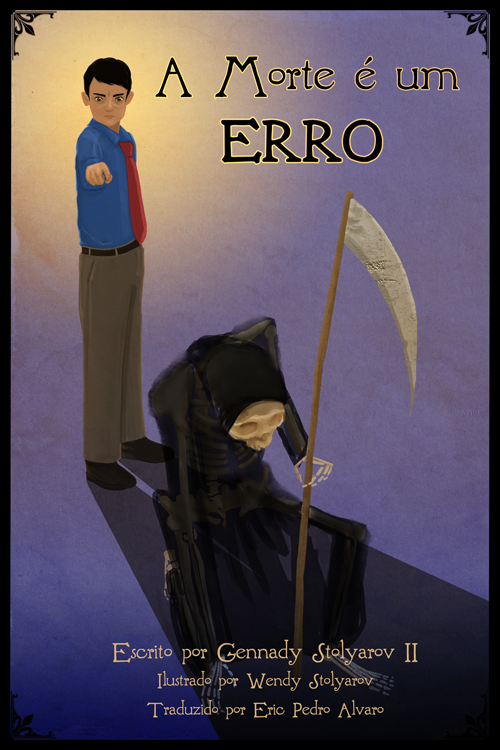
“A Morte é um Erro” – Portuguese Translation of “Death is Wrong” – Translated by Eric Pedro Alvaro – Post by G. Stolyarov II

“A Morte é um Erro” – Portuguese Translation of “Death is Wrong” – Translated by Eric Pedro Alvaro – Post by G. Stolyarov II

The New Renaissance Hat
G. Stolyarov II
******************************

A free PDF version of A Morte é um Erro – the Portuguese translation of Death is Wrong – is now available for download from The Rational Argumentator. You can obtain your copy here and may spread it to Portuguese-speaking audiences as widely as you wish.

A Morte é um Erro was generously translated into Portuguese by Eric Pedro Alvaro.

Death_is_Wrong_Portuguese_CoverPaperback copies of A Morte é um Erro can be purchased in the following venues:

Createspace

Amazon

Kindle copies of A Morte é um Erro can be purchased on Amazon for $0.99.

***

Se você já se perguntou, “Por que as pessoas morrem?” então este livro é para você. A resposta é que não, a morte não é necessária, inevitável ou boa. Na verdade, a morte é um erro. A morte é uma inimiga de todos nós, que deve ser combatida com ciência, medicina e tecnologia. Este livro lhe apresenta os maiores, mais desafiantes e mais revolucionários movimentos para prolongar radicalmente o tempo de vida humano, para que você então simplesmente não precise morrer.

Você aprenderá sobre algumas plantas e animais com um tempo de vida incrivelmente longo, sobre recentes descobertas científicas em relação a ampliação do tempo de vida em humanos, e sobre simples e poderosos argumentos que podem refutar as comuns desculpas para a morte. Se você alguma vez já pensou que a morte é injusta e que ela deve ser derrotada, você não está sozinho. Leia este livro, e se torne parte desta importante busca na história da humanidade.

Este livro foi escrito pelo filósofo e futurólogo Gennady Stolyarov II e ilustrado pela artista Wendy Stolyarov. Com o intuito de lhe mostrar que, não importa quem é você e o que você pode fazer, sempre há uma forma de ajudar humanidade em sua batalha contra morte.

“La mort, c’est mal!” – French Translation of “Death is Wrong” – Translated by Philippe Castonguay – Post by G. Stolyarov II

“La mort, c’est mal!” – French Translation of “Death is Wrong” – Translated by Philippe Castonguay – Post by G. Stolyarov II

The New Renaissance Hat
G. Stolyarov II
May 16, 2015
******************************

La mort, c’est mal! – the French translation of Death is Wrong – is now available for download from The Rational Argumentator. You can obtain your free PDF copy here and may spread it to French-speaking audiences as widely as you wish.

La mort, c’est mal! was generously translated into French by Philippe Castonguay.

Death_is_Wrong_French_CoverPaperback copies of La mort, c’est mal! can be purchased in the following venues:

Createspace – $9.48

Amazon – $9.48

Kindle copies of La mort, c’est mal! can be purchased on Amazon for $0.99.

***

Si vous avez déjà demandé « pourquoi les gens doivent-ils mourir? » alors ce livre est pour vous. La vérité est que non, la mort n’est ni bonne, ni nécessaire, ni inévitable. En fait, la mort, c’est mal! La mort est notre ennemie à tous et toutes et doit être combattue par la médecine, la science et la technologie. Ce livre vous introduit au plus grand défi de notre espèce, à son mouvement le plus révolutionnaire; celui d’augmenter radicalement l’espérance de vie humaine pour que vous n’ayez plus à mourir, du tout.

Vous trouverez dans ce livre des plantes et des animaux à la longévité spectaculaire, des découvertes scientifiques récentes pavant le chemin vers l’augmentation de la durée des vies humaines, ainsi que de simples, mais puissants arguments pour affronter ceux en faveur de la mort. Si vous avez déjà pensé que la mort était injuste et qu’elle devrait être vaincue, sachez que vous n’êtes pas seul. Lisez ce livre et prenez part à la plus importante quête de l’histoire de l’humanité.

Ce livre a été écrit par le philosophe et futuriste Gennady Stolyarov II et illustré par l’artiste Wendy Stolyarov. Ici, il vous sera démontré que, peu importe qui vous êtes et peu importe vos habiletés, il vous est toujours possible d’aider l’humanité dans sa lutte contre la mort.

“Death is Wrong” Reviewed by Robert W. Franson of Troynovant

“Death is Wrong” Reviewed by Robert W. Franson of Troynovant

Read the excellent new review by science-fiction author and literary essayist Robert W. Franson of Death is Wrong. The review is published on Mr. Franson’s website Troynovant, which offers extensive literary and philosophical analysis.

Here is an excerpt: “Death is Wrong is a short book, clearly written and easy to read. I like the personal approach: it doesn’t talk down and is quite accessible. A striking concept presented quite reasonably and supported matter-of-factly. There are apt quotations from a variety of thinkers, including several of my personal heroes of modern times: Francis Bacon, Benjamin Franklin, Friedrich Nietzsche. These people and some scenes from nature are nicely illustrated by Wendy Stolyarov. For readers who want a little more about the background concepts, there is a brief Appendix discussing the seven basic causes of senescence, such as cell loss and atrophy. There are some links for further learning. It’s a good book, entertaining and thoughtful, and certainly gives us a challenge to think about.”

“La muerte está mal” – Spanish Translation of “Death is Wrong” – Translated by Néstor Duno – Post by G. Stolyarov II

“La muerte está mal” – Spanish Translation of “Death is Wrong” – Translated by Néstor Duno – Post by G. Stolyarov II

The New Renaissance Hat
G. Stolyarov II
August 16, 2014
******************************BookCover_Spanish_Flat_FrontOnly_small

The Spanish translation of Death is Wrong – La muerte está mal – generously translated by Néstor Duno – is now available via The Rational Argumentator, Amazon, and Createspace.

A paperback version can be obtained from Createspace for $9.13 here.

Amazon has begun to carry the paperback version for $8.67 here.

The Kindle version is available for $0.99 (the lowest price Amazon permits) here.

Also, a free PDF version is available here.

You have my permission to spread the electronic version of the book to Spanish-speaking audiences as widely as possible, with no strings attached.

“Death is Wrong” Free PDF Files Available for Download – Post by G. Stolyarov II

“Death is Wrong” Free PDF Files Available for Download – Post by G. Stolyarov II

The New Renaissance Hat
G. Stolyarov II
August 11, 2014
******************************

Now that my campaign to spread over 1,000 Death is Wrong books to children has succeeded, I have asked myself what I could do to spread the book and its message even further. In an effort to increase the readership of the book, I have made the Second Edition available for FREE download as a PDF file. Perhaps, in this way, the book could reach tens or even hundreds of thousands of readers. Thus far, PDF versions are available in English, Russian, and Spanish.

PDF URL – Death is Wrong – English Edition: http://rationalargumentator.com/Death_is_Wrong_Second_Edition_Full.pdf

PDF URL – «Смерть неправильна!» – Russian Edition (translated by Marcus Baylin): http://rationalargumentator.com/Death_is_Wrong_Russian_Edition_Full.pdf

PDF URL – La muerte está mal – Spanish Edition (translated by Néstor Duno): http://rationalargumentator.com/Death_is_Wrong_Spanish_Edition.pdf

If you have read the PDF version and enjoyed it, consider purchasing the paperback version on Amazon for yourself, a friend, or a child, and/or consider making a PayPal or cryptocurrency donation via the sidebar on The Rational Argumentator.

Death is Wrong - by Gennady Stolyarov II, Illustrated by Wendy Stolyarov

Death is Wrong – by Gennady Stolyarov II, Illustrated by Wendy Stolyarov

Click on the cover for a high-resolution image that you can download, save, and distribute.

Over 1,000 Kids Will Indeed Be Taught That Death is Wrong – Article by G. Stolyarov II

Over 1,000 Kids Will Indeed Be Taught That Death is Wrong – Article by G. Stolyarov II

The New Renaissance Hat
G. Stolyarov II
August 7, 2014
******************************

At least 1,029 children in at least 14 countries will be taught that death is wrong as a result of the successful provision of Death is Wrong books to 50 longevity activists throughout the world. On August 7, 2014, the last book shipment, free for all recipients, was made, paid for by the funds raised through the Indiegogo campaign I ran in coordination with the Movement for Indefinite Life Extension (MILE) from February 22 through April 23, 2014. (Read Eric Schulke’s earlier article about the success of the fundraiser and the tremendous efforts and publicity that made it possible.) While some of my critics, such as Slate’s Joelle Renstrom, preemptively proclaimed that the funds raised would fall well short of the goal, we actually not only reached the goal in time but even exceeded it – and we have already spent all the money raised on providing free books to children.

I am triumphantly proud to report that the fundraiser’s target of providing a book for every $5 raised has been strictly adhered to. In repeated postings to various social-media outlets – conducted at least once weekly – I did not stop seeking out new dedicated recipients until 1,029 books were provided. My persistence paid off, as every posting made new people aware of the book and its promise in spreading the message of indefinite longevity to children.

I have created a table displaying the numbers of books sent to longevity activists in each of 14 countries, the total cost of shipments in each country, the costs per book by country, and the total project costs.

DIW_Distribution_Summary Our Indiegogo campaign raised $5,141.00 in total. Printing and shipping the books cost slightly more than this amount – $5,259.23 – largely because international shipments are often more expensive than domestic shipments within the United States. An additional amount of $453.05 was paid in fees to Indiegogo, PayPal, and the payment processor used by Indiegogo to make transfers to my bank account. However, all of the cost overruns were covered out of my personal funds – and therefore I consider myself to have made an additional $571.28 donation to this distribution effort. This is certainly a worthwhile expenditure for facilitating the spread of life-extensionist ideas among the next generation of scientists, technologists, doctors, philosophers, and activists – people whom we will need to join us in the struggle against death, so that we might have any hope of personally achieving indefinite lifespans.

While some shipments are still en route, many of the ones that have reached their destinations have already begun to have significant impacts.

Some activists have sent us videos and pictures of children responding to Death is Wrong and its message.

Watch this brief, charming video of Aleksander Kelley interviewing his sister Hanna, who has been giving out Death is Wrong books to kids she knows. Thanks go to David J Kelley for making this possible.

Here is Hanna again, handing a book to a friend. This is a wonderful and inspiring vignette of what can happen as a result of our dedicated and persistent activism in support of indefinite life extension.

DIW_Hanna

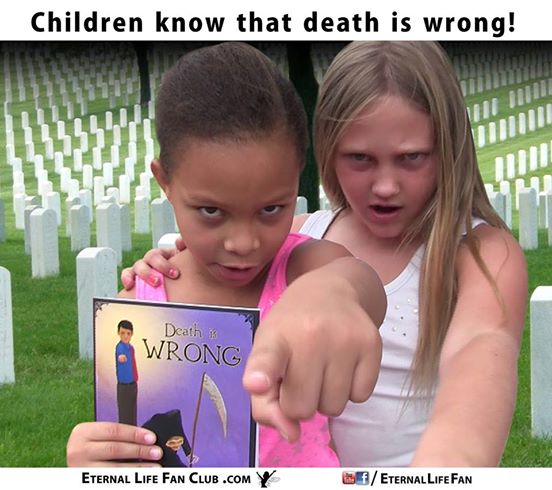
Roen Horn of the Eternal Life Fan Club has begun a strongly publicized series of book giveaways, the first of which he captured on camera. Here is his video featuring two kids who know that death is wrong.

Accompanying Roen’s video are excellent graphics like this one.

Children_Know_That_Death_is_WrongThe books were enthusiastically received at the Church of Perpetual Life in Hollywood, FL, a science-based Transhumanist church, whose primary focus is on ending death and reversing aging. Here is a picture kindly provided by Officiator Neal VanDeRee, where he presents a copy of Death is Wrong to the music teacher Dr. Angie Cook Wong and one of her students, who sang at the service.

DIW_IMG_0687Some of the book recipients have been librarians throughout the United States. Jameson Rohrer, the Transhumanist Librarian, has connected me with fellow librarians who have placed the books in libraries near them. Here are images of Death is Wrong books on display.

DIW_Rohrer_2DIW_Rohrer_3Successes like this one and many others have been chronicled on The Rational Argumentator, on a dedicated page that I continually update, informing readers of new developments in this unprecedented distribution effort. The updates are not finished. As the remaining book shipments arrive and books are given out to children, there will be more pictures, videos, and promising news to share. Indeed, even these impacts will just be the beginning. The true effects of this effort will be seen years and decades in the future – as the young readers of the books grow up and are hopefully motivated to develop their lives and pursuits in directions that will aid us all in overcoming the greatest enemy – death. I will know that my success is complete once even one young researcher or activist informs me, “I read Death is Wrong all those years ago, and it was this book that nudged me onto the path of discovery and development toward who I am today.” We supporters of indefinite life extension still have tremendous obstacles to overcome in achieving our vision. I hope that this effort to distribute over 1,000 Death is Wrong books will erode those obstacles at least somewhat – gradually injecting the ideas of indefinite life extension into the cultural mainstream and nurturing the next generation of advocates for this most worthwhile of endeavors.

DIW_World_MapPhotograph Courtesy of Eric Schulke

“Death is Wrong” Distribution Campaign Nears Completion – Update of August 6, 2014 – by G. Stolyarov II

“Death is Wrong” Distribution Campaign Nears Completion – Update of August 6, 2014 – by G. Stolyarov II

The New Renaissance Hat
G. Stolyarov II
August 6, 2014
******************************

Only 9 Death is Wrong books remain to be sent out as part of our worldwide distribution effort! If you wish to help in providing the books out to children, this is your last chance to get your free shipment now.

10 books were recently sent to Jason Limbert – a long-time supporter of radical life extension in Mississauga, Ontario, Canada. He will be distributing these books to children in his extended family, their friends, and children of neighbors.

3 books were sent to children of relatives of Wendy Stolyarov, my wife and the illustrator of Death is Wrong.

2 books were sent to RJ Lewis in California, a mother, inventor, publicist, and supporter of life extension and cryonics.

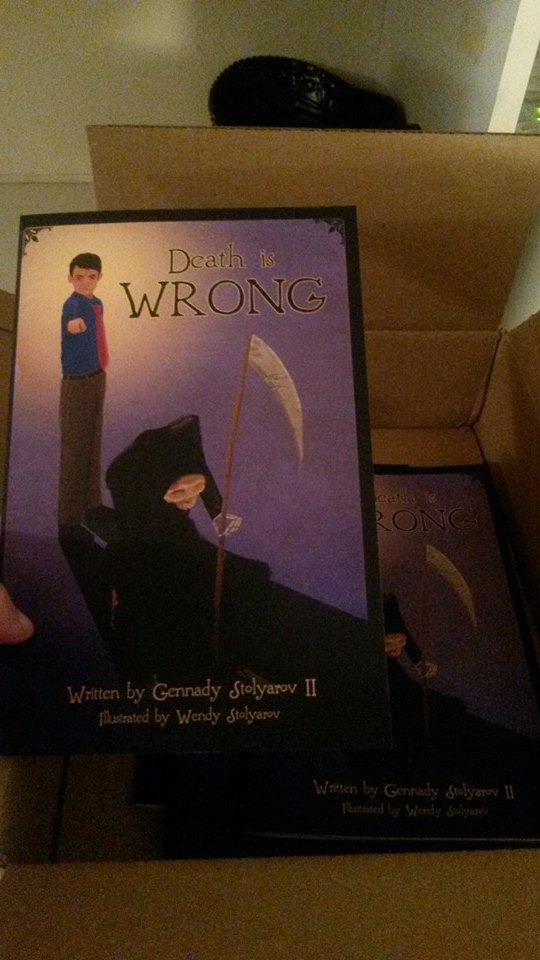
We continue to receive excellent exposure from the previous shipments. Here is a picture sent by Jennifer Huse of the shipment that recently arrived at the Spot the Knot medical spa in Eatontown, New Jersey.

DIW_Books_Received_Huse Roen Horn of the Eternal Life Fan Club has begun a strongly publicized series of book giveaways, the first of which he captured on camera. Here is his video featuring two kids who know that death is wrong.

Accompanying Roen’s video are these excellent graphics.

Children_Know_That_Death_is_WrongChildren_Know_That_Death_is_Wrong_2

All this was made possible by our distribution campaign. We see here great examples of the impact this book is having right now. We are making history by gradually injecting the ideas of indefinite life extension into the cultural mainstream. Help us finish this effort by spreading our last freely available books! To receive your free shipment, e-mail me at gennadystolyarovii@gmail.com with (i) your name, (ii) your MAILING ADDRESS, (iii) your support for indefinite life extension, (iv) the NUMBER OF COPIES of Death is Wrong requested, and (v) your plan for spreading the books to children, free of cost to them.

Free PDF of «Смерть неправильна!» – Russian Translation of “Death is Wrong”

Free PDF of «Смерть неправильна!» – Russian Translation of “Death is Wrong”

The New Renaissance Hat
G. Stolyarov II
June 28, 2014
******************************

A free PDF version of «Смерть неправильна!» – the Russian translation of Death is Wrong – is now available for download from The Rational Argumentator. You can obtain your copy here and may spread it to Russian-speaking audiences as widely as you wish.

«Смерть неправильна!» was translated into Russian by Marcus Baylin.

cover_final_russian_6x9