Browsed by
Tag: longevity

A Most Interesting Data Set Covering the Longevity of Polish Elite Athletes Across Much of the 20th Century – Article by Reason

A Most Interesting Data Set Covering the Longevity of Polish Elite Athletes Across Much of the 20th Century – Article by Reason

The New Renaissance HatReason
******************************

Today I noticed an open access paper in which the authors examine mortality data for Polish Olympic athletes over the past 90 years or so, and compare it with established historical data for the general population. This blends two topics that are occasionally covered here at Fight Aging!: firstly, the growth in human life expectancy in recent history and its causes, and secondly the topic of how regular exercise and life expectancy interact. It is the present consensus that elite athletes, those at the top of their profession, live longer than the rest of us, but it remains open to debate as to whether this is because more exercise is better, or because very robust people who would have lived longer anyway are more likely to enter the world of professional athletics. Researchers want to map the dose-response curve for exercise, in other words. Even though there is very good, very solid evidence for the benefits of regular moderate exercise versus being sedentary, going beyond that to a more nuanced view of what more or less exercise does for health is a challenging goal given the starting point of statistical snapshots of data from various study populations.

Studying the history of life expectancy isn’t much easier, though there the challenges tend to revolve around the ever-decreasing quality of data as you look further back in time. The 20th century marked transitions from hopeful aspiration to solid accomplishment in all fields of medicine, too many profound advances in the capabilities of medical science and practice to list here. As the decades passed, this important progress focused ever more on treatments for age-related conditions. An individual born in the US in 1900 suffered through the end of the era of poor control of infectious disease, prior to modern antibiotics and antiviral drugs, and likely benefited little from later progress towards better control of heart disease and other common age-related diseases. An individual born in the US in 1950, on the other hand, enjoyed a youth with comparatively little fear of disease, and is probably still alive today, with access to far more capable therapies than existed even a couple of decades ago.

Given all of this, one of the interesting things to note in the analysis of the Polish data is that the elite athletes born in the early 20th century appear to have a lower rate of aging than the general population, as determined by a slower rise in mortality over time, but that this difference between athletes and the average individual is greatly diminished for people born in the latter half of the 20th century. This suggests, roughly, that advances in medicine from 1900 to 1950 had a leveling effect, bringing up the average, preventing early deaths, but doing little to address age-related disease. That said, there is a large variation in results across the range of similar studies, both those that look at the history of longevity, and those that look at populations of athletes at a given time. It is wise to consider epidemiological studies in groups rather than one by one, and look for common themes. Still, this one is a fascinating data set for the way in which it combines historical trends and exercise in the study of aging.

Examining mortality risk and rate of ageing among Polish Olympic athletes: a survival follow-up from 1924 to 2012 – by Yuhui Lin, Antoni Gajewski, and Anna Poznańska

Quote:

A sedentary lifestyle is associated with the onset of chronic diseases including ischaemic heart disease, type-II diabetes and neurodegenerative diseases. Frequent exercise is perceived as a major behavioural determinant for improved life expectancy and a slower rate of ageing. There is little doubt that frequent exercise is beneficial for individuals’ well-being, and an active lifestyle reduces the risk for chronic diseases. However, it is still uncertain whether the rate of ageing decelerates in response to frequent and intense physical exercise. Our attempt is the first empirical study to show the application of a parametric frailty survival model to gain insights into the rate of ageing and mortality risk for Olympic athletes.

Our participants for this parametric frailty survival analysis were Polish athletes who had participated in the Olympic Games from 1924 to 2010. We assumed that these athletes were elite in their preferred sports expertise, and that they were engaged in frequent, if not intense, physical exercise. The earliest recorded year of birth was 1875, and the latest was in 1982; total N=2305; male=1828, female=477. For reliable estimates, mortality improvements by calendar events and birth cohort had to be taken into consideration to account for the advancements made in medicine and technology. After the consideration of mortality improvements and the statistical power for parametric survival analysis, we restricted our analysis to male athletes born from 1890 to 1959 (M=1273). For reliable estimates, we preassigned recruited athletes into two categorical cohorts: 1890-1919 (Cohort I); 1920-1959 (Cohort II).

Our findings suggest that Polish elite athletes in Cohort I born from 1890-1919 experienced a slower rate of ageing, and had a lower risk for mortality and a longer life-expectancy than the general population from the same birth cohort. It is very unlikely that these survival benefits were gained within a short observational time. Therefore, we argue that participation in frequent sports from young adulthood reduces mortality risk, increases life-expectancy and slows the rate of ageing. The age-specific mortality trajectories of Cohort I elite athletes also suggest frequent exercise can decelerate the rate of ageing by 1% with an achievement of threefold risk reduction in mortality. In comparison with those of the general population, the differences in energy expenditure, behavioural habits, body mass and sports expertise were likely to be the contributing factors to the higher variance in lifespan among elite athletes.

In Cohort II, the estimated rate of ageing is highly similar between elite athletes and the general population, which contradicts our estimates for Cohort I. This may be attributed to mortality improvements from year 1920 onwards in Poland. These mortality improvements have changed individuals’ susceptibilities for different causes of death, which has resulted in an increased variation in lifespan both in the general population and for elite athletes. Interestingly, the comparison of the rate of ageing of elite athletes in Cohort I and II shows a similar rate of ageing. Among the elite athletes, the estimates suggest that Cohort II individuals benefited from a 50% mortality risk reduction as compared with individuals born in Cohort I. The estimated overall mortality risk of the Polish general population is 29% lower in Cohort II than in I.

Reason is the founder of The Longevity Meme (now Fight Aging!). He saw the need for The Longevity Meme in late 2000, after spending a number of years searching for the most useful contribution he could make to the future of healthy life extension. When not advancing the Longevity Meme or Fight Aging!, Reason works as a technologist in a variety of industries.
This work is reproduced here in accord with a Creative Commons Attribution license. It was originally published on FightAging.org.
Impacts of Indefinite Life Extension: Answers to Common Questions – Article by G. Stolyarov II

Impacts of Indefinite Life Extension: Answers to Common Questions – Article by G. Stolyarov II

The New Renaissance Hat
G. Stolyarov II
******************************

As a proponent of attaining indefinite human longevity through the progress of medical science and technology, I am frequently asked to address key questions about the effects that indefinite life extension would have on human incentives, behaviors, and societies. Here, I offer my outlook on what some of these impacts would be.

What would be the benefits of life extension?

(1) The greatest benefit of life extension is the continued existence of the individual who remains alive. Each individual – apart from the worst criminals – has incalculable moral value and is a universe of ideas, experiences, emotions, and memories. When a person dies, that entire universe is extinguished, and, to the person who dies, everything is lost and not even a memory remains. It is as if the individual never existed at all. This is the greatest possible loss and should be averted if at all possible. The rest of us, of course, also lose the possible benefits and opportunities of interacting with that individual.

(2) People would be able to accomplish far more with longer lifespans. They could pursue multiple careers and multi-year personal projects and could reliably accumulate enough resources to sustainably enjoy life. They could develop their intellectual, physical, and relational capabilities to the fullest. Furthermore, they would exhibit longer-term orientations, since they could expect to remain to live with the consequences of decisions many decades and centuries from now. I expect that a world of longer-lived individuals would involve far less pollution, corruption, fraud, hierarchical oppression, destruction of other species, and short-term exploitation of other humans. Prudence, foresight, and pursuit of respectful, symbiotic interactions would prevail. People would tend to live in more reflective, measured, and temperate ways instead of seeking to haphazardly cram enjoyment and activity into the tiny slivers of life they have now. At the same time, they would also be more open to experimentation with new projects and ideas, since they would have more time to devote to such exploratory behaviors.

(3) Upon becoming adults, people would no longer live life in strict stages, and the normative societal expectations of “what one should do with one’s life” at a particular stage would relax considerably. If a person at age 80 is biologically indistinguishable from a person at age 20, the strict generational divides of today would dissipate, allowing a much greater diversity of human interactions. People will tend to become more tolerant and cosmopolitan, having more time to explore other ways of living and to understand those who are different from them.

(4) Technological, scientific, and economic progress would accelerate rapidly, because precious intellectual capital would not be lost to the ravages of death and disease. Longer-lived humans would be more likely to invest in projects that would materialize over the course of decades, including space travel and colonization, geo-engineering and terraforming, prevention of asteroid impacts and other natural disasters, safe nuclear disarmament and disposal of nuclear waste, and long-term preservation of the human species. The focus of most intelligent people would shift from meeting quarterly or annual business earnings goals and toward time- and resource-intensive projects that could avert existential dangers to humankind and also expand humanity’s reach, knowledge, and benevolence. The achievement of significant life extension would inspire many intelligent people to try to solve other age-old problems instead of resigning to the perception of their inevitability.

(5) Major savings to health-care systems, both private and governmental, would result if the largest expenses – which occur in the last years of life today, in the attempt to fight a losing battle against the diseases of old age – are replaced by periodic and relatively inexpensive rejuvenation and maintenance treatments to forestall the advent of biological senescence altogether. Health care could truly become about the pursuit of sustainable good health instead of a last-ditch effort against the onslaught of diseases that accompanies old age today. Furthermore, the strain on public pensions would be alleviated as advanced age would cease to be a barrier to work.

What drawbacks would life extension pose?

I do not see true drawbacks to life extension. Certainly, the world and all human societies would change significantly, and there would be some upheaval as old business models and ways of living are replaced by new ones. However, this has happened with every major technological advance in history, and in the end the benefits far outweigh any transitional costs. For the people who remain alive, the avoidance of the greatest loss of all will be well worth it, and the human capacity for adaptation and growth in the face of new circumstances is and has always been remarkable.  Furthermore, the continued presence of individuals from older generations would render this transition far more humane than any other throughout history. After all, entire generations would no longer be swept away by the ravages of time. They could persist and preserve their knowledge and experience as anchors during times of change.

Every day, approximately 150,000 people die, and approximately 100,000 of them die from causes related to senescence. If those deaths can be averted and the advent of indefinite life extension accelerated by even a few days, hundreds of thousands of irreplaceable individual universes would be preserved. This is worth paying even substantial costs in my view, but, fortunately, I think the other – economic and societal – effects that accompany life extension would be overwhelmingly positive as well.

As Death is Wrong, my illustrated children’s book on the prospects for life extension, points out, “Death is the enemy of us all, to be fought with medicine, science, and technology.” The book discusses the benefits of life extension in a language and format accessible to most children of ages 8 or older. Death is Wrong also outlines some common arguments against life extension and reasonable responses to them.  For instance, I respond to the common overpopulation argument as follows: “human population is the highest it has ever been, and most people live far longer, healthier, more prosperous lives than their ancestors did when the Earth’s population was hundreds of times smaller. Technology gives us far more food, energy, and living space than our ancestors had, and the growth in population only gives us more smart people who can create even more technologies to benefit us all. Besides, humans ought to build more settlements on land, on water, underwater, and in space. Space travel could also save the human species if the Earth were hit by a massive asteroid that could wipe out complex life. ” I respond to the boredom argument by stating that, due to human creativity and discovery, the number of possible pursuits increases far faster than the ability of any individual to pursue them. For instance, thousands more books are published every day than a single person could possibly read.

ELFC_Death_is_Wrong

Would governments ban indefinite life extension if it is achieved?

Once life-extending treatments are developed and publicly available, national governments would not be effectively able to ban them, since there will not be a single medicine or procedure that would accomplish indefinite lifespans. Rather, indefinite life extension would be achieved through a combination of treatments, beating back today’s deadliest diseases using techniques that would not be limited in their application to people who explicitly want to live longer. (For instance, people who do not harbor that particular desire but do want to get rid of cancer, heart disease, or Alzheimer’s disease that may afflict them or their loved ones, would also benefit from the same treatments.) These treatments would be as embedded in the healthcare systems of the future as over-the-counter drugs like aspirin and ibuprofen are today; it would be practically impossible to ban them, and countries that did would face massive black markets or people traveling abroad to receive the same treatments.

Furthermore, genuine healthy life extension could be a great fiscal solution for many welfare states today, which are finding themselves with unsustainable burdens pertaining to old-age healthcare and pensions. The majority of health-care costs are expended to keep frail people alive a little bit longer and to fight an expensive and ultimately losing battle against the diseases of old age. The only way dramatic life extension could occur is if regular and relatively inexpensive maintenance (made inexpensive through the exponential progress of information technologies and bio/nanotechnology) prevented the decline of the body to such a stage where expensive, losing battles needed to be fought at all. Replacing the current extremely expensive end-of-life medical care with periodic rejuvenation and maintenance would be a great cost-saver and may avert a major fiscal crisis.

What concerns me is not governments banning life-extension technologies once they are developed, but rather existing political systems (and their associated politically connected established private institutions) creating barriers to the emergence of those technologies in the first place. Most of those barriers are probably inadvertent – for instance, the FDA’s approval process in the United States premised on a model of medicines and treatments that must focus on single diseases rather than the biological aging process as a whole. However, there have been influential “bioethicists”, such as Leon Kass, Daniel Callahan, and Sherwin Nuland, who have explicitly and extensively spoken and written against healthy life extension. It is important to win the contest of ideas so that public opinion does not give encouragement to the “bioconservative” bioethicists who want to use the political process to perpetuate the old cycle of life, death, and decay – where each generation must be swept away by the ravages of senescence. We must stand for life and against age-old rationalizations of our own demise.

This essay may be freely reproduced using the Creative Commons Attribution Share-Alike International 4.0 License, which requires that credit be given to the author, G. Stolyarov II. Find out about Mr. Stolyarov here.

Happy Future Day! – Article by Edward Hudgins

Happy Future Day! – Article by Edward Hudgins

The New Renaissance HatEdward Hudgins
******************************

Stand up for optimism about the future today!

Transhumanism Australia, a non-profit that promotes education in science and technology, has marked March 1 as “Future Day.” It wants this day celebrated worldwide as a time “to consider the future of humanity.” If all of us made a habit of celebrating our potential, it could transform a global culture mired in pessimism and malaise. It would help build an optimistic world that is confident about what humans can accomplish if we put our minds and imaginations to it.

The Future is Bright

The information and communications technology that helps define and shape our world was, 40 years ago, a vision of the future brought into present reality by visionaries like Steve Jobs and Bill Gates. The exponential growth of the power of semiconductors allowed entrepreneurs to create one new industry and cutting-edge good product and service after another.

futureToday, we are at exponential takeoff points in biotech, nanotech, and artificial intelligence. For example, the cost of sequencing a human genome was $100 million in 2001, $10 million in 2007, but it costs only a few thousand dollars today. Steve Jobs created the first Apple computers in his garage. Biohackers similarly housed could transform our lives in the future in ways that still seem to most folks like science fiction; indeed, the prospect of “curing death” is no longer a delusion of madmen but the well-funded research projects in the laboratories of the present.

For a prosperous present and promising future a society needs physical infrastructure—roads, power, communications. It needs a legal infrastructure—laws and political structures that protect the liberty of individuals so they can act freely and flourish in civil society. And it requires moral infrastructure, a culture that promotes the values of reason and individual productive achievement.

Future “Future Days”

We should congratulate our brothers “Down Under” for conceiving of Future Day. They have celebrated it in Sydney with a conference on the science that will produce a bright tomorrow. We in America and folks around the world should build on this idea. Today it’s a neat idea: next year, we could start a powerful tradition, a global Future or Human Achievement Day, promoting the bright future that could be.

Were such a day marked in every school and every media outlet, it could to raise achiever consciousness. It could celebrate achievement in the culture—who invented everything that makes up our world today, and how? It could promote achievement as a central value in the life of each individual, whether the individual is nurturing a child to maturity or a business to profitability, writing a song, poem, business plan or dissertation, laying the bricks to a building or designing it, or arranging for its financing.

Such a day would help create the moral infrastructure necessary for a prosperous, fantastic, non-fiction future, a world as it can be and should be, a world created by humans for humans—or even transhumans!

Dr. Edward Hudgins directs advocacy and is a senior scholar for The Atlas Society, the center for Objectivism in Washington, D.C.

Copyright The Atlas Society. For more information, please visit www.atlassociety.org.

25% Median Life Extension in Mice via Senescent Cell Clearance, Unity Biotechnology Founded to Develop Therapies – Article by Reason

25% Median Life Extension in Mice via Senescent Cell Clearance, Unity Biotechnology Founded to Develop Therapies – Article by Reason

The New Renaissance HatReason
******************************

With today’s news, it certainly seems that senescent cell clearance has come of age as an approach to treating aging and age-related conditions. Some of the leading folk in the cellular senescence research community today published the results from a very encouraging life span study, extending life in mice via a method of removing senescent cells. This is much the same approach employed in one of the first tests of senescent cell clearance, carried out in accelerated aging mice a few years ago, but in this case normal mice were used, leaving no room to doubt the relevance of the results. The researchers have founded a new company, Unity Biotechnology, to develop therapies for the clinic based on this technology. Clearance of senescent cells has been advocated as a part of the SENS vision for the medical control of aging for more than a decade now, and it is very encouraging to see the research and development community at last coming round to this view and making tangible progress.

Senescent cells have removed themselves from the cycle of replication in reaction to cell and tissue damage, or a local tissue environment that seems likely to result in cancer. Their numbers accumulate with age. Most are destroyed by the immune system or their own programmed cell death mechanisms, but enough linger for the long term for their growing presence to be one of the contributing causes of the aging process. These cells behave badly, secreting harmful signals that degrade tissue function, generate inflammation, and alter the behavior of surrounding cells as well. Near every common age-related condition is accelerated and made worse by the presence of large numbers of senescent cells. We would be better off without them, aging would be slowed by the regular removal of these errant cells, and the therapies to make that possible are on the near horizon.

The mouse lifespan study is the important news here, as it demonstrates meaningful extension of median life span through removal of senescent cells, the first such study carried out in normal mice for this SENS-style rejuvenation technology. This sort of very direct and easily understood result has a way of waking up far more of the public than the other very convincing evidence of past years. So it looks like Oisin Biotechnology, seed funded last year by the Methuselah Foundation and SENS Research Foundation to bring a senescent cell clearance therapy to market, now has earnest competition. Insofar as the competitive urge in business and biotechnology speeds progress and produces better results, let the games begin, I say.

Scientists Can Now Radically Expand the Lifespan of Mice – and Humans May Be Next

Quote:

Researchers have made this decade’s biggest breakthrough in understanding the complex world of physical aging. The researchers found that systematically removing a category of living, stagnant cells (ones which can no longer reproduce) extends the lives of otherwise normal mice by 25 percent. Better yet, scouring these cells actually pushed back the process of aging, slowing the onset of various age-related illnesses like cataracts, heart and kidney deterioration, and even tumor formation. “It’s not just that we’re making these mice live longer; they’re actually stay healthier longer too. That’s important, because if you were going to equate this to people, well, you don’t want to just extend the years of life that people are miserable or hospitalized.” By rewriting a tiny portion of the mouse genetic code, the team developed a genetic line of mice with cells that could, under the right circumstances, produce a powerful protein called caspase when they start secreting p16. Caspase acts essentially as a self-destruct button; when it’s manufactured in a cell, that cell rapidly dies. So what exactly are these circumstances where the p16 secreting cells start to create caspase and self-destruct? Well, only in the presence of a specific medicine the scientists could give the mice. With their highly-specific genetic tweak, the scientists had created a drug-initiated killswitch for senescent cells. In today’s paper, the team reported what happened when the researchers turned on that killswitch in middle-aged mice, effectively scrubbing clean the mice of senescent cells.

Naturally occurring p16Ink4a-positive cells shorten healthy lifespan

Quote:

Senescent cells accumulate in various tissues and organs over time, and have been speculated to have a role in ageing. To explore the physiological relevance and consequences of naturally occurring senescent cells, here we use a previously established transgene, INK-ATTAC, to induce apoptosis in p16Ink4a-expressing cells of wild-type mice by injection of AP20187 twice a week starting at one year of age. We show that AP20187 treatment extended median lifespan in both male and female mice of two distinct genetic backgrounds. The clearance of p16Ink4a-positive cells delayed tumorigenesis and attenuated age-related deterioration of several organs without apparent side effects, including kidney, heart and fat, where clearance preserved the functionality of glomeruli, cardio-protective KATP channels and adipocytes, respectively. Thus, p16Ink4a-positive cells that accumulate during adulthood negatively influence lifespan and promote age-dependent changes in several organs, and their therapeutic removal may be an attractive approach to extend healthy lifespan.

Unity Biotechnology Launches with a Focus on Preventing and Reversing Diseases of Aging

Quote:

Unity will initially focus on cellular senescence, a biological mechanism theorized to be a key driver of many age-related diseases, including osteoarthritis, glaucoma and atherosclerosis. “Imagine drugs that could prevent, maybe even cure, arthritis or heart disease or loss of eyesight. It’s an incredible aspiration. If we can translate this biology into medicines, our children might grow up in significantly better health as they age. There will be many obstacles to overcome, but our team is committed and inspired to achieve our mission. This has been a long journey, and we’re at the point now where we can start making medicines to achieve in humans what we’ve achieved in mice. I can’t wait to see what happens as we move into the clinic.”

To close this post, and once again, I think it well worth remembering that SENS rejuvenation biotechnology advocates and supporters have been calling for exactly this approach to treating aging for more than a decade. That call was made based on the evidence arising from many fields of medical research, and from a considered perspective of aging as a process of damage accumulation, one that can be most effectively treated by repair of that damage. The presence of senescent cells is a form of damage. SENS was not so long ago derided and considered out on the fringe for putting forward that position, but for several years now it has been very clear that the SENS viewpoint was right all along. I strongly encourage anyone who remains on the fence about the validity of the SENS proposals for the treatment of aging to reexamine his or her position on the science.

Reason is the founder of The Longevity Meme (now Fight Aging!). He saw the need for The Longevity Meme in late 2000, after spending a number of years searching for the most useful contribution he could make to the future of healthy life extension. When not advancing the Longevity Meme or Fight Aging!, Reason works as a technologist in a variety of industries.
This work is reproduced here in accord with a Creative Commons Attribution license. It was originally published on FightAging.org.
The Role of Aging in Society – Article by Demian Zivkovic

The Role of Aging in Society – Article by Demian Zivkovic

The New Renaissance HatDemian Zivkovic
******************************
Take the following situation. We discover an extremely contagious virus. It infects you and your loved ones, and quickly propagates through all of mankind. As a result, 150,000 people die every day. It kills more than twice the number killed in the Holocaust every three months, and in 30 years, it will have killed 1.5 billion, around one in six people. How high would this score on a list of global priorities? There’s no doubt the situation would be grave. Most people would demand immediate action.
***
But that’s just a thought experiment, right? Not really. Every day, 150,000 people do die from age-related disease. Not only the cost in lives is monumental; societal and economic costs are also on the rise. According to the Dutch Statistics Authority (the CBS), the amount of people older than 65 (retirement age) will have increased to 27% in 2040, from the current 19%. As more people are born, this also means more people die from age-related disease, taking all their knowledge, expertise, and productivity with them. In short: If we don’t do anything about the consequences of our aging population, we face severe consequences.
 *** 

So what is the best way to deal with the problem of our society aging?

There is no simple solution. More conventional healthcare barely improves quality of life, while just letting people die is not an ethical option. Rutger Bregman, a Dutch historian and philosopher, argues for thinking more radically about solutions to societal problems. According to his essay “Een pleidooi voor de utopie” (A plea for utopia) in the Dutch magazine “De groene Amsterdammer”, we have lost the ability to think in such a way; We only look at marginal improvements, instead of looking at changes that could radically improve and change our society. So if we do explore more radical solutions, what can we do?

Professor Aubrey de Grey, Ph.D. in biology, Chief Science Officer of the prestigious SENS Research Foundation, and partner at the Gerontological Society of America, argues that we could look at a radical intervention in human aging. According to de Grey, the best way of solving many of these problems is to cure aging at its source. De Grey is not the only one who holds that opinion. Alphabet, Inc.‘s biotechnology subsidiary (Calico) also views the problem from this position. This point of view obviously raises quite a few questions. Critics claim that de Grey’s vision is impossible or undesirable. Proponents point to the massive advantages of curing age-related disease.

One of the arguments put forward is that short-term thinking causes many economical and societal problems. Economist Joseph Stiglitz speaks about rent-seeking (“Rent-Seeking and the Making of an Unequal Society”, 2014), economically destructive behaviour in which an individual or business enriches itself while harming the entire economy in the process. Environmental concerns are also a very large issue. Since people (if they are lucky) don’t get to live much longer than a hundred years old, many people find it very uninteresting to think about what our behaviour is doing to the environment on the long term. But what will it mean for these problems if we have to let go of short-term thinking, because we live for a much longer time? One thing is for sure: If de Grey’s vision becomes reality, a lot will change in our society.

Economy, Environment, and Overpopulation
 *** 

Short-term thinking has a catastrophic effect on our economy and environment.

The previously mentioned economist Joseph Stiglitz claims in his article that our economy is suffering serious problems, since rent-seeking is causing society-wide destruction and inequality. For centuries, economists, philosophers, and ethicists have been considering how to stop such unethical behavior. Usually, they looked at different moral developments, better regulations, or restructuring society as solutions.

In his work “The Power of Context”, Malcolm Gladwell makes the claim that the environment and the context we live in have a large impact on our behaviour. Human life knows a few certainties; one of them is that you will die within a century. One may have children or grandchildren, but very few people are concerned about the fate of their heir several hundred generations down the road. In my interview with him (2014, Nakedbutsafe magazine), Professor de Grey argues that many people would be much more concerned with the long term if they knew they would still be around in several centuries, and there’s a lot to be said about that. Instead of waging a fruitless and hopeless war on selfishness, it may be more prudent to use it to improve the world.

De Grey’s solution essentially means inventing the fountain of youth through advanced biotechnology. He wants to do this through a method called “Strategies for Engineered Negligible Senescence” or SENS. SENS essentially involves periodically repairing accumulated damage from aging, so it never reaches a critical point where it turns into a specific illness. De Grey is not the only one who is looking for a solution for aging: Google Ventures heavily invests in such technology.

In 2013, Google founded a company called Calico, which entered a partnership with AbbVie. With a record investment of two billion dollars, most money ever put into a start-up, the ambitious firm wants to create a fundamental understanding of aging and use said understanding to eventually cure said aging. Bill Maris, president of Google Ventures, has already made the famous claim we will be able to have technology to live 500 years within our lifetimes. Another actor in the corporate sector is BioViva, whose CEO, Elizabeth Parrish, has become the first human on the planet to get treated with a combination of in vivo gene therapies to slow down aging.

The approaches of Calico, SENS, and BioViva look at the problem from different angles, but they have one thing in common: they are not looking at ways to extend the lives of sick, disabled seniors. Instead, they are looking at a method to not simply extend life, but to extend health. They are looking at methods to stop this biological aging from happening. Life extension is merely a side effect. After all, if a 200-year-old has the vitality of a 40-year-old, why would an aging population be a problem? Even though the population will age, the percentage of “elderly” people will decrease, and so will age-related suffering and related economic pressure.

However, not everyone is optimistic about these changes. Critics are concerned about what a radically extended life will mean for overpopulation. They argue that if nobody dies, we will have so many people that we will either have to kill people, or make reproduction illegal. While such a top-down approach may seem like “common sense”, there’s a lot to be said about why such drastic top-down measures will be unnecessary. Steven Johnson, a best-selling popular science author and media theorist, introduces the concept of emergence (Emergence: The Connected Lives of Ants, Brains, Cities, and Software, 2001). Emergence refers to patterns in complex systems which can’t be reduced to the properties or behaviours of an individual element of the system. Johnson uses the ant colony as an example: while no single ant coordinates the behaviour of the colony, the entire system is self-organizing and thus functions perfectly. An ant colony, but even more so human society, is a good example of an emergent system.

A simple example of this self-organization is the distribution of bread. There is no central authority that plants where bakeries should be located, how much grain should be produced, what logistic solutions should be used for bread transport to people’s homes, or what bread prices ought to be. In fact, such central planning has been tried several times in history. In communist dictatorships such as the Soviet Union and North Korea, centralized attempts at steer society have had catastrophic results. However, if emergence of self-organisation does its job, a society flourishes. We can see this same effect work on overpopulation and birth rates. According to the World Health Organisation, the fertility rates plummet as life expectancy skyrockets. Countries that have the highest life expectancies have the lowest birth rates. Japan, which has one of the highest life expectancies has a negative birth rate; its population is in decline, even though no central planning has intervened in any way.

This hypothesis is also supported by virtually all historic trends. Every widespread average life-expectancy spike was met with a plummet in birth rates. When our life expectancy went up because of the invention of antibiotics, our birth rates hit historic lows. We see the opposite in countries where life expectancy is very low. The country with the highest birth rate is Nigeria, while it’s one of the poorest countries in the world. The average life expectancy in Nigeria is below 55. According to the United Nations, countries with low life expectancy have by far the largest effect on overpopulation.

Regulation of population is therefore unnecessary; a complex system such as modern society self-regulates and corrects itself. This idea is in line with Gladwell’s theory of context-dependent behavior; the context largely defines our behavior. And as a self-organizing system, society demonstrably changes the context to steer our behavior in effective patterns. A dystopia where government has to regulate reproduction or death is very unlikely.

Philosophical Arguments

If Gladwell is right about context as catalyst of behaviour, what will the effects of a society devoid of biological aging be on our humanity? Not all arguments against radical life extension are pragmatic in nature. The conservative bioethicist Leon Kass is one of the opponents of radical life extension pondering this question. He argues that indefinite life extension is unnatural and thus undesirable. Kass also claims that we won’t appreciate life if we life “forever.”

“Time is a gift, but the perception of endless time or of time without bound in fact has the possibility of undermining the degree to which we take time seriously and make it count.”

~ Leon Kass (Aging Research, 2004).

Kass makes a comparison with the ancient Greek gods to argument why life’s shortness gives it purpose.

Homer in The Iliad and The Odyssey presents human beings whom he names as mortals. That is their definition in contrast to the immortals. And the immortals for their agelessness and their beauty live sort of shallow and frivolous lives. Indeed, they depend for their entertainment on watching the mortals who, precisely because they know that their time is limited, and that they go around only once, are inclined to make time matter and to aspire to something great for themselves.

~ Leon Kass (Aging Research, 2004)

While these arguments may seem somewhat of a philosophical take on many common criticisms, they are easily debunked. Elizabeth Parrish, CEO of BioViva and a pioneering entrepreneur in the field of gene therapy, argues against the idea that we should accept something because it’s considered “normal.” (“Liz Parrish speaks at People Unlimited on transcending the aging paradigm with gene therapy”, 2015). She argues that “normal” is a situational opinion which constantly changed throughout the entirety of history. In 1665, dying of infectious disease was normal. During this time only one percent of all humans died from aging: Infectious diseases were responsible for more than three quarters of all deaths before we developed the first immunization therapies – the development of which is similar to the process to defeat aging with gene therapy today. Just like today, there was criticism of the development of vaccines and antibiotics, even though lifespans and health were greatly improved by the use of these advancements – and the arguments have stayed very much the same.

Parrish is not the only one who provides a strong argument against the vision of Kass. Reason, creator of the Fight Aging! blog, is another intellectual who is very skeptical about Kass’s position. In his rebuttal of Kass (“Leon Kass, Mystic” by Reason, 2004), he compares Kass with an alchemist, a modern mystic:

“The alchemists of old stood atop what little knowledge of chemistry they had and built a speculative religion of hermetic magic, transient wishes, celestial signs and hidden gold. Leon Kass stands atop what little biotechnology we have today (and seems to have a good grasp thereof), building his own structures of fanciful thought, equally disconnected from the real world. 

All of Kass’ arguments against longer, healthier lives are essentially mystical and devoid of real substance.”

In “Leon Kass, Mystic” (2004), Reason wonders if Kass’s philosophical musings are enough of a reason to condemn billions of people to a slow and painful death. Just like the alchemists, Reason argues, Kass’s vision is based upon ancient texts and his own subjective knee-jerk reactions, instead of researching the world around him. Reason postulates that this is the fundamental difference between a mystic and a scientist: The mystic is immune to impractical facts, consequences, and reality.

De Grey also argues against the bioconservative position. He rejects the idea that longer lives will somehow lower our appreciation of life. We will be able to start a new major when we are fifty years old, or a new career when we’re a hundred and fifty. The very fact that we have so little time causes us to experience “lock-in” in our careers and choices. This causes boredom and stress. The amount of time we lose switching to doing something we may enjoy a lot more is too radical, because we have so little time to begin with. Radical life extension seems more likely to actually cure the problems its critics claim it will cause (such as boredom, stress, or disenchantment with life).

Conclusion

Treatments for age-related diseases are on their way, and curing aging is big business. The first people are already getting early treatments, and the prognoses are positive. Society will have to adapt to the changes that come with these treatments. It is very important to explore options for adequately engaging public opinion in favor of curing age-related disease, to mitigate massive economic and human losses that these diseases currently cause, and to create the legislation and framework needed to implement these technologies in a fair, responsible, and sane way.

Bibliography

Bregman, Rutger (2013). Dromen is niet eng; Essay Pleidooi voor de utopie. De Groene Amsterdammer, jaar 137, week 20. https://www.groene.nl/artikel/pleidooi-voor-de-utopie.

Gladwell, Malcolm (2000). The Power of Context. In R.E. Miller & Spellmeyer (Eds.), The New Humanities Reader (Fifth Edition, pp. 148-167). Print.
 *** 
Stiglitz, J. E. (2012). Rent Seeking and the Making of an Unequal Society. In R.E. Miller & Spellmeyer (Eds.), The New Humanities Reader (Fifth Edition, pp. 148-167). Print.
 *** 

Johnson, Steven. ‘Emergence: The connected Lives of Ants, Brains, Cities, and Software’, 2001. In ‘The New Humanities Reader’, Richard E. Miller, Kurt Spellmeyer, Wadsworth, 2011, pp. 151 – 165

De Grey, Aubrey D. N. J. (2005). Resistance to debate on how to postpone ageing is delaying progress and costing lives. EMBO Reports, 6(Suppl 1), S49–S53. http://doi.org/10.1038/sj.embor.7400399

Kass, Leon (2004). Aging Research.  http://agingresearch.org/sage/Default.aspx?tabid=60

Reason (2004). Leon Kass, Mystic. FightAging.org. https://www.fightaging.org/archives/2004/04/leon-kass-mysti.php
 *** 
Parrish, Elizabeth (2015). Liz Parrish speaks at People Unlimited on transcending the aging paradigm with gene therapy. https://www.youtube.com/watch?v=87OUb8TBwX0
 *** 

Demian Zivkovic is the president of the Institute of Exponential Sciences  (Facebook  / Meetup) – an international transhumanist think tank / education institute comprised of a group of transhumanism-oriented scientists, professionals, students, journalists, and entrepreneurs interested in the interdisciplinary approach to advancing exponential technologies and promoting techno-positive thought. He is also an entrepreneur and student of artificial intelligence and innovation sciences and management at the university of Utrecht.

Demian and the IES have been involved in several endeavors, such as organizing lectures on exponential sciences, interviewing experts such as Aubrey de Grey, joining several of Mr. Stolyarov’s futurism panels, and spreading Death is Wrong – Mr. Stolyarov’s illustrated children’s book on indefinite life extension – in The Netherlands.

Demian Zivkovic is a strong proponent of healthy life extension and cognitive augmentation. His interests include hyperreality, morphological freedom advocacy, postgenderism, and hypermodernism. He is currently working on his ambition of raising enough capital to make a real difference in life extension and transhumanist thought.

Fast-Tracking Safe Drugs without Sacrificing Scientific Rigor – Article by Alex Tabarrok

Fast-Tracking Safe Drugs without Sacrificing Scientific Rigor – Article by Alex Tabarrok

The New Renaissance HatAlex Tabarrok
******************************

Here’s how to do it

In a post earlier this year, I noted that Japan has significantly liberalized its approval process for regenerative medicine. Writing in Forbes, Bart Madden and Nobelist Vernon Smith outline a similar proposal for the United States.

Recently, Japanese legislation has implemented the core Free To Choose Medicine (FTCM) principles of allowing not-yet-approved drugs to be sold after safety and early efficacy has been demonstrated; in addition, observational data gathered for up to seven years from initial launch will be used to determine if formal drug approval is granted. …

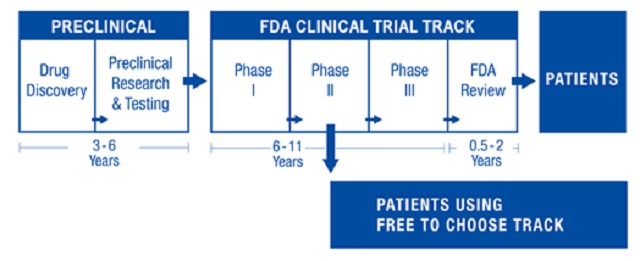
FTCM legislation in the U.S. would create a dual track system (see figure below) that preserves the existing FDA clinical trial process while offering patients an alternative. Patients, advised by their doctors, would be able to contract with a drug developer to use not-yet-approved drugs after Phase I safety trials are successfully completed and one or more Phase II trials have demonstrated continued safety and initial efficacy.

The resulting early access could make FTCM drugs available up to seven years before conventional FDA approval, which entails Phase III randomized control trials and a lengthy FDA review before the FDA makes an approval decision. …

bartgraph

The heart of the dual track system is the Tradeoff Evaluation Drug Database (TEDD) which would be available to the public through a government-supervised web portal. TEDD would contain all treatment results of FTCM drugs including patients’ health characteristics and relevant biomarkers, but no personal identification.

This open access database would be a treasure-trove of information to aid drug developers in making better R&D decisions consistent with fast-paced learning and innovation. …

Today’s world of accelerating medical advancements is ushering in an age of personalized medicine in which patients’ unique genetic makeup and biomarkers will increasingly lead to customized therapies in which samples are inherently small. This calls for a fast-learning, adaptable FTCM environment for generating new data.

In sharp contrast, the status quo FDA environment provides a yes/no approval decision based on statistical tests for an average patient, i.e., a one-size-fits-all drug approval process.

I hold the Bartley J. Madden Chair in Economics at the Mercatus Center, so I am biased, but this is an important proposal. Japan is leading the way and similar ideas are being discussed in Great Britain, but as the most important pharmaceutical market in the world, the United States has an outsize influence on world drug development. We need to lower costs and speed new drugs to market.

This post first appeared at Marginal Revolution.

Alex Tabarrok is a professor of economics at George Mason University. He blogs at Marginal Revolution with Tyler Cowen.

“A Morte é um Erro” – Portuguese Translation of “Death is Wrong” – Translated by Eric Pedro Alvaro – Post by G. Stolyarov II

“A Morte é um Erro” – Portuguese Translation of “Death is Wrong” – Translated by Eric Pedro Alvaro – Post by G. Stolyarov II

The New Renaissance Hat
G. Stolyarov II
******************************

A free PDF version of A Morte é um Erro – the Portuguese translation of Death is Wrong – is now available for download from The Rational Argumentator. You can obtain your copy here and may spread it to Portuguese-speaking audiences as widely as you wish.

A Morte é um Erro was generously translated into Portuguese by Eric Pedro Alvaro.

Death_is_Wrong_Portuguese_CoverPaperback copies of A Morte é um Erro can be purchased in the following venues:

Createspace

Amazon

Kindle copies of A Morte é um Erro can be purchased on Amazon for $0.99.

***

Se você já se perguntou, “Por que as pessoas morrem?” então este livro é para você. A resposta é que não, a morte não é necessária, inevitável ou boa. Na verdade, a morte é um erro. A morte é uma inimiga de todos nós, que deve ser combatida com ciência, medicina e tecnologia. Este livro lhe apresenta os maiores, mais desafiantes e mais revolucionários movimentos para prolongar radicalmente o tempo de vida humano, para que você então simplesmente não precise morrer.

Você aprenderá sobre algumas plantas e animais com um tempo de vida incrivelmente longo, sobre recentes descobertas científicas em relação a ampliação do tempo de vida em humanos, e sobre simples e poderosos argumentos que podem refutar as comuns desculpas para a morte. Se você alguma vez já pensou que a morte é injusta e que ela deve ser derrotada, você não está sozinho. Leia este livro, e se torne parte desta importante busca na história da humanidade.

Este livro foi escrito pelo filósofo e futurólogo Gennady Stolyarov II e ilustrado pela artista Wendy Stolyarov. Com o intuito de lhe mostrar que, não importa quem é você e o que você pode fazer, sempre há uma forma de ajudar humanidade em sua batalha contra morte.

Refuting Ayn Rand’s “Immortal Robot” Argument – Article by G. Stolyarov II

Refuting Ayn Rand’s “Immortal Robot” Argument – Article by G. Stolyarov II

The New Renaissance HatG. Stolyarov II

******************************

Here I refute an argument that has been leveled against proponents of indefinite human longevity from a surprising direction – those sympathetic to the Objectivist philosophy of Ayn Rand. Some advocates of Ayn Rand’s philosophy believe that indefinite life would turn human beings into “immortal, indestructible robots” that, according to Ayn Rand, would have no genuine values. Both of these claims are false. Indefinite life would not turn humans into indestructible robots, nor would an indestructible robot with human abilities lack values or motivation for doing great things. In Ayn Rand’s own words, “Achieving life is not the equivalent of avoiding death.” (John Galt’s speech in For the New Intellectual, p. 135)

Rand’s “immortal robot” argument is found in “The Objectivist Ethics” (The Virtue of Selfishness, p. 15): “To make this point fully clear, try to imagine an immortal, indestructible robot, an entity which moves and acts, but which cannot be affected by anything, which cannot be changed in any respect, which cannot be damaged, injured or destroyed. Such an entity would not be able to have any values; it would have nothing to gain or to lose; it could not regard anything as for or against it, as serving or threatening its welfare, as fulfilling or frustrating its interests. It could have no interests and no goals.”

The “immortal robot” argument needs to be challenged because it originates from Ayn Rand, who otherwise espouses numerous rational ideas. I myself agree with most of the fundamental principles that Ayn Rand advocates. However, in some of her particular reasoning – at least, if applied to the wrong context – she can be off-target in such a way as to retard further progress. The often-leveled argument, derived by contemporary non-transhumanist Objectivists from the above-quoted passage, is that achieving indefinite longevity would turn human beings into Ayn Rand’s description of the “immortal, indestructible robot”.

In responding to Rand’s argument, several points can be made in relation to prolonging human life indefinitely and lifting the death sentence that hangs over all of us. First, at no point in time will human beings become the “immortal, indestructible robots” that Ayn Rand describes. The simple reason for this is that our existence is physical and contingent on certain physical prerequisites being fulfilled. The moment one of these physical prerequisites is lacking, our existence ceases. This will always be the case, even if we no longer have a necessary upper limit on our lifespans. For instance, biomedical advances that would greatly expand human lifespans – allowing periodic reversions to a more youthful biological state and therefore the possibility of an indefinite existence – would not turn humans into indestructible robots. There would still be the need to actively turn back biological processes of decay, and the active choice to pursue such treatments or not. People who live longer by successfully combating senescence could still get run over by a car or experience a plane crash. They would retain potential vulnerability to certain perils – such as death from accidents – although, as I have explained in “Life Extension and Risk Aversion”, they may be more diligent in seeking to greatly reduce the probability of such outcomes. If it is ever the case that death by senescence and the myriad diseases which kill many human beings today can be averted, then human beings will try to avert the other possibilities of death – for instance, by developing safer modes of transportation or engaging in fewer wars.

It is possible to significantly reduce the likelihood that one can be destroyed, without ever eliminating the theoretical potential of such destruction. Furthermore, because human beings have free will, they always have at least the hypothetical option of choosing to undermine the physical prerequisites of their own lives. In my view, no sane, rational being would actually choose to pursue that option, but the option is there nonetheless. For anybody who seeks to commit suicide by immediate or gradual means, or by refusing to take advantage of life-prolonging techniques once they become available, there is virtually nothing in the world that could prevent this, apart from rational persuasion (which may or may not be successful).

Even with indefinite longevity, human beings will always be vulnerable to some actual or hypothetical perils or poor choices. Moreover, when we manage to avoid one kind of peril, other kinds of perils may become more pressing as they come into the frame of awareness of longer-lived beings. If we do manage to live for hundreds of thousands of years, we will be far more subject to long-term geological changes and fluctuations of the Earth’s climate, such as the cycle of ice ages, whereas today humans do not live long enough to experience these massive shifts. Most of us today do not worry about the consequences of huge glaciers advancing over the continents, but humans who live for millennia will see this as a pressing problem for their own lifetimes. Likewise, the longer we live, the greater the likelihood that we will experience a global cataclysm, such as a supervolcano or an asteroid hitting the Earth. Human ingenuity and resources would need to be devoted toward confronting and even preventing these perils – a highly desirable outcome in general, since the perils exist irrespective of our individual lifespans, but most humans currently lack the long-term vision or orientation to combat them.

Moreover, the need to reject the “immortal robot” argument when discussing indefinite life extension does not stem solely from a desire to achieve philosophical correctness. Rather, we should recognize the potential for actually achieving meaningful, unprecedented longevity increases within our own lifetimes. For instance, the SENS Research Foundation is a nonprofit biogerontological research organization whose founder, Dr. Aubrey de Grey, has outlined an engineering-based approach to reversing the seven principal types of damage that accumulate in the human body with age. (SENS stands for “Strategies for Engineered Negligible Senescence”.) Dr. de Grey has stated that, with proper funding, there is approximately a 50 percent probability of these rejuvenation treatments being developed 20-25 years from now. (The 20-year figure is presented in this transcript from a recent NPR interview of Aubrey de Grey – quoted in “Discussing Science and Aging: Aubrey de Grey and Cynthia Kenyon at NPR” by Reason at FightAging.org.) The SENS Research Foundation is not the only entity pursuing radical life extension. Major commercial efforts toward research into reversing biological aging – such as Calico, created and funded by Google (now Alphabet, Inc.) – have been launched already. Thus, it is premature to conclude that death is a certainty for those who are alive today. Medical advances on the horizon could indeed turn many humans into beings who are still potentially vulnerable to death, but no longer subject to any upper limit on their lifespans.

It is therefore ill-advised to pin any ethical justifications for the ultimate value of human life to the current contingent situation, where it just so happens that human lifespans are finite because we have not achieved the level of technological advancement to overcome senescence yet. If such advances are achieved, common interpretations of the “immortal robot” argument and its derivative claims would suggest that life for human beings would transform from an ultimate value to some lesser value or to no value at all. This implication reveals a flaw in arguments that rely on the finitude of life and the inevitability of death. How is it that, by making life longer, healthier, and of higher quality (with less suffering due to the diseases of old age), humans would, in so doing, deprive life of its status as an ultimate value? If life is improved, it does not thereby lose a moral status that it previously possessed.

Yet another important recognition is that some animals have already attained negligible senescence. Their lifespans are de facto finite, but without a necessary upper limit. Suppose that evolution had taken a different course and rational beings had descended from tortoises rather than from primates. Then these rational beings would have negligible senescence without the need for medical intervention to achieve it. Would their lives thereby lack a type of value which the proponents of the “immortal robot” argument attribute to human lives today? Again, a conclusion of this sort illustrates a flaw in the underlying argument.

But suppose that a true immortal, indestructible robot could exist and be identical to human beings in every other respect. It would possess human biological processes and ways of thinking but be made of extremely strong materials that did not deteriorate or that automatically renewed themselves so as to rapidly, automatically repair any injury. Ayn Rand’s argument would still be mistaken. Even if death were not a possibility for such a being, it could still pursue and enjoy art, music, inventions, games – any activity that is appealing from the perspective of the senses, the intellect, or the general civilizing project of transforming chaos into order and transforming simpler orders into more complex ones.

The fear of death is not the sole motivator for human actions by far. Indeed, most great human accomplishments are a result of positive, not negative motivations. Rand acknowledged this when she wrote that “Achieving life is not the equivalent of avoiding death.” At least in the short term, you do not need to do much to avoid death. You could just sit there, stay out of trouble, eat, drink, keep warm, sleep – and you survive to the next day. But that is not a full life, according to Rand. Obviously, one needs to avoid death to have a full life. Survival is necessary, but it is not sufficient. Many thinkers sympathetic to the Objectivist school, such as Edward Younkins, Tara Smith, Douglas Den Uyl, Douglas Rasmussen, Tibor Machan, George Reisman, and Lester Hunt, have extended this insight to conclude that survival is not enough; one should also pursue flourishing. (Younkins provides an excellent overview of this perspective in “Flourishing and Happiness in a Nutshell”.)

I concur fully with the goal of flourishing and recognize the existence of numerous positive motivations besides mere survival. For example, the desire to see oneself create something, to witness a product of one’s mind become embodied in the physical reality, is a powerful motivation indeed. One can furthermore seek to take esthetic pleasure from a particular object or activity. This does not require even a thought of death. Moreover, to appreciate certain kinds of patterns in existence, which are present in art, in technology, and even in games, does not require any thought of death. Many people play games, even if those games do not contribute anything to their survival. This does not mean, however, that doing so is irrational; rather, it is another creative way to channel the activities of the human mind. Via games, the human mind essentially creates its own field of endeavor, a rule system within which it operates. By operating within that rule system, the mind exercises its full potential, whereas just by sitting there and only doing what is absolutely necessary to survive, the mind would have missed some essential part of its functioning.

Creating art and music, undertaking scientific discoveries, envisioning new worlds – actual and fictional – does not rely on having to die in the future. None of these activities even rely on the threat of death. The immortal, indestructible robot, of course, might not engage in precisely the same activities as we do today. It would probably not need to worry about earning its next meal by working for somebody else, but it could still paint a painting, just because it would like to see its mental processes – in this scenario, processes greatly resembling our own – have some kind of external consequence and embodiment in the external reality. Such external embodiment is a vital component of flourishing.

Fear of death is not the sole motivator for human action, nor the sole prerequisite for value, as Ayn Rand acknowledged. There is more to life than that. Life is not merely about survival and should be about the pursuit of individual flourishing as well. Survival is a necessary prerequisite, but, once it is achieved, an individual is free to pursue higher-order values, such as self-actualization. The individual would only be further empowered in the quest for flourishing and self-actualization in a hypothetical environment where no threats to survival existed.

While we will never be true immortal robots, such immortal robots could nonetheless flourish and truly achieve life. As a result, the “immortal robot” argument fails on multiple counts and is not a valid challenge to indefinite life extension.

This essay may be freely reproduced using the Creative Commons Attribution Share-Alike International 4.0 License, which requires that credit be given to the author, G. Stolyarov II. Find out about Mr. Stolyarov here.

Zero-Gravity Orbital Habitation Causes Changes That Are at Least Superficially Similar to Accelerated Aging – Article by Reason

Zero-Gravity Orbital Habitation Causes Changes That Are at Least Superficially Similar to Accelerated Aging – Article by Reason

The New Renaissance HatReason
******************************

That old people will go into orbit to escape the rigors of gravity and thus live longer in their declining years was a staple of golden age and later science fiction. These works were written at a time in which our knowledge of human biochemistry – and the application of that knowledge to medicine – was crude in comparison to today. It is fascinating that we can say that for such a short span of years, a mere short lifetime past, but the differences between the medicine of the 1950s and the medicine of today are profound indeed. The writers of that time largely envisaged a future incorporating great gains in energy generation, and a consequent diaspora from Earth, while computation, medicine and the human condition remained much unchanged; older spacemen in the outer reaches struggling with heart disease in their fifties. Instead we found that expanding the generation, storage, transmission, and application of energy is very hard, and the largely unanticipated information revolution occurred instead. We lost the near future of cheap heavy lift to orbit and the solar system at our beck and call, but gained Moore’s Law, biotechnology, nanotechnology, a pervasive internet, and medical progress that is in the early stages of conquering heart disease and may yet save us from all of degenerative aging.

As it turns out, retreating from the rigors of gravity may well have the opposite effect to that imagined by the authors of the last century. Among the alterations produced by orbital habitation in zero gravity are those that appear, at least superficially, much like accelerated aging of the cardiovascular system. The root causes have yet to be pinned down, since very few people are actually researching this topic, but since the onset of these symptoms is fairly rapid, I’d guess at the cause being more a matter of regulatory dysfunction than increased tissue damage, such as the presence of cross-links related to arterial stiffening in aging. Here I’ll point out a few links to the work of one research group on this topic in recent years:

Waterloo to lead new experiment aboard International Space Station

Quote:

The experiment will link changes in astronauts’ hearts and blood vessels with specific molecules in the blood to determine why astronauts experience conditions that mimic aging-related problems and chronic diseases on earth. The findings will help identify important indicators for chronic disease and assist with the development of early interventions for people on earth. “We know that astronauts return from space with stiffer arteries and resistance to insulin, conditions affecting many adults as they age. For the first time, we will be able to track exactly how – and why – the body’s blood vessels change, and use these findings to potentially improve quality of life and the burden of chronic disease.” “In space, astronauts’ bodies show aging-like changes much faster than on Earth. The International Space Station provides a unique platform to study aging-related conditions providing insights that can be used to help understand some of the biggest health issues affecting society. Our research to date suggests that even though astronauts exercise every day, the actual physical demands of tasks of daily living are greatly reduced due to the lack of gravity. This lifestyle seems to cause changes in the vascular system and in the body’s ability to regulate blood glucose that would normally take years to develop on earth.”

U.Waterloo – Vascular Aging and Space Research Program

Quote:

We study factors related to cardiovascular health with aging. One focus is on blood pressure regulation and its impact on brain blood flow to help us understand some of the factors that could contribute to falls in the elderly, especially those that occur on rising from bed. Another focus is on aging blood vessels. We have reported a strong link between peripheral arterial stiffness and a reduction in brain blood flow. Our space research program is very active. We recently completed the study Cardiovascular and Cerebrovascular Control on Return from the International Space Station (CCISS). We are currently collecting data for the project Cardiovascular Health Consequences of Long-Duration Space Flight (Vascular).

Cardiovascular Health Consequences of Long-Duration Space Flight (Vascular)

Quote:

Cardiovascular Health Consequences of Long-Duration Space Flight (Vascular) investigates the impact of long-duration space flight on the blood vessels of astronauts. Space flight accelerates the aging process, and it is important to understand this process to develop specific countermeasures. Data is collected before, during, and after space flight to assess inflammation of the artery walls, changes in blood vessel properties, and cardiovascular fitness. Spaceflight can cause stiffening of the arteries, affecting the body’s ability to control blood pressure. This investigation assessed the blood vessels of astronauts and found decreased flexibility of the carotid artery during flight. Researchers found no relationship between the level of physical fitness and this decrease. The experiment also provided data on the mechanisms behind increased arterial stiffness from spaceflight. Further research is needed to establish effective ways to counter the cardiovascular consequences of spaceflight and ultimately help treat increased arterial stiffness from aging on Earth, which can cause high blood pressure and organ damage.

Impaired cerebrovascular autoregulation and reduced CO2 reactivity after long duration spaceflight

Quote:

Long duration habitation on the International Space Station (ISS) is associated with chronic elevations in arterial blood pressure in the brain compared with normal upright posture on Earth and elevated inspired carbon dioxide. Although results from short-duration spaceflights suggested possibly improved cerebrovascular autoregulation, animal models provided evidence of structural and functional changes in cerebral vessels that might negatively impact autoregulation with longer periods in microgravity. Seven astronauts (1 woman) spent 147 ± 49 days on ISS. Preflight testing (30-60 days before launch) was compared with postflight testing on landing day or the morning 1 or 2 days after return to Earth. The results indicate that long duration missions on the ISS impaired dynamic cerebrovascular autoregulation and reduced cerebrovascular carbon dioxide reactivity.

Recent findings in cardiovascular physiology with space travel

Quote:

The cardiovascular system undergoes major changes in stress with space flight primarily related to the elimination of the head-to-foot gravitational force. A major observation has been that the central venous pressure is not elevated early in space flight yet stroke volume is increased at least early in flight. Recent observations demonstrate that heart rate remains lower during the normal daily activities of space flight compared to Earth-based conditions. Structural and functional adaptations occur in the vascular system that could result in impaired response with demands of physical exertion and return to Earth. Cardiac muscle mass is reduced after flight and contractile function may be altered. Regular and specific countermeasures are essential to maintain cardiovascular health during long-duration space flight.

Reason is the founder of The Longevity Meme (now Fight Aging!). He saw the need for The Longevity Meme in late 2000, after spending a number of years searching for the most useful contribution he could make to the future of healthy life extension. When not advancing the Longevity Meme or Fight Aging!, Reason works as a technologist in a variety of industries.
This work is reproduced here in accord with a Creative Commons Attribution license. It was originally published on FightAging.org.
Jason Hope on Philanthropy – Article by Reason

Jason Hope on Philanthropy – Article by Reason

The New Renaissance Hat
Reason
November 30, 2015
******************************

Jason Hope, you might recall, has provided half a million dollars in research funding to the SENS Research Foundation, used to establish a SENS laboratory at Cambridge in order to push forward with the Foundation’s AGE-breaker program. AGE-breakers are drugs or other treatments capable of breaking down advanced glycation end-products (AGEs). These are a class of metabolic waste product that accumulate in our tissues to cause significant harm that includes the progressive loss of elasticity in skin and blood vessels.

There is, on the whole, far too little work undertaken today on AGE-breaker treatments in comparison to the benefits that a treatment could bring. What little research has taken place over the past twenty years unfortunately produced no effective therapies. As it turned out the AGEs that are important in short-lived laboratory animals are not the same at all as those that are important in humans – something that would have been challenging to identify until comparatively recently, and which resulted in promising animal studies that then went nowhere in commercial trials.

Now, however, researchers know that the vast majority of all AGEs in human tissues consist of just one type, called glucosepane – so the way is open for bold philanthropists and forward-looking researchers to build therapies that will be effective in removing this contribution to degenerative aging. Glucospane removal is one of the areas in which the SENS Research Foundation and its backers pick up the slack, undertaking important rejuvenation research that is neglected by the mainstream, even though it was exactly the mainstream research community that produced all of the studies and evidence that demonstrate the important role of glucospane in aging.

In any case, I should point out that Jason Hope runs a website and blog in which he discusses his take on philanthropy and his support for research aimed at extending healthy human life and rejuvenating the old. This makes for an interesting follow-on from yesterday’s post on big philanthropy. More folk of this ilk would certainly be a good thing, and I’m always pleased to see more of the better connected people in this world of ours speaking openly of their support for rejuvenation biotechnology.

Philanthropy

Quote:

Philanthropy has become a big focus for me. The organizations I have chosen to stand behind have come from many facets of my life. One of my passions has become the research done at the SENS Research Foundation. Their involvement in anti aging is not just about wanting to live forever. It’s about creating a longer, better quality of life.

Foundations like SENS are taking a different approach to anti-aging. They are focused on finding cures for disease that break down the body and thus cause us to age faster than we should. Disease like Alzheimer’s and heart and lung disease affect all functions of the body. Traditional medicine looks at treating these diseases after they happen. We want to focus on stopping these diseases from ever happening. We have spent so much time focused on medication for treating disease and not enough time on preventing that disease from ever happening.

By supporting scientific research that thrives through innovation and is not afraid to challenge the modern school of thought we will continue to break down walls.

A 21st-Century Philanthropic Model For Philanthropy

Quote:

Can you conceive of a world without age-related disease, disability and suffering? What about a world in which it’s possible for the average person to live 120 healthy years? While it may sound like a utopian dream, such a world is the exact goal of some of society’s most brilliant scientists and visionary leaders. At this very minute, groundbreaking work is underway at universities across the globe as researchers attempt to apply regenerative medicine to age-related disease through the repair of damage to tissue, cells and molecules within the body. While this research couldn’t be possible without the leadership of the world’s wealthiest philanthropists, it also relies upon the collective power of everyday people who have joined forces in their commitment to a better quality of life for all.

Traditionally, big ticket donors have been the primary target for fundraising programs. Research has consistently shown that the bulk of donor funds come from a small percentage of the wealthiest donors: in fact, a full 75 percent of funds raised come from gifts of over $1 million.

Instead of resigning themselves solely to the influence of the individual, non-profits are turning to the collective power of a group. The MFoundation’s “The 300 Pledge” fundraising campaign is an exciting example of this method in practice. The 300 Pledge asks 300 funders to commit $1,000 a year for 25 years toward critical research aimed at ending age-related diseases. When broken down, this goal is manageable for many households: just $3 a day or $85 a month – less than your daily tab at Starbucks. Obviously, the model is working: to date, 291 people have taken up the challenge, with nine spots remaining.

As evidenced by the magnificent philanthropy of people like Peter Thiel, Bill Gates and others like them, it’s obvious that one person can make a difference. However, fundraising challenges, like MFoundation’s “The 300,” also demonstrate the power of a dedicated group of people to foster real world change for the billions of people living in the world today as well as the generations that follow. In doing so, those who take up the challenge create a unique and world-altering legacy for themselves.

Reason is the founder of The Longevity Meme (now Fight Aging!). He saw the need for The Longevity Meme in late 2000, after spending a number of years searching for the most useful contribution he could make to the future of healthy life extension. When not advancing the Longevity Meme or Fight Aging!, Reason works as a technologist in a variety of industries. 
***

This work is reproduced here in accord with a Creative Commons Attribution license. It was originally published on FightAging.org.